Climate Change and Sustainability


Introduction
Climate change and sustainability are critical topics in today's world, as global warming, pollution, and resource depletion threaten ecosystems and human life. For the CLAT PG exam, the Environmental Law section includes Climate Change & Sustainability to test your understanding of legal frameworks, policies, and judicial decisions that address these issues. This section is important because environmental laws in India and international agreements play a big role in fighting climate change and promoting sustainable development. The CLAT PG exam often uses passage-based questions, so you need to know key laws, principles, cases, and current developments to analyze legal texts and apply them to practical scenarios.
Constitutional Provisions for Environment Protection
The Indian Constitution provides a foundation for protecting the environment and addressing climate change through specific articles:
 Article 48A (Directive Principles of State Policy):
- It says the State must protect and improve the environment and safeguard forests and wildlife.
- Example: The government should promote clean energy to reduce pollution.
Article 51A(g) (Fundamental Duties):
- Every citizen has a duty to protect the environment, including forests, lakes, rivers, and wildlife, and to show compassion for living creatures.
- Example: Citizens should avoid littering and support conservation efforts.
Article 21 (Right to Life):
- The Supreme Court has interpreted this article to include the right to a clean and healthy environment.
- Example: If air pollution harms people's health, it violates their right to life.
Key Case Laws:
M.C. Mehta v. Union of India (1987, Oleum Gas Leak Case):
- The court said industries causing pollution must follow strict safety rules and compensate for harm caused.
- This case expanded the scope of Article 21 to include environmental protection.
Subhash Kumar v. State of Bihar (1991):
- The court ruled that the right to clean water and air is part of Article 21.
- Citizens can file cases if pollution affects their health.
Major Environmental Laws in India
India has several laws to protect the environment and promote sustainability. You should know their objectives and key provisions.
1. Environment (Protection) Act, 1986
- Purpose: To protect and improve the environment and prevent pollution.
Key Points:
- Gives the central government power to set pollution standards, regulate industries, and issue environmental clearances.
- Covers air, water, and land pollution.
- Example: The government can ban single-use plastics to reduce waste.
2. Air (Prevention and Control of Pollution) Act, 1981
- Purpose: To control air pollution and maintain air quality.
Key Points:
- Sets up Central and State Pollution Control Boards to monitor air quality.
- Regulates emissions from industries and vehicles.
- Example: Rules for reducing smoke from factories help fight climate change.
3. Water (Prevention and Control of Pollution) Act, 1974
- Purpose: To prevent water pollution and ensure clean water bodies.
Key Points:
- Controls industrial and domestic waste discharge into rivers and lakes.
- Pollution Control Boards monitor water quality.
- Example: Factories must treat wastewater before releasing it into rivers.
4. Forest Conservation Act, 1980
- Purpose: To protect forests and regulate their use for development.
Key Points:
- Requires government approval to use forest land for non-forest purposes (e.g., mining).
- Promotes afforestation to replace lost trees.
- Example: A company must plant new trees if it cuts forests for a project.
5. Wildlife Protection Act, 1972
- Purpose: To protect wildlife and their habitats.
Key Points:
- Bans hunting of protected species and regulates trade in wildlife products.
- Creates national parks and sanctuaries.
- Example: Protecting tigers helps maintain ecosystems that store carbon.
6. National Green Tribunal Act, 2010
- Purpose: To set up the National Green Tribunal (NGT) for quick resolution of environmental disputes.
Key Points:
- NGT handles cases related to pollution, forest conservation, and climate change.
- It can impose fines and order restoration of damaged areas.
- Example: NGT banned diesel vehicles in Delhi to reduce air pollution.
7. Biological Diversity Act, 2002
- Purpose: To conserve biodiversity and ensure sustainable use of resources.
Key Points:
- Protects plants, animals, and microorganisms.
- Regulates access to biological resources (e.g., medicinal plants).
- Example: Companies must share profits with local communities if they use local plants.
Principles of Environmental Law
These are guiding rules that shape environmental laws and policies. They are often discussed in court cases and international agreements.
1. Sustainable Development
- Meaning: Meeting today's needs without harming the ability of future generations to meet their needs.
- Example: Using solar energy instead of coal to reduce pollution.
- Case: Vellore Citizens' Welfare Forum v. Union of India (1996) - The court said development must balance economic growth with environmental protection.
2. Polluter Pays Principle
- Meaning: The person or company causing pollution must pay for the damage.
- Example: A factory polluting a river must clean it up and compensate affected people.
- Case: Indian Council for Enviro-Legal Action v. Union of India (1996) - The court ordered polluting industries to pay for environmental restoration.
3. Precautionary Principle
- Meaning: If an activity might harm the environment, take preventive steps even if there's no full scientific proof.
- Example: Ban a new chemical if it might harm ecosystems.
- Case: Vellore Citizens' Welfare Forum v. Union of India (1996) - The court applied this principle to protect the environment from industrial pollution.
4. Public Trust Doctrine
- Meaning: The government holds natural resources (like rivers and forests) in trust for the public.
- Example: The government can't allow private companies to destroy a lake for profit.
- Case: M.C. Mehta v. Kamal Nath (1997) - The court said the state must protect public resources like rivers.
5. Intergenerational Equity
- Meaning: Protect the environment so future generations can enjoy it.
- Example: Plant trees today to ensure clean air for children in the future.
6. Extended Producer Responsibility (EPR)
- Meaning: Producers are responsible for the environmental impact of their products, even after use.
- Example: A company making plastic bottles must recycle them.
International Environmental Agreements
These global treaties shape India's climate change and sustainability policies. Focus on their goals and India's role.
1. United Nations Framework Convention on Climate Change (UNFCCC)
- Purpose: To stabilize greenhouse gas emissions to prevent climate change.
Key Points:
- Signed in 1992 at the Rio Earth Summit.
- Follows Common but Differentiated Responsibilities (CBDR) - Developed countries have more responsibility to cut emissions.
- India is a signatory and attends annual COP (Conference of Parties) meetings.
2. Kyoto Protocol (1997)
- Purpose: To set binding emission reduction targets for developed countries.
Key Points:
- Introduced mechanisms like Clean Development Mechanism (CDM), allowing developed countries to fund green projects in developing countries like India.
- India ratified it but had no binding targets as a developing nation.
3. Paris Agreement (2015)
- Purpose: To limit global warming to below 2°C, ideally 1.5°C, compared to pre-industrial levels.
Key Points:
- Countries submit Nationally Determined Contributions (NDCs) - their climate action plans.
- India's NDCs: Increase renewable energy, reduce emissions intensity, and create carbon sinks (e.g., forests).
- Focuses on climate finance to help developing countries.
4. Convention on Biological Diversity (CBD)
- Purpose: To conserve biodiversity, use resources sustainably, and share benefits equitably.
Key Points:
- Signed in 1992.
- Includes Cartagena Protocol (on biosafety) and Nagoya Protocol (on access to genetic resources).
- Example: India protects its biodiversity hotspots like the Western Ghats.
5. Ramsar Convention
- Purpose: To protect wetlands, which store carbon and support biodiversity.
Key Points:
- India has designated wetlands like Chilika Lake as Ramsar sites.
6. Montreal Protocol
- Purpose: To phase out ozone-depleting substances (e.g., CFCs).
Key Points:
- Helps climate change by reducing harmful gases.
- India has successfully reduced CFC use.
7. Stockholm Declaration (1972) and Rio Declaration (1992)
- Stockholm (1972): First global agreement on environmental protection; inspired India's environmental laws.
- Rio (1992): Introduced sustainable development and CBDR principles.
Climate Change Laws and Policies in India
India has specific policies to tackle climate change and promote sustainability.
1. National Action Plan on Climate Change (NAPCC)
- Launched: 2008.
- Purpose: To address climate change through eight national missions.
Key Missions:
- National Solar Mission: Promote solar energy (e.g., solar panels).
- National Mission for Enhanced Energy Efficiency: Reduce energy waste in industries.
- National Mission on Sustainable Habitat: Promote green buildings and public transport.
- National Water Mission: Improve water conservation.
- National Mission for a Green India: Increase forest cover.
2. State Action Plans on Climate Change (SAPCC)
- Purpose: Each state creates its own climate action plan based on local needs.
- Example: Rajasthan focuses on solar energy, while Kerala focuses on coastal protection.
3. National Green Tribunal (NGT)
- Role: Resolves environmental disputes quickly.
Examples:
- Ordered a ban on old diesel vehicles in Delhi to reduce air pollution.
- Directed states to protect wetlands and forests.
4. Energy Laws and Policies
- Electricity Act, 2003: Promotes renewable energy like wind and solar.
- Bureau of Energy Efficiency (BEE): Sets standards for energy-efficient appliances.
- Example: Star ratings on ACs and fridges encourage energy savings.
5. Carbon Emission Regulations
Perform, Achieve, and Trade (PAT) Scheme:
- Encourages industries to reduce energy use.
- Energy-efficient companies can sell credits to others.
Environment Impact Assessment (EIA)
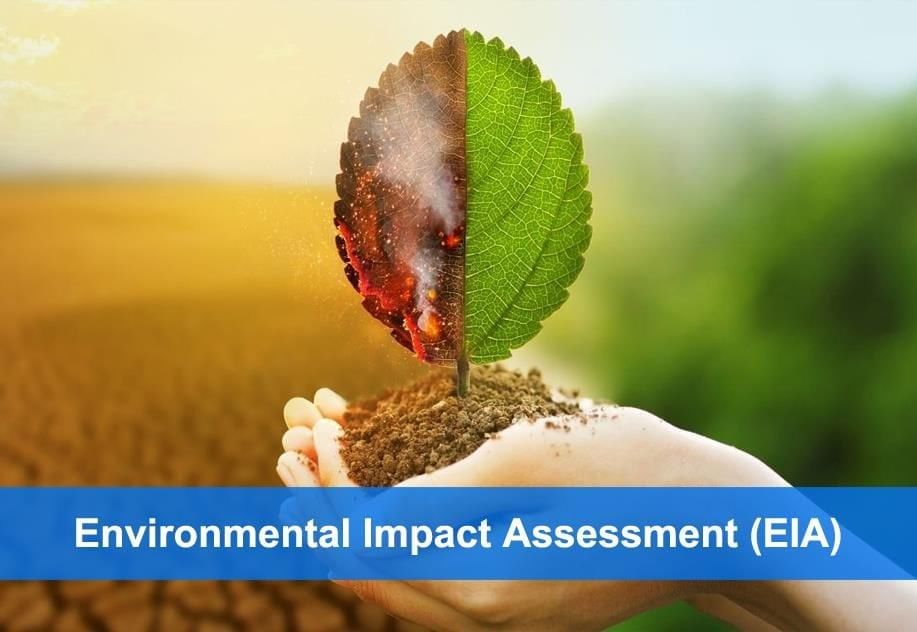 EIA ensures that development projects do not harm the environment.
EIA Notification, 2006:
- Under the Environment (Protection) Act, 1986.
- Requires projects (e.g., dams, highways) to get environmental clearance.
Process:
- Screening: Decide if a project needs EIA.
- Scoping: Identify environmental impacts to study.
- Public Hearing: Local people give opinions on the project.
- Appraisal: Experts review the EIA report.
Public Participation:
- Public hearings allow communities to raise concerns.
- Example: Villagers can oppose a factory that pollutes their river.
Controversies:
- Draft EIA 2020 was criticized for reducing public consultation and exempting some projects.
- Courts have intervened to strengthen EIA rules.
Landmark Case Laws
These cases are critical for understanding how courts address climate change and sustainability.
M.C. Mehta v. Union of India (Taj Trapezium Case, 1986):
- Issue: Air pollution was damaging the Taj Mahal.
- Ruling: The court ordered industries near the Taj to use cleaner fuels or relocate.
- Principle: Polluter pays and precautionary principle.
M.C. Mehta v. Union of India (Ganga Pollution Case, 1985):
- Issue: Tanneries were polluting the Ganga River.
- Ruling: The court ordered polluting industries to set up treatment plants or shut down.
- Principle: Right to clean water under Article 21.
Vellore Citizens' Welfare Forum v. Union of India (1996):
- Issue: Tanneries polluted rivers in Tamil Nadu.
- Ruling: The court applied sustainable development, polluter pays, and precautionary principles.
- Importance: First case to formally adopt these principles in India.
Indian Council for Enviro-Legal Action v. Union of India (1996):
- Issue: Chemical industries caused soil and water pollution.
- Ruling: The court ordered the industries to pay for cleanup and compensate victims.
- Principle: Polluter pays principle.
T.N. Godavarman Thirumulpad v. Union of India (1997):
- Issue: Illegal deforestation across India.
- Ruling: The court set rules for sustainable forest management and banned illegal logging.
- Principle: Sustainable development and public trust doctrine.
Emerging Issues in Climate Change and Sustainability
These are new trends shaping environmental law.
1. Climate Litigation
- Meaning: Lawsuits against governments or companies for failing to address climate change.
- Example: Urgenda Foundation v. Netherlands - The court ordered the government to cut emissions.
- India's Context: NGT cases on air pollution and renewable energy are examples.
2. Corporate Sustainability
- Meaning: Companies must follow environmental, social, and governance (ESG) standards.
- Legal Basis: Companies Act, 2013 requires CSR spending and sustainability reporting.
- Example: Companies must reduce carbon emissions and report their environmental impact.
3. Climate Justice
- Meaning: Ensuring climate policies protect marginalized communities.
- Example: Tribal communities displaced by dams need fair compensation.
4. Carbon Markets
- Meaning: Systems where companies buy/sell carbon credits to offset emissions.
- Example: India is developing a carbon trading framework under NAPCC.
5. Adaptation and Resilience
- Meaning: Preparing for climate impacts like floods and heatwaves.
- Legal Basis: Disaster Management Act, 2005 supports climate adaptation.
- Example: Building flood-resistant infrastructure in coastal areas.
Conclusion
In conclusion, climate change and sustainability are vital issues that require strong legal frameworks and active participation from both the government and citizens. India has made significant strides in environmental law through constitutional provisions, key legislation, and international agreements. However, ongoing challenges like pollution and resource depletion necessitate continuous efforts in policy implementation and public awareness. By prioritizing sustainability and climate justice, India can work towards a healthier environment for current and future generations.
FAQs on Climate Change and Sustainability
| 1. What are the constitutional provisions for environmental protection in India? |  |
| 2. What are some major environmental laws in India? | |
| 3. What principles of environmental law are recognized in India? | |
| 4. How does India participate in international environmental agreements? | |
| 5. What is the significance of Environmental Impact Assessment (EIA) in India? | |