NCERT Solutions: Living Together

Write
Page No. 4
Q: Look at the picture of Chandan's village. What do you see in the picture? Describe below.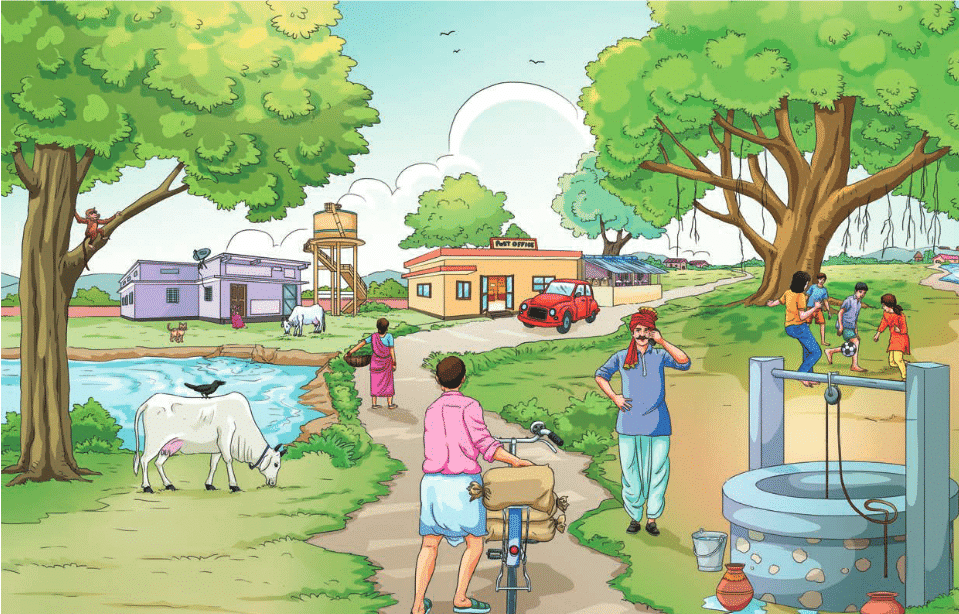 Ans: In the picture of Chandan's village, we can see a peaceful village with many things happening:
- Path: There is a path in the village, and a person in a pink shirt is carrying grains on a bicycle.
- Houses: There are colorful houses in the village, including a yellow one with a red roof and a purple one. A red car is parked near the yellow house.
- Water Well: There is a water well where a person in blue is standing, and a bucket filled with water is placed near the person.
- Children Playing: A group of children is playing football near a large tree on the right. They look happy and are having fun together.
- Trees and Animals: The village has many big green trees with hanging vines, and there are animals like a cow eating grass near the pond. Birds are also flying in the sky.
Overall, the picture shows a calm village where people work, play, and live happily with nature.
Activity 1
Q: Explore your locality; observe the people and places around you. Write your observations about how the people and places you see are connected to each other in the table given below.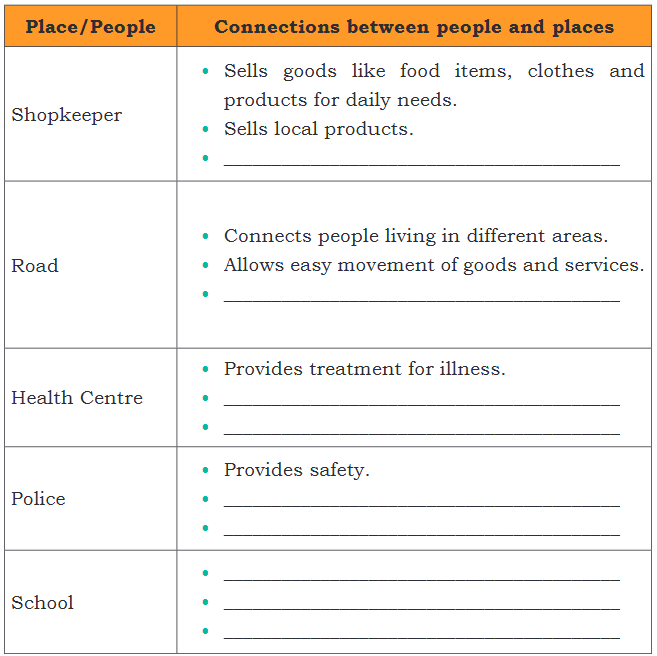 Ans:
Ans: 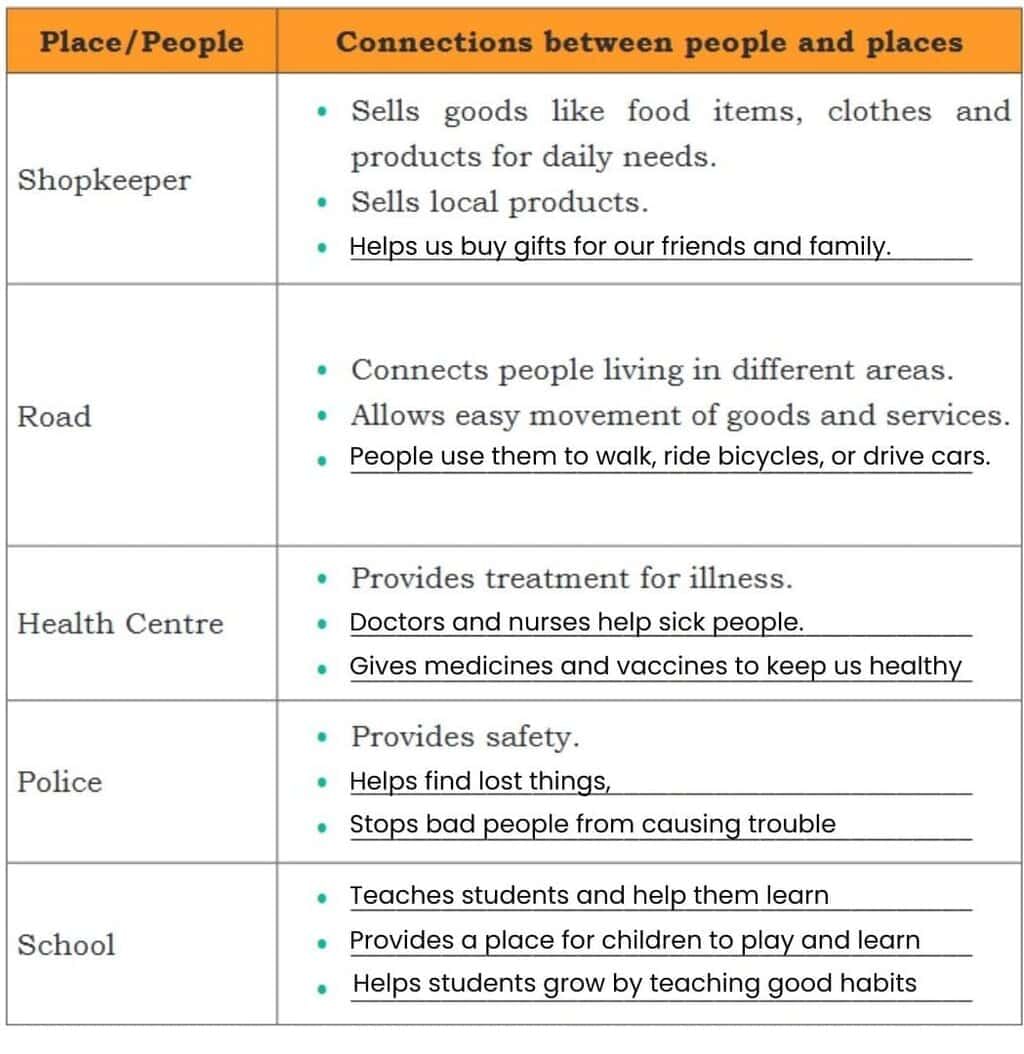
Discuss
Page No. 5
Q1: Why do you think it is important to have places like parks, schools, hospitals, and bus stops in your locality?Ans: These places are very important for our community:
- Parks give us a place to play and relax, helping us stay healthy.
- Schools teach us new things and help us grow.
- Hospitals take care of us when we are sick.
- Bus stops help us travel easily to places like work, markets, and other areas.
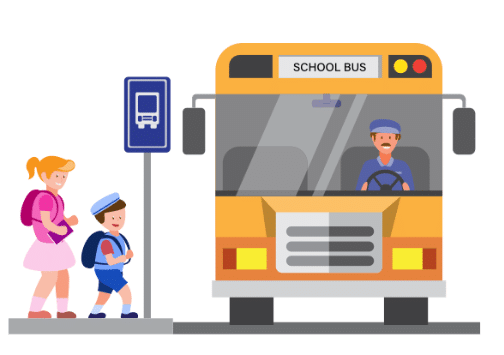 Bus Stop
Q2: How would life be different if one or more of these places in your locality did not exist?
Ans: Without these places, life would be challenging:
- Without parks, people wouldn't have places to relax or play, which could affect their health.
- Without schools, children wouldn't be able to learn, which would limit their future chances.
- Without hospitals, it would be hard to get medical help when sick or hurt.
- Without bus stops, it would be difficult to travel, making it harder for people to connect with others and do work.
Q3: What can you do to keep these places clean and safe?
Ans: To keep these places clean and safe, we can:
- Join cleanliness drives to help pick up trash.
- Report any damage or broken things to the right people.
- Plant trees and take care of the plants in parks.
- Follow rules like not littering or damaging things.
- Teach others how important it is to keep public spaces clean.
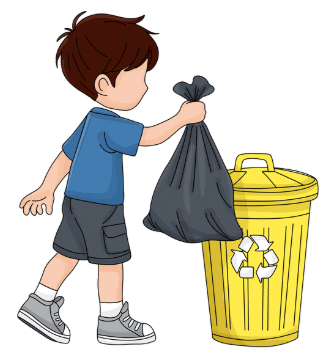 Cleanliness Drive
Activity 2
Page No. 6
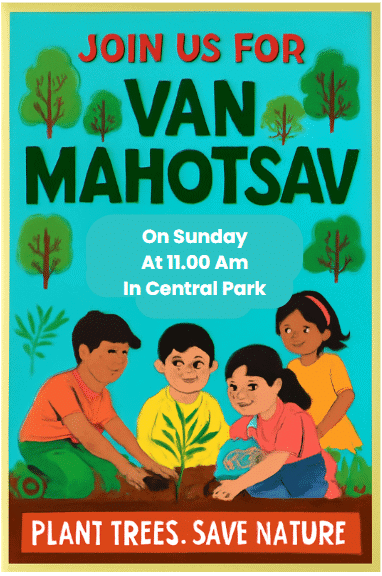
Q: Let us create a colourful poster to help Chandan and his friends invite people from their neighbourhood to participate in the Van Mahotsav.Ans: Here is one Sample Poster:
Activity 3
Page No. 7
Q1: Identify the people who help in maintaining your locality. What are their occupations?Ans: People who help maintain the locality include:
- Sweepers: Clean streets and public areas.
- Gardeners: Maintain parks and green spaces.
- Electricians: Repair streetlights and electrical systems.
- Masons: Fix structures like walls and benches.
- Police Officers: Ensure safety and security.
- Teachers: Educate and organize community activities.
- Volunteers: Participate in community drives like tree planting.
Q2: Look at the table below. List different kinds of work required for developing and maintaining the park. Also, mention the material, tools, and skills required. An example is given here.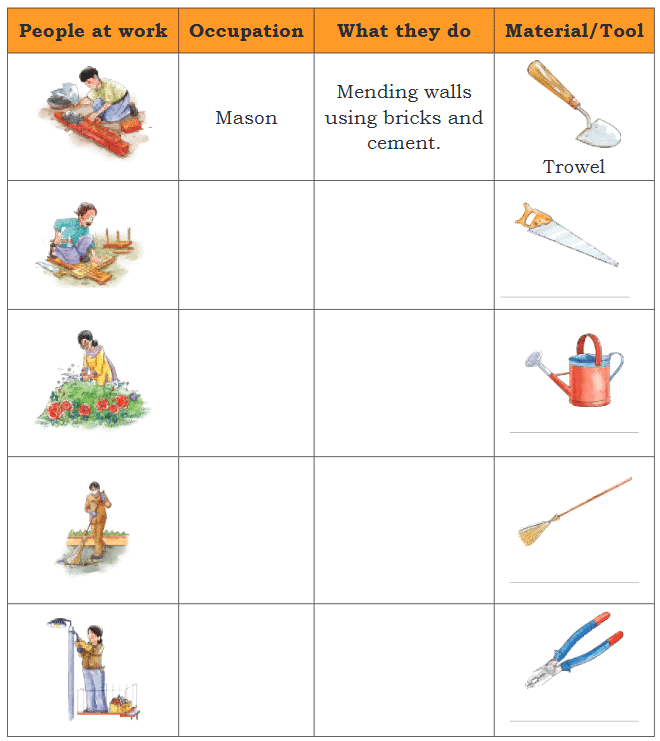 Ans:
Ans: 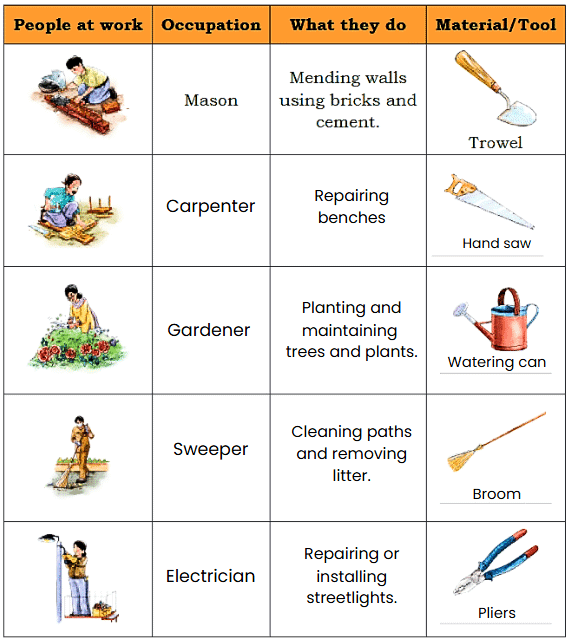
Q3: Find out from your family members or neighbours about their work. What questions would you ask them?
Here are some examples:
(a) What do you like the most about your work?
(b) What types of tools or things do you use?
(c) What challenges do you face?
Ans: More Questions to ask:
(d) How does your work help the community?
(e) What skills are important for your job?
Discuss
(Page 10)
Q1: It is important for communities to come together in times of need. What do you think about this statement?Ans: This statement is true. When communities work together during problems, like floods or broken roads, they can solve them faster. For example, in Kanker, Chhattisgarh, people built a bridge together to cross a flooded river. This shows how working as a team helps everyone stay safe and get to places easily.
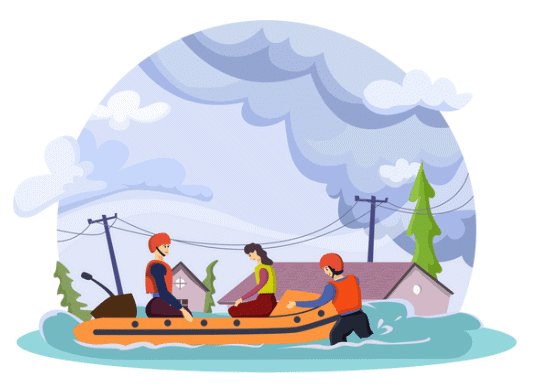 Help During FloodQ2: Do people in your locality come together and support each other? Can you remember one such occasion?
Ans: Yes, people in my neighborhood help each other. For example, during a recent flood, our neighbors set up a camp to collect food and clothes. They also helped clean the homes that were affected. This teamwork made our community stronger and gave quick help to those who needed it.
Write
Page No.11
Q: Think about your family or community. How do you work together to help each other while preparing for a festival or any other occasion?Ans: In my community, during festivals like Diwali, we work together by:
- Sharing tasks like cleaning homes, putting up lights, and making sweets.
- Sharing things like cooking ingredients or decoration materials.
- Organizing fun events, like cultural programs or meals for everyone.
- Helping older people or those in need by giving them food or support.
This teamwork makes the festival more joyful and brings us closer together.
Discuss
Page No. 13
Q1: What are some of the ways by which we can take care of nature and our neighbourhood? List a few.Ans: Lists are:
- Plant trees and take care of green areas.
- Reduce waste by recycling and composting.
- Keep public places clean by not throwing trash.
- Save water and electricity in community areas.
- Join cleanliness and tree-planting events.
Q2: How does helping others and working together make our community better?
Ans: Helping others and working together:
- Builds trust and makes the community stronger.
- Helps solve problems quickly, like fixing public places or helping during emergencies.
- Makes the environment cleaner, safer, and nicer.
- Encourages everyone to care for shared spaces.
- Creates a feeling of belonging and respect for each other.
Let us reflect
(Page 13 - 16)
Our School, Our Team!Q1: Write the different role people play in your school teachers, students, caretakers, bus drivers, etc.
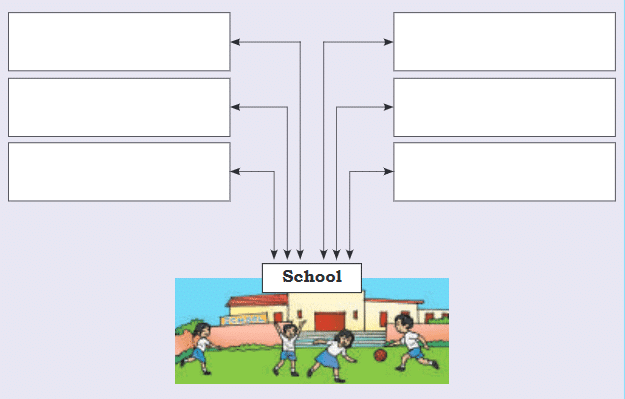
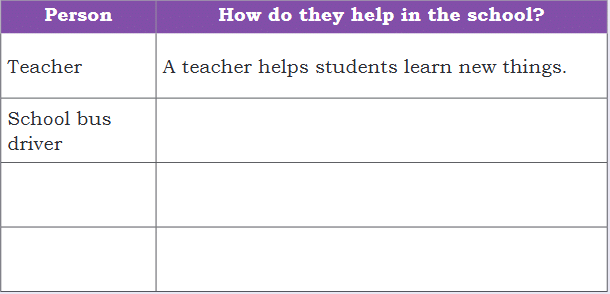 (a) Why is it important for everyone to work as a team in a school?
(b) What is your role as a member of your school community?
Ans:
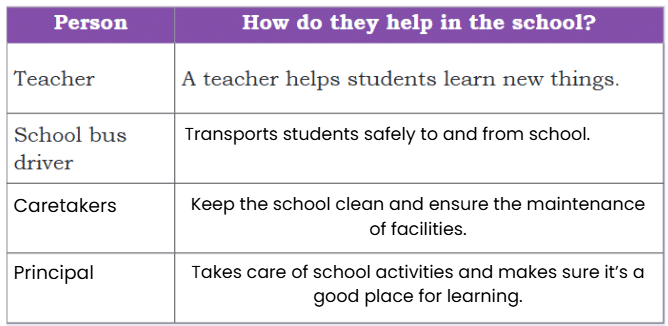 (a) Teamwork in school is important because it helps everything run smoothly, creates a friendly environment, and makes learning better. Teachers, students, and staff all have different jobs, and when they work together, they make the school a safe, clean, and good place for everyone to learn.
(b) As a student, my role is to:
- Study hard and take part in class activities.
- Help keep the school clean by not throwing trash.
- Show respect to teachers, staff, and classmates.
- Join school events and activities, like cleanliness drives or cultural programs.
Q2: Form small groups of 4-5 students. Choose one fun activity to perform from the list below:
(a) Tree plantation
(b) Cleanliness drive
(c) Making artefacts with materials from nature (something useful like a leaf-plate or a decorative item like a garland).
After the activity, fill out this table: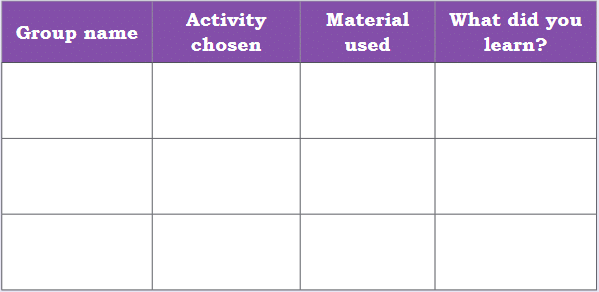 Ans:
Ans: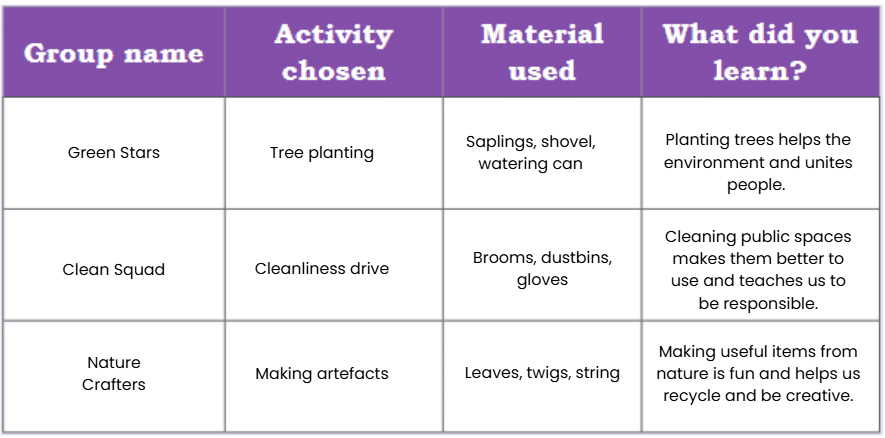
Q3: Match the riddles with their solutions hidden in the pictures.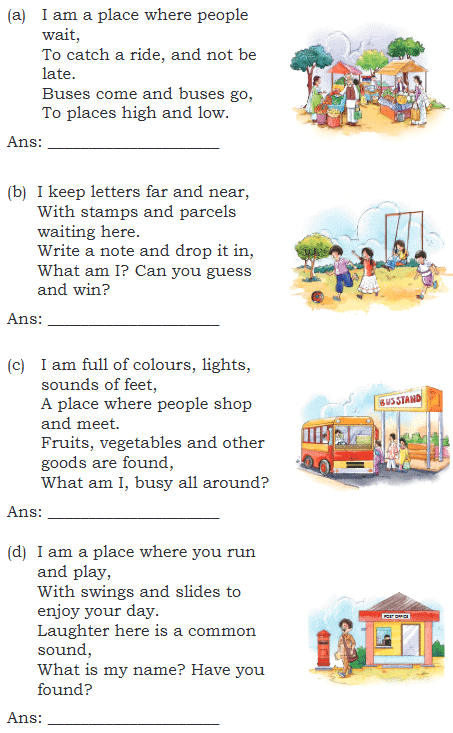 Ans:
Ans: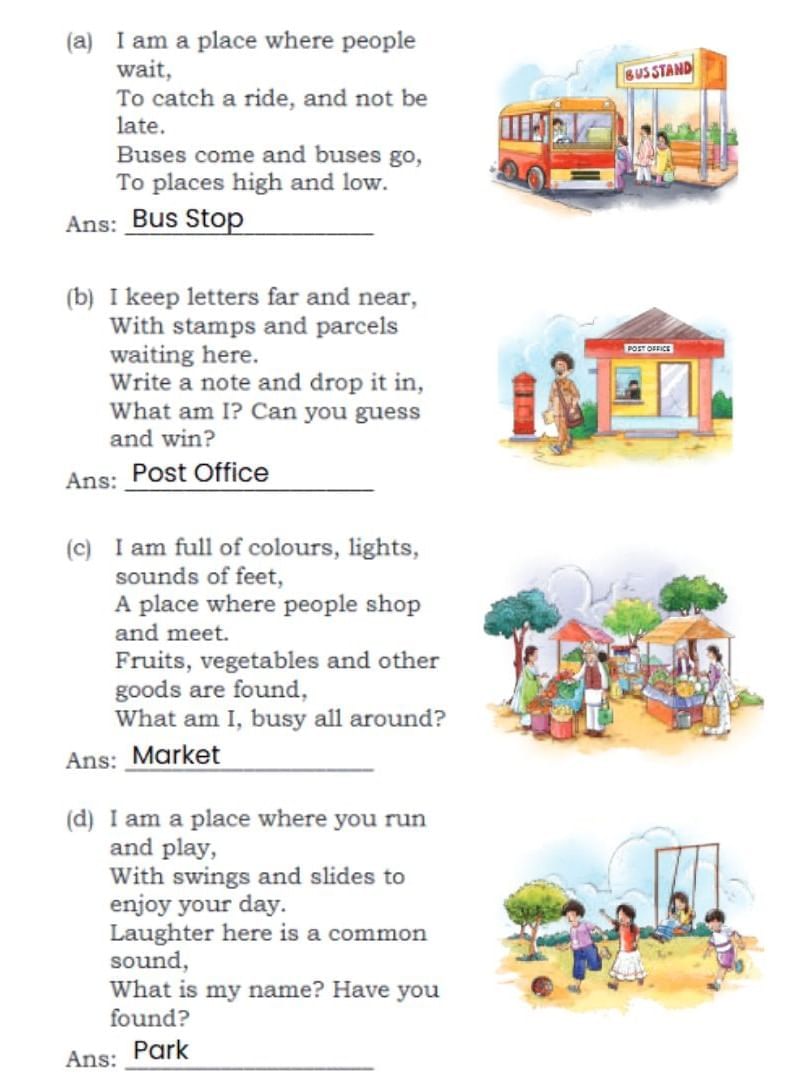 Choose a public place of your interest, and create a similar riddle about it for your friends to solve.
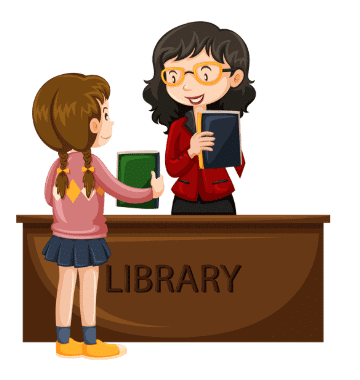
Ans: Riddle: I am a place with books galore,
Where knowledge grows and minds explore.
Quietly read or borrow a few,
What am I? Can you name me too?
Ans: Library
 Q4: Create three groups in the class. Each group would think about a situation in their locality that needs to be improved. Identify activities that can make a difference to the situation. This could be related to cleaning, helping others, organising an event, etc. Complete the table below.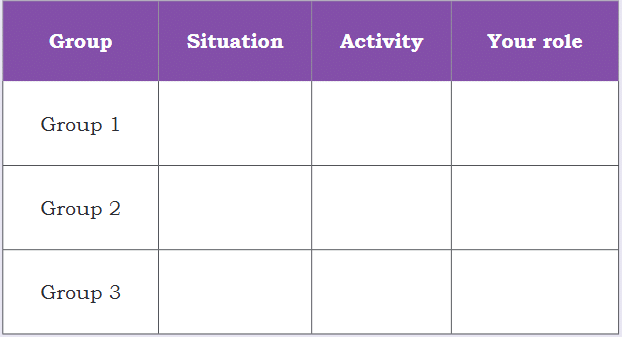
After completing the table, discuss and answer the following questions:
(a) Do you think working together can make your activities more useful? Give reasons.
(b) How will your involvement in these activities help the community?
Ans: 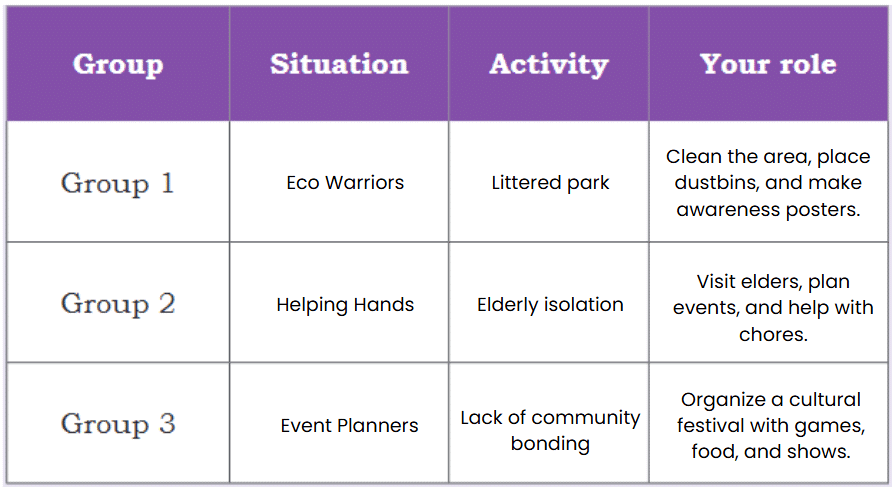 (a) Yes, working together makes activities more helpful because:
- It brings together different skills and ideas to find better solutions.
- Tasks get done faster when everyone helps.
- It helps people work as a team and makes the community stronger.
- The more people involved, the bigger the impact and the more people know about it.
(b) My involvement will:
- Make public places cleaner and safer.
- Help build stronger friendships among people in the community.
- Encourage others to join in helping the community.
- Solve local problems and make life better for everyone.
Q5: Ask your family about any one special skill or craft (for example - basket making, wall painting, pottery) that is famous in your region.
Ans: In my area, pottery is a well-known craft. My family told me that skilled potters use clay to make beautiful pots, vases, and decorations. They use a special wheel, clay, and water, and shape the clay with their hands. This craft is important to our culture and is sold at local markets, helping people earn money and keeping the tradition alive.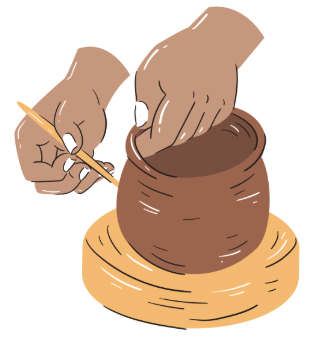 Pottery Making
FAQs on NCERT Solutions: Living Together
| 1. What does living together mean and why do plants and animals need each other? |  |
| 2. How do bees help plants and what do they get in return? | |
| 3. What are the different ways animals help plants spread their seeds? | |
| 4. Why do we need to protect forests if we want animals and plants to live together peacefully? | |
| 5. What happens to other animals when one species disappears from an ecosystem? | |