Use of Force and International Humanitarian Law


Introduction
The use of force in international law governs when and how states may use military force, primarily regulated by the United Nations Charter (1945). It is generally prohibited, with exceptions for self-defense and UN Security Council authorization. International Humanitarian Law (IHL), also known as the law of armed conflict, regulates the conduct of hostilities and protects victims during armed conflicts, primarily through the Geneva Conventions (1949) and their Additional Protocols. For the CLAT PG exam, understanding these topics is crucial, as questions often involve analyzing the legality of military actions or IHL violations, citing cases like Nicaragua v. USA. These notes explain the use of force and IHL in simple language, covering principles, legal frameworks, exceptions, key rules, cases, and exam tips to prepare for passage-based and theoretical questions.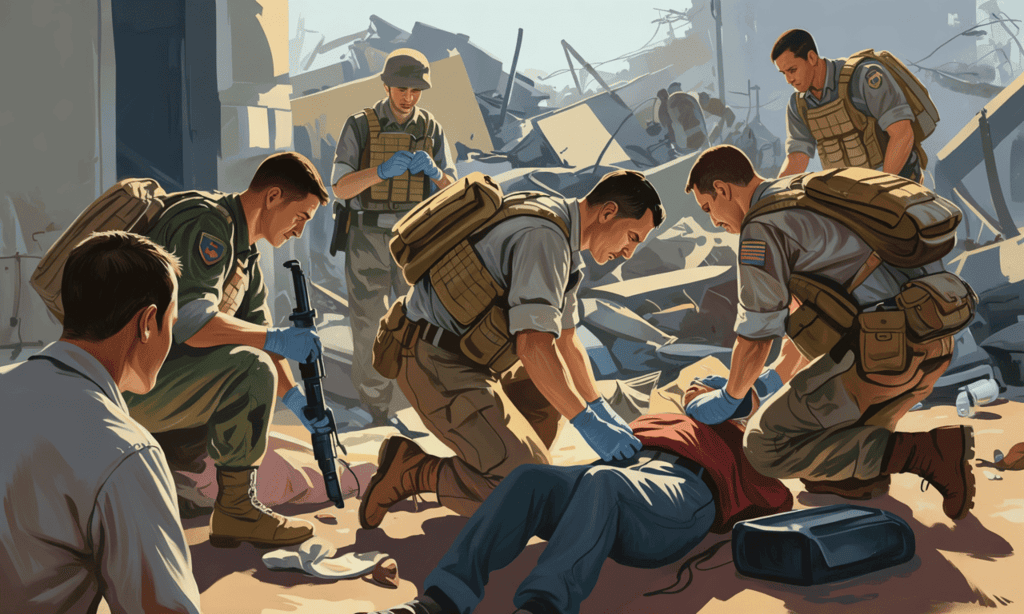
1. Use of Force: Principles and Legal Framework
Overview
The use of force is regulated to maintain international peace and security, with a general prohibition under the UN Charter, subject to specific exceptions.
Principles
- Prohibition of Force: States must refrain from the threat or use of force against another state's territorial integrity or political independence (UN Charter, Article 2(4)).
- Sovereign Equality: All states have equal rights to sovereignty, and force violating this is unlawful (UN Charter, Article 2(1)).
- Peaceful Settlement: Disputes must be resolved peacefully, not through force (UN Charter, Article 2(3)).
- Exceptions: Force is permitted in self-defense or with UN Security Council authorization.
Legal Framework
- UN Charter (1945):
- Article 2(4): Prohibits the threat or use of force.
- Article 51: Permits self-defense against an armed attack until the Security Council acts.
- Chapter VII (Articles 39-51): Allows the Security Council to authorize force to address threats to peace.
- Example: The UN authorized force in Iraq (1991) to expel Iraqi forces from Kuwait.
- Customary International Law:
- Prohibits force and recognizes self-defense, binding even non-UN members.
- Example: Customary law applied in pre-UN cases like the Caroline Case (1837).
- General Assembly Resolutions:
- Resolution 2625 (1970): Declares principles of friendly relations, reinforcing Article 2(4).
- Example: Condemned interventions like the U.S. invasion of Grenada (1983).
2. Exceptions to the Prohibition of Force
Overview
The UN Charter allows force in two main cases: self-defense and Security Council authorization. Other debated exceptions, like humanitarian intervention, lack universal acceptance.
Exceptions
- Self-Defense (UN Charter, Article 51):
- Conditions: Permitted if an armed attack occurs; must be necessary (no alternative) and proportionate (limited to repelling the attack).
- Types:
- Individual Self-Defense: A state defends itself (e.g., Israel's response to the 1967 Six-Day War).
- Collective Self-Defense: States assist an attacked state (e.g., NATO's support for the U.S. post-9/11).
- Preemptive Self-Defense: Controversial; allows force against an imminent attack, per the Caroline Case (necessity and proportionality).
- Reporting: States must report self-defense actions to the Security Council.
- Example: The U.S. invoked Article 51 after 9/11 to attack Al-Qaeda in Afghanistan.
- Security Council Authorization (Chapter VII):
- Process: The Security Council determines a threat to peace (Article 39) and may authorize force (Article 42).
- Features: Binding on UN members, requires agreement of permanent members (P5).
- Example: UN Resolution 678 (1990) authorized a coalition to liberate Kuwait from Iraq.
- Humanitarian Intervention (Debatable):
- Definition: Unilateral force to prevent atrocities (e.g., genocide), without Security Council approval.
- Status: Not explicitly permitted; controversial due to Article 2(4) and sovereignty concerns.
- Example: NATO's 1999 intervention in Kosovo, criticized by some as unlawful.
- Responsibility to Protect (R2P):
- Definition: UN-endorsed principle (2005) to protect populations from genocide, war crimes, etc., preferably through Security Council action.
- Status: Not a legal exception to Article 2(4); requires Council approval for force.
- Example: UN-authorized intervention in Libya (2011) under Resolution 1973.
Examples
- India's 1971 military action in East Pakistan (Bangladesh) was justified by some as self-defense and humanitarian intervention, though debated.
- The UN authorized force in Mali (2013) to counter terrorist threats, per Chapter VII.
3. International Humanitarian Law: Principles and Legal Framework
Overview
IHL regulates the conduct of armed conflicts, protecting those not or no longer fighting (e.g., civilians, prisoners) and limiting means and methods of warfare. It applies to international and non-international armed conflicts.
Principles
- Distinction: Parties must distinguish between combatants and civilians, targeting only combatants and military objectives.
- Proportionality: Attacks must not cause excessive civilian harm relative to military advantage.
- Necessity: Force must be necessary to achieve a legitimate military objective.
- Humanity: Prohibits unnecessary suffering, torture, or inhumane treatment.
- Protection of Victims: Civilians, wounded, and prisoners of war (POWs) must be protected.
Legal Framework
- Geneva Conventions (1949):
- First Convention: Protects wounded and sick soldiers on land.
- Second Convention: Protects wounded and sick at sea.
- Third Convention: Governs treatment of POWs.
- Fourth Convention: Protects civilians during conflict.
- Common Article 3: Applies to non-international conflicts, ensuring humane treatment.
- Example: India, a party to the Conventions, ensures POW rights, as seen in the 1971 war.
- Additional Protocols (1977):
- Protocol I: Enhances protections in international conflicts (e.g., civilian protection).
- Protocol II: Strengthens rules for non-international conflicts.
- Note: India has not ratified Protocols I and II but follows customary IHL.
- Hague Conventions (1899, 1907):
- Regulate means and methods of warfare (e.g., banning certain weapons).
- Example: Prohibits poison gas, used in World War I.
- Customary IHL:
- Rules like distinction and proportionality bind all states, codified by the ICRC's Customary IHL Study.
- Example: Protecting civilians is customary, even for non-parties to Protocols.
- Other Treaties:
- Chemical Weapons Convention (1993): Bans chemical weapons.
- Convention on Cluster Munitions (2008): Prohibits cluster bombs (India not a party).
Scope of Application
- International Armed Conflicts: Between states (e.g., India-Pakistan 1971 war).
- Non-International Armed Conflicts: Between states and non-state actors or within a state (e.g., Maoist insurgency in India).
- Example: Common Article 3 applied to the Sri Lankan Civil War (1983-2009).
4. Key Rules of IHL
Overview
IHL imposes specific obligations on parties to armed conflicts to minimize harm and protect vulnerable groups.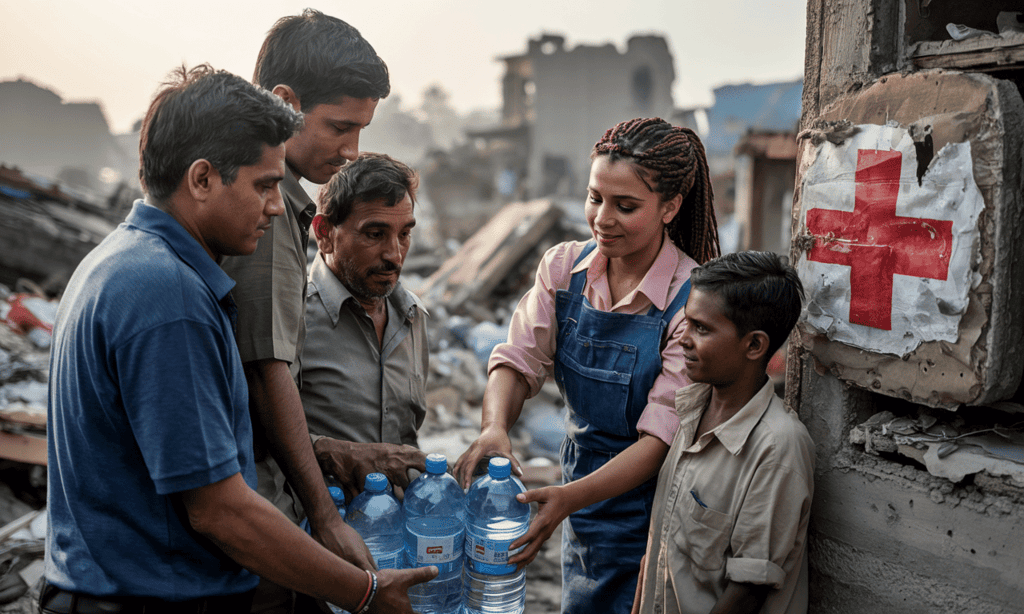
Rules
- Protection of Civilians: Civilians must not be targeted; indiscriminate attacks are prohibited (Fourth Geneva Convention, Protocol I, Article 51).
- Treatment of POWs: POWs must be treated humanely, with food, shelter, and no torture (Third Geneva Convention).
- Protection of Wounded and Sick: Medical personnel and facilities must be respected; wounded must receive care (First and Second Geneva Conventions).
- Prohibited Weapons: Weapons causing unnecessary suffering (e.g., chemical weapons, blinding lasers) are banned (Hague Conventions, Chemical Weapons Convention).
- Proportionality in Attacks: Attacks must balance military advantage against civilian harm (Protocol I, Article 57).
- Humanitarian Access: Parties must allow humanitarian aid to reach civilians (Fourth Geneva Convention, Article 23).
Examples
- During the 1971 India-Pakistan war, India provided humane treatment to Pakistani POWs, per the Third Geneva Convention.
- Attacking a hospital in a conflict zone violates the First Geneva Convention and customary IHL.
CLAT PG Tips
- Memorize key IHL rules: civilian protection, POW treatment, prohibited weapons.
- Learn relevant articles (e.g., Protocol I, Articles 51, 57; Fourth Convention, Article 23).
- Practice scenarios, like identifying if a drone strike violates proportionality.
5. Landmark Cases
Overview
Landmark cases illustrate the application of use of force and IHL rules, critical for CLAT PG passage-based questions.
Key Cases
- Caroline Case (UK v. USA, 1837):
- Facts: British forces attacked a U.S. ship (Caroline) aiding Canadian rebels, claiming self-defense.
- Issue: Was the British use of force lawful self-defense?
- Outcome: Established criteria for self-defense: necessity (imminent threat) and proportionality, later reflected in Article 51.
- Significance: Foundation for customary self-defense, especially preemptive actions.
- Nicaragua v. USA (ICJ, 1986):
- Facts: Nicaragua sued the U.S. for supporting Contra rebels and mining its harbors, alleging unlawful force.
- Issue: Did the U.S. violate UN Charter Article 2(4)?
- Judgment: The ICJ ruled that the U.S. breached Article 2(4) and customary law by intervening, rejecting U.S. self-defense claims due to lack of an armed attack.
- Significance: Clarified the prohibition of force and limits of self-defense; emphasized ICJ's role.
- Legality of the Threat or Use of Nuclear Weapons (ICJ Advisory Opinion, 1996):
- Facts: The UN General Assembly requested an ICJ opinion on whether nuclear weapons violate international law.
- Issue: Are nuclear weapons lawful under use of force and IHL rules?
- Judgment: The ICJ held that nuclear weapons are generally unlawful under IHL (distinction, proportionality) but could not rule out their use in extreme self-defense scenarios.
- Significance: Linked use of force (Article 51) with IHL, highlighting restrictions on weapons.
- Tadić Case (ICTY, 1995):
- Facts: The International Criminal Tribunal for the former Yugoslavia (ICTY) prosecuted Duško Tadić for war crimes in the Yugoslav conflict.
- Issue: Did IHL apply to non-international conflicts, and were violations war crimes?
- Judgment: The ICTY ruled that Common Article 3 applies to non-international conflicts, and violations (e.g., targeting civilians) are war crimes.
- Significance: Expanded IHL's scope to non-international conflicts, influencing international criminal law.
- Armed Activities on the Territory of the Congo (DRC v. Uganda, ICJ, 2005):
- Facts: The DRC sued Uganda for military occupation and atrocities in its territory, alleging unlawful force and IHL violations.
- Issue: Did Uganda violate Article 2(4) and IHL?
- Judgment: The ICJ ruled that Uganda's actions breached Article 2(4) (unlawful force) and IHL (e.g., civilian attacks, looting), ordering reparations.
- Significance: Reinforced the prohibition of force and IHL's application to occupation, emphasizing state responsibility.
Key Takeaways
- Use of Force: Prohibited under UN Charter Article 2(4), with exceptions for self-defense (Article 51) and Security Council authorization (Chapter VII).
- IHL: Regulates armed conflicts, protecting civilians, POWs, and wounded, per Geneva Conventions and customary law.
- Principles: Use of force: prohibition, self-defense; IHL: distinction, proportionality, necessity, humanity.
- Legal Frameworks: UN Charter, Geneva Conventions, Hague Conventions, Additional Protocols, customary IHL.
- Cases: Caroline (self-defense), Nicaragua (force), Nuclear Weapons (IHL), Tadić (non-international conflict), Congo (occupation).
- India's Role: Adheres to Article 2(4) and Geneva Conventions, invokes self-defense (e.g., 1971, Balakot), applies IHL in conflicts.
- Exam Tips: Memorize articles, cases, and practice applying them to scenarios and passages.
FAQs on Use of Force and International Humanitarian Law
| 1. What are the fundamental principles governing the use of force in international law? |  |
| 2. What exceptions exist to the prohibition of the use of force under international law? | |
| 3. What is International Humanitarian Law (IHL) and what are its main objectives? | |
| 4. What are some key rules of International Humanitarian Law? | |
| 5. Can you provide examples of landmark cases related to the use of force and IHL? | |