NCERT Solutions: The Tinkling Bells


Let us Think
(Page 14)
A. Answer the following.Q1: Why was Chinna upset?
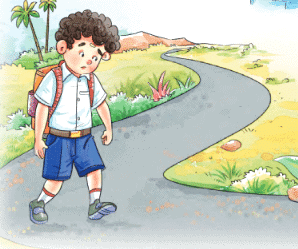
Ans: Chinna was upset because he couldn't find the money his Dadaji (grandfather) had given him in his pockets.
Q2: How did Kamala help Chinna feel better?
Ans: Kamla made Chinna feel better by promising him that she would give him money to buy the bells.
Q3: What did the fruit seller do by mistake?
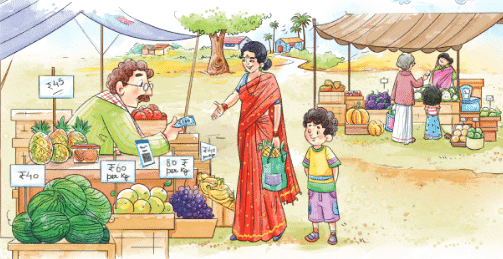
Ans: The fruit seller gave Chinna ten rupees extra by mistake.
Q4: How did Chinna manage to buy the bells from Chacha in the end?
Ans: Chinna returned the extra money the fruit seller had given him by mistake. Feeling pleased with her child's honesty, Chinna's mother took him to Chacha's shop to buy him the bells.
B. Write 'T' for true or 'F' for false.
Q1: Chinna wanted to buy the bells to attach them to his bicycle.Ans: F
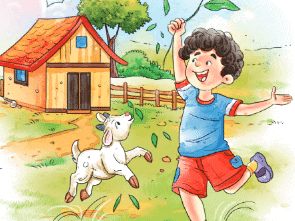
Q2: Chinna's mother, Kamala, comforted him when he came home feeling sad.
Ans: T
Q3: The fruit seller gave Chinna twenty rupees extra as change.
Ans: F
Q4: Chinna decided to keep the extra money and bought chocolates with it.
Ans: F
Q5: The fruit seller was unhappy when Chinna returned the extra money.
Ans: F
C. Think and discuss.
Q1: Why do you think Chinna decided to return the money instead of keeping it?Ans: Chinna decided to return the money instead of keeping it because his mother made him realize that keeping the money would be like stealing. She also reminded him how he had felt after losing money, and he realized that the fruit seller would feel the same about the extra money he had given him by mistake.
Q2: Think of a time when you found something that didn't belong to you. What did you do? How did it make you feel?
Ans: Once, I found a watch on my school's playground during recess. I didn't know who it belonged to, so I submitted it to the school office. The office staff made announcements, and the owner collected the watch from the office. In the end, I felt very happy because I knew I had done the right thing.
Let us Learn
(Page 15)
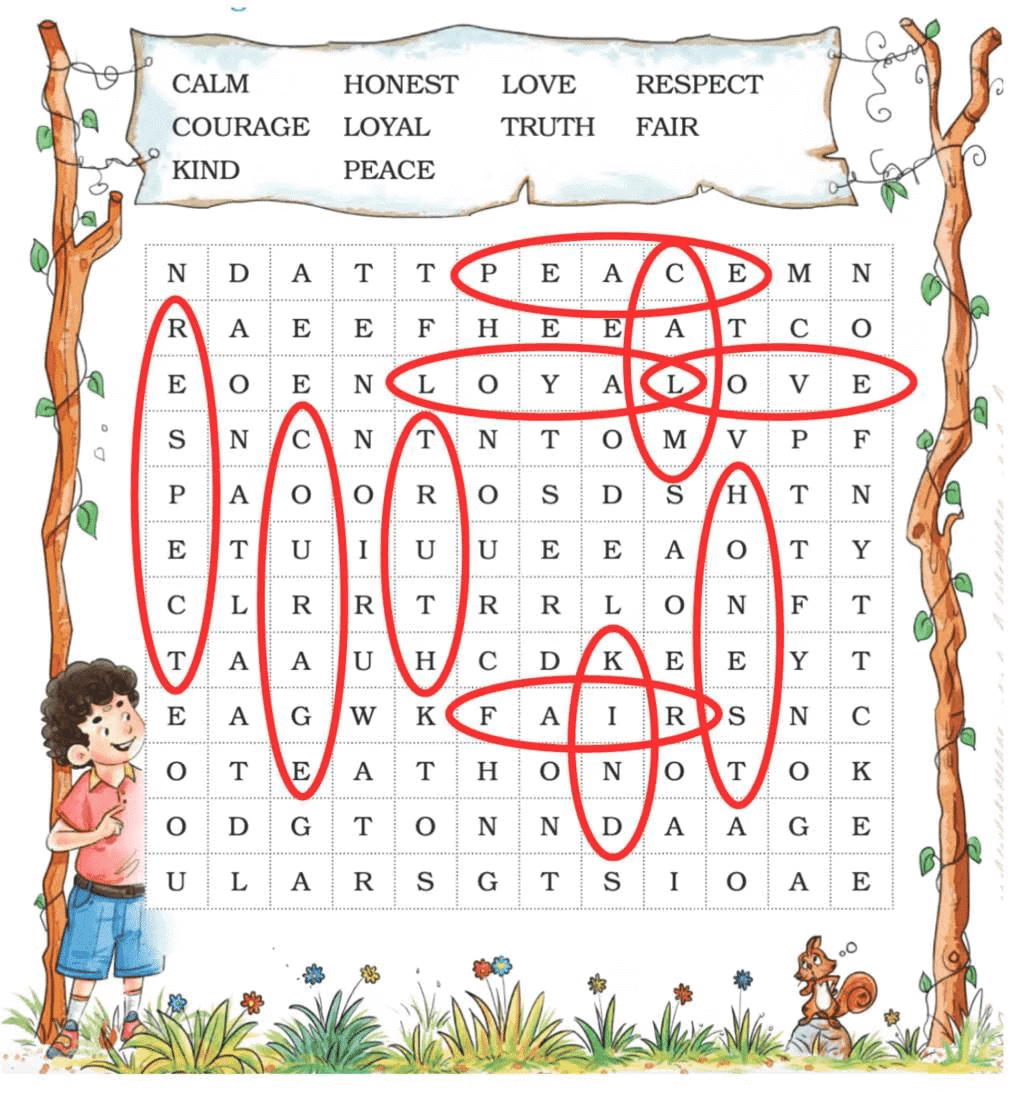
A. Find the given words.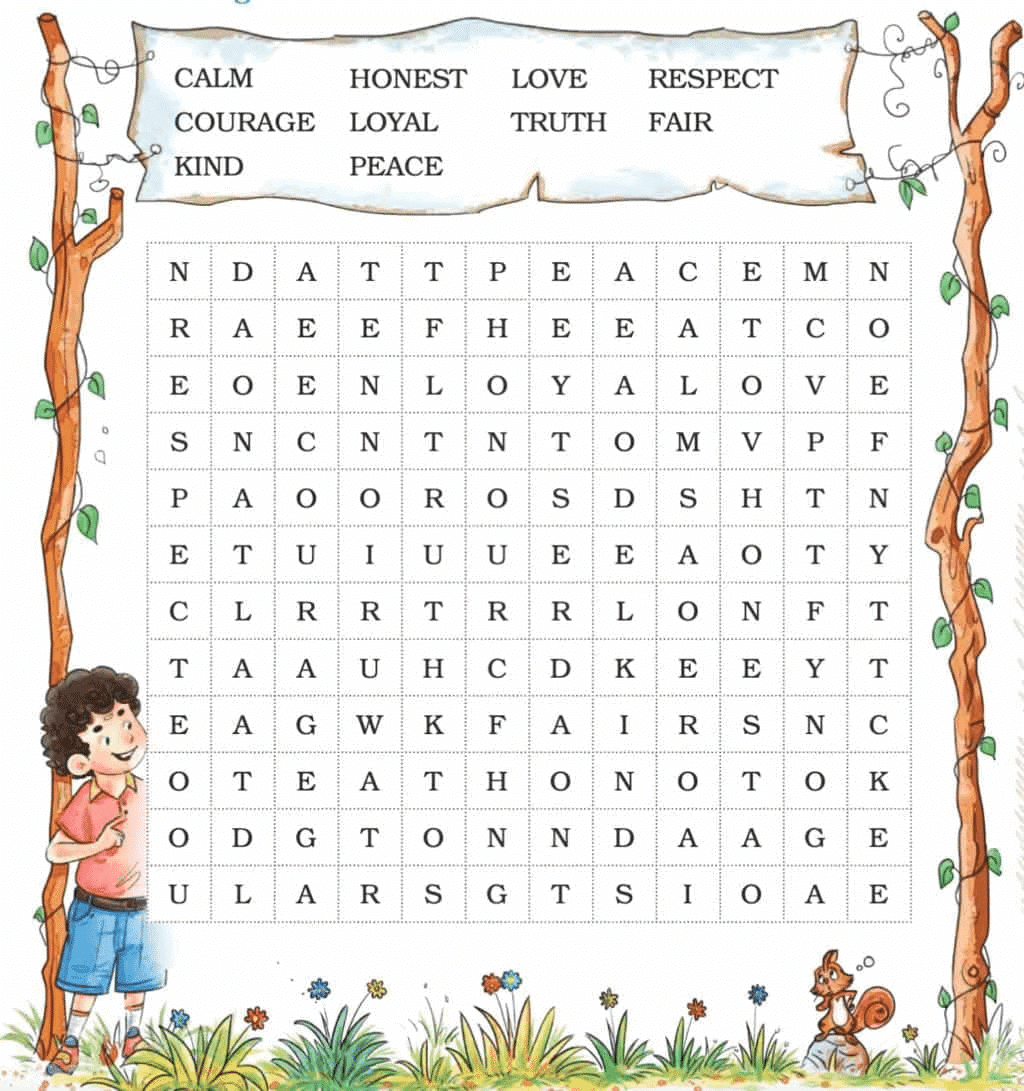
Ans:
B. Read the following.
Chinna, Charu and Jasmine are friends. They study in Grade 4.
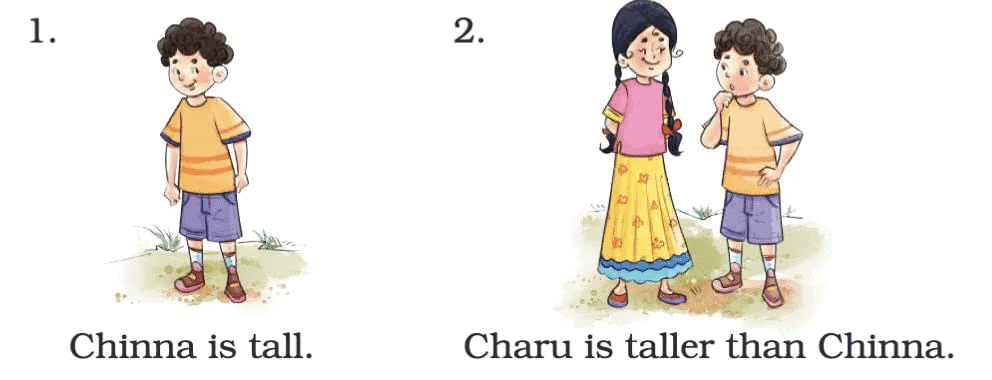
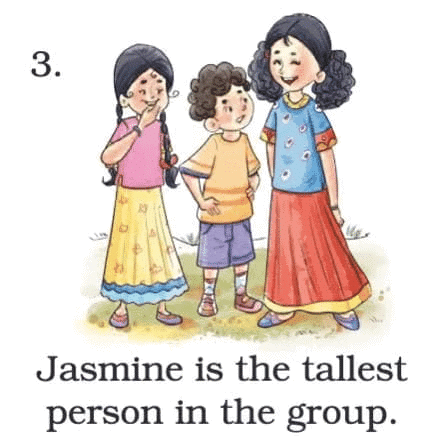
- We use different forms of adjectives to compare the qualities of people or things.
- When we compare the qualities of two people or objects, we add -er to the adjective.
- We always use 'than' while comparing two people or objects. Example- Aman is shorter than Jiya.
- When the comparison is made in a whole group or collection, we add -est to the adjective. Example- February is the shortest month of the year.
Fill in the blanks using the correct comparison markers (-er or -est).
Q1: I am tall___ than my brother.
Ans: I am taller than my brother.
Q2: January is the cold___ month of the year.
Ans: January is the coldest month of the year.
Q3: An ant is small___ than an elephant.
Ans: An ant is smaller than an elephant.
Q4: My sister is smart___ than me.
Ans: My sister is smarter than me.
Q5: Jay was the fast___ person in the race.
Ans: Jay was the fastest person in the race.
C. Circle the word that means the opposite of the highlighted word in each sentence.
Q1: Chacha showed him some beautiful tinkling bells.
a) Attractive
b) Ugly
c) Broken
Ans: b) Ugly
The opposite of "beautiful" is "ugly."
Q2: The fruit seller was so happy that he gave Chinna ten rupees as a reward.
a) Offer
b) Prize
c) Punishment
Ans: c) Punishment
The opposite of "reward" is "punishment."
Q3: I'll give you money to buy the bells.
a) Sell
b) Purchase
c) Order
Ans: a) Sell
The opposite of "buy" is "sell."
Q4: "Can I buy chocolates with the money?" whispered Chinna.
a) Murmured
b) Shouted
c) Talked
Ans: b) Shouted
The opposite of "whispered" is "shouted."
Let us Listen
(Page 18)
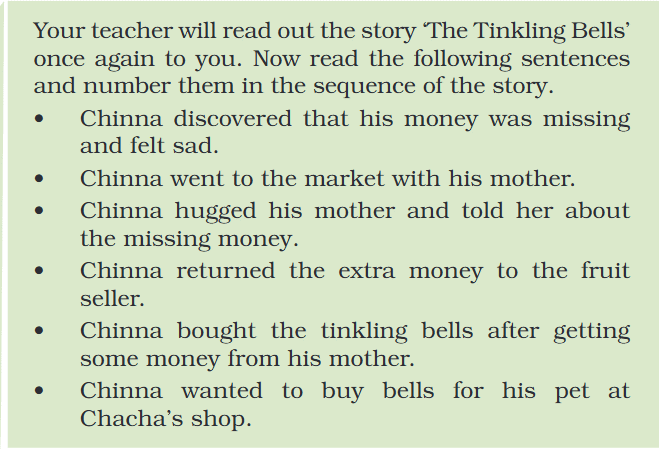
Ans:
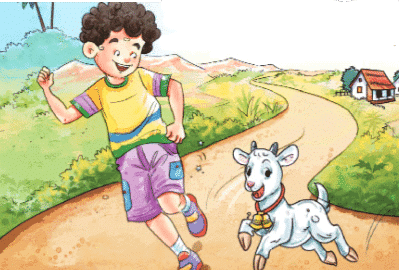
- Chinna wanted to buy bells for his pet at Chacha's shop.
- Chinna discovered that his money was missing and felt sad.
- Chinna hugged his mother and told her about the missing money.
- Chinna went to the market with his mother.
- Chinna returned the extra money to the fruit seller.
- Chinna bought the tinkling bells after getting some money from his mother.
Let us Speak
What would you do in the following situations?Q1: You borrowed your friend's favorite pen. After using it, you accidentally broke it. What would you do?
Ans: I would say sorry to my friend and tell them I broke the pen by mistake. I would buy a new pen for him to make up for it.
Q2: During a math quiz, your friends ask you to show them your answers because they didn't study. If you don't help, your friends might get upset with you. What would you do?
Ans: I would politely refuse and explain to them that cheating isn't fair and helpful in the long run.
Q3: You see a classmate taking a notebook from the teacher's desk without permission. The classmate tells you not to tell anyone. What would you do?
Ans:I would tell my classmate to return the notebook because taking things without permission is wrong.
Q4: You bring your favourite snack to school. But you find that your classmate has not brought anything to eat. You really want to enjoy the snack alone. What would you do?
Ans: I would share my snack with my classmate because a small act of kindness could make their day better.
Let us Write
(Page 19)
A. Frame sentences using the following words from the story.Q1: smiling:
Ans:
- My sister was smiling when she saw her birthday gift.
- The teacher was smiling at us after we sang a song in class.
Q2: mistake:
Ans:
- I made a mistake by writing the wrong answer in my test.
- My friend made a mistake and forgot to bring his book to school.
Q3: honest:
Ans:
- I was honest and told my parents I broke the glass by accident.
- Being honest helps me make good friends who trust me.
Q4: praise:
Ans:
- My father praised me for cleaning my room without being asked.
- The coach praised our team for playing well in the match.
Q5: careful:
Ans:
- I am careful when I ride my bicycle so I don't fall.
- We should be careful with our toys so they don't break.
B. Draw two national symbols (e.g., national flag, national bird) and write a few sentences about each.
Ans: 1. National Flag
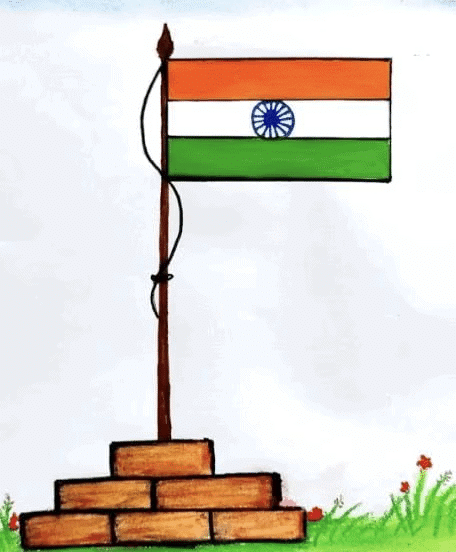 The national flag of India has three colours: saffron, white, and green, with a blue Ashoka Chakra in the middle. It stands for courage, peace, and growth. We salute the flag on Independence Day.
2. National Bird (Peacock)
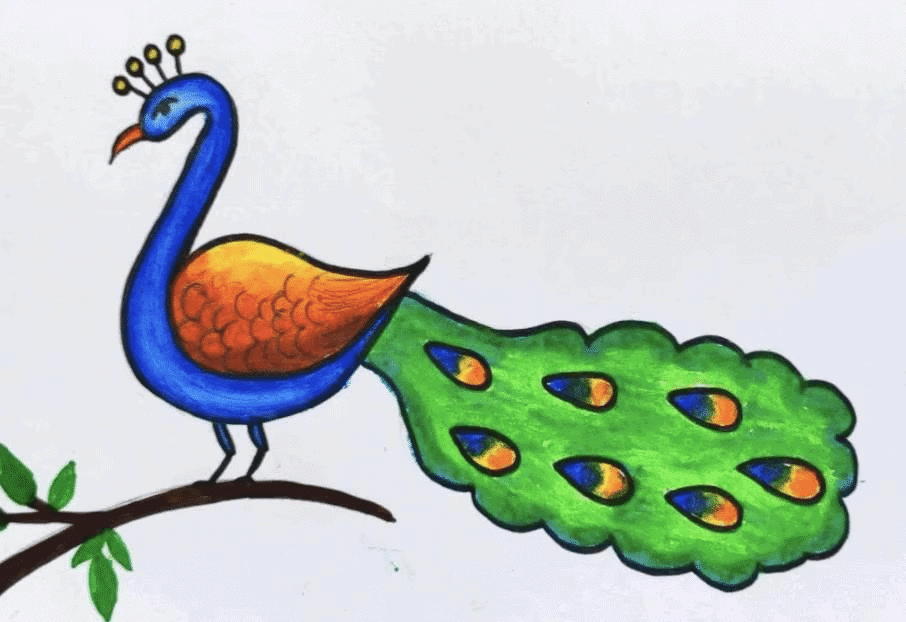 The peacock is India's national bird. It has beautiful blue and green feathers and dances when it rains. It shows the beauty of our country.
Fun With Matchsticks
(Page 23)
Activity: Fix the equation.Objective: Move one matchstick to make the equation correct.
One puzzle has been solved for you.
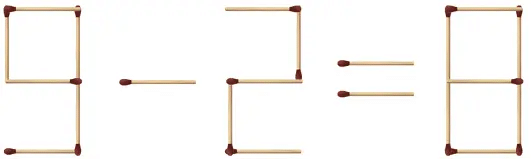
Solution: 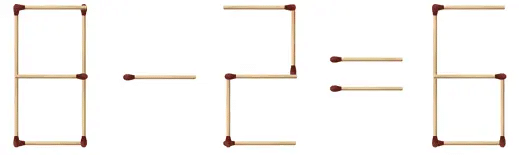 Now, solve the following equation by moving one matchstick.
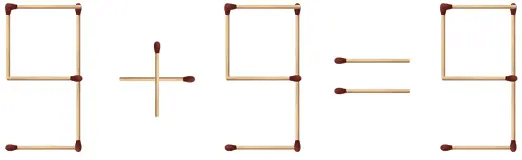 Solution: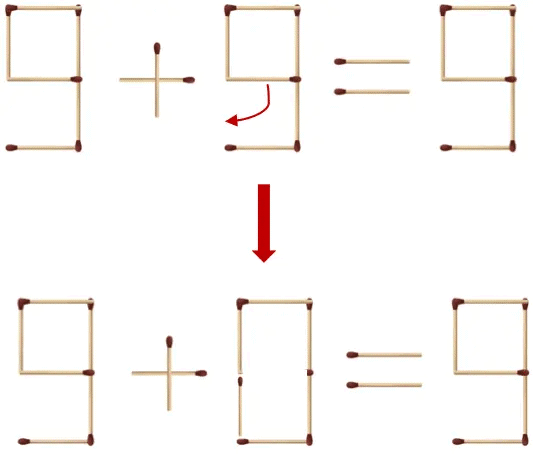
Let us Explore
(Page 24)
Q. We have read about Chinna's love for tinkling bells in the story. Collect or draw pictures of different types of bells found in India. Ans: Here are the pictures of different types of bells found in India: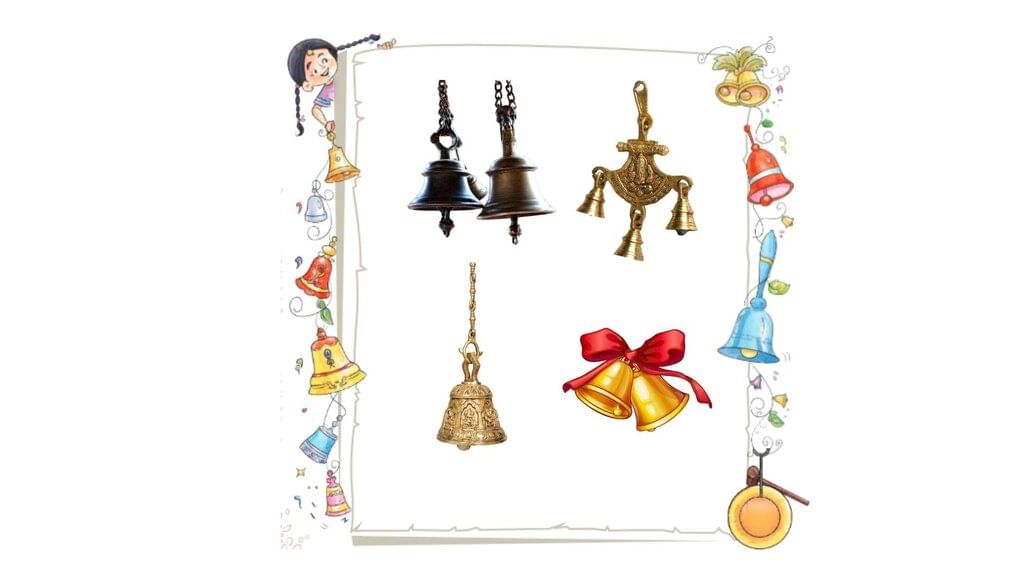
FAQs on NCERT Solutions: The Tinkling Bells
| 1. What is the main message or theme of "The Tinkling Bells" poem for Class 4? |  |
| 2. Who are the key characters or speakers in "The Tinkling Bells" and what do they represent? | |
| 3. What are the important literary devices used in "The Tinkling Bells" NCERT poem? | |
| 4. How should I answer comprehension questions about "The Tinkling Bells" for my exams? | |
| 5. What vocabulary words from "The Tinkling Bells" should I focus on for Class 4 English? | |