Worksheet Solutions: Nature Trail


Multiple Choice Questions (MCQs)
Q1: Who guides the students during their nature walk in Pachmarhi?
(a) The teacher
(b) Abha, a nature scientist
(c) Sarthak
(d) Arya
Ans: (b) Abha, a nature scientist
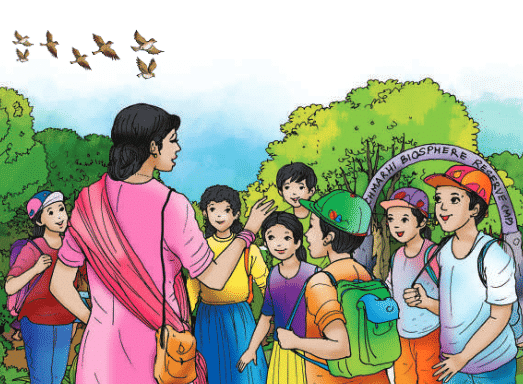
Abha Didi, a nature scientist who studies plants and animals, guides the students in exploring the forest.
Q2: What is the name of the state animal of Tripura?
(a) Spectacled Monkey
(b) Indian Giant Squirrel
(c) Gharial
(d) Sunbird
Ans: (a) Spectacled Monkey
The Spectacled Monkey is the state animal of Tripura. It is named for the white patches around its eyes, which look like spectacles.
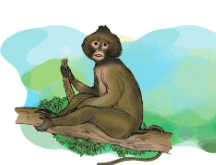 Spectacled Monkey
Q3: What helps frogs live both on land and in water?
(a) Webbed feet
(b) Sharp claws
(c) Strong shells
(d) Long tails
Answer: (a) Webbed feet
Frogs have webbed feet, which help them swim easily in water.
Q4: What feature helps the gharial catch fish?
(a) A long, narrow, and pointed snout
(b) Webbed feet
(c) Strong claws
(d) A smooth shell
Ans: (a) A long, narrow, and pointed snout
The Gharial has a long, narrow snout that helps it catch fish in the water.
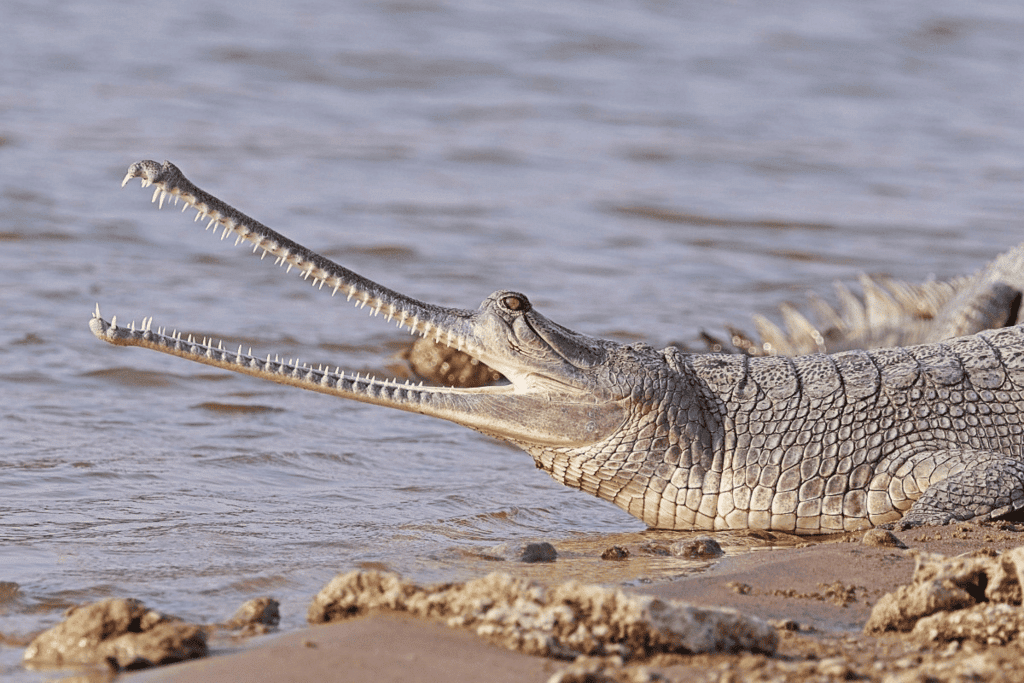 Gharial
Q5: Which of the following insects has antennae to sense its surroundings?
(a) Butterfly
(b) Grasshopper
(c) Spider
(d) Beetle
Ans: (a) Grasshopper
Grasshoppers have antennae that help them sense their surroundings.
Fill in the Blanks
Q1: The ________ has a large, red-coloured body and is found in Pachmarhi.
Ans: Indian Giant Squirrel
The Indian Giant Squirrel is a big, red-coloured squirrel found in Pachmarhi.
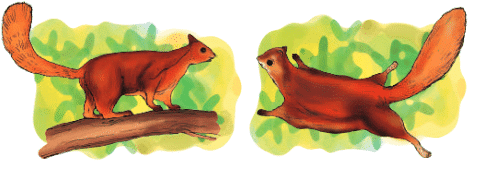 Giant Squirrel
Q2. A ________ has a headgear growing out of its forehead, making it look like it is wearing a horn.
Ans: Hornbill
The Hornbill has a headgear, which makes it look like it's wearing a horn.
Q3. The ________ is a tree with hanging roots that touch the ground.
Ans: Banyan
The Banyan Tree has hanging roots that reach the ground.
Q4. The ________ has three pairs of legs and one pair of antennae.
Ans: Insect
Insects, like grasshoppers, have three pairs of legs and antennae.
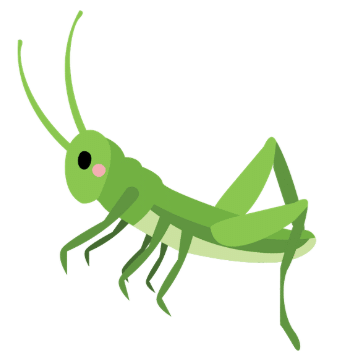 Grasshopper
Q5. ________ are the lines on a leaf that help in carrying water and nutrients.
Ans: Veins
Veins are the lines on leaves that transport water and nutrients.
 Veins of Leaf
True or False
Q1. Insects, like grasshoppers, have two pairs of wings.
Ans: True
Grasshoppers and many other insects have two pairs of wings that help them fly.
Q2. All animals in the forest live in harmony and do not depend on each other.
Ans: False
In nature, animals and plants depend on each other for food, shelter, and survival. This is called the interdependence in nature.
Q3. Birds like owls have sharp eyesight to help them see in the dark.
Ans: True
Owls have excellent night vision, which helps them hunt for food in the dark.
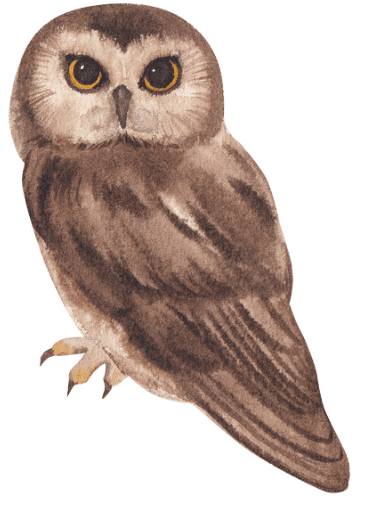 Owl
Owl
Q4. A Hornbill's beak helps it drink nectar from flowers.
Ans: False
The Hornbill uses its long beak to eat fruits and small animals, not to drink nectar.
Q5. Frogs can live only in water and cannot survive on land.
Ans: False
Frogs can live both in water and on land, making them amphibians.
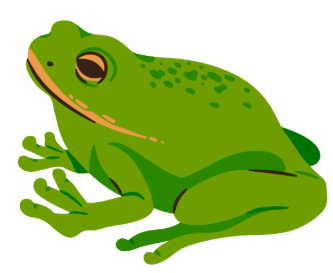 Frog
Frog
Short Question Answers
Q1: What are some of the safety rules to follow while visiting the forest?
Ans: Some safety rules include not teasing animals, not feeding animals, not damaging trees and flowers, not bringing pets or weapons, and not throwing garbage in the forest.
Q2: What did the students observe about the birds during the nature walk?
Ans: The students observed various birds, such as the hornbill, and learned that birds have different types of beaks and claws, which help them in eating and other activities.
Q3: What is the purpose of the 'Web of Life' game?
Ans: The game demonstrates how different elements of nature, like plants, animals, and natural resources, are interconnected and depend on each other for survival.
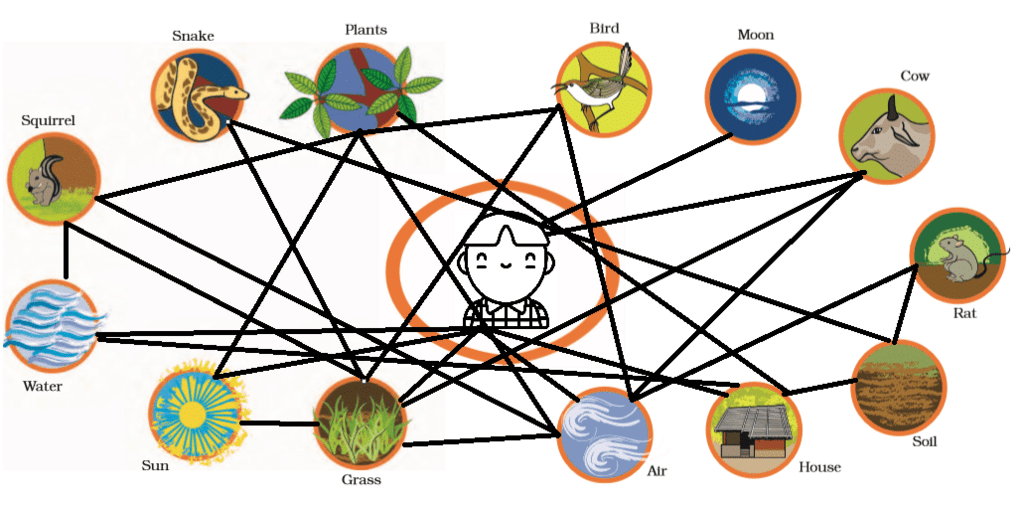 Web of Life
Q4: How do fish, gharials, and turtles adapt to their environments?
Ans: Fish have fins for swimming, gharials have long snouts for catching fish, and turtles have strong shells to protect themselves and webbed feet to swim easily.
Q5: How does the 'Leaf Autograph' activity help students?
Ans: The 'Leaf Autograph' activity helps students observe and understand the variety of plants in their environment, as well as the specific features like color, shape, and texture.
Vocabulary Activity - "Guess the Word"
Q1: A person who studies plants and animals.
Ans: Biologist.
More specifically, they may be a botanist (studying plants) or a zoologist (studying animals).
Q2: The short, high sounds made by birds.
Ans: Chirping
Q3: The sharp, curved nails on a bird's or animal's feet.
Ans: Claws
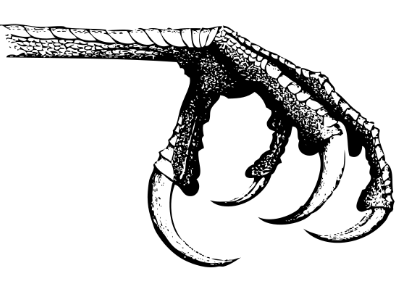 Claws of Bird
Q4: The hard, pointed structure of a bird's mouth used for feeding.
Ans: Beak
Q5: The marks left by an animal's feet on the ground.
Ans: Footprints
Match the Following
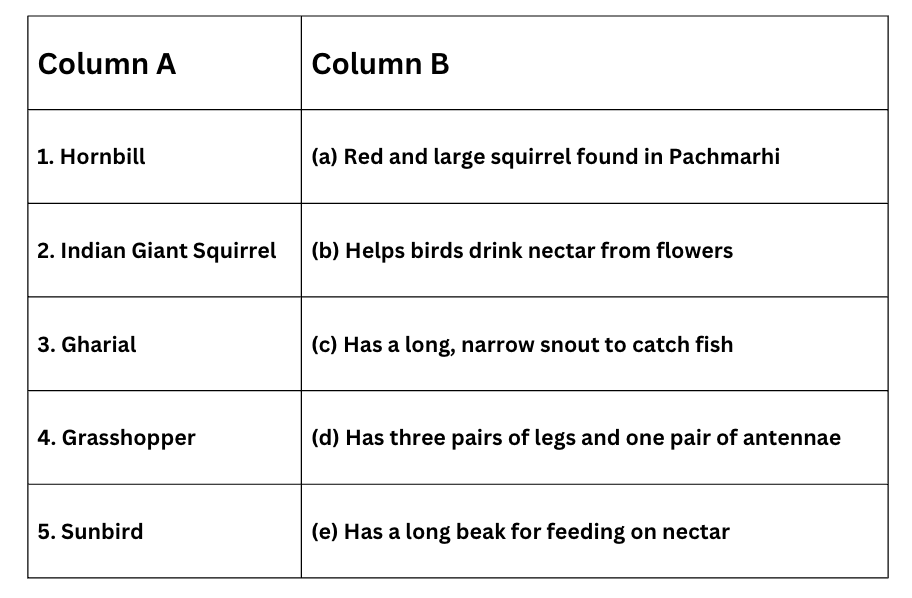
Answer: 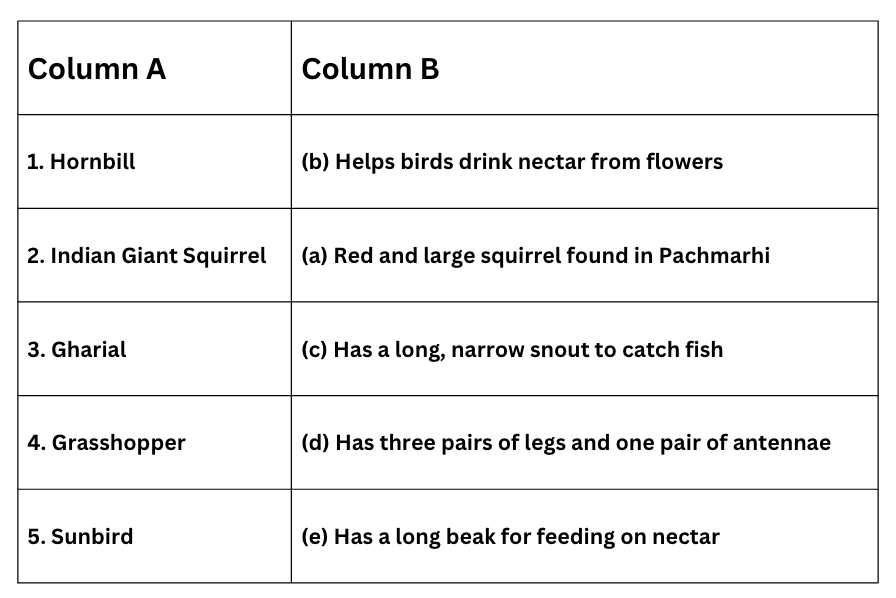 1 - (b) Helps birds drink nectar from flowers
2 - (a) Red and large squirrel found in Pachmarhi
3 - (c) Has a long, narrow snout to catch fish
4 - (d) Has three pairs of legs and one pair of antennae
5 - (e) Has a long beak for feeding on nectar
Explanation:
- Hornbill: Known for its long beak that helps it feed on nectar.
- Indian Giant Squirrel: A large red squirrel found in Pachmarhi.
- Gharial: A crocodile with a long, narrow snout used to catch fish.
- Grasshopper: An insect with three pairs of legs and antennae.
- Sunbird: A bird with a long beak to drink nectar from flowers.
FAQs on Worksheet Solutions: Nature Trail
| 1. What are the main topics covered in the "Nature Trail" worksheet for Class 4? |  |
| 2. How can students best prepare for the "Nature Trail" exam? | |
| 3. What types of vocabulary activities are included in the "Nature Trail" worksheet? | |
| 4. Are there any specific guidelines for completing the fill in the blanks section? | |
| 5. What is the importance of matching activities in the "Nature Trail" worksheet? | |