Worksheet Solutions: Our Sky

Multiple Choice Questions (MCQs)
Q1: What color does the sky appear in the morning?
(a) Blue
(b) Orange and bright
(c) Red
(d) Dark
Ans: (b) Orange and bright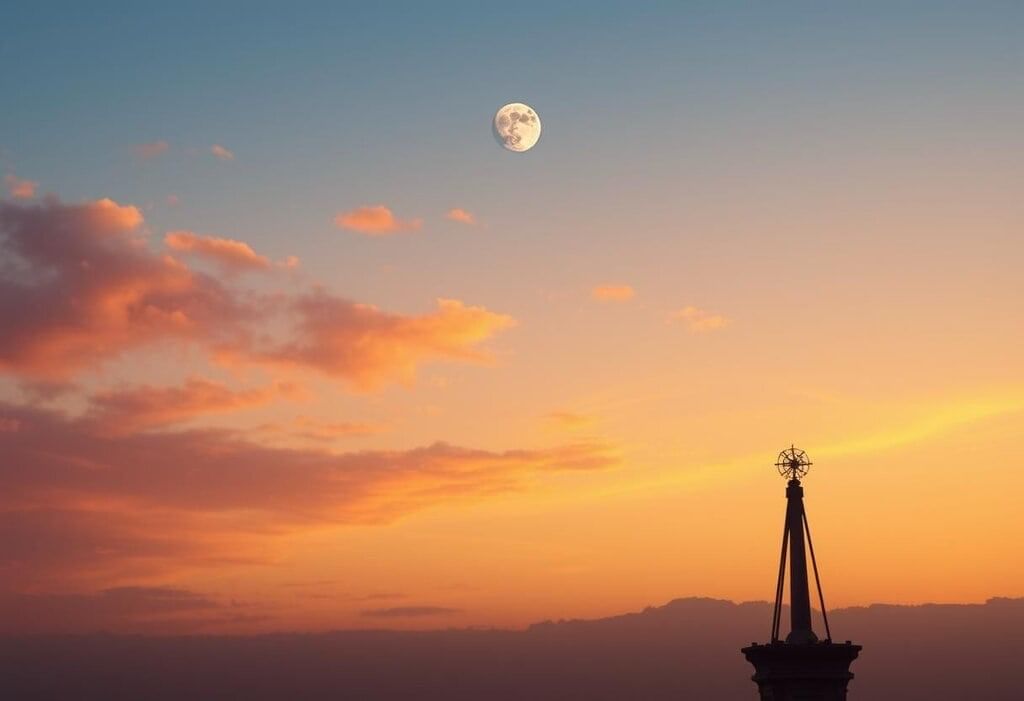
Q2: When the Sun is present in the sky, why are other stars not visible?
(a) They disappear during the day
(b) They are covered by clouds
(c) The Sun is very bright
(d) They move away
Ans: (c) The Sun is very bright
Q3: How are shadows at noon compared to morning and evening?
(a) Long
(b) Very dark
(c) Short
(d) Invisible
Ans: (c) Short
Q4: When is Diwali celebrated?
(a) On the Full Moon
(b) On the New Moon
(c) When the Moon is a crescent
(d) On the first night of the Moon
Ans: (b) On the New Moon
Q5: What did India's Chandrayaan mission aim to explore?
(a) Mars
(b) The Sun
(c) The Moon
(d) Venus
Ans: (c) The Moon
Fill in the Blanks
Q1: The Sun appears to move from ________ to ________ during the day.
Ans: East, West
Q2: Ancient people used the shape of the Moon to keep count of the ________.
Ans: days
Q3: On some nights, the Moon looks like the letter ________.
Ans: C
Q4: The Sun gives us ________ and ________.
Ans: light and heat
Q5: If the object is close to the source of light, the shadow becomes ________.
Ans: bigger
Match the Following
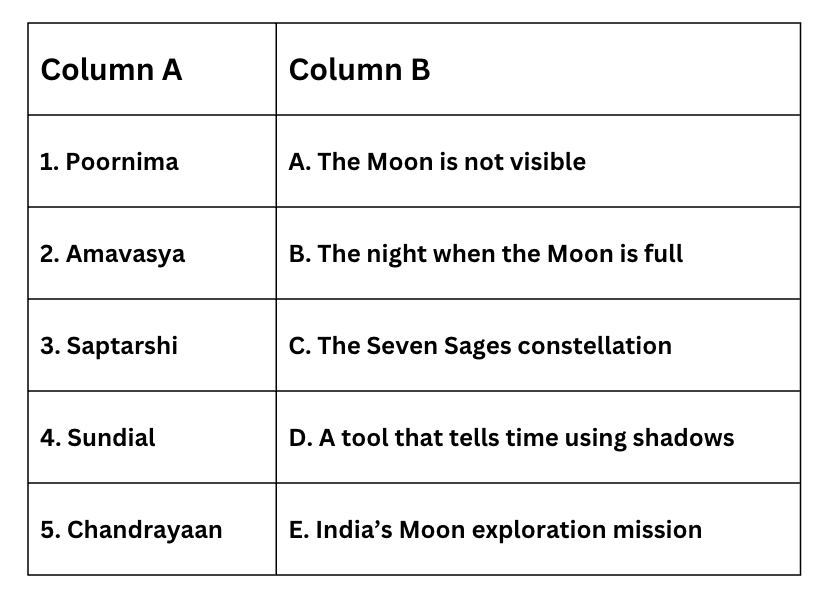
Ans: 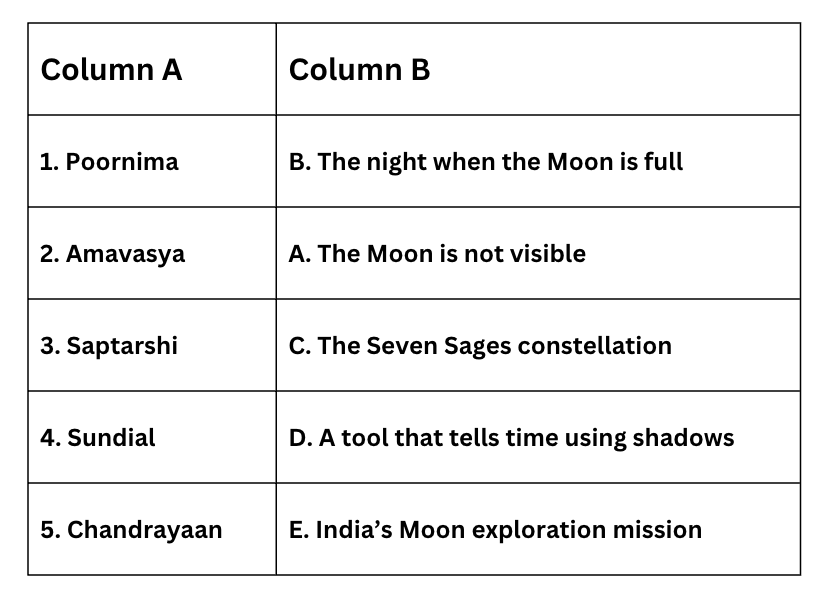
Short Question Answers
Q1: What happens to the sky's color as the day progresses?
Ans: In the morning, the sky is orange and bright. In the afternoon, it is blue and clear. At night, it turns dark with twinkling stars.
Q2: What is the significance of the Full Moon (Poornima) and the New Moon (Amavasya)?
Ans: The Full Moon, or Poornima, is when the Moon appears as a complete circle. The New Moon, or Amavasya, is when the Moon is not visible at all.
Q3: Why do shadows in the morning and evening form in different directions?
Ans: Shadows in the morning and evening form in different directions because the Sun appears to move from East to West. As the position of the Sun changes, the direction of the shadow also changes.
Q4: What is the significance of the Chandrayaan mission?
Ans: Chandrayaan is India's mission to explore the Moon. In 2023, the Vikram Lander successfully landed on the Moon and gathered important data about its surface.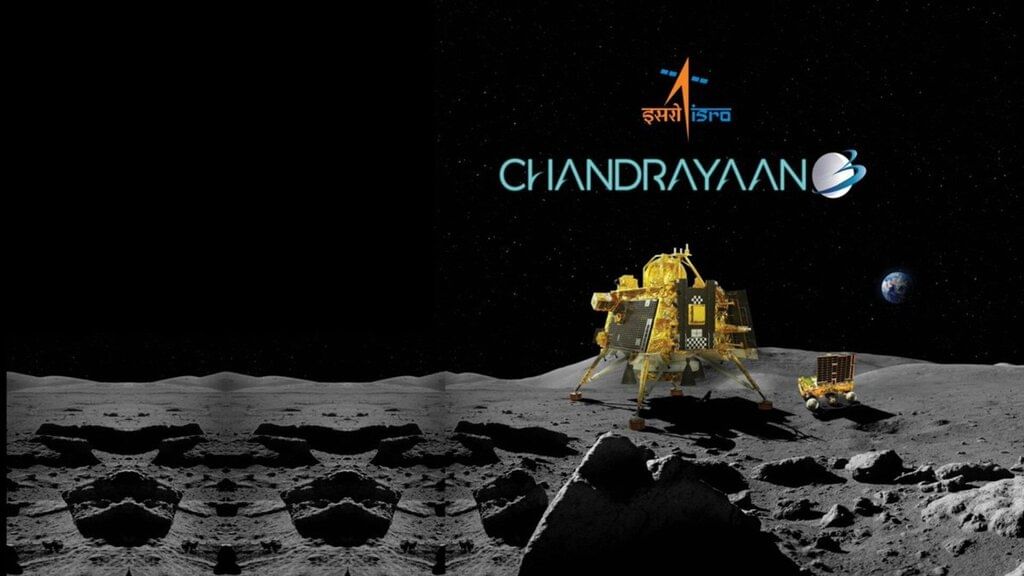
Q5: How does studying the sky help us understand nature?
Ans: Studying the sky helps us track time, understand natural cycles, and observe celestial events like the movement of the Sun, Moon, and stars.
Vocabulary Activity - "Guess the Word"
Q1: A group of stars known as the Seven Sages in Indian astronomy.
Ans: Saptarshi
Q2: The time of the day when the Sun is directly overhead and shadows are the shortest.
Ans: Noon
Q3: The phenomenon where an object blocks light and forms a dark shape.
Ans: Shadow
Q4: The device built by Raja Jai Singh that tells time accurately based on shadow.
Ans: Sundial (Samrat Yantra)
FAQs on Worksheet Solutions: Our Sky
| 1. What is the main theme of "Our Sky Class 4"? |  |
| 2. How does "Our Sky Class 4" incorporate hands-on activities for students? | |
| 3. What age group is "Our Sky Class 4" intended for? | |
| 4. Are there any assessments included in "Our Sky Class 4"? | |
| 5. How can parents support their children while using "Our Sky Class 4"? | |