NCERT Solutions: Ticking Clocks and Turning Calendar


Page No. 175: (Let Us Do)
Q1: Notice the number of days in February in the years 2024 and 2025.
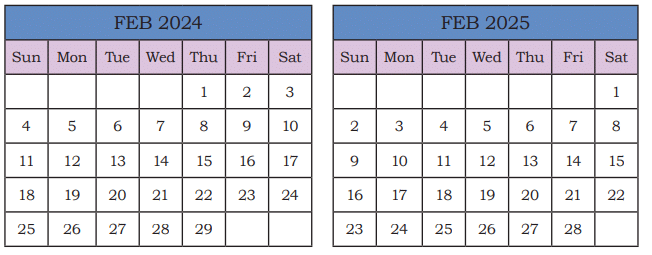
- Number of days in Feb 2024 = _____________
- Number of days in Feb 2025 = _____________
Ans:
- Number of days in Feb 2024 = 29 Days
- Number of days in Feb 2025 = 28 Days
Explanation: 2024 is a leap year, so February has 29 days. 2025 is not a leap year, so February has 28 days. A leap year usually comes every 4 years, which adds one extra day to February.
Page No. 176
Q2: Fill in the blanks with consecutive leap years before and after 2024.
Ans: A leap year occurs every 4 years.
2016, 2020, 2024, 2028, 2032, 2036
Explanation: These years are four years apart. Each of them is divisible by 4, so they are leap years.
Q3: We know that most years have 365 days. How many days would a leap year have?
Ans: Leap year: 365 + 1 = 366 days.
Explanation: A leap year has one extra day added in February, so the total becomes 366 days.
Q4: Write the names of the months when you celebrate your favourite festivals.
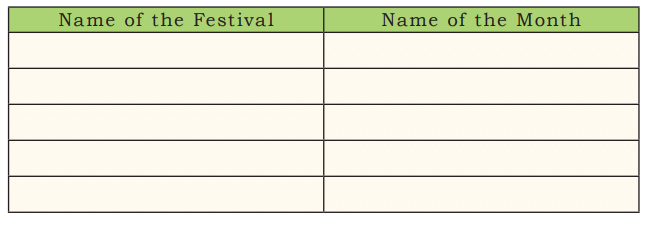
Ans: Example festivals:
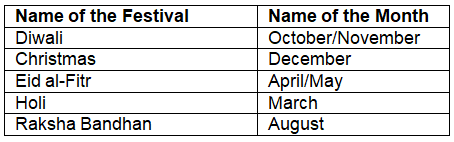
Explanation: Write the month name beside each festival you celebrate. For example, Diwali - October/November; Eid - depends on the lunar calendar.
Q5: Answer the following questions by writing the appropriate days of the week:
(a) Today: ___________
(b) Yesterday: ___________
(c) Tomorrow: ___________
(d) Day after tomorrow: ___________
(e) Day before yesterday: ___________
Ans: Assume today is Friday, April 25, 2025:
(a) Today: Friday
(b) Yesterday: Thursday
(c) Tomorrow: Saturday
(d) Day after tomorrow: Sunday
(e) Day before yesterday: Wednesday
Explanation: Days repeat in a 7-day cycle. So moving one day back from Friday gives Thursday; one day forward gives Saturday; two days forward gives Sunday; two days back gives Wednesday.
Q6: July 1 is a Monday. Write the dates for the next two Mondays.
Ans: July 1: Monday.
Each day of a week comes exactly 7 days after the previous occurrence of the same weekday.
So, the dates for the next two Mondays will be
Next Monday: July 1 + 7 = July 8.
Following Monday: July 8 + 7 = July 15.
Explanation: Add 7 days each time to get the next same weekday because a week has 7 days.
Q7: Laali was born on 04/07/2014, and Chotu was born on 04/12/2019. Who is older among the two and by how much?
Ans: Laali: Born 04/07/2014.
Chotu: Born 04/12/2019.
Compare: 2014 < 2019, Laali is older.
Difference: From 04/07/2014 to 04/12/2019.
Years: 2019 - 2014 = 5 years.
Months: July to December = 5 months.
Days: Same day (4th), so 0 days.
Laali is older by 5 years, 5 months.
Explanation (stepwise):
1. Compare years: 2014 and 2019 → Laali was born earlier, so she is older.
2. From 04/07/2014 to 04/07/2019 = 5 years.
3. From 04/07/2019 to 04/12/2019 = 5 months.
4. Day number is the same (4th), so no extra days. Total = 5 years, 5 months older.
(a) Laali will turn 5 years old on ______________.
Ans: Born: 04/07/2014.
5 years old: 04/07/2014 + 5 years = 04/07/2019.
Explanation: Add 5 years to the birth date to get the 5th birthday.
(b) Chotu's 10th birthday will be celebrated on
Ans: Born: 04/12/2019.
10th birthday: 04/12/2019 + 10 years = 04/12/2029.
Explanation: Add 10 years to Chotu's birth date to get the date of the 10th birthday.
Q8: Check the manufacturing and expiry dates on the wrapper of any biscuit packet.
(a) How old is the packet of biscuits?
Ans: Example: Manufacturing: 01/01/2025, Today: 25/04/2025.
Duration: From 01/01/2025 to 25/04/2025.
- Months: January to April = 3 months.
- Days: 31 (Jan) + 28 (Feb) + 31 (Mar) + 25 (Apr) - 1 = 114 days ≈ 3 months, 24 days.
- 3 months, 24 days.
(b) How many more days are the biscuits safe to eat?
Ans: Example: Expiry: 01/01/2026, Today: 25/04/2025.
Duration: From 25/04/2025 to 01/01/2026.
- Months: April 2025 to January 2026 = 8 months.
- Days: 5 (Apr) + 31 (May) + 30 (Jun) + 31 (Jul) + 31 (Aug) + 30 (Sep) + 31 (Oct) + 30 (Nov) + 31 (Dec) = 250 days ≈ 8 months, 7 days.
- 8 months, 7 days (250 days).
Q9: Notice the day on which July 15 falls in your calendar. Now, find out what day August 15 is? September 15? October 15? What pattern do you notice? Share in grade.
Ans: Assume July 15, 2024, is a Monday (calendar check).
August 15: 31 days later (July 15 to August 15).
31 ÷ 7 = 4 weeks, 3 days. Monday + 3 = Thursday.
September 15: 31 days later (August 15 to September 15).
Thursday + 3 = Sunday.
October 15: 30 days later (September 15 to October 15).
30 ÷ 7 = 4 weeks, 2 days. Sunday + 2 = Tuesday.
Pattern: Days shift by 2-3 days per month (30-31 days).
Explanation: Most months have either 30 or 31 days. When you move forward by 31 days, the weekday moves ahead by 3 days (because 31 = 4×7 + 3). When you move forward by 30 days, the weekday moves ahead by 2 days (30 = 4×7 + 2). This is the pattern you will notice each month.
Now choose a date and look up the day on which it falls. Challenge your friends to guess which day the same date will fall on in the following month.
Ans: Do it Yourself!
Page No. 177 (Let Us Explore)
Q1: Find out when the year begins in each of these calendars.
Ans:
- Hindu Calendar - Starts with Chaitra (March/April)
- Islamic Calendar - Starts with Muharram (Moves each year; in 2025, it starts in July/August)
- Sikh Calendar (Nanakshahi) - Starts with Chet (March/April)
Explanation: Different calendars begin their year in different months. The Hindu and Sikh calendars follow solar or lunisolar systems and usually begin around March/April, while the Islamic calendar is lunar and shifts each year.
Q2: Check how the names of the months in these calendars correspond to the months in the English calendar.
Ans:
Hindu Calendar:
- Chaitra ≈ March/April
- Vaishakha ≈ April/May
- And so on...
Islamic Calendar:
- Muharram, Safar, etc.
- These months move about 10 days earlier every year because they follow the moon.
Sikh Calendar:
- Chet ≈ March/April
- Vaisakh ≈ April/May
- And so on...
Q3: Identify the months from the Hindu/Islamic/Sikh or any other calendar in which some of the important festivals of the community fall.
Ans: Hindu Festivals:
- Diwali - Kartika (October/November)
- Holi - Phalguna (February/March)
Islamic Festivals:
- Eid al-Fitr - Shawwal (April/May in 2025)
- Eid al-Adha - Dhu al-Hijjah (June/July in 2025)
Sikh Festivals:
- Vaisakhi - Vaisakh (April)
- Guru Nanak Jayanti - Kartik (November)
Q4: Identify the dates of the new moon and full moon in your community's calendar every month. Do you notice any pattern?
Ans: In the Hindu calendar,
- Purnima means full moon
- Amavasya means new moon
- These come about 15 days apart
In the Islamic calendar,
- The new moon marks the start of a new month
- The lunar cycle (from new moon to next new moon) is about 29.5 days, so there is a clear pattern.
Explanation: The full moon and new moon fall nearly halfway apart (about 15 days). The lunar month is shorter than the solar month, which is why lunar months move relative to the English calendar.
Q5: How are the full moon or new moon days named in your community's calendar?
Ans: Hindu Calendar:
- Purnima - Full Moon
- Amavasya - New Moon
Islamic Calendar:
The new moon starts each month (e.g., 1st Muharram)
Sikh Calendar:
- The new month begins on Sangrand
- Special days like full moons are observed during religious occasions
Page No. 178
Look at the picture below. It shows the time spent on different activities by a doctor. Write the number of hours spent on each activity in the space provided. Then, find the total number of hours between 6 o'clock in the morning and 6 o'clock in the evening and 6 o'clock in the morning of the next day.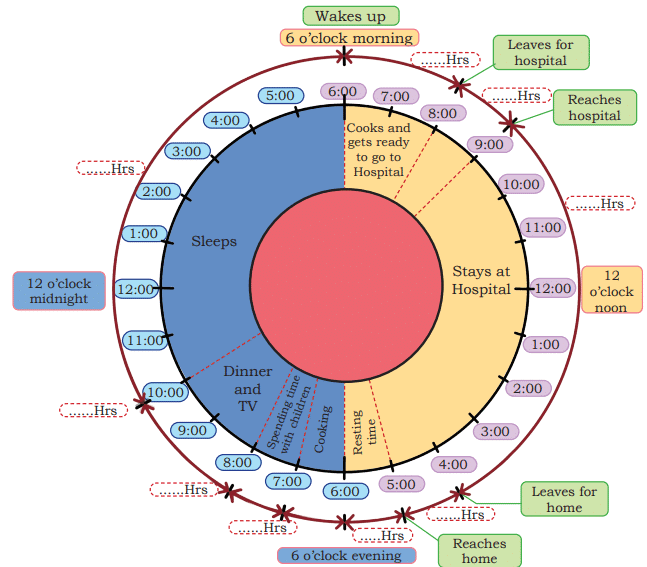
The total number of hours is ________ .
Ans: 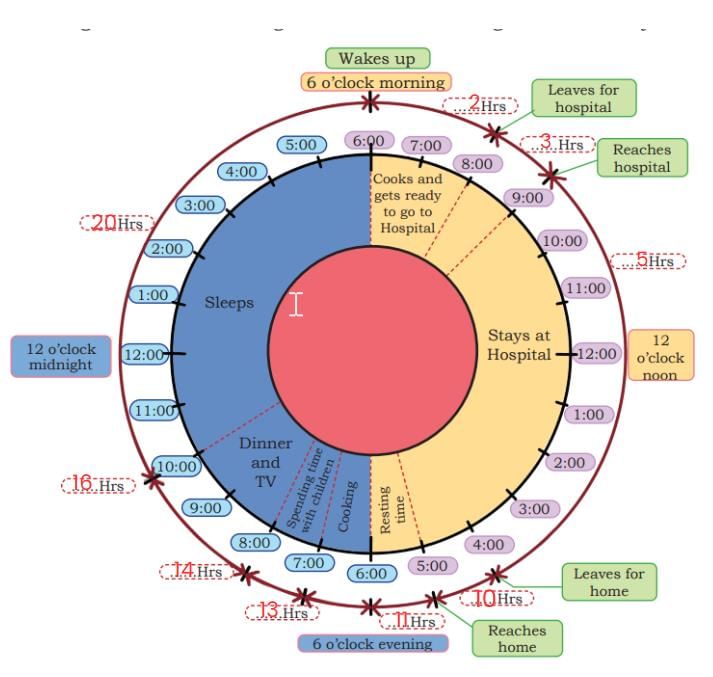
- Total: 6 AM to 6 PM = 12 hours.
- Full day: 6 AM to next 6 AM = 24 hours.
Page No. 180
Fill in the blanks by writing the time in the appropriate format.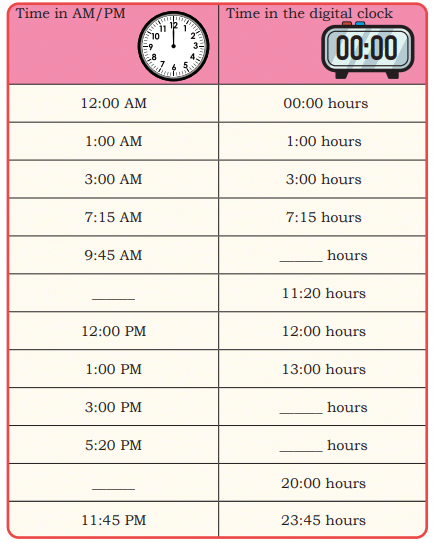
Ans: 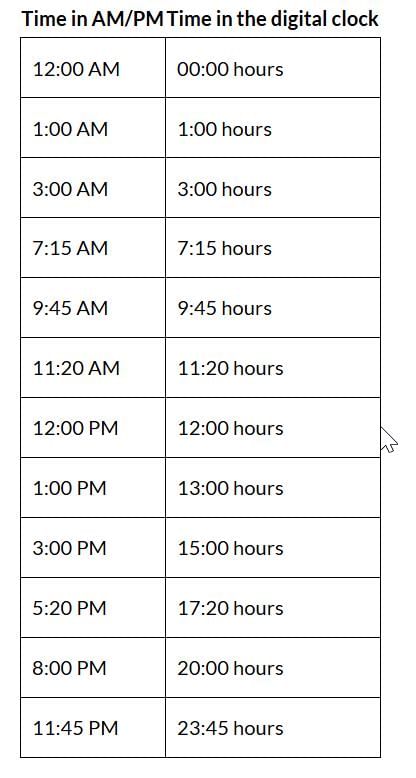
Page No. 181
Raghav leaves home at 8:20 AM and returns at 8:35 AM. How much time has he taken?
Ans: From 8:20 AM to 8:35 AM.
Minutes: 35 - 20 = 15 minutes.
Let Us Do
Q1: Show the appropriate times on the clock as per instructions.(a) Raghav started doing his homework at 10:20 AM. He took 25 minutes to finish it. Show the time that he finished his homework.

Ans: 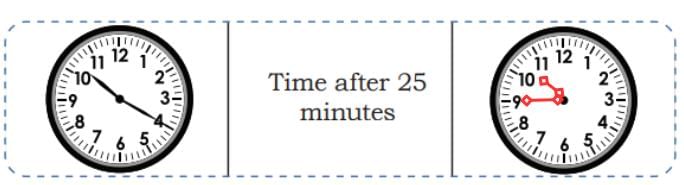
- Start: 10:20 AM.
- Add 25 minutes: 10:20 + 20 = 10:40, +5 = 10:45 AM.
- Ans: 10:45 AM.
(b) Muneera starts reading a story at 4:15 PM. She finishes reading it in 45 minutes. Show the time that she finished reading the story.

Ans: 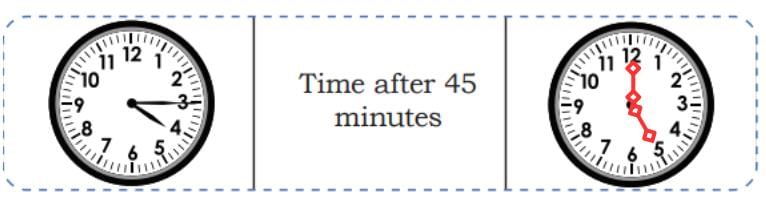
- Start: 4:15 PM.
- Add 45 minutes: 4:15 + 45 = 4:60 = 5:00 PM.
- Ans: 5:00 PM.
(c) Akira leaves for school at 8:00 AM. She reaches school in 15 minutes.
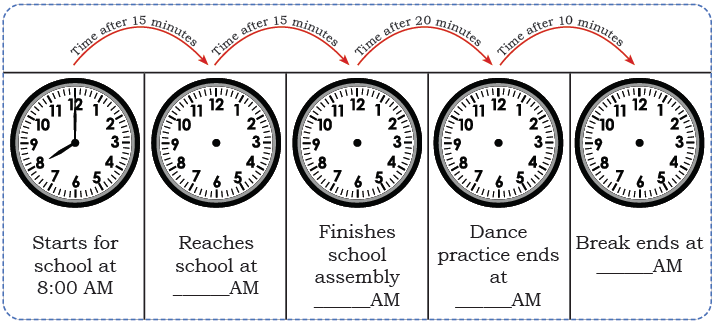
Ans:
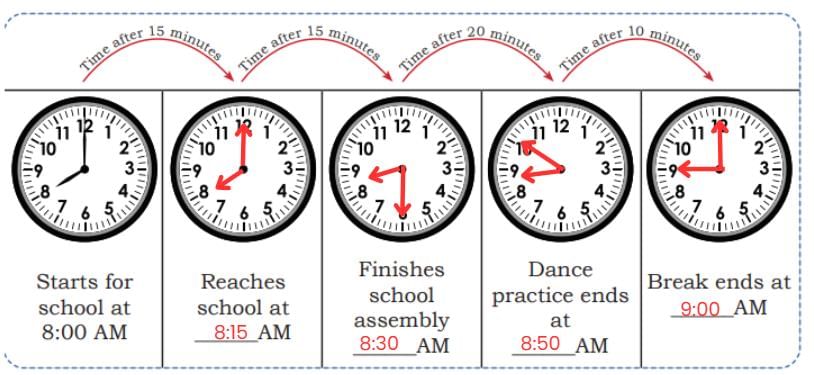
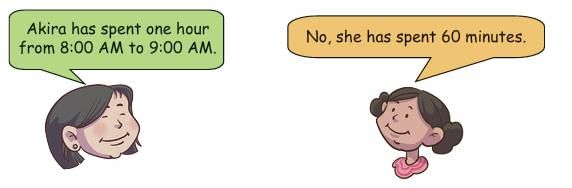
(d) Who do you think is correct? Is there any relation between 1 hour and 60 minutes?
Ans: Both are right!
Akira says she spent 1 hour (from 8:00 to 9:00).
The other person says 60 minutes.
As,
1 hour = 60 minutes
Observe the shaded portions
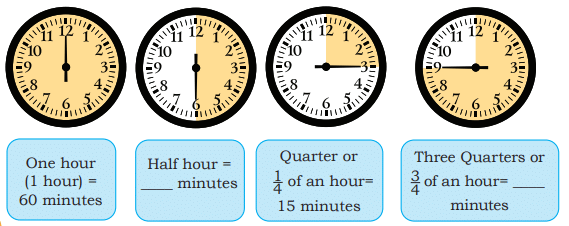
Ans: 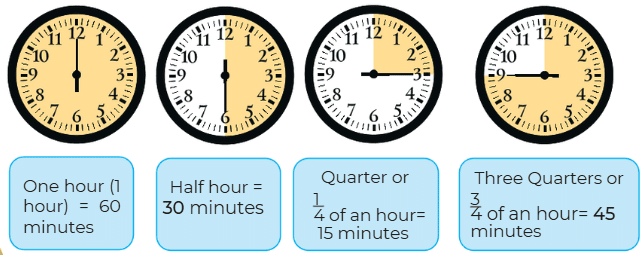
Page No. 183
Q: Find out how much time you take to(a) boil milk
Ans: Example: Boiling milk takes ~10 minutes.
(b) Fill water from the tap in a bucket
Ans: Example: Filling a bucket takes ~10 minutes.
Q: What activities can you do in 5 minutes?
Ans: Examples: Brush teeth, tie shoes, eat a snack, read a page.
Let Us Check
Three friends read the time from a clock. Who is right? Discuss the error and explain how one reads the clock correctly.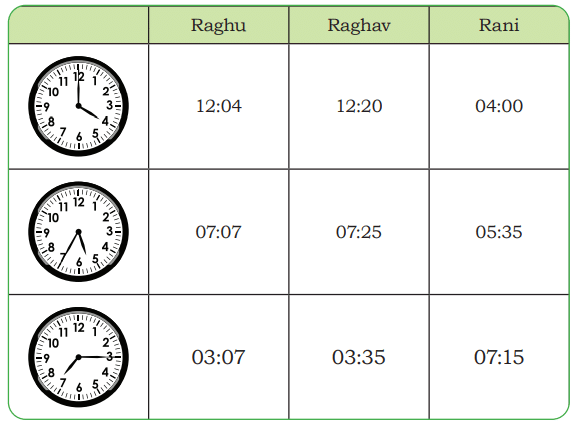
Ans: First Row: Big Hand at 12, Small Hand at 4
Correct Time: 04:00
Rani is correct.
Second Row: Big Hand at 7, Small Hand between 5 and 6
Correct Time: 05:35
Rani is correct.
Third Row: Big Hand at 3, Small Hand at 7
Correct Time: 07:15
Rani is correct.
FAQs on NCERT Solutions: Ticking Clocks and Turning Calendar
| 1. How do I read an analog clock correctly for Class 4 Maths? |  |
| 2. What's the difference between AM and PM time, and why does it matter? | |
| 3. How do I figure out how many days are in each month for the calendar? | |
| 4. What is the relationship between hours, minutes, and seconds on a clock? | |
| 5. How do I calculate the number of days between two dates using the calendar? | |