NCERT Solutions: Climates of India

The Big Questions (Page 45)
Q1: What makes India's climate so diverse?
Ans: India's climate is diverse because of several geographical and environmental factors. These factors work together to produce different weather and climatic conditions in different parts of the country:
- Latitude - Places nearer the equator receive more direct sunlight and are therefore warmer. For example, Kanyakumari is warmer than places in the far north such as Srinagar.
- Altitude - Higher places are usually cooler. Hill stations such as Shimla and Ooty have lower temperatures because air becomes thinner and cooler with height.
- Near the sea - Coastal areas, for example Mumbai, have milder temperatures because the sea heats and cools slowly and so reduces extremes of temperature.
- Winds - Wind direction and type affect temperature and rainfall. Winds from dry regions like deserts can cause heat waves, while moist monsoon winds bring heavy rainfall.
- Mountain barriers - The Himalayas block cold winds from Central Asia, keeping most of India warmer in winter. Mountains also cause rainfall when moist air rises and cools (orographic rainfall).
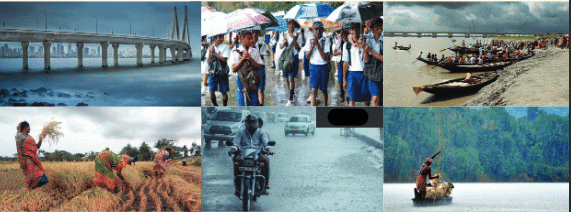 Climate of India
Q2: What are the monsoons? How are they formed?
Ans: Monsoons are seasonal winds that bring large amounts of rain and are very important for life in India. The word comes from the Arabic "mausim", meaning "season."
- Summer Monsoon: In summer the land heats up faster than the sea and a low-pressure area develops over the northern plains and the Tibetan Plateau. Moist winds from the Indian Ocean blow towards this low-pressure area. These south-west winds carry moisture and bring the heavy rains known as the south-west monsoon.
- Winter Monsoon: In winter the land cools down faster than the sea and a high-pressure area forms over the land. Winds blow from land to sea (north-east winds). These north-east monsoon winds are generally dry but bring some rain to parts of eastern and southern India.
- How rain forms: As the moist winds reach the land, they rise over hills and mountains, cool down, and the moisture condenses into clouds and rain. This is why regions like Kerala and the windward side of the Western Ghats get heavy rainfall.
Q3: What is the effect of climate on economy, culture, and society?
Ans:
- Economy: Agriculture depends on regular monsoon rains. If the monsoon fails, crops can fail, causing food shortages, higher food prices, and unemployment. Water shortages can also affect industries that need water.
- Culture: Many festivals and customs are linked to seasons and farming cycles. For example, festivals such as Pongal, Onam, Baisakhi, and Chhath Puja celebrate planting or harvest seasons and thank nature for good crops.
- Society: Climate affects daily life - food habits, clothing and housing styles change with seasons. It also affects health (for example, more water-borne diseases during floods) and requires planning for roads, drainage and other infrastructure.
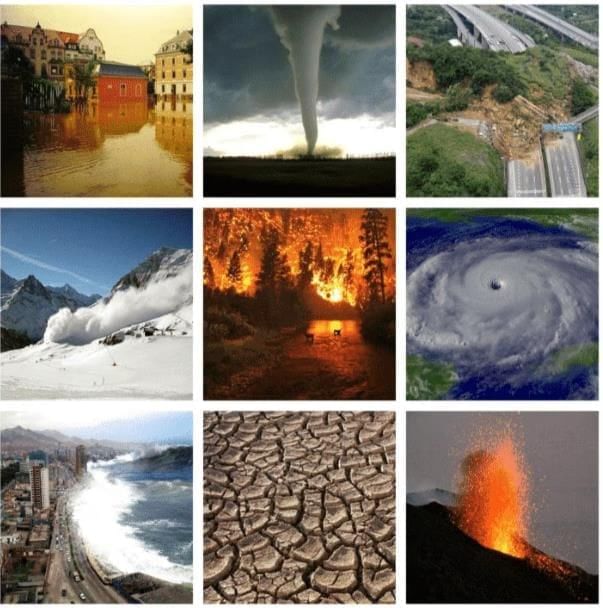 Natural Disasters
Q4: How can understanding the climate help us to prepare for natural disasters?
Ans: Understanding climate patterns helps people and governments prepare and reduce damage from natural disasters:
- Weather and climate data help predict events such as cyclones, floods and droughts, giving time to act.
- Agencies like the India Meteorological Department (IMD) issue warnings in advance so people can be alerted and evacuated if needed.
- Organisations such as the National Disaster Response Force (NDRF) plan rescues and relief work using these forecasts.
- Advance planning reduces loss of life, damage to homes and crops, and allows better management of water and food supplies during crises.
Q5: What is climate change? What are its consequences?
Ans:
- What it is: Climate change means long-term changes in temperature, rainfall and weather patterns over many years. Human activities are a major cause of recent climate change.
- Causes: Burning fossil fuels (like coal, oil and gas) and cutting down forests release greenhouse gases into the atmosphere. These gases trap heat and cause the planet to warm up.
- Consequences: Effects include more extreme weather (storms, heat waves, heavy rain), shorter winters in some areas, damage to crops, rising sea levels and harm to small industries and livelihoods.
- What can be done: Use more renewable energy (like solar and wind), plant trees, save energy, reduce pollution and change farming and water use to cope with changing rainfall patterns.
Back Questions (65 & 66)
Q1: Match the climatic factors with their effects:
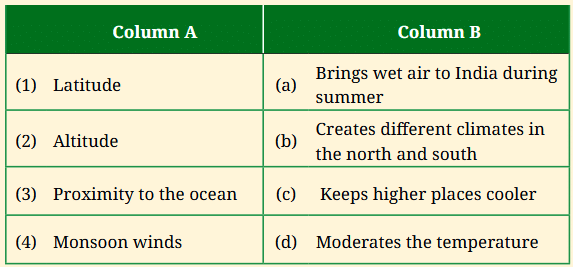
Ans:
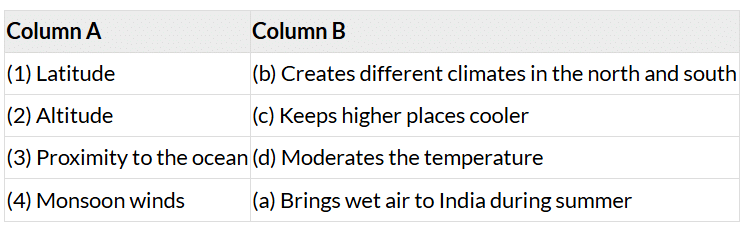
1. Latitude (b) Creates different climates in the north and south: Latitude decides how much sunlight a place gets. Regions near the Equator are warmer; for example, South India is generally warmer than North India.
2. Altitude (c) Keeps higher places cooler: At higher heights the air is thinner and colder. Hill towns such as Shimla and Darjeeling are cooler than the plains because of their high altitude.
3. Proximity to the ocean (d) Moderates the temperature: The sea warms and cools slowly, so coastal places like Mumbai have less change in temperature between seasons. Inland places such as Nagpur have hotter summers and colder winters.
4. Monsoon winds (a) Bring wet air to India during summer: Monsoon winds carry moisture from the ocean and cause heavy seasonal rainfall that is vital for farming in regions such as Kerala and Maharashtra.
Q2: Answer the following questions:
a) What is the difference between weather and climate?
Ans:
Weather describes the atmosphere at a particular time and place. It can change from hour to hour or day to day - for example, it may be sunny in the morning and rainy in the afternoon.
Climate is the typical pattern of weather over a long time (many years) for a region. Climate tells us what the weather is usually like in each season, such as hot summers and cool winters.
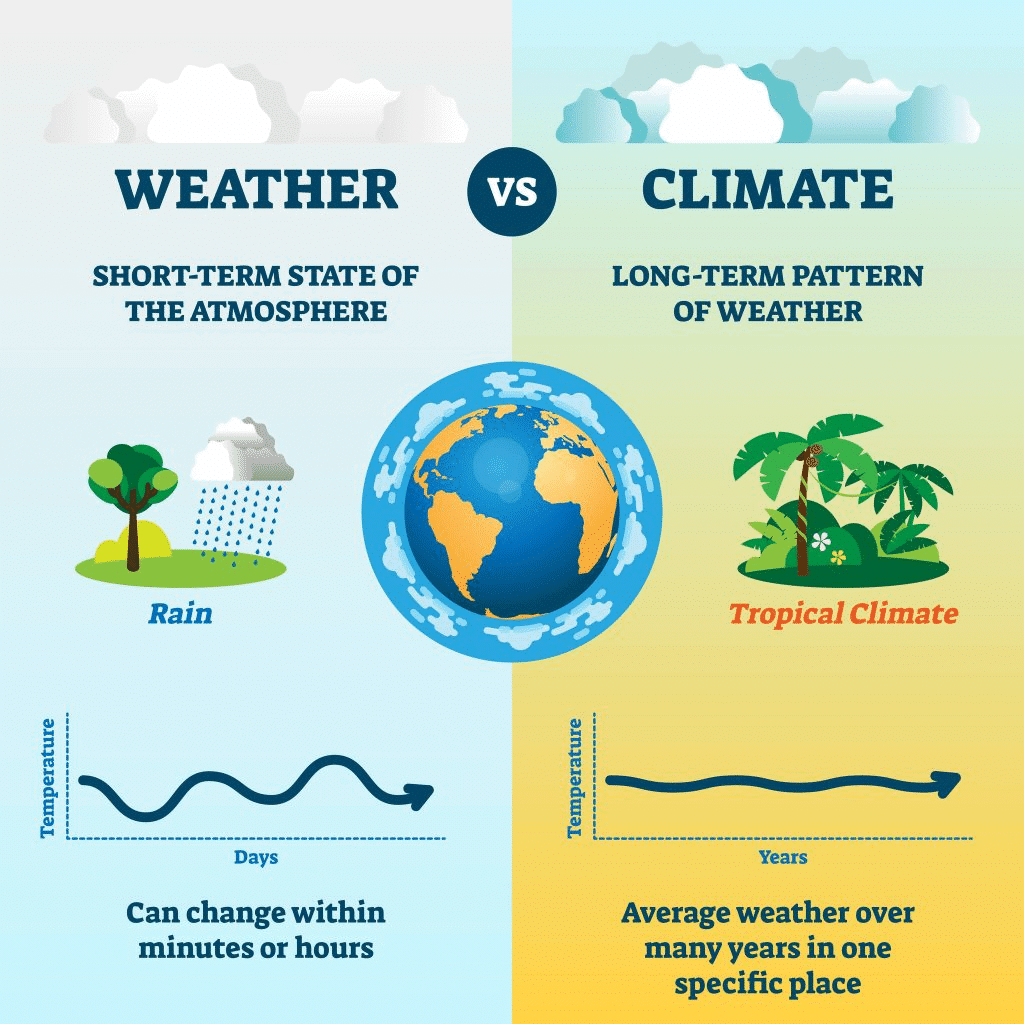 Difference between Weather and Climate
b) Why do places near the ocean have milder temperatures than places far away from it?
Ans: Coastal areas have milder temperatures because water heats up and cools down more slowly than land. This means that in summer the sea keeps coastal areas cooler, and in winter it keeps them warmer. For example, Mumbai (near the sea) has cooler summers than Nagpur (inland).
c) What role do monsoon winds play in affecting India's climate?
Ans: Monsoon winds bring heavy rainfall between June and September. These winds blow from the southwest and carry moisture from the Indian Ocean. When they meet land or rise over mountains such as the Western Ghats, the air cools and the moisture falls as rain. This seasonal rain is essential for crops like rice and shapes India's climate patterns.
d) Why is Chennai warm or hot throughout the year, while Leh is cold?
Ans:
- Chennai is near the sea and lies in the tropical region. The sea keeps temperatures high and the air is humid, so Chennai stays warm or hot for most of the year.
- Leh is at a very high altitude in the Himalayas. Higher altitude brings lower temperature, so Leh has an alpine climate with cold conditions even during summer and very cold winters.
Q3: Look at a map of India given at the end of this book. Identify the climate for these cities - Leh, Chennai, Delhi, Panaji, and Jaipur.
- Is the place near the sea, near the mountains, or in the desert?
- How do these factors affect the climate there?
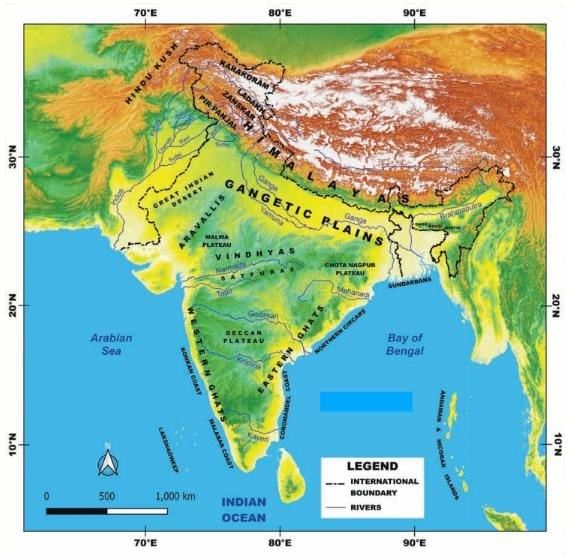
Ans: Climate type for each city and the main geographical reason:
- Leh: Cold alpine or cold desert climate. It is near the mountains (Himalayas) and very high in altitude, so temperatures are low and winters are severe.
- Chennai: Tropical maritime climate. It is near the sea (Bay of Bengal) and remains hot and humid most of the year, with rainfall mainly from the north-east monsoon.
- Delhi: Subtropical continental climate. It is inland between plains and has very hot summers and cool winters; rainfall mainly comes from the summer monsoon.
- Panaji: Tropical monsoon coastal climate. It is on the west coast and gets heavy rains from the south-west monsoon; temperatures are moderated by the sea.
- Jaipur: Hot semi-arid climate. It lies near the desert region (Rajasthan) and has hot summers, a short rainy season and cooler winters.
Q4: Draw the monsoon cycle in summers and winters on a map of India.
Ans:
- Summer Monsoon (June to September): Winds blow from the southwest from the Indian Ocean towards the land, bringing moisture and heavy rain. Rains start at the southern tip (Kerala) in early June and move northwards, covering most of the country by mid-July.
- Winter Monsoon (October to February): Winds reverse and blow from land to sea (north-east winds). These bring mostly dry weather to northern India but can bring some rainfall to parts of east and south India, especially where the winds pick up moisture from the Bay of Bengal.
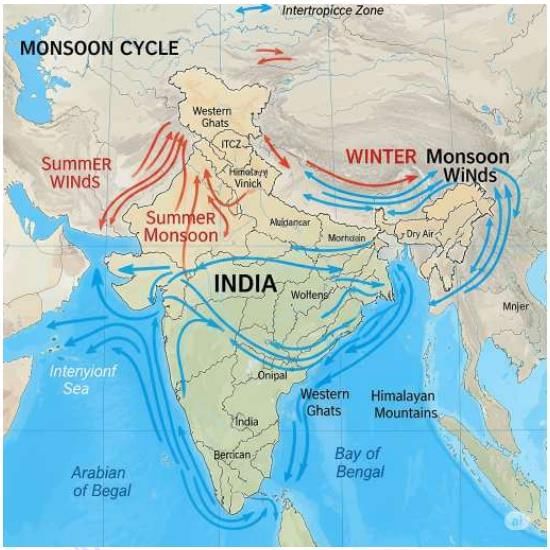
Q5: Make a colourful poster showing festivals in India linked to farming and weather (e.g., Baisakhi, Onam).
Ans:
Instructions for students:
Create a poster with images or drawings of festivals such as:
- Baisakhi - the harvest festival of wheat in Punjab.
- Onam - rice harvest festival in Kerala.
- Pongal - harvest festival in Tamil Nadu.
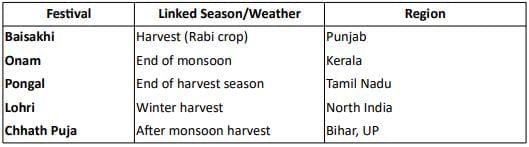
Include images of farmers, crops, and celebrations such as dances and traditional food associated with these festivals.
Here is a sample Poster:
 Seasons influencing festivals
Q6: Imagine you are a farmer in India. Write a short diary entry about how you would prepare for the rainy season.
Ans:
Diary Entry: "Today I am preparing for the rainy season. I cleaned and levelled my fields and checked the irrigation channels. I sharpened my tools and stored seeds in a dry place. I repaired the bunds to hold rainwater and made sure the pump is working. When the monsoon starts, I will sow rice in the low-lying fields. I hope the rains come on time so the crops grow well and I can have a good harvest."
Q7: Identify a natural disaster (e.g., cyclone, flood, landslide, or forest fire) and write a short essay that includes the causes and impacts. Suggest actions that individuals, communities, and the government can take to reduce the impact.
Ans:
Essay on Cyclones:
Causes: Cyclones form when a low-pressure area develops over warm ocean water. Warm air rises and the surrounding air rushes in, picking up moisture. With enough heat and a weak upper-level wind, the system can strengthen into a cyclone with strong winds and heavy rain.
Impacts:
- Loss of life and injury when buildings and trees fall.
- Destruction of crops and farmland due to flooding and salt water intrusion.
- Damage to infrastructure such as roads, bridges, electricity lines and houses.
- Soil erosion and destruction of natural habitats, harming plants and animals.
Actions to Reduce the Impact:
- Individuals: Follow weather warnings, keep an emergency kit (food, water, medicines), and evacuate early when asked by authorities.
- Communities: Develop local shelters, make evacuation plans, build homes to safer standards and clear drains so water can flow away quickly.
- Government: Improve early warning systems and communication, build cyclone-resistant infrastructure, maintain mangroves and coastal forests which act as natural barriers, train disaster response teams, and run regular preparedness drills.
These actions together - by individuals, communities and the government - help reduce loss of life and damage from cyclones and other natural disasters.
FAQs on NCERT Solutions: Climates of India
| 1. What are the different types of climate zones found across India? |  |
| 2. Why does the Indian monsoon bring most of the rainfall between June and September? | |
| 3. How does the Western Ghats receive more rainfall compared to the Deccan Plateau? | |
| 4. What is the difference between the winter and summer seasons in North India's climate? | |
| 5. How do coastal areas of India maintain a more moderate climate compared to inland regions? | |