Back Questions (Page 207 & 208)
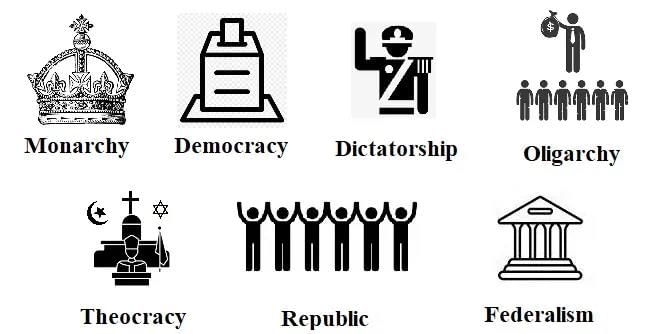
Q1: Write names of the various types of government that you have learnt in the chapter.
Ans: The types of government discussed in the chapter are:
Democracy
Monarchy
Theocracy
Dictatorship
Oligarchy
Q2: Which type of Government does India have? And why is that called that type?
Ans:
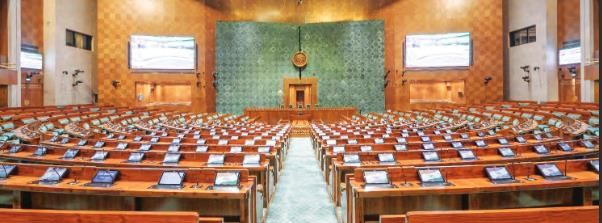
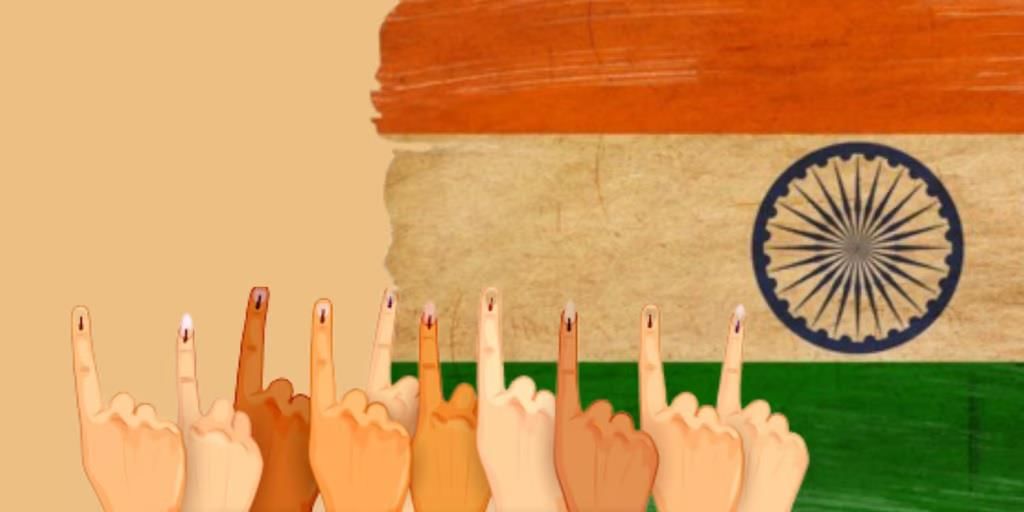
- India has a Democratic Government. It is called a democracy because the people have the power to choose their representatives through elections.
- These representatives make laws and govern on behalf of citizens.
- Decision-making power ultimately rests with the people.
 Democracy
Ans: India has a democratic government because:
1. People elect their representatives to form the government
2. These representatives make laws and govern on behalf of citizens
3. Decision-making power ultimately rests with the people
Q4: Do you think democratic government is better than other forms of government? Why?
Ans: Democracy is considered better because:
- People choose their representatives.
- Everyone enjoys equality and freedom.
- Citizens have rights, including freedom of expression.
- The government is accountable and can be changed by elections.
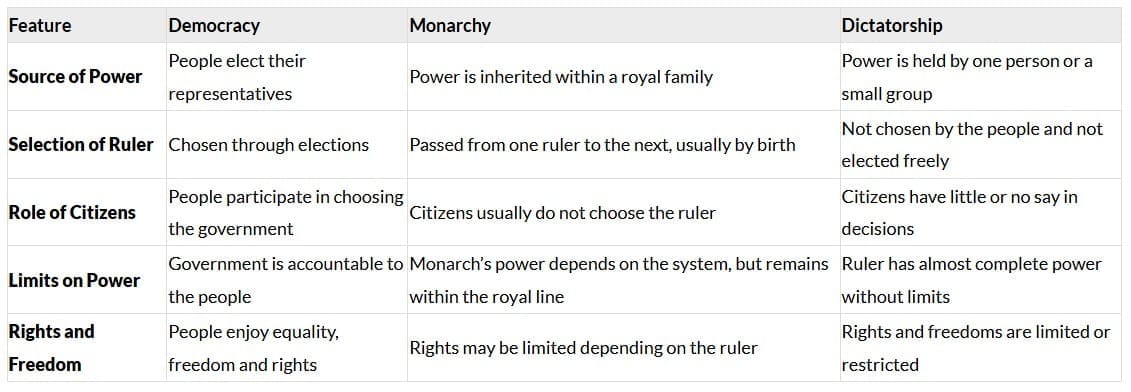
Other systems concentrate power in one person or a small group, limiting equality and people's role in decisions.
Q5: These are some practices in a few different countries. Can you match the practice with the type of government?
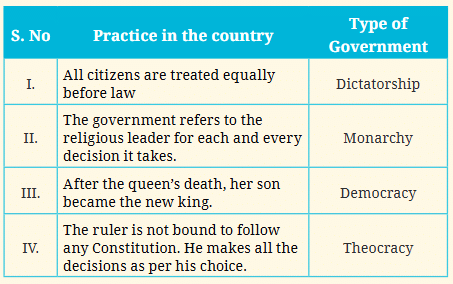
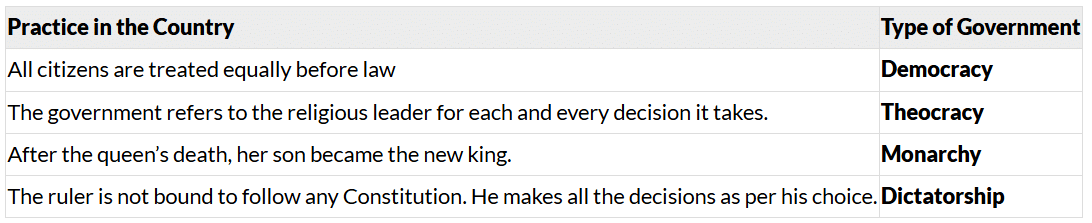
Explanation:
- Democracy: In a democracy, all citizens are treated equally before the law. This means everyone has the same rights and responsibilities and is subject to the same rules, which helps protect individual freedoms.
- Theocracy: In a theocracy, the government is guided by religious leaders and decisions are often made according to religious laws. Religious institutions play a central role in governing.
- Monarchy: A monarchy is a form of government where the ruler's position is inherited, usually within a royal family. When a monarch dies, the next in line from the royal family becomes the new ruler.
- Dictatorship: In a dictatorship, one person or a small group holds most or all of the power and makes decisions without the input of the people or representative bodies.
Q6: Below is a list of countries. Find out the types of government these countries have:
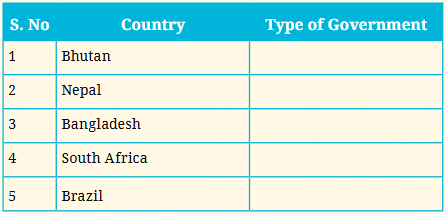
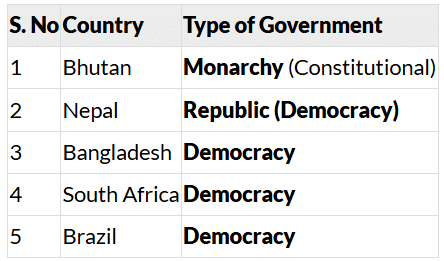
Explanation:
- Bhutan (Monarchy - Constitutional): Bhutan has a constitutional monarchy, which means it has a king but the king's powers are limited by a constitution and democratic institutions share power.
- Nepal (Republic - Democracy): Nepal is a republic and follows democratic rules. It does not have a king and leaders are chosen through elections.
- Bangladesh (Democracy): Bangladesh is a democratic country where citizens vote to elect their representatives, and the government is responsible to the people.
- South Africa (Democracy): South Africa has a democratic system with regular elections; the government is formed by elected representatives who make laws on behalf of the people.
- Brazil (Democracy): Brazil is a representative democracy where people elect leaders at different levels and those leaders are accountable to voters.
Q7: What are possible hurdles in a democracy in achieving its values and ideals? How can they be overcome?
Ans: Democracy aims to protect equality, freedom and the well-being of all. However, it faces several hurdles that can prevent it from achieving these ideals.
- Some major challenges include corruption, large gaps between the rich and the poor, and situations where a small number of powerful people influence important decisions.
- Democracy can also be weakened when information is controlled or manipulated, or when the independence of the judiciary is reduced.
To overcome these challenges, citizens must remain alert and aware of how the government works. People need to participate actively and question unfair practices so that democratic values remain strong and are upheld in everyday life.
Q8: Democracy is different from monarchy and dictatorship. Explain.
Ans: