NCERT Solutions: The Constitution of India — An Introduction

The Big Questions (Page 209)
Q1: What is a constitution, and why do we need one?
Ans: A constitution is a written, formal document that sets out the basic principles, laws and structure of a country's government. It explains how the legislature, executive and judiciary should work, and it states the rights and duties of citizens.
We need a constitution because:
- It provides a common framework to govern the country, so that all laws and government actions follow agreed rules. This brings predictability and order to public life.
- It ensures fairness, accountability and justice by balancing powers among different branches of government and preventing misuse of power. Clear rules limit what each organ can do.
- It lays down guiding values such as equality, freedom and justice that help shape laws and policies. These values become a reference for lawmakers and judges.
- Like a rule book in a game, it helps everyone follow agreed rules, maintaining order and harmony in a diverse nation. It tells citizens and rulers what is allowed and what is not.
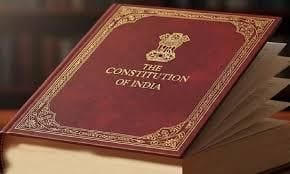 Indian Constitution
Q2: How was the Indian Constitution prepared?
Ans: The Indian Constitution was prepared by the Constituent Assembly, which was set up in 1946 to frame the laws for independent India. The Assembly first had 389 members and, after Partition, its strength became 299. Fifteen women were members of the Assembly. The process involved careful discussion and drafting of provisions over several years.
- Dr. Rajendra Prasad was the Chairman of the Constituent Assembly and presided over its sessions.
- Dr. B.R. Ambedkar headed the Drafting Committee which prepared the detailed text of the Constitution.
- The Constitution was debated and finalised over about three years and was adopted on 26 November 1949. The Assembly had long debates, committee examinations and revisions before adoption.
- It came into effect on 26 January 1950, the day now celebrated as Republic Day. This date was chosen to honour earlier calls for a sovereign republic.
Q3: How did our freedom struggle and civilisational heritage influence the Constitution?
Ans: India's freedom movement and its long civilisational traditions both influenced the Constitution in important ways:
- The freedom struggle brought forward ideals such as equality, justice, liberty and fraternity. These became core values reflected in the Constitution's Fundamental Rights and Preamble. Leaders wanted a nation free from discrimination and oppression.
- Many members of the Constituent Assembly had taken part in the independence movement and used their experience to shape provisions that protect citizens' rights and promote social justice. Their practical experience helped design institutions to safeguard these rights.
- Ancient Indian traditions of respect for diversity, learning and ethical governance influenced elements like Fundamental Duties and the emphasis on tolerance. These traditions supported ideas of pluralism and peaceful coexistence.
- Philosophical ideas such as vasudhaiva kutumbakam (the world is one family) and sarve bhavantu sukhinah (may all be happy) are reflected in the Constitution's concern for the welfare and dignity of all people. Such values encouraged policies for social welfare and inclusion.
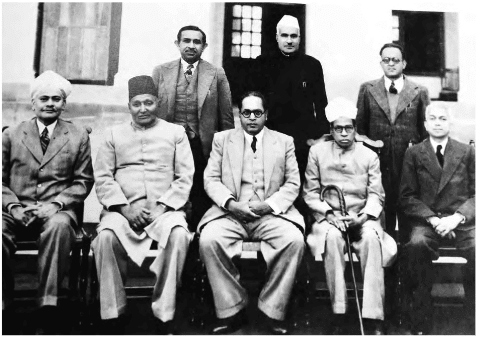 Constituent Assembly
Q4: What are the key features of the Constitution of India? Why is it still relevant, even though it was written more than seventy years ago?
Ans: The Constitution of India includes several important features that keep it relevant:
- Fundamental Rights - These protect individual freedoms such as equality before the law, freedom of speech and the right to education. They give citizens legal protection against unfair treatment.
- Fundamental Duties - These suggest the responsibilities of citizens, for example respecting the Constitution and protecting the environment. Duties remind citizens to act responsibly for the common good.
- Directive Principles - These guide the government to make laws that promote social welfare, health, education and economic justice. They set goals for government policy though they are non-justiciable.
- It sets up a three-tier government (Central, State and Local), with a clear separation of powers so that no single body holds all authority. This helps in sharing responsibilities and addressing local needs.
- It is a living document - it can be amended to meet new needs; for example, rights like the Right to Education and institutions like Panchayati Raj were added later. Flexibility allows the Constitution to remain useful as society changes.
Back Questions (244 & 245)
Q1: "The Constituent Assembly had representatives from diverse backgrounds in India." Why do you think it was important to have a diverse set of representatives from all over India?
Ans: Having representatives from diverse regions, communities and backgrounds was important because:
- It made the Constitution inclusive so that different languages, religions and cultures were considered when laws were framed. This helped the Constitution reflect the country's variety.
- It increased the legitimacy of the Constitution because people were more likely to accept rules made by a body that represented them. Broad representation builds trust in the new system.
- It helped protect the interests of minorities and different regions by allowing their voices to be heard during debates. This reduced the risk of decisions favouring only a few groups.
- It allowed the Assembly to find balanced solutions for problems affecting a large and diverse country like India. Different viewpoints led to more carefully considered laws and institutions.
Q2: Read the statements below carefully and identify which key features/values in the Constitution of India are reflected in each statement.
(a) Sheena, Rajat, and Harsh are standing in a line. They are excited to cast their first vote in the general elections.
(b) Radha, Imon, and Harpreet study in the same class in the same school.
(c) Parents must make arrangements to ensure their children's education.
(d) People of all castes, genders, and religions can use the village well.
Ans:
(a) Key Feature/Value: Universal Adult Franchise - This reflects the principle that every adult citizen has the right to vote, regardless of caste, religion or gender. It ensures broad participation in choosing the government.
(b) Key Feature/Value: Right to Education - This shows the Constitution's aim to provide free and compulsory education for children (for example, as stated in Article 21A). Education helps children develop and prepare for the future.
(c) Key Feature/Value: Fundamental Duty - Parents are expected to take responsibility for their children's education, which follows from the idea of citizens' duties. Duties encourage everyone to contribute to social goals.
(d) Key Feature/Value: Equality before Law - Access to common resources without discrimination reflects the constitutional value of equality for all. The law forbids unfair treatment based on caste, gender or religion.
Q3: It is said that 'All citizens in India are equal before the law'. Do you think this is a fact? If yes, why? If not, why not? Formulate your arguments.
Ans: Yes, it is a fact that all citizens are equal before the law. According to the Constitution of India, all citizens are entitled to equal treatment by the law, irrespective of their caste, religion, gender, or economic status. This is enshrined in the first Fundamental Right, that is, Right to Equality, which prohibits discrimination.
However, in practice, disparities such as economic inequality, social bias, and discrimination still persist, which can affect how equality is experienced by different groups in society. These issues highlight the gap between legal equality and social equality, suggesting that while the law provides for equality, real-life challenges remain in its full implementation. To bridge this gap, laws and policies, along with social action and awareness, are necessary so that legal equality is matched by equal opportunities on the ground.
Q4: You have learnt that 'India is the only country that provided universal adult franchise to its citizens from the beginning.' Can you explain why India did it?
Ans: India adopted universal adult franchise to give every adult an equal voice in choosing government, regardless of social status, gender or education. This decision came from the ideals of the freedom movement, which aimed to remove old exclusions and create a democratic society. Granting voting rights to all adults ensured that the government would be more representative, more legitimate and more accountable to people from all sections of society. It also reflected a commitment to treat every citizen as equal in political rights.
Q5: How did the freedom struggle inspire the making of the Constitution of India? How did India's civilisational heritage inspire some of the key features in the Constitution of India? Explain.
Ans:
- The freedom struggle inspired the Constitution by promoting values such as justice, equality, freedom and fraternity. Leaders of the movement wanted a nation where all citizens had rights and protection under the law, so these ideas became part of the Constitution. These values guided the drafting of Fundamental Rights and other safeguards.
- The struggle also highlighted the need for institutions that protect rights, promote social and economic justice, and hold leaders accountable - this influenced provisions like Fundamental Rights, Directive Principles and the system of checks and balances. The design of courts, legislative procedures and administrative rules grew out of lessons from the freedom movement.
- India's civilisational heritage contributed ideas such as tolerance, pluralism and respect for diverse cultures and religions. Concepts like vasudhaiva kutumbakam and sarve bhavantu sukhinah influenced the Constitution's concern for the welfare of all and social harmony. These cultural ideas encouraged policies aimed at social welfare and communal harmony.
Q6: Do you think we, as a society, have achieved all the ideals of the Constitution? If not, what can we each do as citizens to move our country closer to these ideals?
Ans: No, we have not yet fully achieved all the ideals of the Constitution. Challenges remain in areas such as equality, education, gender justice and economic equality. The Constitution gives us the tools to work towards these goals, and as citizens we can help by:
- Promoting equality - Treating everyone fairly, opposing discrimination and supporting measures that help disadvantaged groups. Simple acts of fairness and support can make a difference in local communities.
- Participating in elections - Voting responsibly and choosing representatives who work for the common good. Informed voting strengthens democracy and holds leaders accountable.
- Supporting good policies - Backing programmes that improve education, health and employment for all, especially for marginalised communities. Citizens can support such policies by joining civic groups or discussing them publicly.
- Spreading awareness - Teaching others about their rights and duties so that more people can take part in democracy and demand justice. Awareness helps people use legal protections and participate actively.
By acting together, respecting differences and working for justice, we can move closer to the ideals set out in the Constitution.
Q7: Read the clues carefully to solve the crossword on the next page to uncover important concepts from the Indian Constitution.

Clues for Crossword:
Across:
2. The branch of government that makes laws: Legislature
7. The part of the Constitution that outlines the duties of citizens: Fundamental Duties
8. The highest court in India that protects the Constitution: Supreme Court
9. A system where the head of state is elected, not hereditary: Republic
10. The process by which the Constitution can be changed over time: Amendment
Down:
1. The group of people who wrote the Indian Constitution: Constituent Assembly
3. The statement at the beginning of the Constitution that tells us the values it upholds: Preamble
4. The document that lays out the rules and laws of a country: Constitution
5. The gas used to preserve the original Constitution safely: Helium
6. Basic rights given to every citizen, like freedom and equality: Fundamental Rights
FAQs on NCERT Solutions: The Constitution of India — An Introduction
| 1. What are the main features of the Indian Constitution that make it different from other countries? |  |
| 2. Why did Dr. Ambedkar call the Constitution a "living document" and what does that mean? | |
| 3. How many fundamental rights are granted to Indian citizens under the Constitution? | |
| 4. What's the difference between the Preamble of the Constitution and the actual constitutional articles? | |
| 5. Why is the Indian Constitution considered a blend of rigidity and flexibility in its amendment process? | |





