Chapter Notes: Measurement of Time and Motion


Introduction
Prerna and her sister were watching a sports channel. Prerna loved running and was the fastest girl in her district's 100 metre sprint. She is training for the state level and dreams of running for India. While watching old Olympic races, Prerna was amazed at how exact the timing was, even when runners finished together. At school, they used a stopwatch to time races and compare results.
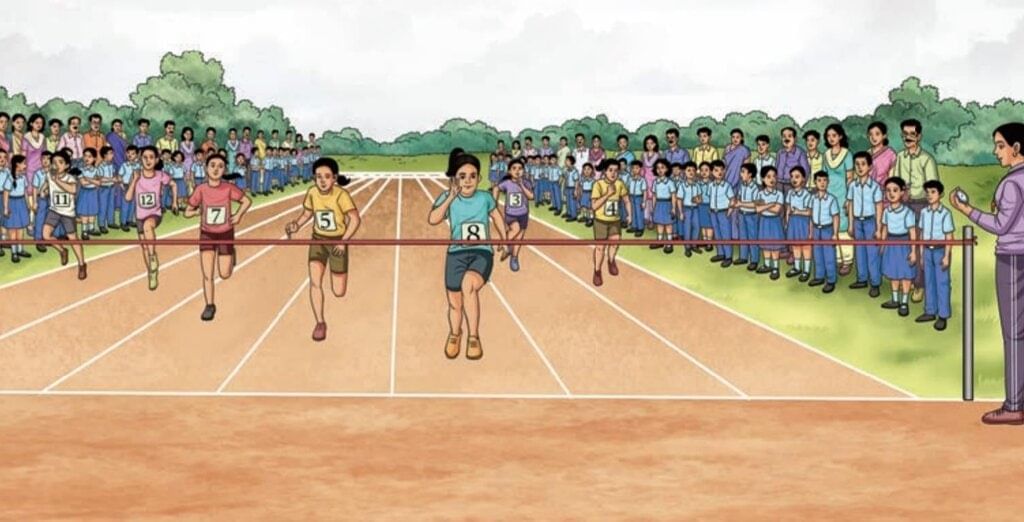
Prerna's mother wore a watch, her sister checked time on a phone, and her uncle had a Braille and a talking watch. There was also a big clock at school. Prerna wondered how people in the past told time without these devices.
Let's explore the history of time and learn how people have measured it over the ages.
Measurement of Time
Long ago, humans became interested in keeping track of time. They noticed many natural events happened in regular cycles - for example, the Sun rising and setting, the phases of the Moon and changing seasons. These cycles helped people create calendars. A day was defined by the cycle of the Sun rising and setting.
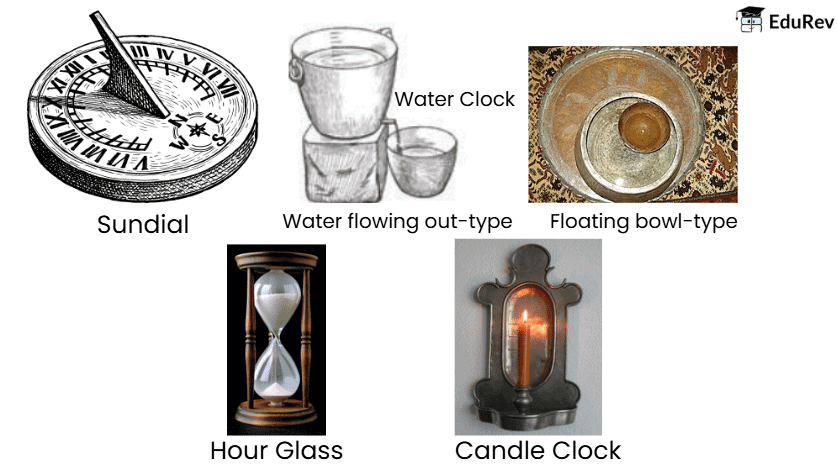
People also wanted to know the time during the day. Since there were no clocks or watches, they invented devices to measure smaller parts of the day and mark equal intervals. Some of the earliest devices used for measuring time within a day were:
- Sundials: These use the shadow cast by the Sun on a fixed surface to show the time of day. As the Sun moves across the sky, the shadow changes position.
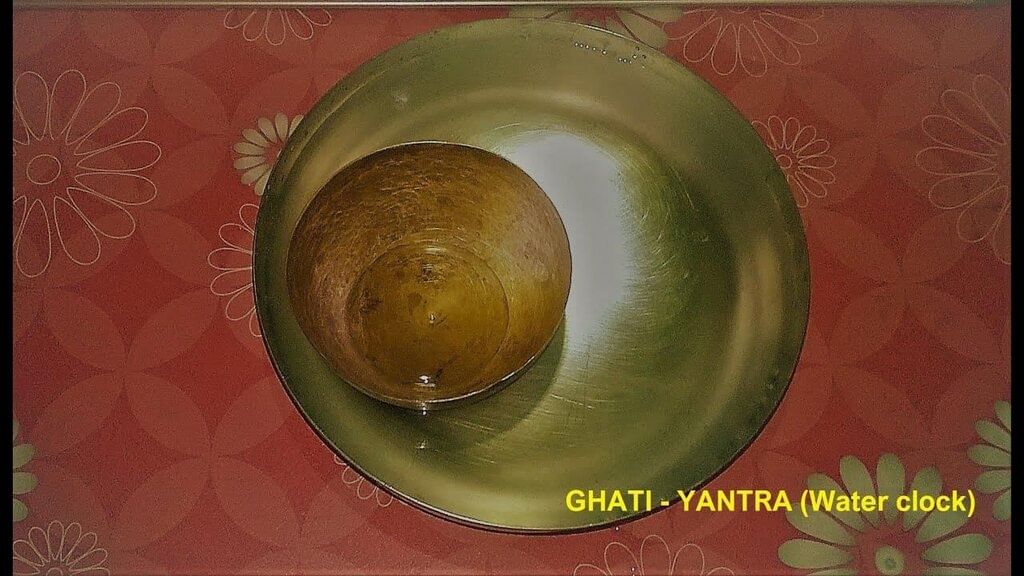
- Water clocks: These measure time by the steady flow of water from one container to another or by the sinking of a bowl that fills with water.
- Hourglasses: These measure time by sand flowing from an upper bulb to a lower bulb through a narrow neck.
- Candle clocks: These are candles with marks; as the candle burns down the marks indicate the passage of time.
Fascinating facts
The world's largest stone sundial, called the Samrat Yantra, was built about 300 years ago at the Jantar Mantar in Jaipur, Rajasthan. Jantar Mantar is a UNESCO World Heritage site containing a group of astronomical instruments.
The Samrat Yantra stands 27 metres tall. Its shadow moves very slowly - about 1 millimetre every second - and falls on a scale that can measure time as precisely as every 2 seconds. Like all sundials it shows local solar time, so a small correction is needed to convert this to Indian Standard Time.
Constructing a Simple Water Clock
A water clock measures time by the flow of water from one container to another. It works on the principle of approximately constant water flow, where the time taken for a certain amount of water to flow indicates the passage of time.
Materials required
- Used transparent plastic bottle (1/2 litre or larger) with cap
- Drawing pin
- Water
- Ink or food colour (optional)
Procedure
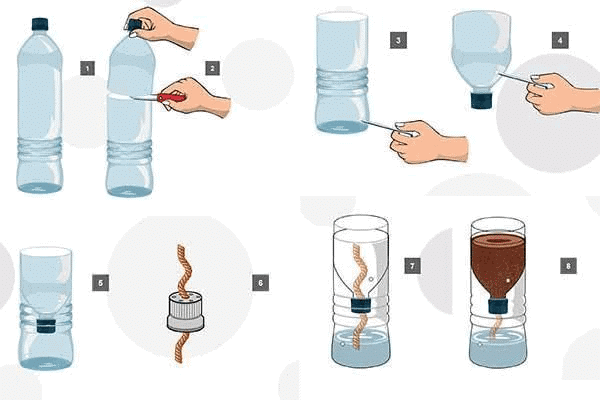
- Cut the plastic bottle into two halves roughly in the middle.
- Use a drawing pin to make a small hole in the cap of the bottle.
- Place the upper part of the bottle (with the hole in the cap) upside down on the lower half so that water from the top part can drip into the lower part.
- Fill the upper part with water. You can add a few drops of ink or food colour to make the water level easier to see.
- As water drips into the lower part, use a watch to mark the water level at regular intervals (for example, each minute) until all the water has dripped down. These marks form the scale of your water clock.
How to use the water clock
- Resetting: Pour the water from the lower part back into the upper part to start again.
- Timing: Watch the water drip into the lower part and note when the water reaches each previously marked level. Each mark represents a fixed passage of time (for example, one minute).
Fascinating facts (ancient India)
- The earliest mention of measuring time by shadows occurs in the Arthashastra by Kautilya (2nd century BCE to 3rd century CE).
- Around 530 CE, Varahamihira described a precise method to calculate time using the shadow of a vertical stick.
- Water clocks, where water flowed out of a vessel, were described in ancient texts such as the Arthashastra and the Sardulakarnavadana.
- These early water clocks were not very accurate because the flow of water slowed as the water level dropped.
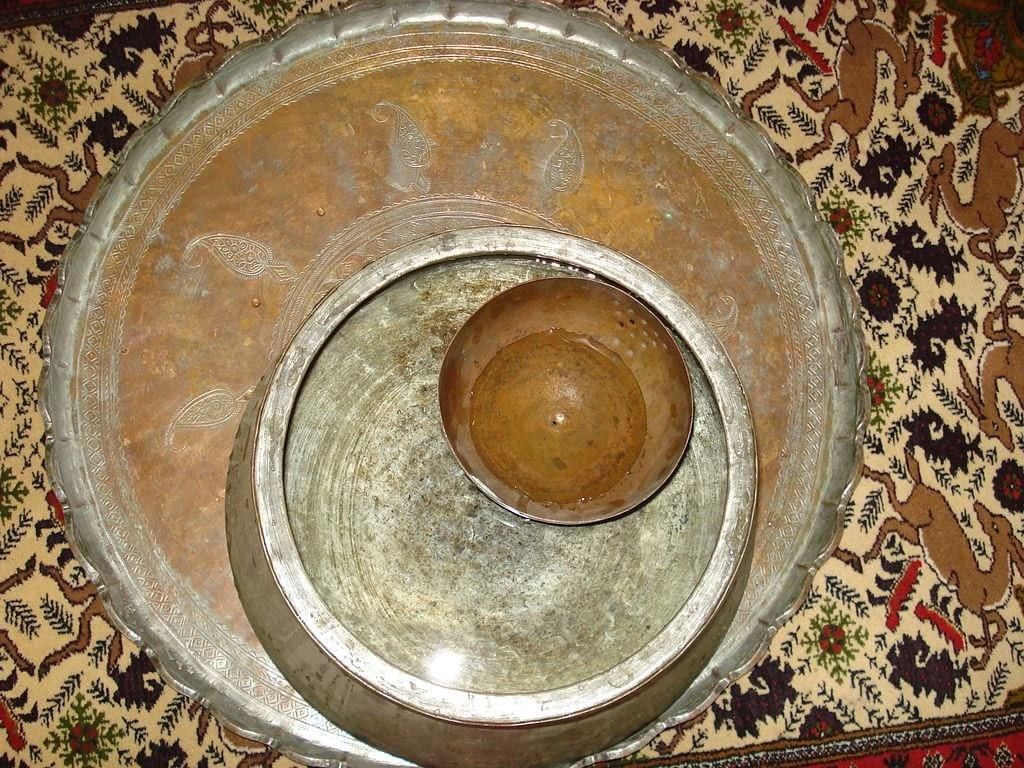
- To improve accuracy, the sinking-bowl water clock (called the Ghatika-yantra) was developed and mentioned by astronomers including Aryabhata.
- The Ghatika-yantra was used in Buddhist monasteries, royal palaces and town squares. When the bowl sank, time was announced by drums, conch shells or gongs.
- Although pendulum clocks replaced the Ghatika-yantra by the late 19th century, it continued to be used in some religious places for rituals.
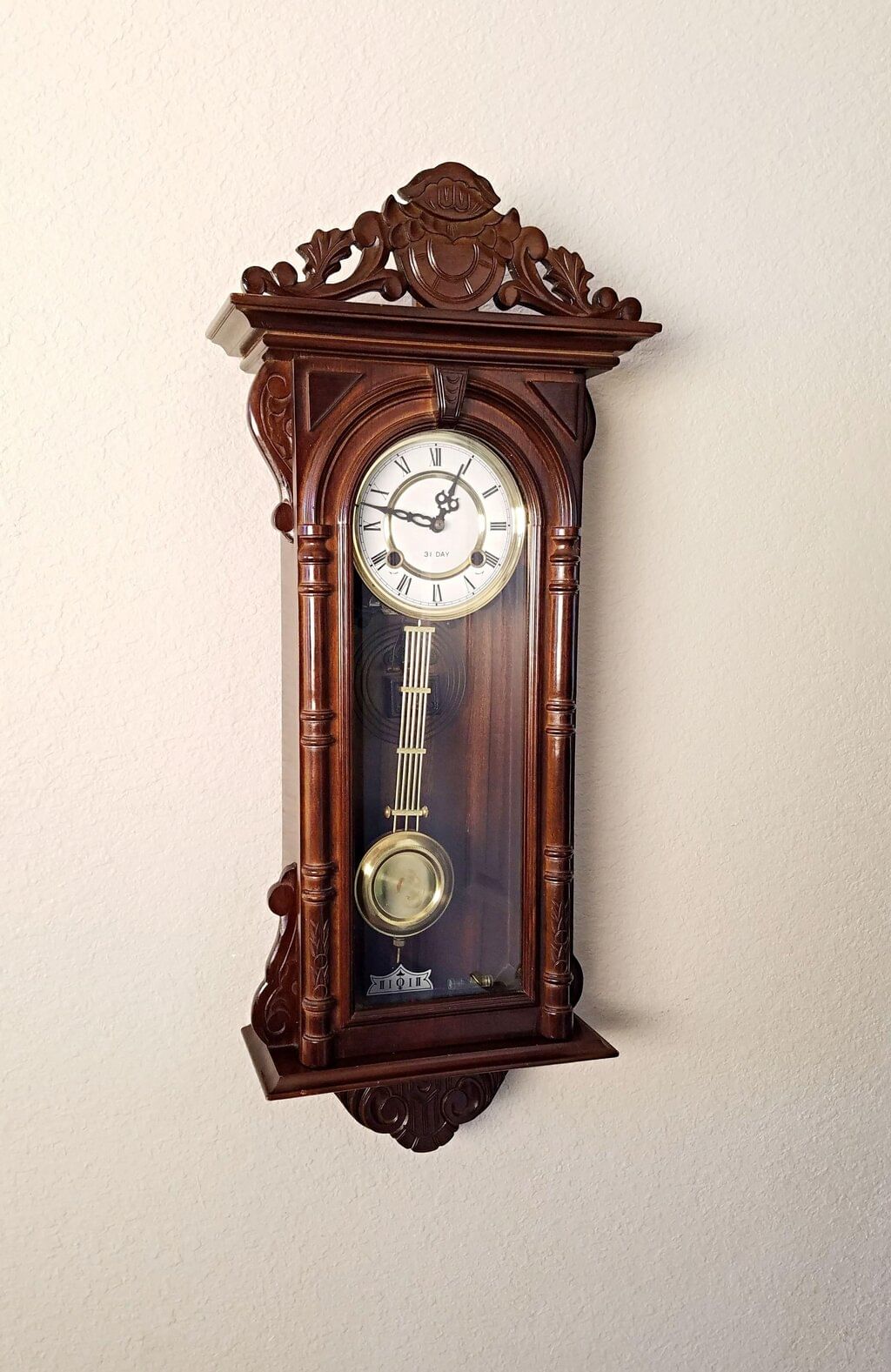
As human civilisation advanced and long-distance travel became common, precise timekeeping became more important. This led to the development of mechanical clocks driven by weights, gears and springs from the 14th century onwards. The invention of the pendulum clock in the 17th century was a major breakthrough, greatly improving the accuracy of mechanical clocks.
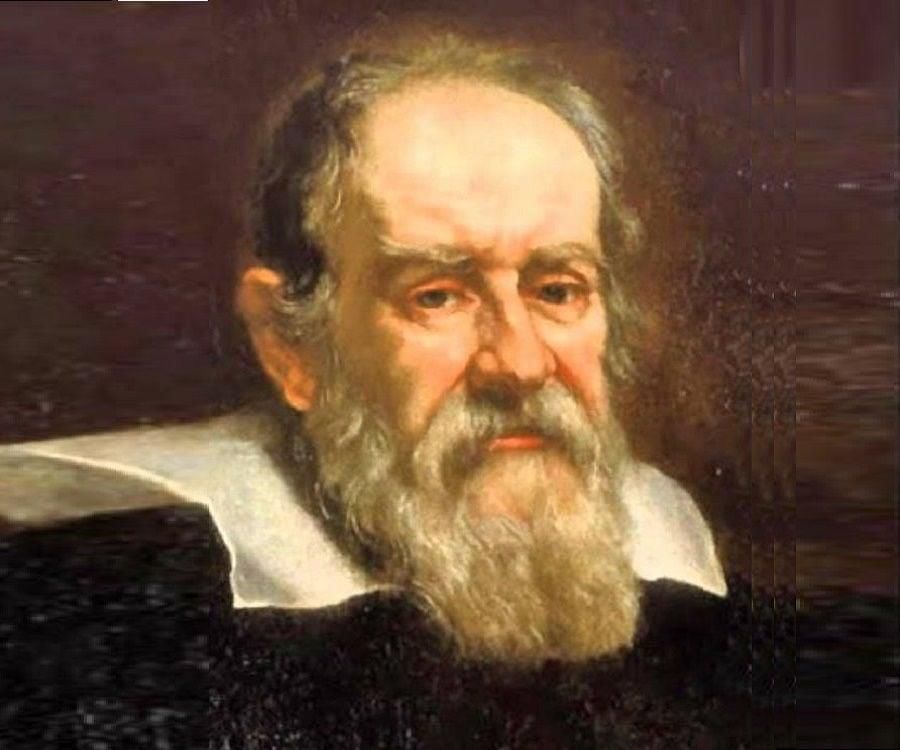
Know a scientist: Galileo Galilei
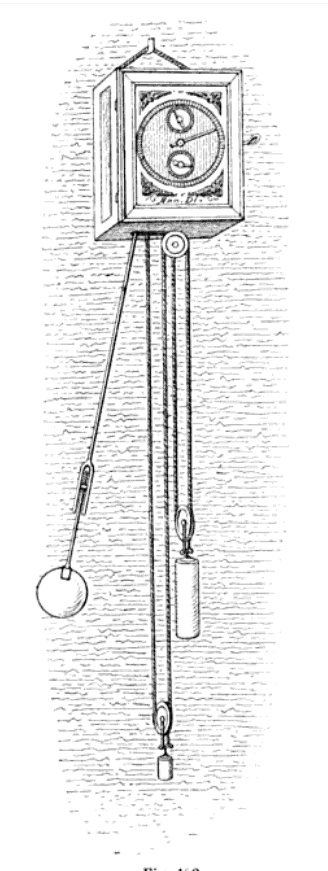
The pendulum clock was invented in 1656 and patented in 1657 by Christiaan Huygens (1629-1695). Huygens was inspired by earlier observations made by Galileo Galilei (1564-1642). Galileo noticed a lamp swinging in a church and, using his own pulse to measure time, found that the lamp took the same amount of time for each swing. After testing different pendulums, Galileo discovered that the time for one complete swing remains nearly the same for a pendulum of fixed length. This observation led to the development of accurate pendulum clocks.
Huygens' Pendulum clock
Try yourself: What device measures time using the flow of water?
The Simple Pendulum
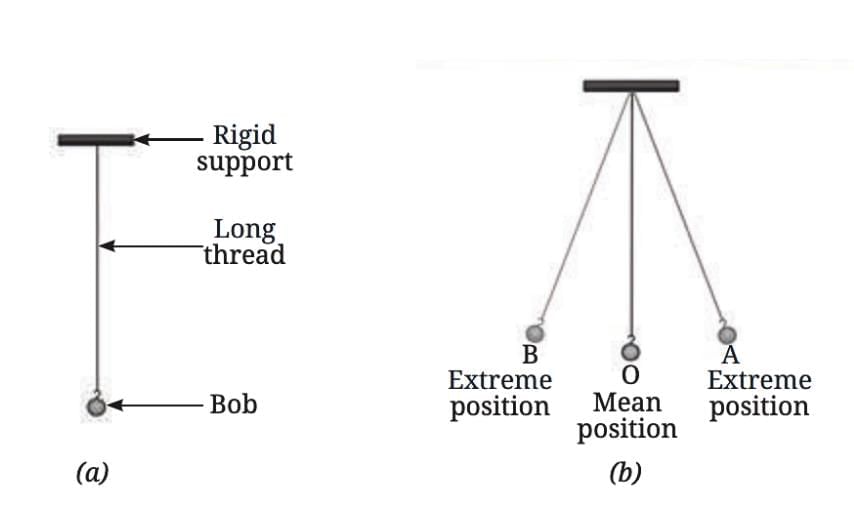
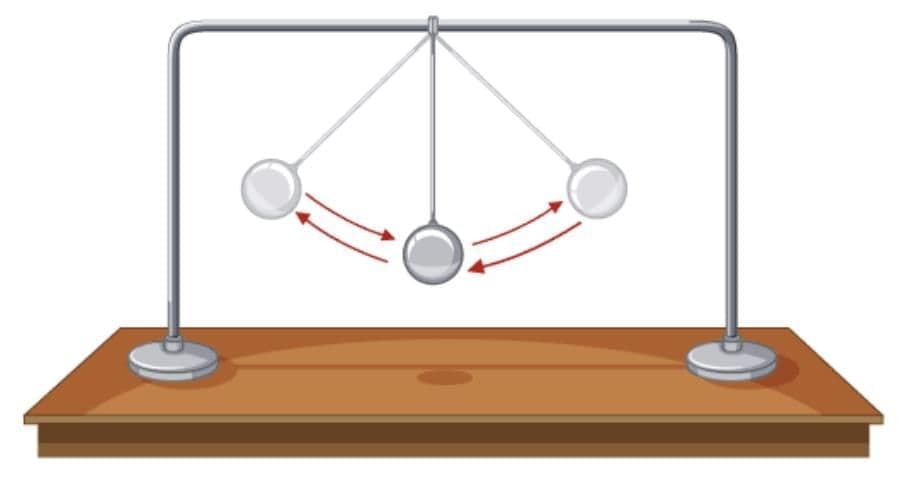
- A simple pendulum consists of a small metal ball, called the bob, suspended from a rigid support by a long thread or light rod.
- When the bob is at rest it is in the mean position. If the bob is displaced slightly to one side and released, it swings back and forth in an oscillatory motion.
- This motion is periodic because it repeats the same path after a fixed interval of time.
- One complete oscillation occurs when the bob, starting from the mean position O, moves to the extreme position A, changes direction, moves to the other extreme position B, changes direction again and returns to O.
- Alternatively, one oscillation is completed when the bob moves from one extreme (A) to the other extreme (B) and back to A.
- The time taken for the pendulum to complete one oscillation is called its time period.
Experiment to Measure the Time Period of a Pendulum
Materials needed
- A piece of string about 150 cm long
- A heavy metal ball or a small stone (bob)
- A stopwatch or watch to measure time
- A ruler to measure the length
Procedure
- Tie the bob to one end of the string.
- Fix the other end of the string to a rigid support so that the length between the support and the bob is about 100 cm.
- Let the bob come to rest in its mean position. The pendulum is now ready.
- Gently pull the bob slightly to one side and release it without pushing. Make sure the string is taut when you release it.
- Observe the pendulum oscillating back and forth.
- Using the watch, measure the time taken for the pendulum to complete 10 oscillations.
- Record the time in a table. Repeat this measurement 3-4 times for accuracy.
- Calculate the time period by dividing the total time for 10 oscillations by 10.
Observations
Length of the string = 100 cm
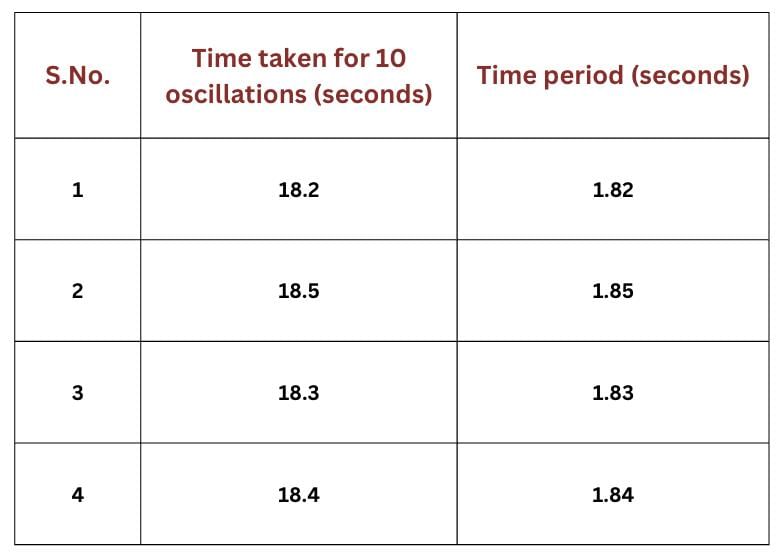
- The time period of the pendulum is nearly consistent across repeated measurements.
- This indicates that the time taken for one complete oscillation remains fairly constant for a pendulum of fixed length.
Conclusion
The pendulum's time period stays nearly constant because its length and the acceleration due to gravity at that location remain unchanged. This regularity makes pendulums useful for measuring time.
Think like a scientist
When experimenting with pendulums you can investigate questions such as:
- How does the length of the pendulum affect its time period?
- Do pendulums of different lengths have different time periods?
- Does the mass of the bob affect the time period?
To test these questions:
- Use the same bob and measure the time period for pendulums of two or three different lengths, and record the results.
- Keep the pendulum length fixed and test with bobs of different masses to see whether mass influences the time period.
Conclusion from these tests: The time period of a simple pendulum depends on its length but not on the mass of the bob. At a given location, all pendulums of the same length have the same time period.

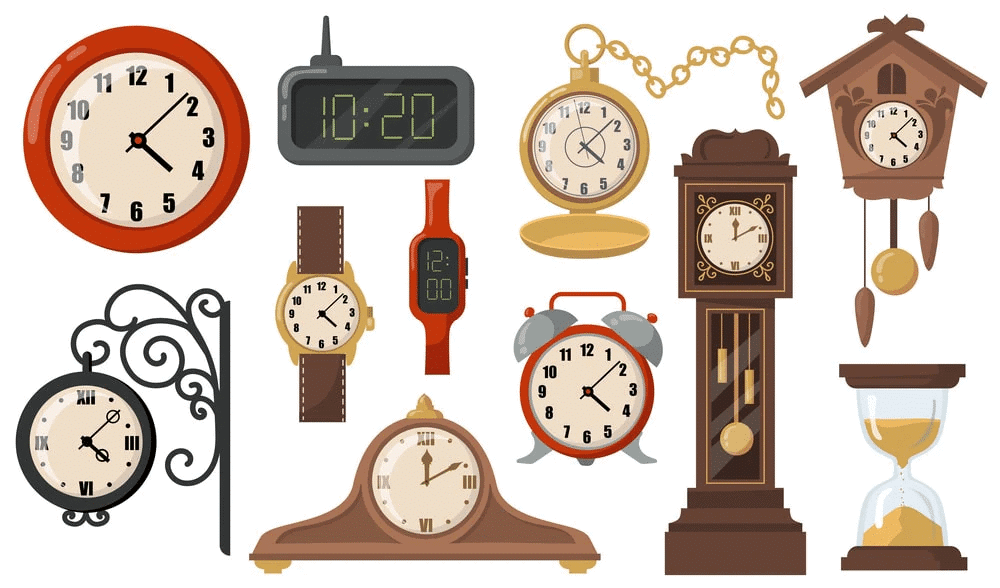
All clocks, whether ancient or modern, rely on a process that repeats continuously to mark equal intervals of time.
Dive deeper
Modern clocks measure time using repeating movements of different kinds. Instead of pendulums, many modern clocks use tiny vibrations of quartz crystals or the energy transitions of atoms. Early pendulum clocks could lose or gain about 10 seconds per day, but today's atomic clocks are vastly more accurate and can lose only about one second in millions of years. Scientists continue to improve clock accuracy for use in science, navigation and communications.
SI Unit of Time
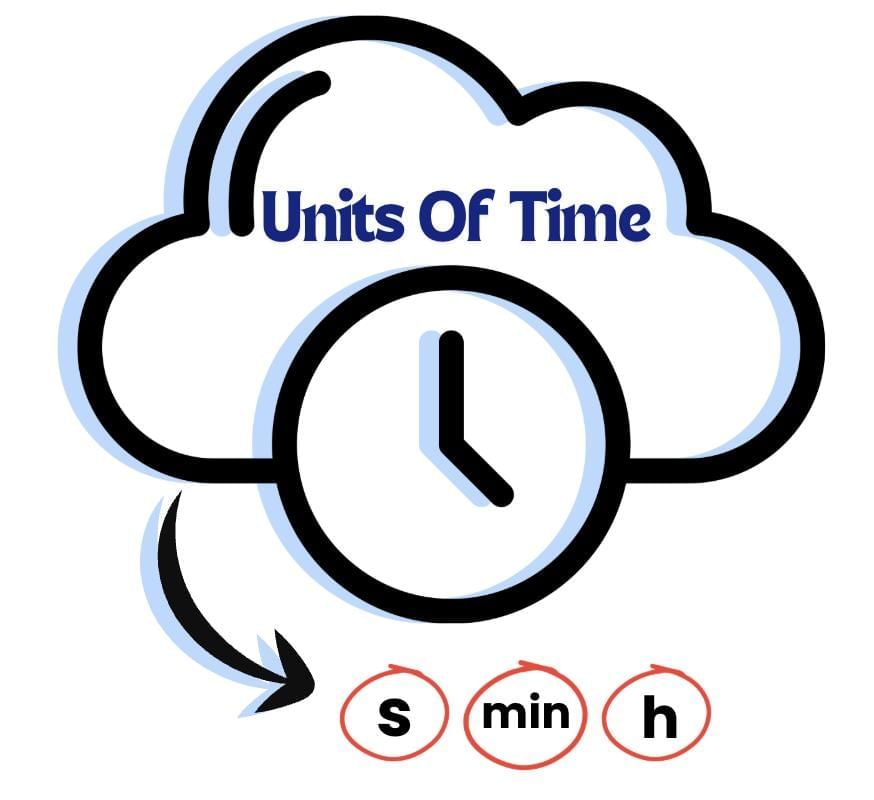
- The standard unit of time in the International System of Units (SI) is the second, symbolised as s.
- Larger units of time include the minute (symbol: min) and the hour (symbol: h).
- Common conversions:
- 1 minute = 60 seconds
- 1 hour = 60 minutes = 3600 seconds

Dive deeper - rules for writing units
Unit names such as second, minute and hour start with a lower-case letter unless they begin a sentence. Their symbols - s, min, and h - are always lower-case and singular. Do not put a full stop after the symbol unless it ends a sentence. Always leave a space between the number and the unit when writing time. Using abbreviations such as "sec" for second or "hrs" for hours is incorrect in formal usage.
Fascinating fact
The hole in the bowl of the Ghatika-yantra was designed so the bowl took 24 minutes to fill and sink. This time interval was called a ghatika or ghati. A 24-hour day was divided into 60 equal ghatis; the ghati remained a standard unit of time in many places until the end of the 19th century.
Science and society: precision in time measurement
Measuring very small fractions of a second is important in many fields:
- Sports: Timekeeping devices record events to one-hundredth or one-thousandth of a second to determine winners in races.
- Medicine: Heart monitors such as electrocardiograms (ECG) measure heartbeat variations in milliseconds to diagnose health issues.
- Music: Digital recordings sample sound thousands of times per second for smooth playback.
- Technology: Computers and smartphones process signals in microseconds and nanoseconds, enabling fast operation.
As clock accuracy improves, it supports precision work and technologies that shape modern life.
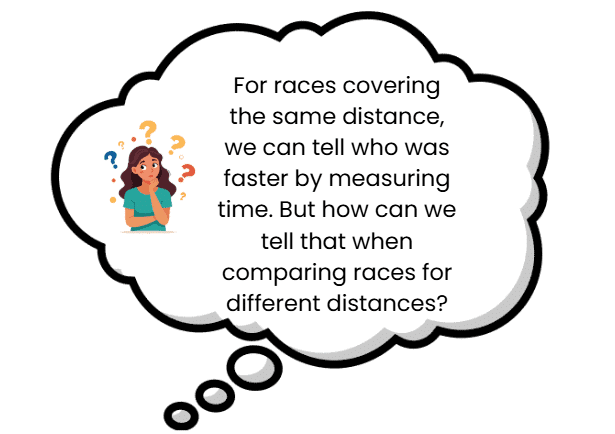
Slow or Fast
- When we say something is moving fast or slow, we compare how far it moves in a certain amount of time.
- For example, in a 100-metre race all runners start together but soon spread out.
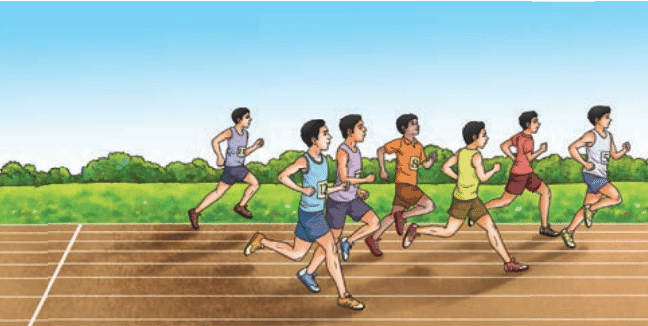 Boys running a race on a straight track
- The runner who is ahead at a given moment has covered more distance in the same time and is therefore moving faster.
- Thus, the distance covered in a given time helps decide who is faster or slower.
- We say that the faster runner has a higher speed.
Speed
Speed is a measure of how fast an object is moving. It tells the distance an object covers in a certain amount of time.
- By comparing the distances moved by two or more objects in the same time, we can determine which object is moving faster.
- The unit time can be one second, one minute or one hour.
- The distance covered by an object in a unit time is called its speed.
- The SI unit of speed is metre per second (m/s). For larger distances and times speed is often given in kilometre per hour (km/h).
Example Ravi's school is 5.2 km from his house. It took him 20 minutes to reach his school riding his bicycle. Calculate the speed of the bicycle in m/s.
Solution
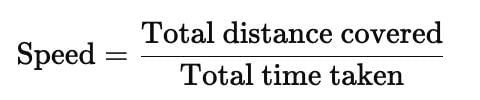
Speed = Distance covered / Time taken
Distance = 5.2 km
Time = 20 minutes
Convert units to metres and seconds:
Distance = 5.2 × 1000 m = 5200 m
Time = 20 × 60 s = 1200 s
Speed = 5200 m / 1200 s
Speed = 4.33 m/s
Answer: The speed of the bicycle is 4.33 m/s.
Activity
To compare the speeds of different trains based on their timetable information.
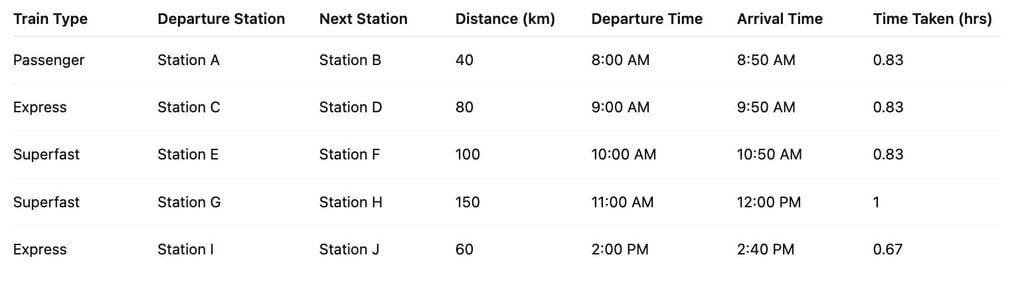
Calculate speed for each train using the timetable and compare results.
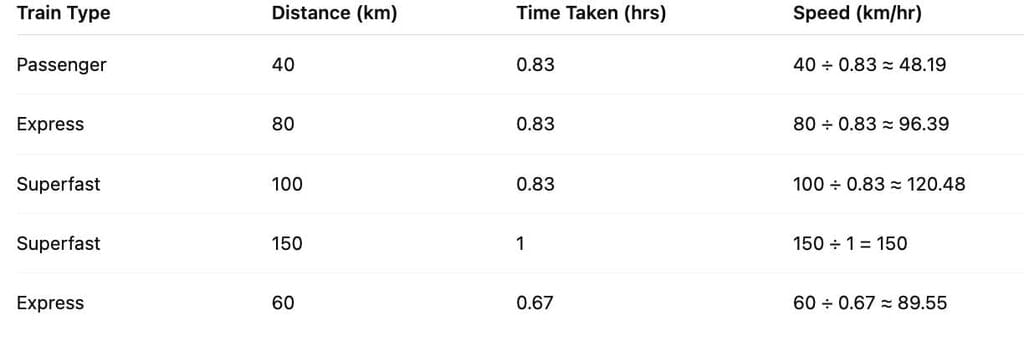
- Fastest train: The Superfast Train between Station G and Station H is the fastest, with a speed of 150 km/h.
- Slowest train: The Passenger Train between Station A and Station B is the slowest, with a speed of 48.19 km/h.
Relationship between Speed, Distance and Time
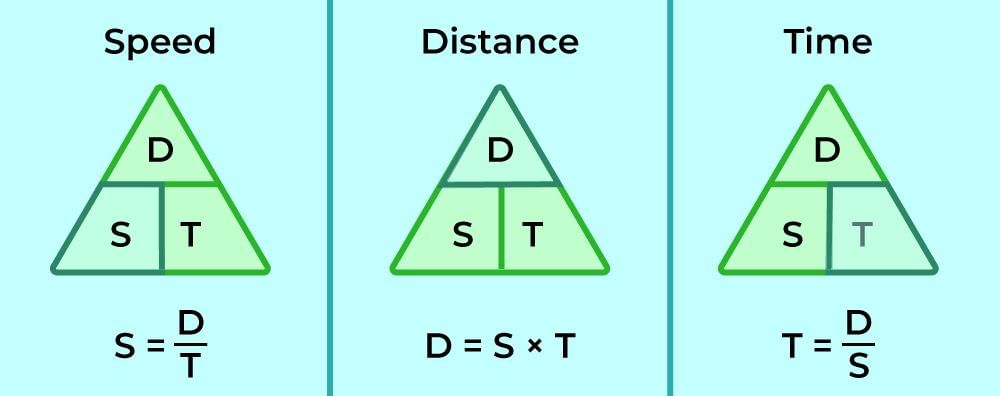
- The basic formula for speed is:

- The formula can be rearranged to find distancewhen speed and time are known:

- Similarly, to find timewhen distance and speed are known:

Example 2
Question: Priya is travelling to a nearby town in a car moving at a speed of 60 km/h. If it takes her 3 hours to reach the town, how far is the town?
Solution
Distance = Speed × Time
Distance = 60 km/h × 3 h
Distance = 180 km
Answer: The town is 180 km away.
Example 3
Question: A train is travelling at a speed of 80 km/h. How much time will it take to cover 240 km?
Solution
Time = Distance / Speed
Time = 240 km / 80 km/h
Time = 3 h
Answer: The train will take 3 hours to cover 240 km.
Average Speed
- The speed calculated by dividing the total distance by the total time is the average speed.
- An object may not move at the same speed throughout; sometimes it may move slower and sometimes faster.
- In such situations, when speed varies, the term speed is often used to mean average speed.
Science and Society: Measuring Speed and Distance in Vehicles
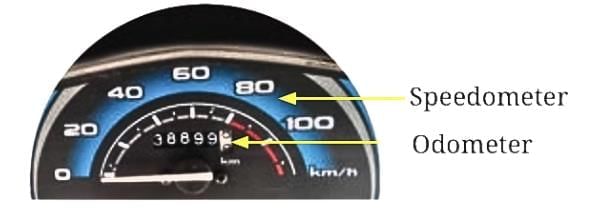
- Vehicles like scooters, motorbikes, cars and buses have an instrument called a speedometer.
- A speedometer shows the vehicle's speed in kilometres per hour (km/h).
- An odometer measures the total distance travelled by the vehicle in kilometres.
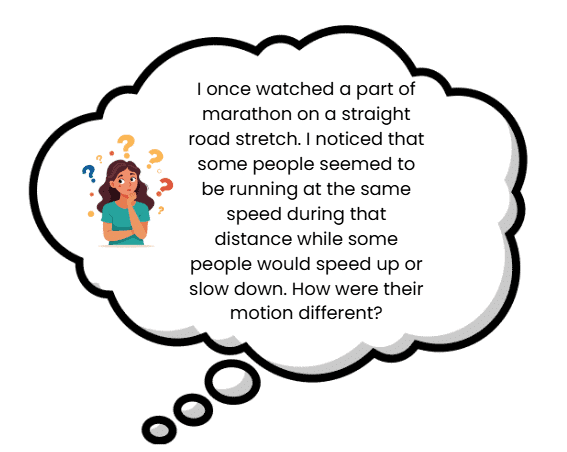
Uniform and Non-uniform Linear Motion
Linear Motion
- When an object moves along a straight line, the motion is called linear motion.
- Example: A train moving on a straight track between two stations.
- This motion can be uniform (constant speed) or non-uniform (changing speed).
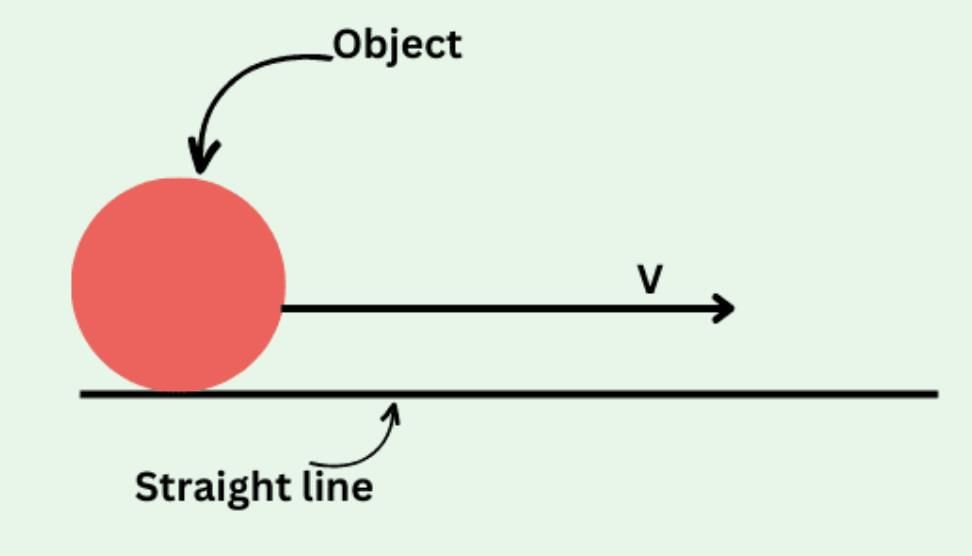
Uniform Linear Motion
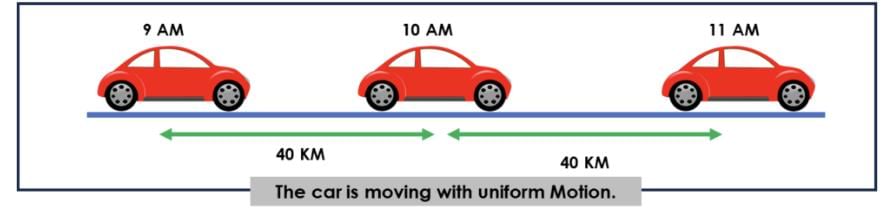
- When an object moves along a straight line with a constant (unchanging) speed.
- It covers equal distances in equal intervals of time.
- Example: A car moving from one point to another at a constant speed.
Non-uniform Linear Motion
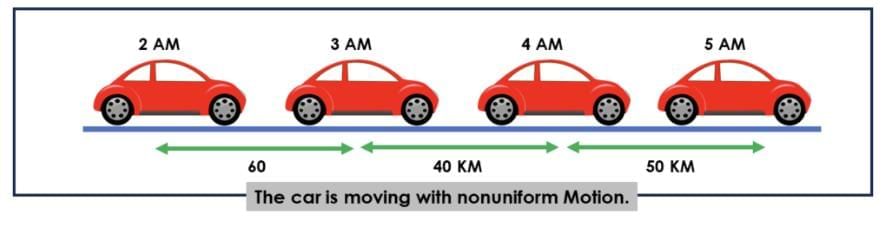
- When the speed of an object keeps changing while moving along a straight line.
- It covers unequal distances in equal intervals of time.
- Example: A car whose speed varies while travelling from A to B to C.
Real-life note Uniform motion is an ideal concept. In real life an object rarely maintains a perfectly constant speed for long, so we often use average speed for practical purposes.
Case study
Data are given for the distances travelled by two trains, X and Y, between 10:00 AM and 11:00 AM.
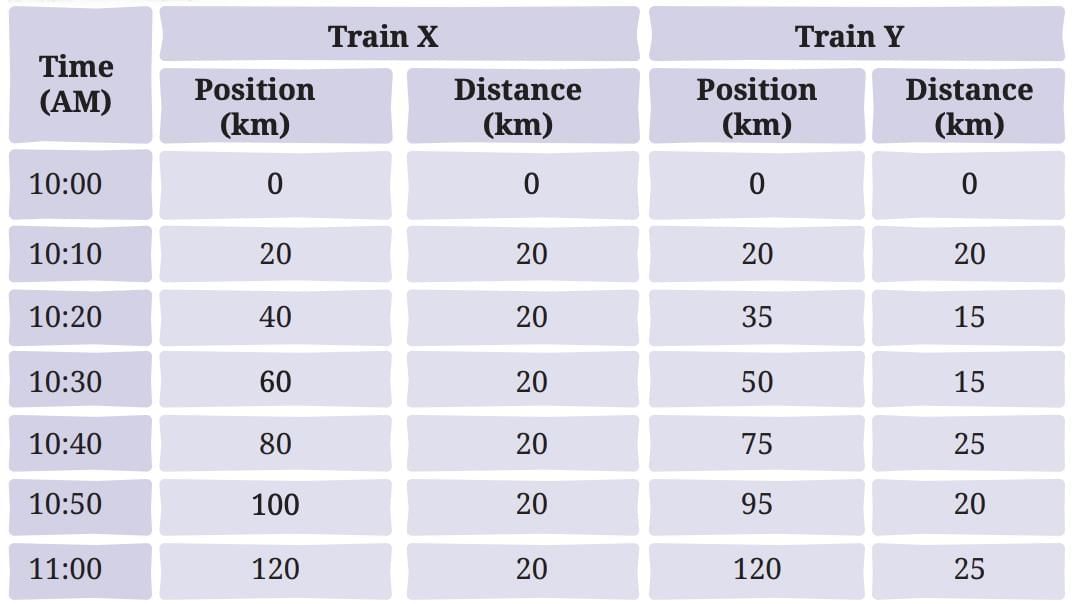
Solution
Train X covers equal distances in equal time intervals, so it is in uniform linear motion. Train Y covers unequal distances in each equal time interval, so it is in non-uniform linear motion.
- Train X is in uniform linear motion between 10:00 AM and 11:00 AM because it covers equal distances (for example, 20 km) in equal time intervals (for example, each 10 minutes).
- Train Y is in non-uniform linear motion because the distances it covers in each 10-minute interval are not equal (for example, 20 km, then 15 km, etc.).
Thus, Train X moves uniformly while Train Y does not.
Terms to Remember
- Sundial: A device that uses the Sun's shadow to indicate the time of day.
- Water clock: A device that measures time by the flow of water into or out of a vessel.
- Hourglass: A device that measures time by sand flowing between two bulbs.
- Candle clock: A candle with markings that indicate time as the candle burns down.
- Pendulum: A weight (bob) hanging from a fixed point that swings back and forth and can be used to measure time.
- Time period: The time taken for one complete oscillation of a pendulum.
- Second: The SI unit of time, symbolised as s.
- Speed: The distance covered by an object in a unit of time, measured in m/s or km/h.
- Speedometer: An instrument in vehicles that shows speed in km/h.
- Odometer: An instrument in vehicles that measures distance travelled in km.
- Linear motion: Motion along a straight line.
- Uniform linear motion: Motion along a straight line at constant speed, covering equal distances in equal times.
- Non-uniform linear motion: Motion along a straight line with changing speed, covering unequal distances in equal times.
- Average speed: Total distance covered divided by the total time taken; used when speed varies.
- Ghatika-yantra: A sinking-bowl water clock used in ancient India to measure time in ghatis.
- Ghati: A traditional time unit equal to 24 minutes, measured by the Ghatika-yantra.
FAQs on Chapter Notes: Measurement of Time and Motion
| 1. What's the difference between speed and velocity in motion for Class 7 CBSE? |  |
| 2. How do you calculate average speed if an object travels different distances at different times? | |
| 3. Why do we need to measure time accurately when studying motion and speed? | |
| 4. What are the main SI units used for measuring time and distance in motion experiments? | |
| 5. Can an object have zero velocity but non-zero speed, or does that make no sense? | |