CBSE Class 7  >  Class 7 Notes  >  Science (Curiosity) - New NCERT  >  Very Short Question Answers: Life Processes in Plants

Very Short Question Answers: Life Processes in Plants

Q1: Name some components of food.
Ans: Carbohydrates, proteins, fats, vitamins, and minerals.Very Short Question Answers: Life Processes in Plants
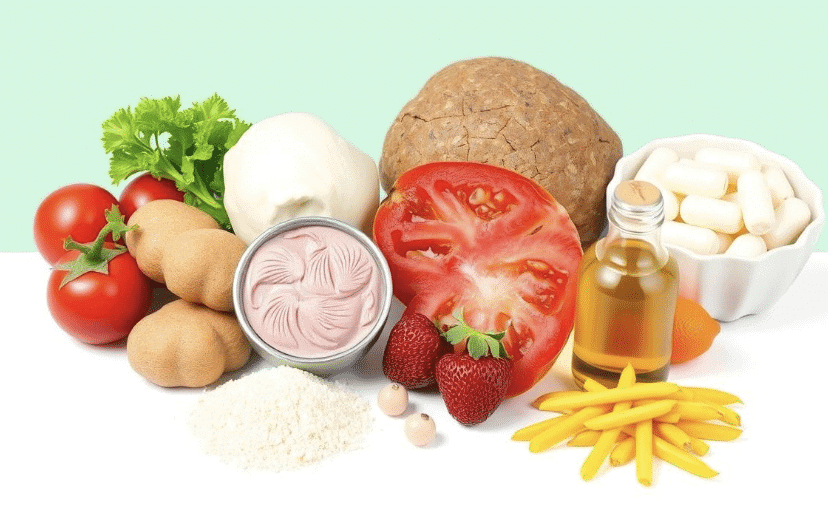
Q2: Define nutrients.
Ans: Carbohydrates, proteins, fats, vitamins, and minerals are essential components of food, these components are called nutrients.

Q3: Give an example of autotrophs.
Ans: All green plants.Very Short Question Answers: Life Processes in Plants
Q4: Give an example of heterotrophs.
Ans: Animals and human beings.

Q5: Plants prepare their food by using raw materials present in their ______________.
Ans: Surrounding.

Q6: What do you mean by nutrition?
Ans: Nutrition is the mode of taking food by an organism and its utilization by the body.

Q7: Name the food factories of plants.
Ans: Leaves.

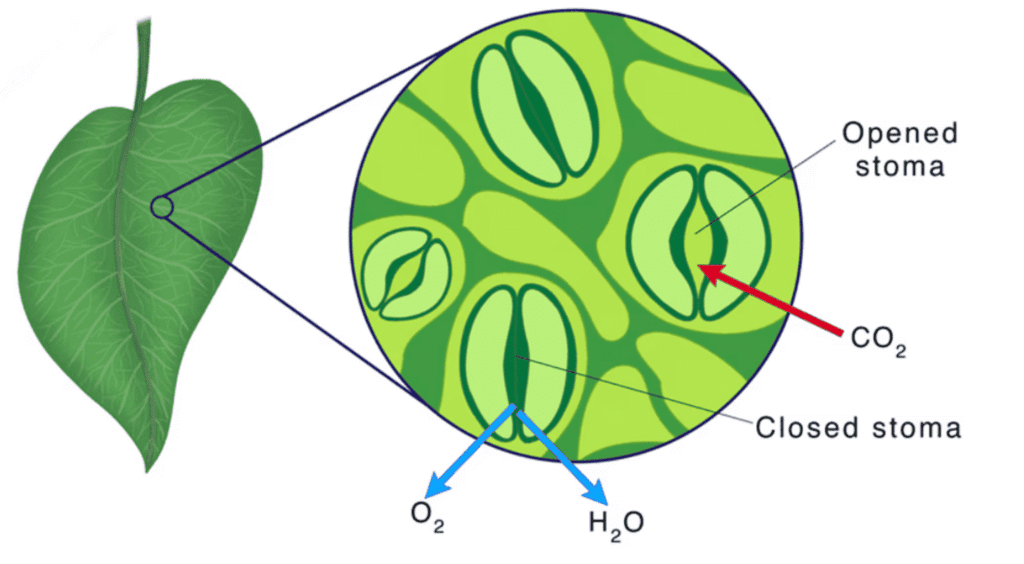
Q8: Name the tiny pores present on the surface of leaves.
Ans: Stomata.Very Short Question Answers: Life Processes in Plants
Q9: Name the green pigment present in leaves.
Ans: Chlorophyll.

Q10: ____________ helps leaves to capture the energy of sunlight.
Ans: Chlorophyll.

Q11: Why is photosynthesis named so?
Ans: Because the synthesis of food occurs in the presence of sunlight.

Q12: Sun is the ultimate source of energy for all living organisms. True / False.
Ans: True.

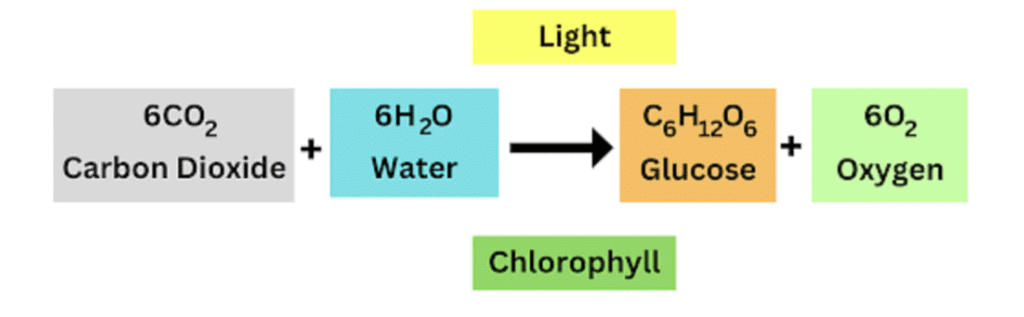
Q13: State the equation for the process of photosynthesis.
Ans: Carbon dioxide + water → carbohydrate + Oxygen (in the presence of sunlight).Very Short Question Answers: Life Processes in Plants
Q14: Why are algae present in stagnant water bodies green in color?
Ans: Because they contain the green pigment chlorophyll.

Q15: During photosynthesis, plants take in _______________ and release _______________.
Ans: Carbon dioxide and oxygen.

Q16: During photosynthesis solar energy is converted into chemical energy. True / False.
Ans: True.

Q17: The product of photosynthesis is
a. Carbohydrate
b. Protein
c. Fats
d. All of these
Ans: a. Carbohydrate.

Q18: Name a plant that has both autotrophic and heterotrophic modes of nutrition.
Ans: Insectivorous plants.

Q19: Name the pores present in leaves through which exchange of gases takes place.
Ans: Stomata.

Q20:What do plants need to grow?

Ans: Plants need sunlight, water, air, and nutrients to grow.Very Short Question Answers: Life Processes in Plants
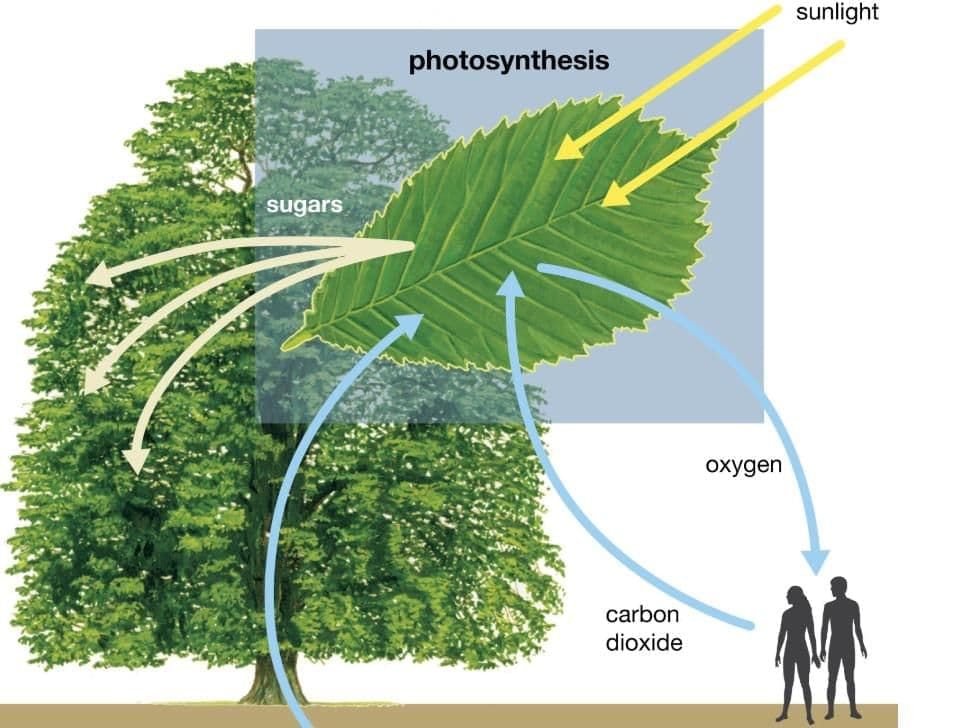
Q21. How do plants make their own food?

Ans: Plants make food through photosynthesis.

Q22. What is the role of sunlight in plant growth?

Ans: Sunlight provides energy for food production.

Q23. What do roots absorb from the soil?
Ans: Roots absorb water and minerals.

Q24.  What gas do plants take from air during photosynthesis?
Ans:  Plants take in carbon dioxide.

Q25. Where does photosynthesis mainly take place?
Ans: Photosynthesis mainly takes place in leaves.

The document Very Short Question Answers: Life Processes in Plants is a part of the Class 7 Course Science (Curiosity) Class 7 - New NCERT.
All you need of Class 7 at this link: Class 7

FAQs on Very Short Question Answers: Life Processes in Plants

1. What are the main life processes in plants?
Ans. The main life processes in plants include photosynthesis, respiration, transpiration, and reproduction. Photosynthesis is the process by which plants use sunlight to convert carbon dioxide and water into glucose and oxygen. Respiration involves the breakdown of glucose to release energy for growth and other functions. Transpiration is the loss of water vapor from plant surfaces, which helps in nutrient transport and temperature regulation. Reproduction can occur sexually through seeds or asexually through methods like budding or cuttings.
2. How does photosynthesis occur in plants?
Ans. Photosynthesis occurs primarily in the leaves of plants, specifically in the chloroplasts that contain chlorophyll. The process requires sunlight, carbon dioxide from the air, and water absorbed by the roots. During photosynthesis, chlorophyll captures sunlight, which provides the energy needed to convert carbon dioxide and water into glucose (a type of sugar) and oxygen. The overall equation for photosynthesis can be simplified as: carbon dioxide + water + sunlight → glucose + oxygen.
3. Why is transpiration important for plants?
Ans. Transpiration is important for several reasons. It helps in the movement of water and nutrients from the roots to other parts of the plant. As water evaporates from the leaves, it creates a negative pressure that pulls more water upward from the roots. This process also helps in cooling the plant and maintaining its temperature. Furthermore, transpiration plays a crucial role in the water cycle by returning water vapor to the atmosphere.
4. What are the different ways plants reproduce?
Ans. Plants can reproduce in two main ways: sexual and asexual reproduction. Sexual reproduction involves the formation of seeds through the fertilization of ovules by pollen. This can occur through flowers in flowering plants. Asexual reproduction, on the other hand, does not involve seeds. Instead, plants can reproduce through methods such as budding, vegetative propagation (like runners in strawberries), or cuttings, where parts of the plant can grow into new individuals.
5. How do plants obtain nutrients?
Ans. Plants obtain nutrients primarily through their roots from the soil. The roots absorb water and dissolved minerals, which are essential for growth and development. Nutrients such as nitrogen, phosphorus, and potassium are absorbed by the roots and transported through the plant via the xylem and phloem. Additionally, some plants have adaptations, like root nodules in legumes, which help them to fix nitrogen from the atmosphere, enhancing their nutrient uptake.
Explore Courses for Class 7 exam
Get EduRev Notes directly in your Google search
Related Searches
Semester Notes, Important questions, MCQs, Summary, Previous Year Questions with Solutions, study material, Free, mock tests for examination, video lectures, Very Short Question Answers: Life Processes in Plants, ppt, pdf , Extra Questions, Very Short Question Answers: Life Processes in Plants, Viva Questions, practice quizzes, Objective type Questions, shortcuts and tricks, Very Short Question Answers: Life Processes in Plants, Sample Paper, Exam, past year papers;