Chapter Notes: Movements of the Earth and Planets


Movements of the Earth and Planets
This section explores how the Earth and other planets move in space, focusing on two key motions: rotation and revolution. These movements cause day and night, seasons, and the length of a year.
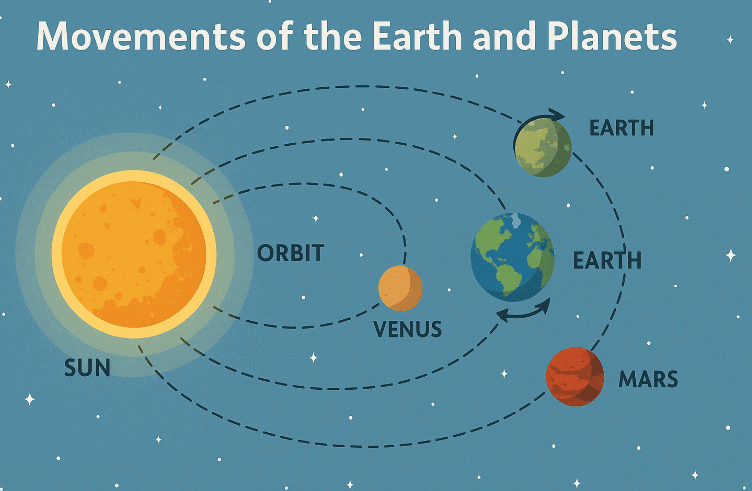
Importance of Movement
- The Earth's movements create the cycle of day and night and the yearly cycle of seasons.
- Each planet's movement around the Sun determines the length of its year, which varies depending on its distance from the Sun.
Rotation (Earth)
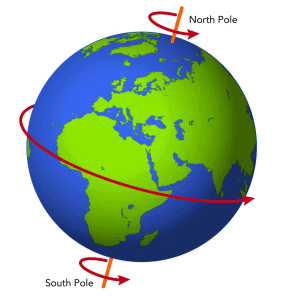
Rotation is the spinning of the Earth on its axis, an imaginary line running from the North Pole to the South Pole. This movement is responsible for day and night.
What is Rotation?
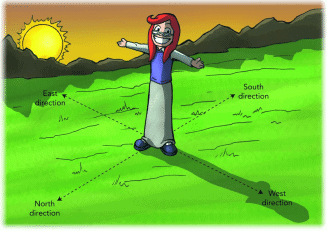
- Definition: Rotation is when the Earth spins around its axis, like an orange spinning on a pencil.
- Time Taken: The Earth takes 24 hours to complete one full rotation.
- Axis: The axis is an imaginary line through the Earth's center, from the North Pole to the South Pole.
Day and Night
- Cause: As the Earth rotates, only one half of the planet faces the Sun at a time, experiencing daylight. The other half is in shadow, experiencing night.
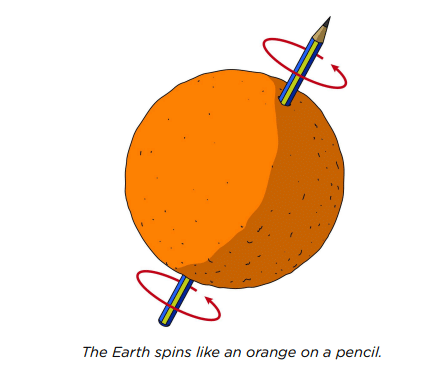
- Sun's Apparent Movement: The Sun appears to move across the sky, rising in the east and setting in the west, but it is actually the Earth's rotation that causes this effect.
- Global Impact: When it is nighttime in one part of the world (e.g., South Africa), it is daytime in another part (e.g., Brazil), because different parts of the Earth face the Sun at different times.
Directions and the Sun
- East: The direction where the Sun rises in the morning.
- West: The direction where the Sun sets in the evening.
- Finding Directions: By observing the Sun's rising and setting points, you can determine east and west, which helps with navigation.
Misconceptions About Movement
- Historical Belief: Long ago, people thought the Sun moved around a stationary Earth.
- Reality: The Earth rotates, making it seem like the Sun is moving, similar to how houses appear to move past a moving bus when you look out the window.
Revolution (Earth)
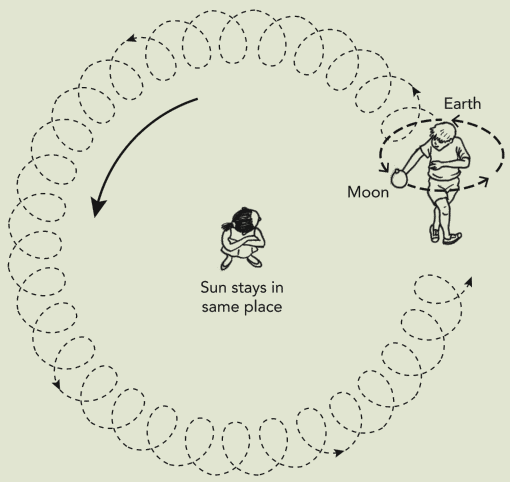
Revolution is the movement of the Earth around the Sun in a path called an orbit. This movement determines the length of a year and affects seasonal changes.
What is Revolution?
- Definition: Revolution is when the Earth travels around the Sun in its orbit, like a planet circling a central point.
- Time Taken: The Earth takes 365.25 days to complete one revolution, which we call a year.
- Orbit: The orbit is the elliptical path the Earth follows around the Sun.
Difference Between Rotation and Revolution
- Rotation: The Earth spins on its axis (like spinning in place), causing day and night. It takes 24 hours.
- Revolution: The Earth moves around the Sun in its orbit (like walking in a circle), causing the seasons and a year. It takes 365.25 days.
- Combined Effect: The Earth rotates and revolves simultaneously, so as it spins, it also travels around the Sun.
Revolution of Other Planets
- Unique Orbits: Each planet revolves around the Sun in its own orbit, with the time taken depending on its distance from the Sun.
- Example: Mars, being farther from the Sun than Earth, takes longer to complete one revolution (about two Earth years).
Points to Remember
- The Earth's rotation takes 24 hours, causing the cycle of day and night.
- The Earth's revolution takes 365.25 days, which is why we have a leap year every four years to account for the extra 0.25 days.
Difficult Words
- Rotation: The spinning of the Earth on its axis, causing day and night.
- Revolution: The movement of the Earth around the Sun in its orbit, causing a year.
- Axis: An imaginary line through the Earth's center, from the North Pole to the South Pole, around which the Earth rotates.
- Orbit: The path a planet follows as it revolves around the Sun.
- Daylight: The time when a part of the Earth faces the Sun and is lit.
- Shadow: The dark area created when an object blocks sunlight, seen during nighttime on Earth.
Summary
The Earth moves in two main ways: rotation and revolution. Rotation is the Earth spinning on its axis every 24 hours, causing day and night as different parts of the planet face the Sun or fall into shadow. Revolution is the Earth's journey around the Sun in its orbit, taking 365.25 days to complete one year. While the Sun appears to rise in the east and set in the west, it is the Earth's rotation that creates this effect. All planets revolve around the Sun, but the length of their year depends on their distance from the Sun. These movements shape our daily and yearly cycles, influencing time, seasons, and navigation.
FAQs on Chapter Notes: Movements of the Earth and Planets
| 1. What is the difference between the rotation and revolution of the Earth? |  |
| 2. How does the Earth's rotation affect our daily lives? | |
| 3. Why do we have leap years, and how are they related to the Earth's revolution? | |
| 4. How do the movements of the Earth affect the seasons? | |
| 5. What are some other celestial bodies that also rotate and revolve? | |