Worksheet Solutions: The Day the River Spoke

Multiple Choice Questions (MCQs)
Q1: Who is the author of Jahnavi's story?
a) Gopi
b) Kamala Nair
c) Chandu
d) Appu
Ans: b) Kamala Nair
The introduction clearly states that the story is written by Kamala Nair. Gopi and Appu are Jahnavi's brothers, and Chandu is a fisherman, none of whom is the author.
Q2: Why is Jahnavi initially not allowed to go to school?
a) She is too old
b) She is a girl and needed at home
c) There is no school in the village
d) She does not want to study
Ans: b) She is a girl and needed at home
The story explains that Jahnavi's family does not allow her to go to school because she is a girl and is needed at home to care for her younger siblings. The story does not suggest she is too old, that there is no school, or that she lacks interest in studying.
Q3: What does the river tell Jahnavi about girls' abilities?
a) Girls are better than boys
b) Girls are just as capable as boys
c) Girls should not go to school
d) Girls should stay at home
Ans: b) Girls are just as capable as boys
The river encourages Jahnavi by telling her that girls are just as capable as boys, boosting her confidence to pursue her dream. It does not claim girls are better, suggest they should not go to school, or advocate for staying at home.

Q4: What story does the teacher tell in the classroom when Jahnavi enters?
a) A story about ships
b) A story about King Ashoka
c) A story about the river
d) A story about spiders
Ans: b) A story about King Ashoka
When Jahnavi enters the classroom, she listens to a story about King Ashoka. The text does not mention stories about ships, the river, or spiders being told by the teacher.
Q5: What is the meaning of the word "startled" as used in the story?
a) Speaking softly
b) Suddenly surprised or shocked
c) Breathing heavily
d) Moving smoothly
Ans: b) Suddenly surprised or shocked
The word "startled" is defined in the story as meaning suddenly surprised or shocked, which fits the context of Jahnavi's reaction to the river speaking. The other options refer to different words like "murmuring" (speaking softly), "panting" (breathing heavily), or "slithered" (moving smoothly).
Fill in the Blanks
Q1: Jahnavi's mother recalls her own childhood dream of _______.
Ans: studying
Q2: The river speaks to Jahnavi in a _______ voice.
Ans: sleepy
Q3: Jahnavi wants to become a _______ to help other girls.
Ans: teacher
Q4: Chandu is a _______ in the village.
Ans: fisherman
Q5: The word "catamaran" refers to a small _______ used by fishermen.
Ans: boat
True or False
Q1: Jahnavi has three brothers named Gopi, Ramu, and Appu.
Ans: True
The story confirms Jahnavi has three brothers: Gopi, Ramu, and Appu, as stated in the description of her family.
Q2: The river suggests that Jahnavi should run away from home to achieve her dream.
Ans: False
The river advises Jahnavi to walk into the classroom and listen quietly, not to run away from home.
Q3: Jahnavi's father fully supports her dream of going to school from the beginning.
Ans: False
Jahnavi's father is initially worried and only agrees after the teacher's visit and her mother's support.
Q4: The story emphasises the importance of education for girls.
Ans: True
The story's moral highlights that education is crucial for girls, as shown by Jahnavi's journey and aspirations.
Q5: The word "thicket" means a loud, high-pitched sound.
Ans: False
"Thicket" means a group of bushes or trees, not a sound; "shrieked" refers to a high-pitched sound.
Very Short Answer Questions
Q1: What is the name of Jahnavi's youngest brother?
Ans: Appu
Q2: Where does Jahnavi spend time when she feels hopeless?
Ans: By the river
Q3: Who visits Jahnavi's home to discuss her education?
Ans: The teacher
Q4: What does the river mention about ships?
Ans: That Chandu could take her to see one
Q5: What does the word "conspiratorially" mean in the story?
Ans: Speaking secretly, as if sharing a special plan

Long Answer Questions
Q1: How does Jahnavi's interaction with the river motivate her to pursue her dream?
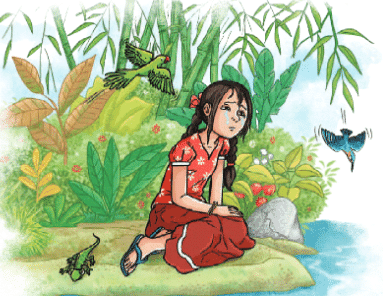
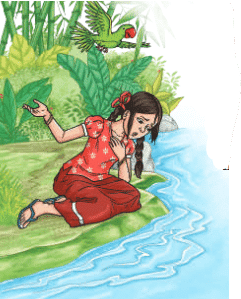
Ans: Jahnavi's interaction with the river is a turning point in the story. Feeling hopeless, she cries by the river, which speaks to her in a sleepy, kind voice. The river listens to her desire to learn about the world and her fear of being too old for school. It encourages her by affirming that girls are just as capable as boys and suggests a practical step: to walk into the classroom and listen quietly. This advice gives Jahnavi the courage to take action, and the river's mention of ships and the world beyond sparks her imagination, motivating her to pursue her dream with determination.
Q2: Describe the role of the teacher in helping Jahnavi achieve her dream of going to school.
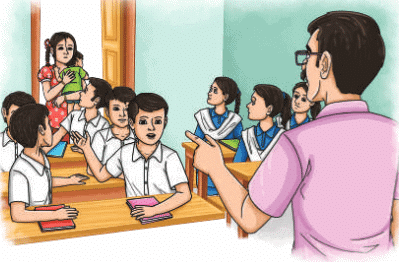
Ans: The teacher plays a crucial role in making Jahnavi's dream of attending school a reality. When Jahnavi bravely enters the classroom with her brother Appu and listens to a story about King Ashoka, the teacher notices her but does not send her away. Instead, the teacher learns she is Gopi's sister and takes the initiative to visit Jahnavi's home that evening to discuss her education with her parents. This visit is pivotal, as it helps convince Jahnavi's parents, particularly her initially hesitant father, to allow her to join school, thus enabling her to start her educational journey.
Q3: Explain how Jahnavi's mother's past influences her decision to support Jahnavi's education.
Ans: Jahnavi's mother initially delays her daughter's schooling due to her responsibilities at home and her young age. However, when the teacher visits, her mother becomes supportive, influenced by her own past. She recalls her childhood dream of studying, which she could not fulfil. This unfulfilled aspiration makes her empathise with Jahnavi's desire to learn. Her personal experience motivates her to ensure Jahnavi gets the opportunity she missed, and she advocates for Jahnavi's education, helping to persuade her father and secure family approval for Jahnavi to attend school.
Q4: What lessons does the story teach about courage and determination?
Ans: The story teaches that courage and determination are essential for overcoming obstacles to achieve one's dreams. Jahnavi's courage is evident when she follows the river's advice and enters the classroom despite her fears and lack of permission. Her determination is shown in her persistent dream of going to school, even when her family initially denies her the opportunity. The story illustrates that taking small, brave steps, like Jahnavi's decision to listen quietly in class, combined with unwavering determination, can lead to significant changes, such as gaining her parents' approval to study, emphasising the power of these qualities in facing challenges.
Q5: How does the story highlight the importance of support from others in achieving one's dreams?
Ans: The story underscores that support from others is vital for achieving dreams, especially when facing societal or familial barriers. Jahnavi's dream of going to school is realised through the encouragement and actions of key figures. The river provides emotional support and practical advice, boosting her confidence. The teacher's proactive visit to Jahnavi's home bridges the gap between her aspirations and her family's concerns. Her mother's eventual support, driven by her own past, sways her father's decision. Together, these supportive figures-the river, teacher, and mother-illustrate that dreams are often achieved with the help of others who believe in and advocate for the dreamer.
FAQs on Worksheet Solutions: The Day the River Spoke
| 1. What does the river symbolize in "The Day the River Spoke" and why is it important to the story? |  |
| 2. How do the characters react when the river actually starts speaking in this chapter? | |
| 3. What lesson about environmental awareness does "The Day the River Spoke" teach for Class 7 students? | |
| 4. Why is personification used as a literary device when the river speaks in this chapter? | |
| 5. What are the main problems the river complains about in "The Day the River Spoke" NCERT chapter? | |