CBSE Class 7 > Class 7 Notes > English Poorvi - New NCERT > Short and Long Answer Questions: Rani Abbakka
Short and Long Answer Questions: Rani Abbakka

Short Answer Questions
Q1: Why did Rani Abbakka refuse to pay tribute to the Portuguese?
Ans: Rani Abbakka refused to pay tribute because she regarded Ullal as a sovereign, independent state and would not accept control or orders from Portugal. Her refusal showed her determination to protect her kingdom's freedom and dignity.
Q2: What was Veera Narasimha's reaction to Abbakka's plan to resist the Portuguese?
Ans: Veera Narasimha, Abbakka's husband, was worried because he feared that resisting the Portuguese would provoke them and put his kingdom, Bangadi, at risk. He tried to persuade her to change her mind and even ordered his soldiers to stop her, but Abbakka remained firm in her decision.
Q3: How did Rani Abbakka strengthen Ullal against the Portuguese?
Ans: Rani Abbakka strengthened Ullal by ordering the building of merchant ships, forming an alliance with the Zamorin of Kozhikode and persuading neighbouring rajas to unite against the Portuguese. These measures improved Ullal's trade, especially with Arabia, and increased its defensive strength.
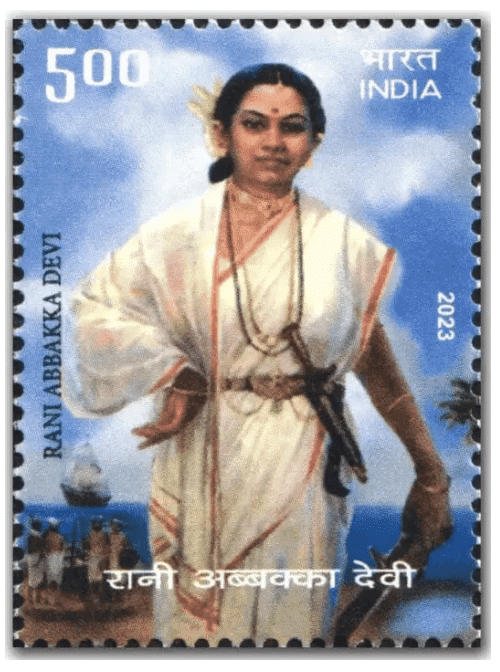
Q4: What happened during the battle for Ullal?
Ans: During the four-day battle for Ullal, Rani Abbakka led her soldiers with great courage, fighting alongside them against the Portuguese attack. The people of Ullal displayed strong bravery, forced the Portuguese to retreat, and kept Ullal free from further trouble by them.
Q5: How did Rani Abbakka's victory impact other Indian rulers?
Ans: Rani Abbakka's victory inspired other Indian rulers to resist foreign powers. Her courageous leadership and the success of a united defence showed that even powerful enemies could be challenged, which strengthened the confidence of other rulers to stand up for their independence.
Long Answer Questions
Q1: How did Rani Abbakka's determination shape her response to the Portuguese demand for tribute, and what does this reveal about her character?
Ans: Rani Abbakka's determination made her refuse the Portuguese demand for tribute because she would not compromise Ullal's sovereignty. Her decision revealed that she was a resolute and principled ruler who valued freedom above convenience. She also took practical steps to defend her kingdom: she united local rajas, formed an alliance with the Zamorin of Kozhikode and strengthened Ullal's naval and trade capacity. By personally leading her forces during the four-day fight and mounting an attack on the Portuguese fort, she showed fearless leadership and deep commitment to her people. Her actions ensured Ullal's independence and encouraged others to resist foreign domination.
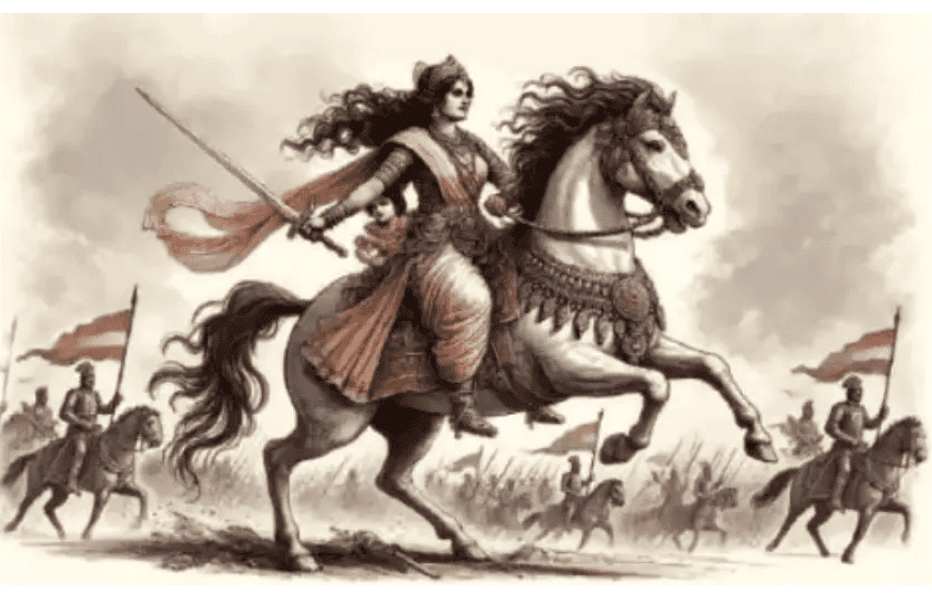
Q2: What challenges did Rani Abbakka face in her fight against the Portuguese, and how did she overcome them?
Ans: Rani Abbakka faced several challenges: the military strength of the Portuguese, opposition from her husband, and hesitation among some local rajas. She overcame these difficulties in a few ways. She forged alliances, most importantly with the Zamorin of Kozhikode, built merchant ships to support trade and logistics, and persuaded neighbouring chiefs to unite for a common defence. Her personal example-leading soldiers in battle-helped to inspire courage and unity among her people. These combined measures enabled her to defeat the Portuguese and protect Ullal's independence.
Q3: Why was Rani Abbakka's leadership significant in uniting her people and allies against the Portuguese?
Ans: Rani Abbakka's leadership mattered because she combined clear purpose with practical strategy. She declared Ullal's sovereignty firmly, which gave others a clear cause to support. She secured an alliance with the Zamorin of Kozhikode and worked to bring local rajas together, improving both military strength and economic support through trade. By fighting alongside her soldiers during the four-day battle, she set a personal example that inspired loyalty and bravery. Her leadership not only protected Ullal but also showed other rulers the value of unity and firm leadership when facing a powerful enemy.
Q4: How did Rani Abbakka's victory over the Portuguese influence Ullal and other Indian kingdoms?
Ans: Rani Abbakka's victory reinforced Ullal's independence and increased its prestige in the region. The Portuguese were driven back and did not return to trouble Ullal, while the alliance with the Zamorin and increased trade, particularly with Arabia, helped Ullal's economy. Beyond Ullal, her success became an example for other Indian rulers, showing that organised resistance and unity could defeat stronger colonial forces. This encouraged a spirit of opposition to foreign domination across neighbouring kingdoms.
Q5: What lessons about courage and leadership can we learn from Rani Abbakka's story?
Ans: Rani Abbakka's life teaches several lessons about courage and leadership: stand firm for principles even when it is risky; build alliances and plan strategically; lead by example to inspire others; and work to unite people for a common goal. Her determination, practical action and willingness to share danger with her soldiers show that a leader's personal courage and ability to unite others can bring about important change and protect a community's freedom and dignity.
The document Short and Long Answer Questions: Rani Abbakka is a part of the Class 7 Course English Poorvi Class 7 - New NCERT.
All you need of Class 7 at this link: Class 7
FAQs on Short and Long Answer Questions: Rani Abbakka
| $1. Who was Rani Abbakka and what is her significance in history? |  |
Ans.Rani Abbakka was a prominent queen of the coastal kingdom of Ullal in Karnataka, India, during the 16th century. She is celebrated for her fierce resistance against Portuguese colonial rule and is regarded as a symbol of bravery and valor. Her leadership and strategies during numerous battles made her a notable figure in Indian history.
| $2. What were the key events in Rani Abbakka's life that showcased her leadership? | |
Ans.Key events in Rani Abbakka's life include her successful defense of her kingdom against the Portuguese forces, her alliances with neighboring kings, and her innovative strategies in warfare. One of the most notable events was the Battle of Ullal, where she led her troops to victory against a much stronger enemy, demonstrating her courage and military acumen.
| $3. How did Rani Abbakka contribute to the empowerment of women in her time? | |
Ans.Rani Abbakka's reign is significant for the empowerment of women as she broke traditional gender roles by taking on leadership in battles and governance. Her example inspired many women in her kingdom and beyond, encouraging them to assert their rights and roles in society, paving the way for future generations of female leaders.
| $4. What challenges did Rani Abbakka face during her rule? | |
Ans.Rani Abbakka faced numerous challenges during her rule, including constant threats from the Portuguese who sought to control the coastal trade routes. Additionally, she dealt with internal dissent and the complexities of forming alliances with other kingdoms. Despite these challenges, her resilience and strategic skills helped her maintain her kingdom's independence for many years.
| $5. Why is Rani Abbakka considered a national hero in India? | |
Ans.Rani Abbakka is considered a national hero in India due to her unwavering resistance against colonialism and her role in the struggle for independence. Her bravery and dedication to her kingdom have made her a symbol of pride and inspiration, representing the fight for freedom and the empowerment of women in Indian history.
About this Document

1.2K Views

4.66/5 Rating

Apr 19, 2026 Last updated
Related Exams
Document Description: Short and Long Answer Questions: Rani Abbakka for Class 7 2026 is part of English Poorvi Class 7 - New NCERT preparation. The notes and questions for Short and Long Answer Questions: Rani Abbakka have been prepared according to the Class 7 exam syllabus. Information about Short and Long Answer Questions: Rani Abbakka covers topics like and Short and Long Answer Questions: Rani Abbakka Example, for Class 7 2026 Exam. Find important definitions, questions, notes, meanings, examples, exercises and tests below for Short and Long Answer Questions: Rani Abbakka.
Introduction of Short and Long Answer Questions: Rani Abbakka in English is available as part of our English Poorvi Class 7 - New NCERT for Class 7 & Short and Long Answer Questions: Rani Abbakka in Hindi for English Poorvi Class 7 - New NCERT course. Download more important topics related with notes, lectures and mock test series for Class 7 Exam by signing up for free. Class 7: Short and Long Answer Questions: Rani Abbakka
Description
Short & Long Answer Questions: Rani Abbakka of English Poorvi Class 7 - variety of important questions with solutions, helping you prepare for exam. Download free PDF from EduRev.
Information about Short and Long Answer Questions: Rani Abbakka
In this doc you can find the meaning of Short and Long Answer Questions: Rani Abbakka defined & explained in the simplest way possible. Besides explaining types of Short and Long Answer Questions: Rani Abbakka theory, EduRev gives you an ample number of questions to practice Short and Long Answer Questions: Rani Abbakka tests, examples and also practice Class 7 tests



Related Searches
practice quizzes, study material, Short and Long Answer Questions: Rani Abbakka, Sample Paper, MCQs, Viva Questions, Semester Notes, past year papers, Free, Short and Long Answer Questions: Rani Abbakka, Important questions, Short and Long Answer Questions: Rani Abbakka, pdf , shortcuts and tricks, Extra Questions, ppt, Summary, Previous Year Questions with Solutions, video lectures, Objective type Questions, Exam, mock tests for examination;