NCERT Solutions: Rani Abbakka

Let us do these activities before we read (Page 206)
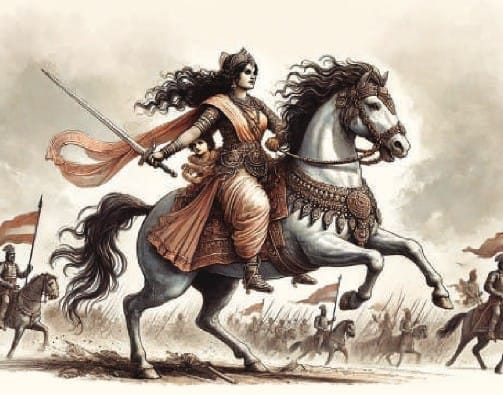
Q1: Solve the riddle given below and share your answer with your classmates and the teacher.
She was a queen who led the fight,
She fought for her country and her right.
With a shining sword in her hand,
Her son on her back in a cloth band
Remembered as a warrior grand,
She died defending her beloved Motherland.
Who is she?
Ans: The answer to the riddle is Rani Lakshmibai, the Queen of Jhansi. She was a brave warrior queen who fought against British rule during the Indian Revolt of 1857.
Q2: Think of any other women warriors who made a significant contribution to India's struggle for Independence. Share your answers with your classmates and the teacher.
Ans: Other women warriors who contributed to India's freedom struggle include: Rani Lakshmibai of Jhansi, who led forces in 1857 against the British; Captain Lakshmi Sahgal, who commanded the Rani of Jhansi Regiment in the Indian National Army; and Begum Hazrat Mahal, who organised resistance in Awadh during 1857. Each of these leaders displayed courage and leadership that inspired many to resist foreign rule.
Let us discuss (Page 213)
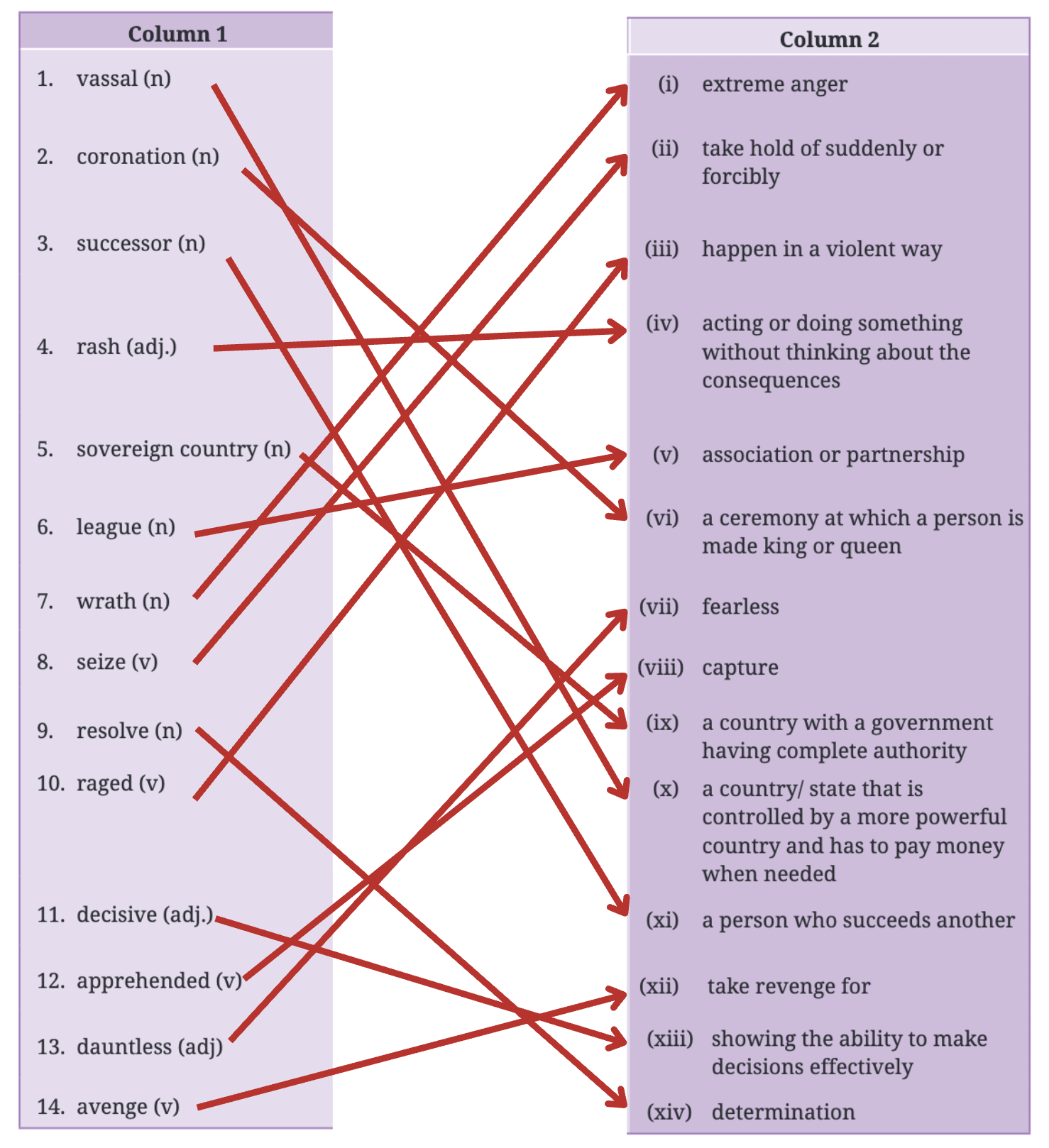
QI: Match the words in Column 1 with their meanings in Column 2. Share your answers with your classmates and the teacher.
Ans:
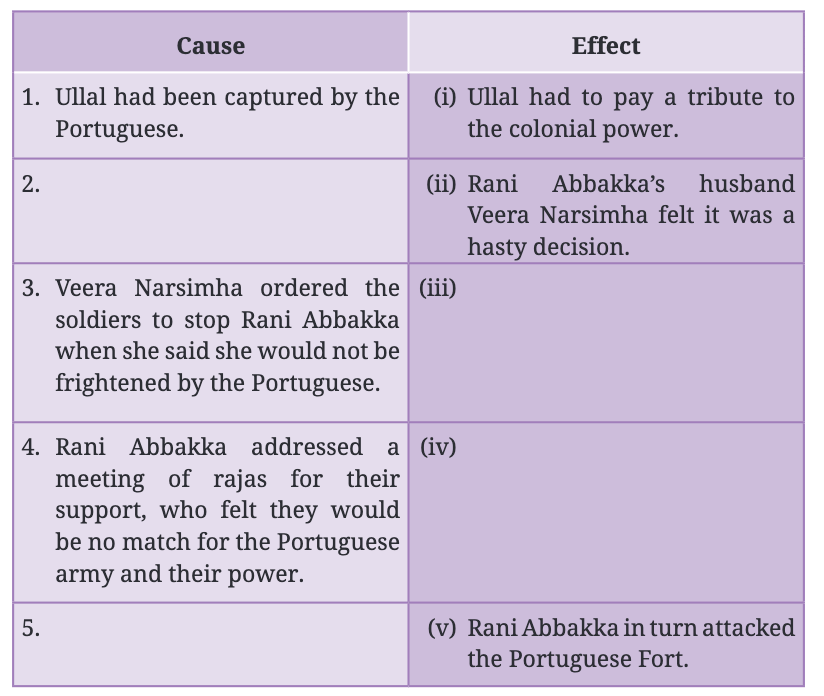
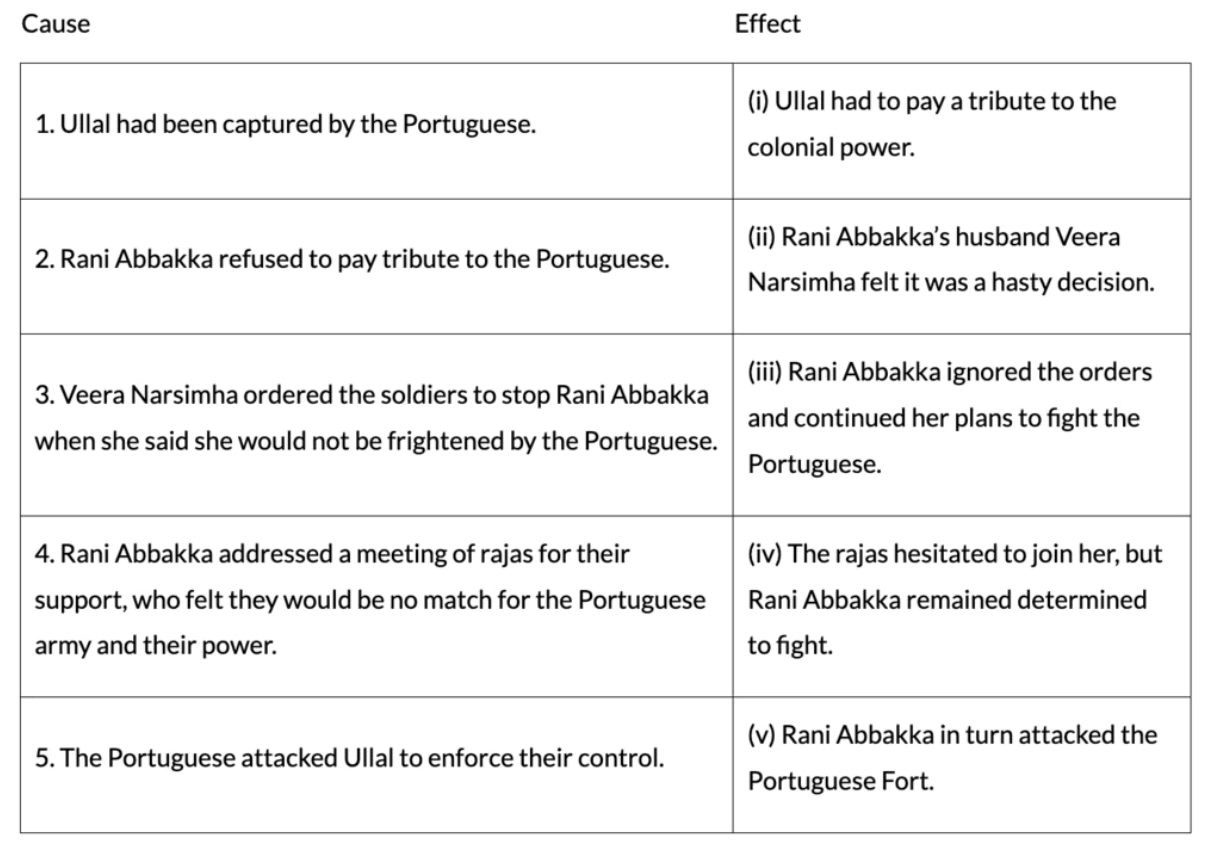
QII: Complete the table given below based on your understanding of the lesson. An example has been done for you. Share your answers with your classmates and the teacher.
Ans:
Let us think and reflect (Page 214)
QI: Read the extract given below and answer the questions that follow.
Portuguese envoy: Our Governor has sent me to remind you that the annual tribute from Ullal is long overdue and...
Rani Abbakka: We are a sovereign country. We don't pay tribute to Portugal. And we don't take orders from the Portuguese!
Portuguese envoy: Your Majesty, you will regret your stand.
Abbakka ordered merchant ships to be built and in alliance with the Zamorin of Kozhikode, she defied the Portuguese and established a hugely profitable trading relation with Arabia.
1. What does the word 'tribute' mean in this context?
Ans: In this context, tribute means money, goods or regular payments demanded by a stronger power to show submission. Rani Abbakka refused to pay such tribute because doing so would have meant accepting Portuguese control over Ullal.
2. Complete the sentence with a suitable reason. Rani Abbakka says, "We are a sovereign country" because
Ans: Rani Abbakka says, "We are a sovereign country" because Ullal had its own ruler and independent authority, and it did not accept orders, control or payment demands from the Portuguese.
3. Identify whether the following statement is true or false. The Portuguese envoy threatened Rani Abbakka.
Ans:True. The Portuguese envoy threatened Rani Abbakka by warning, "Your Majesty, you will regret your stand," which implies a threat of punishment or attack if she did not obey.
4. Choose a word given in brackets to replace the underlined word. "... she defied the Portuguese and established a hugely profitable trading relation with Arabia." (defeated/disobeyed)
Ans: The suitable replacement is disobeyed. Here defied means she refused to follow Portuguese demands and instead pursued her own policies and trade relations.
5. Choose the option that lists the qualities of Rani Abbakka, based on this extract.
(i) bold (ii) thoughtful (iii) capable (iv) generous (v) determined
A. (i), (ii), and (v)
B. (ii), (iii), and (iv)
C. (i), (iii), and (v)
D. (ii), (iv), and (v)
Ans: (C)
Explanation: Rani Abbakka was bold in refusing the envoy's demand, capable in arranging merchant ships and forming trade alliances, and determined in defending Ullal rather than submitting to foreign control. These three qualities best match options (i), (iii) and (v).
QII: Answer the following questions.
1. Rani Abbakka spoke to her mother on her deathbed. How might these words have made her mother feel?
Ans: Rani Abbakka's promise to protect Ullal and fight for its freedom would have made her mother feel proud and reassured. She would have taken comfort in knowing her daughter was brave and ready to lead and defend the people.
2. What does the support of the people of Ullal and the soldiers for Rani Abbakka suggest about their mindset?
Ans: The people's and soldiers' support suggests they were patriotic, loyal and courageous. They trusted Rani Abbakka's leadership and were willing to rally together to defend their homeland.
3. How might the people of Ullal have felt when the mighty Portuguese were defeated?
Ans: The people of Ullal likely felt joyful, proud and relieved after the Portuguese were defeated. The victory would have boosted their confidence and strengthened their faith in local leadership and unity.
4. Why do you think Rani Abbakka's victory against the Portuguese would have inspired other rulers to go against a foreign power?
Ans: Rani Abbakka's success showed that unity, courage and clever strategy could defeat a stronger foreign force. Her victory provided a powerful example that resistance could succeed, encouraging other rulers to defend their kingdoms rather than accept foreign domination.
Let us learn (Page 215)
QI: Study the following words from the lesson.
seize, sovereign, their, soldiers.
The spelling of the given words have 'ei' and 'ie' in them.
Spelling tip: 'i' before 'e' except after 'c'.
For example: receive, deceive.
Now, fill in the blanks with 'ie' or 'ei' for the following words.
Ans:
c_ei_ling - ceiling
bel_ie_ve - believe
th_ie_f - thief
- ach_ie_ve - achieve
- perc_ei_ve - perceive
- prot_ei_n - protein
- soc_ie_ty - society
- sh_ie_ld - shield
- w_ei_ght - weight
- fr_ie_nd - friend
QII: Study the highlighted word in the following sentence from the lesson.
...; and Bangadi too may have to face their wrath.
Was the initial letter 'w' pronounced? There are many words in the English language where certain letters are not pronounced but are spelt. They are called 'silent letters'.
For example: campaign, knowledge, pneumonia, honour, calm. Now, find more words with silent letters.
Ans: The initial 'w' in wrath is not pronounced; it is a silent letter. More words with silent letters include:
- doubt (silent 'b')
- wrist (silent 'w')
- knight (silent 'k')
- debt (silent 'b')
- listen (silent 't')
QIII: Read the following expressions from the lesson.
laughing stock, last laugh.
Use the dictionary page given below to find the meanings of the following. burst out laughing, don't make me laugh, laugh until you cry, have a good laugh. Now, use these expressions in sentences of your own.
Ans:
- burst out laughing: To suddenly start laughing.
Sentence: When the clever trick worked, the soldiers burst out laughing at the surprised look on the enemy's faces. - don't make me laugh: Said when something seems ridiculous or unbelievable.
Sentence: The Portuguese boast that they would win easily-don't make me laugh! - laugh until you cry: To laugh so much that tears come to your eyes.
Sentence: The villagers laughed until they cried when they heard about the enemy's clumsy attempt to cross the river. - have a good laugh: To enjoy a hearty laugh.
Sentence: After the successful defence, everyone had a good laugh while remembering the enemy's failed plan.
QIV: Read the following dialogues from the lesson.
- Rani Abbakka said, "I will make them pay for this."
- The merchants said to the Arabians, "Visit us again, brother."
The given sentences are the direct words of the speaker; hence, they are in direct speech.
The reported forms or indirect forms of speech for the given sentences are:
- Rani said that she would make them pay for that.
- The merchants told the Arabian brothers to visit them again.
While reporting direct speech to indirect speech, we make certain modifications related to time, place, and person.
- Time (Tense): Verbs are often shifted back (for example, present simple to past simple) to reflect the change in time.
- Place (Adverbs of Place): Words indicating place are changed to fit the reporter's viewpoint.
- Person: Pronouns and subjects are changed to match the new perspective.
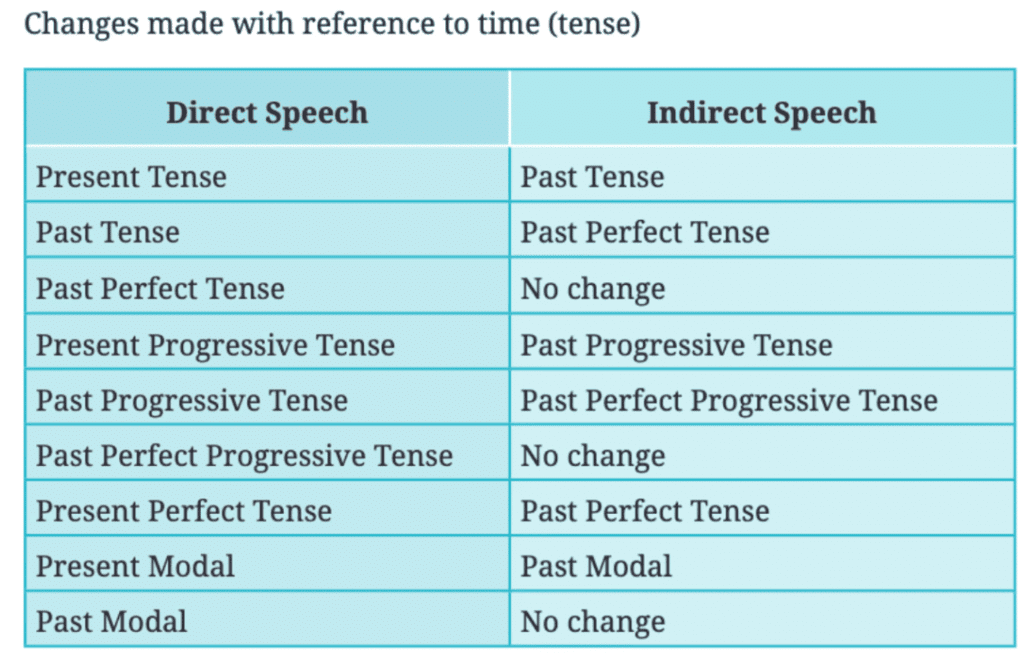
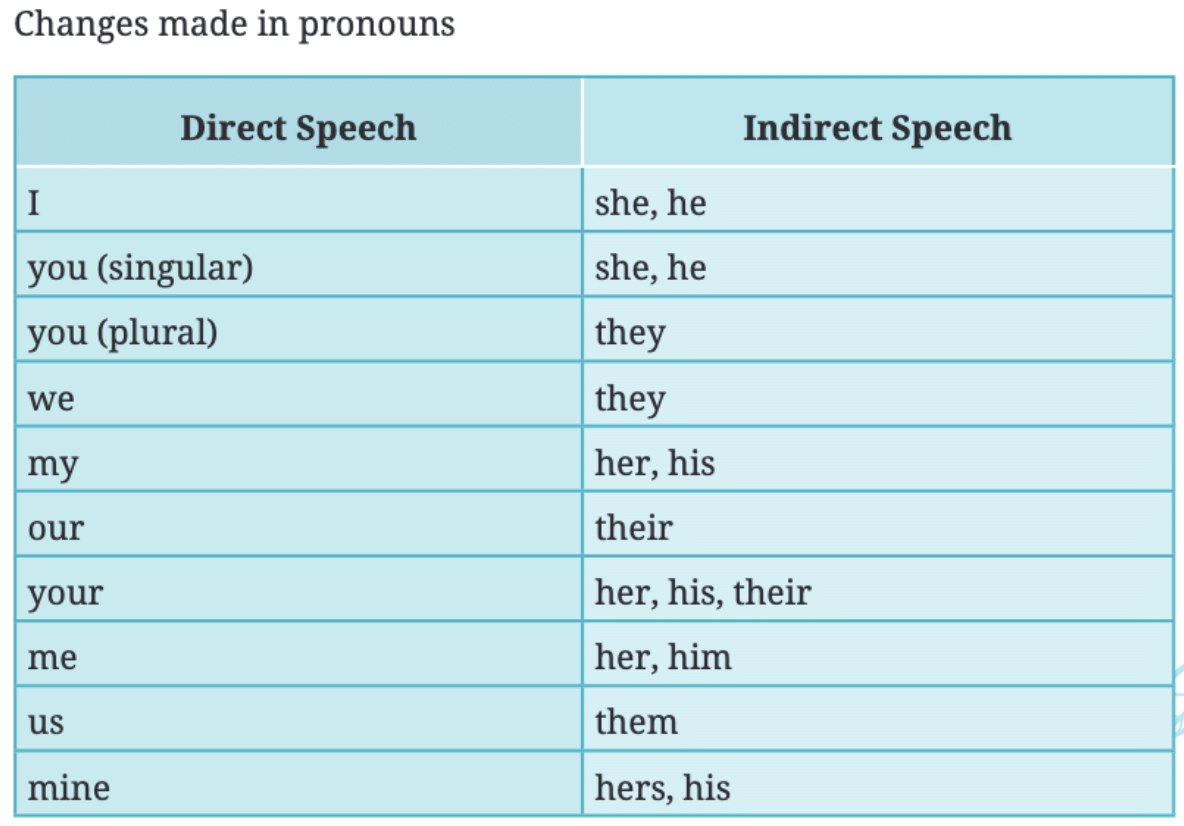
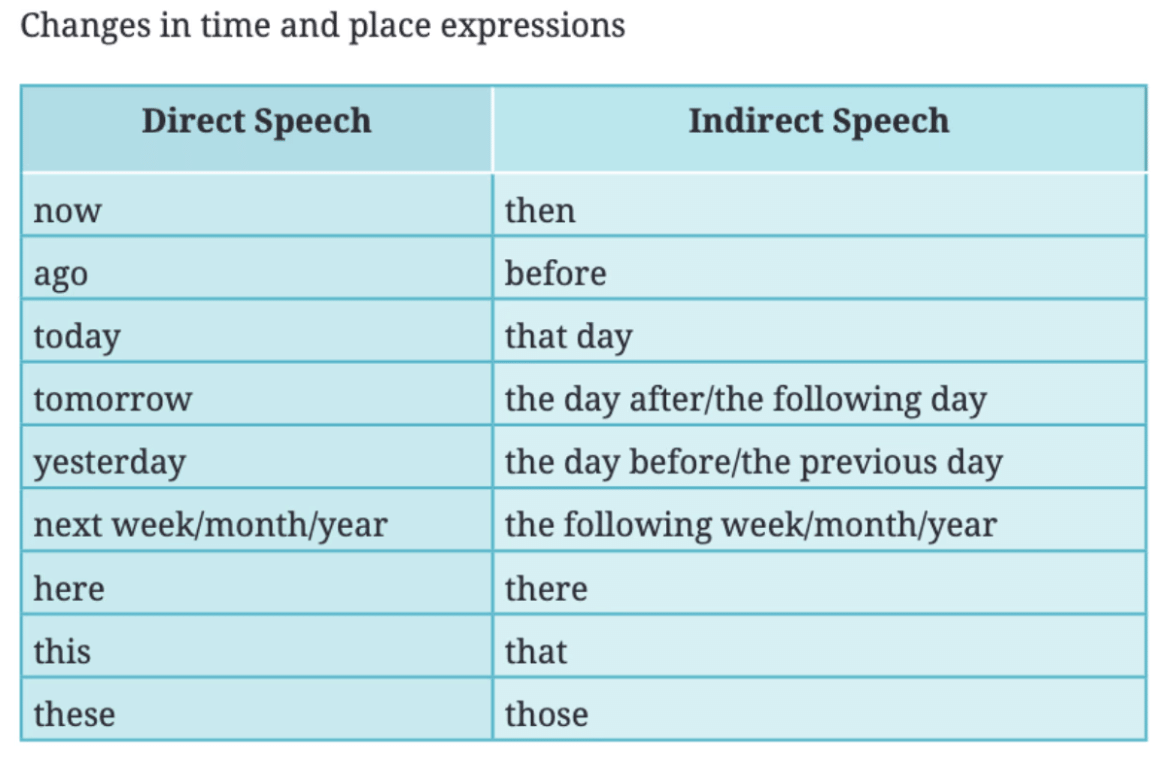
Rewrite the following sentences in direct speech to indirect speech. Remember to make the necessary changes.
Ans:
- The teacher said, "Women of valour have made significant contributions throughout history."
Ans: The teacher remarked that women of valour had made significant contributions throughout history. - "I enjoy reading historical novels," said Smitha.
Ans: Smitha said that she enjoyed reading historical novels. - The captain said to the coach, "Our team won the championship last year."
Ans: The captain told the coach that their team had won the championship the previous year. - The class teacher said, "Please turn off the lights when you leave."
Ans: The class teacher requested that they turn off the lights when they left. - "Finish the work before dinner," said mother to Ravi.
Ans: Mother advised Ravi to finish the work before dinner. - The vet said to the pet owner, "Take the dog for a walk."
Ans: The vet instructed the pet owner to take the dog for a walk.
QV: Read the conversation between the Captain and the team.
Captain: We need to focus on our strategy for the final match.
Player: I have some ideas on how we can improve our strategy.
Captain: Make sure to share those ideas with the team during practice.
Complete the following paragraph by transforming the dialogue in the indirect form of speech.
Ans: The Captain said that they needed to focus on their strategy for the final match. A player replied that he had some ideas about how they could improve their strategy. The Captain told the player to make sure he shared those ideas with the team during practice.
Let us write (Page 221)
Q: India's past was heroic, and at present, the pace of her development is inspiring. Women play a significant role in it. These women are around us, inspiring us all the time. With these thoughts, write a conversation between two students, Pratap and Tarana, discussing the role played by women in forming India's identity as a strong nation.
Ans:
Pratap: Tarana, I have a lot of respect for women like Rani Abbakka, who fought bravely against the Portuguese to protect Ullal.
Tarana: I believe in the capabilities of women. Did you know Rani Lakshmibai led her army in the 1857 revolt against the British?
Pratap: Yes, their courage shaped India's identity as a fearless nation. Women like Indira Gandhi also strengthened India as a global leader.
Tarana: Absolutely. Modern women like Kalpana Chawla, who became an astronaut, inspire us to aim high and contribute to India's progress.
Pratap: I admire how women in the Armed Forces, such as Captain Lakshmi Sahgal, fought for freedom and now continue to serve the nation.
Tarana: And leaders like Kiran Bedi, who brought reforms to policing, show that women lead with strength and vision.
Pratap: These women prove that India's strength comes from their determination and leadership.
Tarana: I agree, Pratap. Their contributions make India proud and help build a strong, modern nation today.
FAQs on NCERT Solutions: Rani Abbakka
| 1. Who was Rani Abbakka and what is her significance in Indian history? |  |
| 2. What were the major challenges faced by Rani Abbakka during her reign? | |
| 3. How did Rani Abbakka demonstrate her leadership and military skills? | |
| 4. What role did Rani Abbakka play in promoting women's empowerment in her time? | |
| 5. Why is Rani Abbakka’s story important for contemporary society? | |





