Worksheet: Growing up with Nature


Multiple Choice Questions (MCQs)
Q1: What special event was happening in the village?
(a) Sports competition
(b) The school annual day
(c) The village becoming solar-powered
(d) A tree-planting drive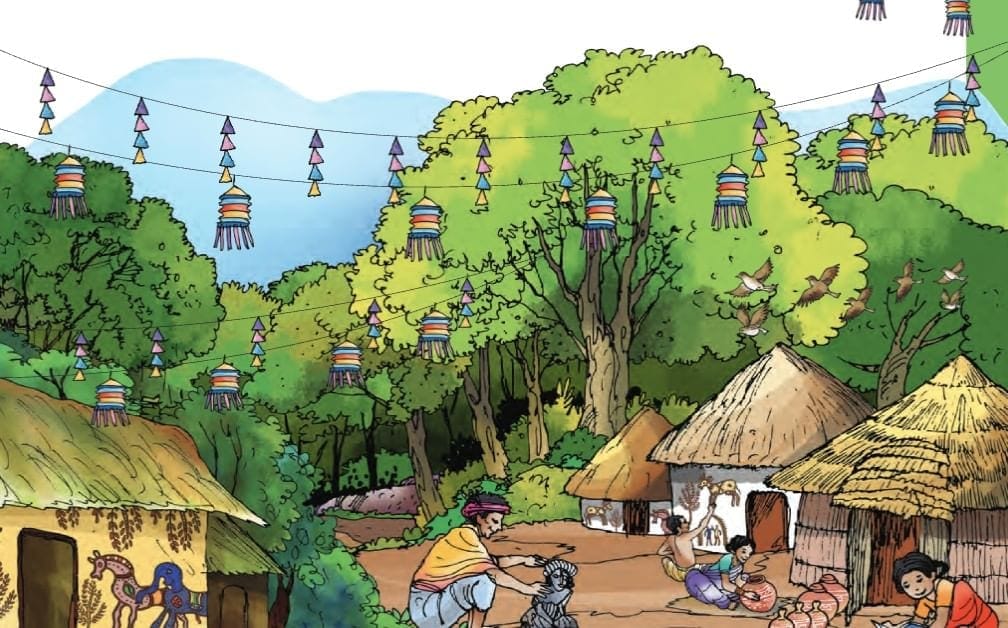
Q2: What natural material is used to build homes in the village?
(a) Bricks and cement
(b) Wood and metal
(c) Clay, hay, and cow dung
(d) Plastic and glass
Q3: What is the purpose of using neem oil in the village?
(a) To clean the house
(b) To keep mosquitoes away
(c) To make the food tastier
(d) To paint the walls
Q4: What is the name of the tribe that collects honey in Karnataka?
(a) Jenu Kurubas
(b) Gond
(c) Santals
(d) Bhils
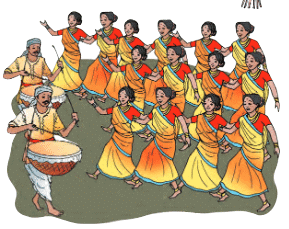 Jenu Kurubas
Q5: What is the significance of Sacred Groves in the village?
(a) They are used for farming
(b) They are areas for worship and preserving wildlife
(c) They are used for storing water
(d) They are areas where animals live freely
Fill in the Blanks
Q1. The Palash tree is also called the ________ of the forest because of its vibrant flowers.
Q2. The village was going to be fully powered by ________ for the celebrations.
 Solar Panel
Q3. The villagers use ________ to store grains and keep them safe from pests.
Q4. Reena and Amit's grandmother uses ________ to paint on the cloth.
Q5. The ________ is a mixture made with neem oil to protect against mosquitoes.
True or False
Q1. The village was decorated with plastic and artificial materials for the festival.
Q2. Bamboo baskets in the village are used to store grains and are coated with cow dung to keep insects away.
Q3. The Jenu Kurubas tribe uses modern equipment to collect honey.
Q4. The village's solar power initiative helps reduce the use of fossil fuels and makes the village more sustainable.
Q5. Sacred Groves are areas where plants and wildlife are protected, but they are not used for worship.
Short Question Answers
Q1: What is Gond art and how does it connect with nature?
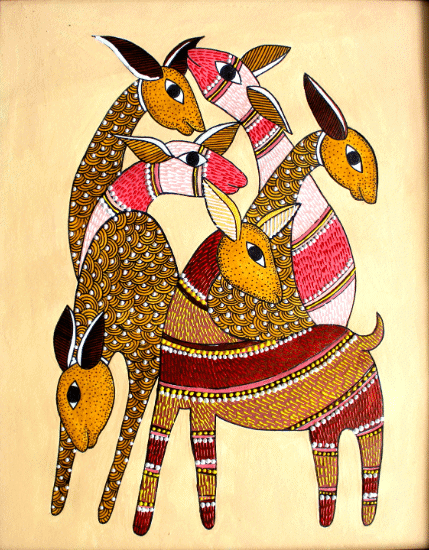 Gond Art
Q2: What makes the houses in the village environmentally friendly?
Q3: How do the villagers use neem oil in daily life?
Q4: How do the Jenu Kurubas tribe show respect for nature while collecting honey?
Q5: What is the importance of Sacred Groves in the village?
Vocabulary Activity - "Guess the Word"
Q1: A type of energy generated from sunlight, used to power items like fans and light bulbs.
Q2: A tree whose flowers make the forest appear reddish-orange.
Q3: A natural material used for building homes in the village.
Q4: The small forest areas protected by the community for worship and wildlife preservation.
Q5: A tree whose leaves are used to repel insects.
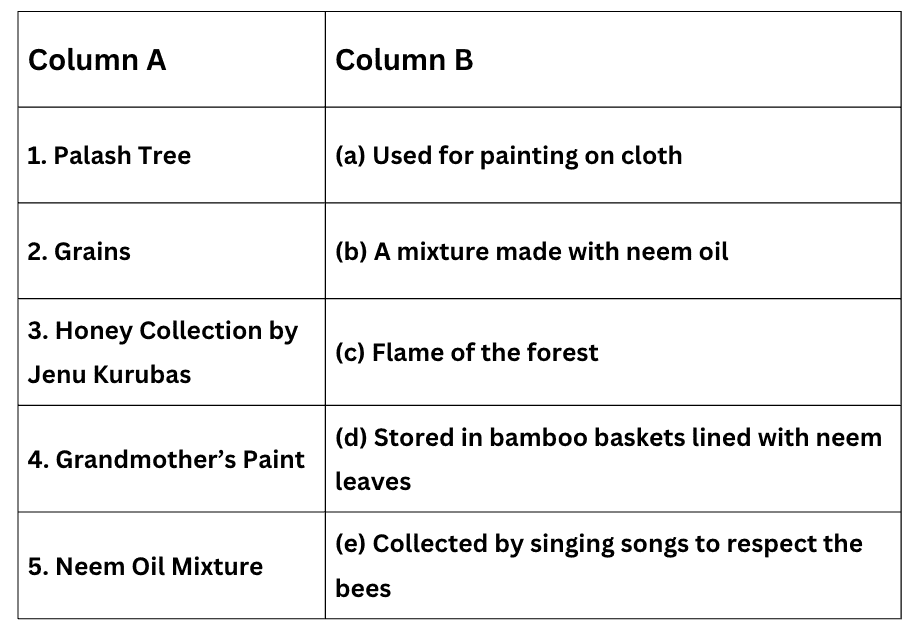
Match the Following
FAQs on Worksheet: Growing up with Nature
| 1. How do plants and animals grow together in nature for Class 4? |  |
| 2. What are the different ways animals use plants for survival and growth? | |
| 3. How do seasonal changes affect how plants and animals grow in their habitats? | |
| 4. What happens when we disturb natural spaces where plants and animals live together? | |
| 5. How can Class 4 students observe and record plant and animal interactions in their own surroundings? | |