CBSE Class 4  >  Class 4 Notes  >  EVS (Our Wondrous World: New NCERT)  >  Worksheet: How Things are Made

Worksheet: How Things are Made

Multiple Choice Questions (MCQs)

Q1: What is the primary material used to make recycled paper?
(a) Wood pulp
(b) Old newspapers
(c) Plastic
(d) Cloth
Multiple Choice Questions (MCQs)

Q2: Which of these ingredients can be used to color recycled paper naturally?
(a) Turmeric
(b) Artificial dyes
(c) Paint
(d) Ink

Q3: What is the Braille system used for?
(a) To help visually impaired people read and write
(b) To make paper
(c) To teach children about colors
(d) To decorate paper

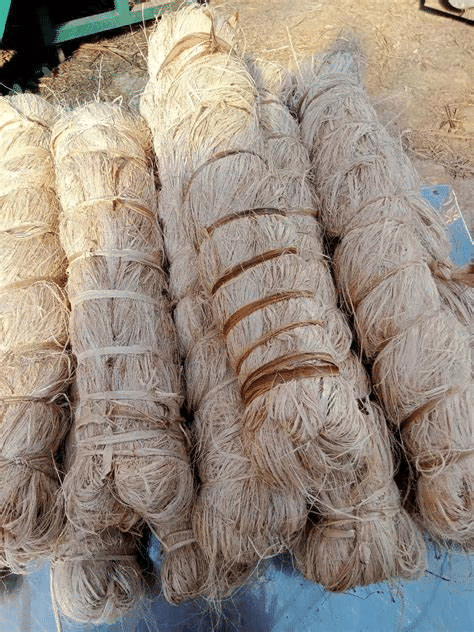
Q4: What is an example of an eco-friendly material used to make paper?
(a) Banana fiber
(b) Plastic
(c) Cotton
(d) LeatherMultiple Choice Questions (MCQs)
Q5: What is the purpose of fenugreek seeds in making recycled paper?
(a) To add color
(b) To bind the paper
(c) To soften the paper
(d) To make the paper waterproof

Fill in the Blanks

Q1: Recycled paper is made from old ________.
Q2: The process of turning old materials into new products is called ________.
Q3: ________ is a system of raised dots on paper that allows visually impaired people to read.
Q4: ________ are eco-friendly materials that can be used to make paper, helping to save trees.
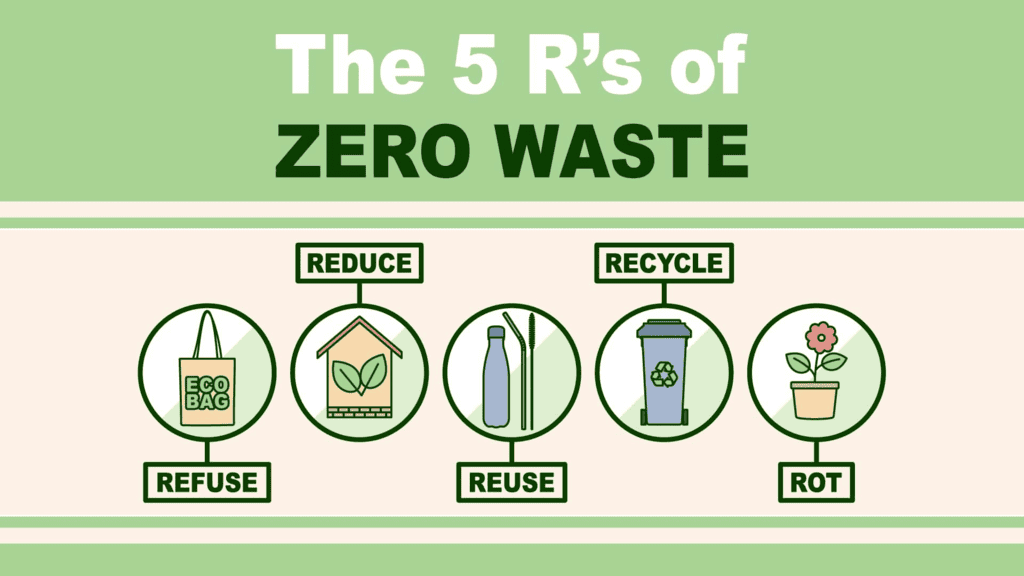
Q5: The 5Rs of waste management are: Refuse, Reduce, ________, Repurpose, and Recycle.Fill in the Blanks
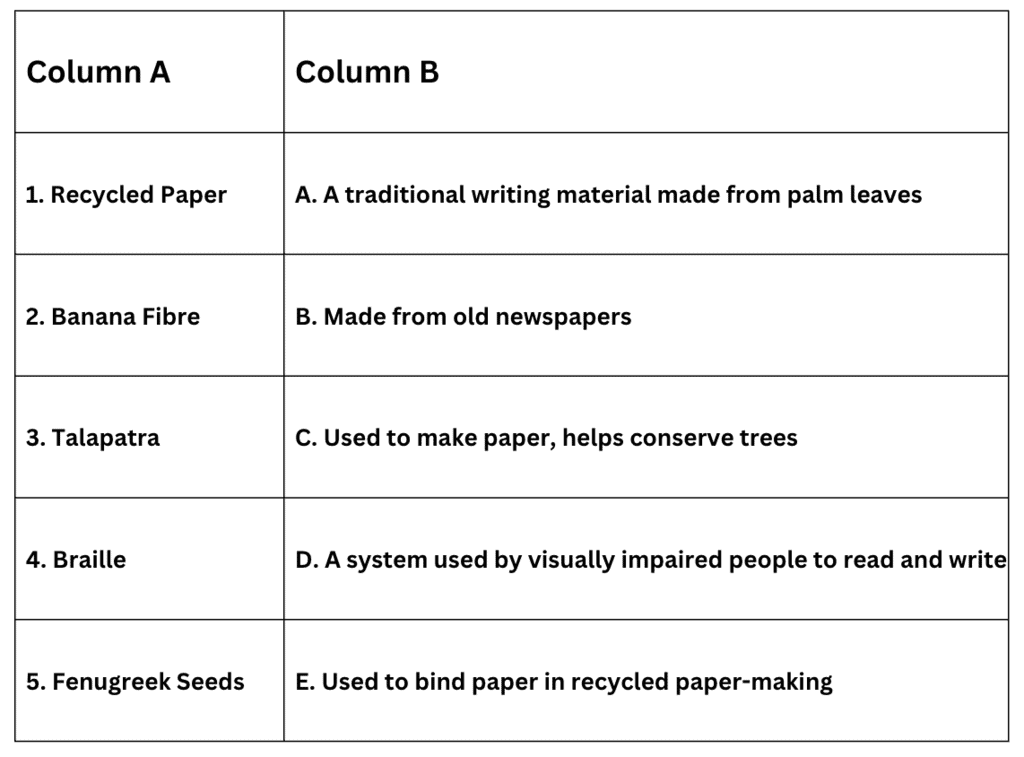
Match the Following

Match the Following

Short Question Answers

Q1: How do you make recycled paper?
Q2: Why is it important to use eco-friendly materials like banana fiber for making paper?
Q3: What does the 5Rs of waste management stand for?
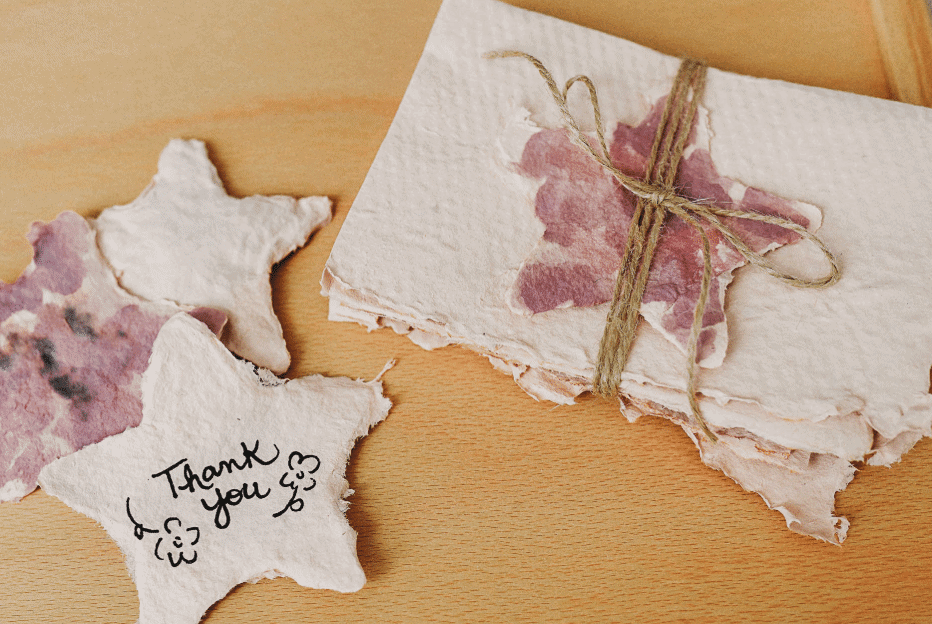
Q4: How can we make a greeting card using recycled paper?Short Question Answers
Q5: How does the Braille system help visually impaired people?

Vocabulary Activity - "Guess the Word"

Q1: The process of turning old paper into new paper.
Q2: A system of raised dots used by visually impaired people to read and write.
Q3: A type of seed used to bind paper in recycled paper-making.
Q4: A natural material used to make paper and other products, such as banana fiber.
Q5: A material used historically in India for writing, made from palm leaves.

The document Worksheet: How Things are Made is a part of the Class 4 Course EVS for Class 4 (Our Wondrous World: New NCERT).
All you need of Class 4 at this link: Class 4

FAQs on Worksheet: How Things are Made

1. How are everyday things like pencils and notebooks made in factories?
Ans. Pencils are made by mixing graphite and clay, then shaping the mixture into thin rods and wrapping them in wood. Notebooks are created by cutting and binding paper sheets together with glue or stitching. Both involve multiple steps-from raw materials to final assembly-where different machines and workers perform specific tasks to produce the finished product students use daily.
2. What are the main steps involved in making clothes from raw cotton?
Ans. Cotton clothing production begins with harvesting cotton bolls, then cleaning and spinning fibres into yarn. The yarn is woven into fabric using looms, dyed for colour, and finally cut and stitched into garments. Each stage requires different machinery and skilled workers, transforming raw plant material into the clothes we wear through a sequential manufacturing process.
3. How does milk from cows become the packaged milk we buy at shops?
Ans. Milk is collected from cows and transported to dairy processing plants where it's cleaned and pasteurised to kill harmful germs. The milk is then cooled, packaged into cartons or bottles, and labelled before distribution to shops. This food production chain ensures milk remains fresh, safe, and ready for consumers through careful handling at every manufacturing stage.
4. Why do different items require different manufacturing processes and raw materials?
Ans. Each product's manufacturing method depends on its final use, durability requirements, and available raw materials. For example, plastic toys need moulding machines, while wooden furniture requires cutting and joining techniques. Understanding how things are made helps students appreciate that no two manufacturing processes are identical because each item has unique properties, purposes, and design needs based on what it must accomplish.
5. What happens to waste materials during the manufacturing process of common products?
Ans. Waste materials generated during production-like fabric scraps, metal shavings, or plastic offcuts-are either recycled, reused for other products, or disposed of responsibly. Many factories now implement waste management systems to reduce environmental impact. Understanding production leftovers teaches students that making things sustainably means minimising waste through reuse and recycling rather than simply discarding unwanted material.
Explore Courses for Class 4 exam
Get EduRev Notes directly in your Google search
Related Searches
practice quizzes, study material, Previous Year Questions with Solutions, Viva Questions, Objective type Questions, video lectures, Free, pdf , Exam, Worksheet: How Things are Made, ppt, Worksheet: How Things are Made, Semester Notes, shortcuts and tricks, MCQs, past year papers, Important questions, mock tests for examination, Worksheet: How Things are Made, Summary, Extra Questions, Sample Paper;