Topic wise Previous Year Questions (Solved) : Economic Geography

Q1: "While scarcity of water resources are felt locally, but its causes are increasingly global." Comment. (2024)
Ans: Water scarcity, experienced at local levels, is increasingly driven by global factors such as climate change, transboundary resource mismanagement, and economic globalization. This interplay of global causes and local impacts underscores the need for coordinated solutions, as evident in 2024.
- Climate Change: Global warming alters precipitation patterns, exacerbating local water shortages. In 2024, prolonged droughts in India's Marathwada region were linked to global climate shifts, reducing groundwater availability for farmers.
- Transboundary Issues: Rivers crossing national borders create global dependencies. In 2024, disputes over the Indus River between India and Pakistan highlighted how upstream damming globally affects local water access downstream.
- Economic Globalization: Global demand for water-intensive crops like cotton drives local overexploitation. In 2024, Punjab's groundwater depletion was worsened by export-driven agriculture, reflecting global market pressures.
- Local Impacts: While causes are global, effects are acutely local, impacting agriculture, health, and livelihoods. In 2024, Cape Town's water rationing showed how global climate trends translate into local crises.
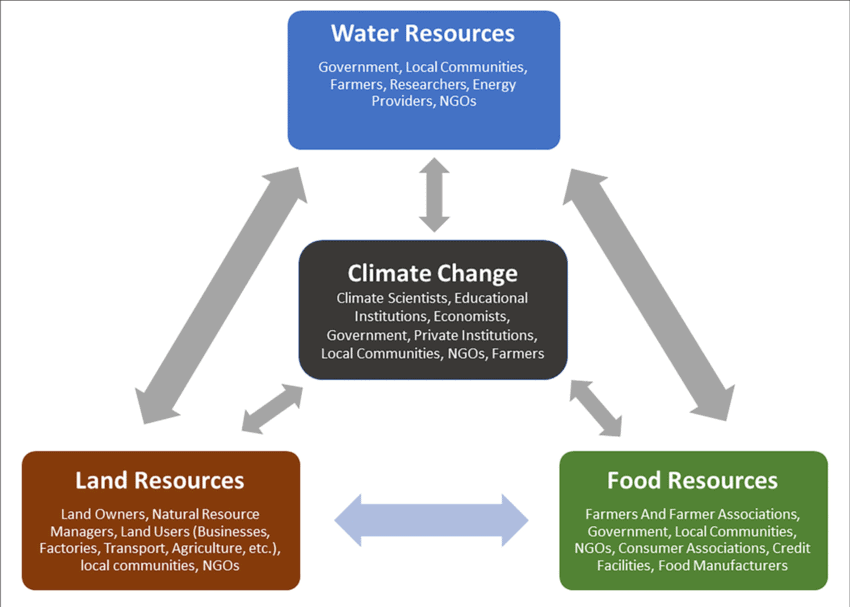
Addressing water scarcity requires global cooperation, such as climate agreements and equitable river treaties, alongside local conservation efforts. In 2024, India's Jal Shakti Abhiyan promoted sustainable water use, but global action remains critical to mitigate root causes.
Q2: Explain the basis of D. Whittlesey's classification of agricultural regions of the world. (2024)
Ans: Derwent Whittlesey's classification of agricultural regions, proposed in 1936, remains a cornerstone in agricultural geography, categorizing global farming systems based on climate, soil, technology, and socio-economic factors. Its relevance persists in 2024 for understanding agricultural diversity.
- Climatic Influence: Whittlesey emphasized climate's role in shaping agricultural types, such as monsoon-based paddy cultivation in South Asia. In 2024, climate-resilient crops in India's semi-arid zones reflect this basis.
- Socio-Economic Factors: The classification considers labour, capital, and market access. For instance, commercial grain farming in the US Midwest relies on mechanization, contrasting with labour-intensive subsistence farming in Sub-Saharan Africa.
- Land Use Patterns: Whittlesey distinguished intensive (e.g., rice in Asia) from extensive (e.g., ranching in Australia) systems. In 2024, India's intensive horticulture in Punjab aligns with this framework.
- Limitations: The classification overlooks modern technological advancements like precision agriculture, prominent in 2024, and dynamic global trade impacts on local farming.
Whittlesey's framework provides a robust lens for analyzing agricultural diversity, guiding policy in 2024 for sustainable farming. However, integrating modern innovations ensures its continued relevance.
Suggested Diagram: A world map highlighting Whittlesey's agricultural regions with examples.
Q3: Analyse the spatial changes and emerging patterns of semiconductor manufacturing in the world. (2024)
Ans: Semiconductor manufacturing, critical for technology and economic growth, has undergone significant spatial shifts by 2024, driven by geopolitical strategies, supply chain resilience, and technological advancements, reshaping global economic geography.
- Shift to Asia: Asia dominates semiconductor production, with Taiwan (TSMC) and South Korea (Samsung) leading due to advanced technology and cost advantages. In 2024, Taiwan produced over 60% of global chips.
- Diversification Efforts: Geopolitical tensions, like US-China trade disputes, prompted diversification. In 2024, the US CHIPS Act spurred domestic manufacturing in Arizona, while India launched semiconductor plants in Gujarat.
- Supply Chain Resilience: Post-2021 chip shortages, countries prioritized local production. In 2024, Europe's EU Chips Act boosted facilities in Germany, reducing reliance on Asian suppliers.
- Challenges: High costs and skilled labour shortages limit new hubs. In 2024, India's nascent industry faced technological gaps despite government incentives.
These spatial changes enhance global supply chain stability but require sustained investment. In 2024, collaborative policies and technology transfers are vital for equitable growth in semiconductor manufacturing.
Suggested Diagram: A global map showing major semiconductor manufacturing hubs in 2024.
Q4: Discuss critically food and nutrition problems associated with the developing world. (2023)
Ans: Food and nutrition problems in the developing world, characterized by hunger, malnutrition, and food insecurity, pose significant challenges to human development. These issues, evident in 2023, stem from structural, environmental, and socio-economic factors.
- Hunger and Malnutrition: Over 800 million people faced hunger in 2023, with Sub-Saharan Africa and South Asia most affected. In India, stunting affected 35% of children, reflecting nutrient deficiencies.
- Agricultural Constraints: Low productivity due to outdated farming techniques and climate variability limits food availability. In 2023, droughts in Ethiopia reduced crop yields, exacerbating food shortages.
- Economic Barriers: Poverty restricts access to nutritious food. In 2023, rising food prices in Nigeria deepened malnutrition among low-income households.
- Policy Gaps: Inadequate distribution systems and corruption hinder food security programs. In 2023, India's Public Distribution System faced leakages, limiting benefits to the poor.
Addressing these challenges requires integrated approaches, such as climate-resilient agriculture and equitable food distribution, as seen in India's 2023 nutrition campaigns. Sustainable policies are essential for long-term food security.
Suggested Diagram: A pie chart showing causes of food insecurity (poverty, climate, policy gaps) in 2023.
Q5: Explain population, resource use, and development nexus in the Limits to Growth Model. Why has this model been criticized intensively? (2023)
Ans: The Limits to Growth Model (1972), developed by the Club of Rome, examines the interplay of population growth, resource use, and development, predicting potential collapse if unchecked. Its relevance persists in 2023 amid sustainability debates.
- Population Growth: Rapid population increase strains resources. In 2023, India's population surpassed 1.4 billion, intensifying pressure on food and water.
- Resource Use: Finite resources like fossil fuels and minerals deplete with overexploitation. In 2023, global oil demand strained supplies, highlighting resource limits.
- Development Impacts: Industrialization drives resource consumption, often at environmental costs. In 2023, China's industrial growth increased CO2 emissions, affecting sustainable development.
- Criticism: The model's deterministic assumptions ignore technological innovation, like renewable energy advancements in 2023. It also overlooks adaptive human responses and regional variations, limiting its applicability.
The model underscores the need for sustainable resource management but requires integration with modern innovations to remain relevant in 2023.
Q6: "The stages of Demographic Transition are a reflection of uneven economic development across the globe." Explain with suitable examples. (2023)
Ans: The Demographic Transition Model (DTM) outlines stages of population change driven by economic development, reflecting global disparities in birth, death rates, and growth patterns, as seen in 2023.
- Stage 1 (High Birth/Death Rates): Rare in 2023, this stage persists in isolated regions like parts of Sub-Saharan Africa, where low healthcare access keeps mortality high.
- Stage 2 (High Birth, Falling Death Rates): Developing nations like Nigeria in 2023 exhibit rapid population growth due to improved healthcare but persistent high fertility, reflecting uneven economic progress.
- Stage 3 (Falling Birth/Death Rates): Countries like India in 2023, with growing urbanization and education, show declining birth rates, indicating economic advancement.
- Stage 4 (Low Birth/Death Rates): Advanced economies like Japan in 2023 have stable populations, reflecting high development but facing aging challenges.
The DTM highlights how economic disparities shape demographic patterns. Targeted policies, as seen in India's 2023 education drives, can accelerate transitions for equitable development.
Q7: "Shifting global trade patterns create new opportunities". Examine this statement. (2022)
Ans: Shifting global trade patterns, driven by geopolitical realignments, technological advancements, and regional agreements, have opened new opportunities for economic growth and diversification, as observed in 2022.
- Regional Trade Agreements: Agreements like RCEP in 2022 boosted intra-Asian trade, enabling countries like Vietnam to expand manufacturing exports.
- Digital Trade: E-commerce growth created opportunities for small businesses. In 2022, India's MSMEs leveraged platforms like Amazon to access global markets.
- Supply Chain Diversification: Post-COVID disruptions prompted new trade hubs. In 2022, India emerged as an alternative manufacturing base for electronics, attracting FDI.
- Challenges: Trade shifts can marginalize smaller economies. In 2022, African nations struggled to compete in high-tech trade, highlighting disparities.
These shifts foster economic resilience but require inclusive policies to ensure equitable benefits, as seen in India's 2022 trade initiatives.
Q8: "Automation is rapidly changing the economies of labour and will affect trade patterns in significant ways". Clarify. (2022)
Ans: Automation, by enhancing productivity and reducing labour dependency, is reshaping labour economies and trade patterns, with significant implications observed in 2022.
- Labour Market Shifts: Automation displaces low-skill jobs but creates high-skill opportunities. In 2022, India's IT sector saw job growth in AI, while textile workers faced layoffs.
- Trade Competitiveness: Automated manufacturing lowers costs, boosting exports. In 2022, China's automated factories increased electronics exports, strengthening its trade dominance.
- Supply Chain Changes: Automation enables localized production, reducing trade dependency. In 2022, the US adopted automated factories to counter reliance on Asian imports.
- Challenges: Developing nations risk trade disadvantages due to automation gaps. In 2022, African countries struggled to compete in automated manufacturing.
Automation drives trade efficiency but exacerbates inequalities. Skill development, as seen in India's 2022 initiatives, is crucial for inclusive trade benefits.
Q9: Climate change is a serious problem to global food security and poverty eradication. Critically examine. (2022)
Ans: Climate change, through rising temperatures, extreme weather, and resource depletion, threatens global food security and poverty eradication, with severe impacts in 2022.
- Food Security Threats: Droughts and floods reduce crop yields. In 2022, India's wheat production fell due to heatwaves, inflating food prices and threatening access.
- Poverty Impacts: Smallholder farmers, reliant on agriculture, face income losses. In 2022, East African droughts pushed millions into poverty.
- Adaptation Efforts: Climate-resilient crops and irrigation systems mitigate impacts. In 2022, India's PMKSY promoted drip irrigation, enhancing food security.
- Limitations: Unequal access to adaptation resources widens poverty gaps. In 2022, wealthier farmers in India benefited more from subsidies than marginalized ones.
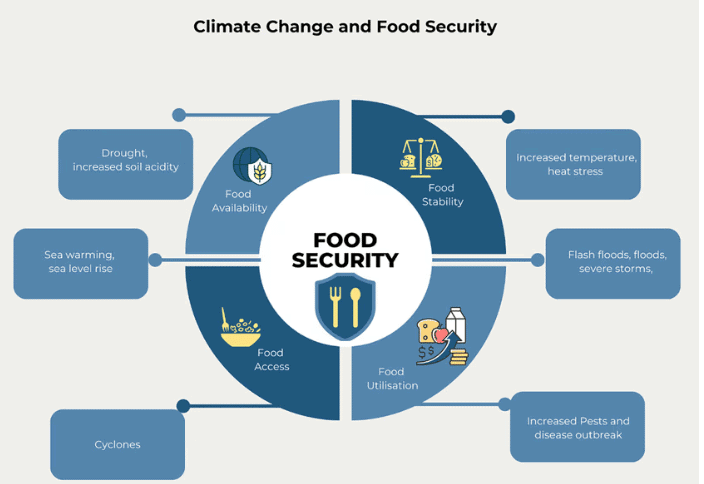
Climate change undermines food security and poverty alleviation, requiring equitable, sustainable solutions, as seen in 2022 global initiatives.
Q10: Explain in detail the impact of regional disparities on economic development. (2022)
Ans: Regional disparities, marked by uneven access to resources, infrastructure, and opportunities, significantly hinder equitable economic development, as evident in 2022.
- Resource Distribution: Regions with fertile land or minerals grow faster. In 2022, Gujarat's industrial hubs thrived, while Bihar's agrarian economy lagged.
- Infrastructure Gaps: Poor connectivity limits growth in underdeveloped areas. In 2022, Northeast India's weak transport networks restricted market access.
- Human Capital: Disparities in education and health affect productivity. In 2022, Kerala's high literacy boosted its service sector, unlike Uttar Pradesh.
- Policy Challenges: Uneven policy implementation exacerbates disparities. In 2022, India's urban-focused schemes neglected rural areas.
Addressing disparities through targeted investments, as seen in India's 2022 regional development programs, is vital for inclusive economic growth.
Suggested Diagram: A bar graph comparing regional economic indicators in 2022.
FAQs on Topic wise Previous Year Questions (Solved) : Economic Geography
| 1. What is Economic Geography and why is it important for the UPSC exam? |  |
| 2. What are the key topics covered under Economic Geography for the UPSC syllabus? | |
| 3. How can candidates effectively prepare for Economic Geography questions in the UPSC exam? | |
| 4. What are some frequently asked questions related to Economic Geography in previous UPSC papers? | |
| 5. How does Economic Geography relate to environmental issues in the context of UPSC? | |




