Kurukshetra Summary: April 2025


Devolution to Panchayats in India
 Rural Democracy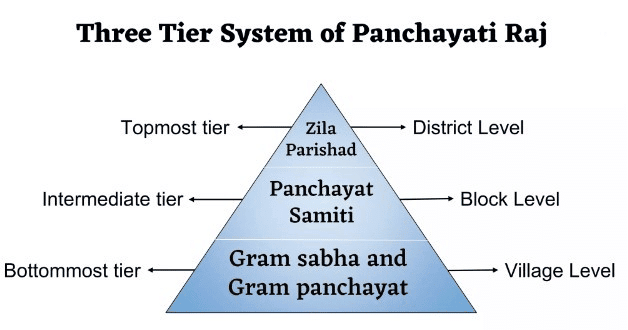
Introduction
The Ministry of Panchayati Raj has released a comprehensive report titled "Status of Devolution to Panchayats in States - An Indicative Evidence-Based Ranking" (Panchayat Devolution Index 2024). This report assesses the extent of power delegated to Panchayati Raj Institutions (PRIs) across various states and union territories in India.
Constitutional and Institutional Context
The 73rd Constitutional Amendment Act of 1992 laid the foundation for democratic decentralization by recognizing Panchayati Raj as the third tier of governance. Key constitutional provisions include:
- Article 243G: Empowers State Legislatures to delegate powers, authority, and responsibilities to PRIs, enabling them to function as self-governing entities.
- Article 243H: Grants PRIs the authority to levy, collect, and manage taxes and fees.
- Article 243-I: Mandates the establishment of State Finance Commissions (SFCs) every five years.
- Article 280(3)(bb): Directs the Central Finance Commission to recommend measures for enhancing state funds to bolster PRI resources.
Key Highlights of the Devolution to Panchayats in States 2024 Report
About the Report
- Aim: To assess the actual transfer of powers, responsibilities, finances, and personnel to PRIs in accordance with Article 243G.
- Approach: Ranking based on six dimensions-Framework, Functions, Finances, Functionaries, Capacity Building, and Accountability.
Overall Progress
- The Devolution Index has increased from 39.9% in 2013-14 to 43.9% in 2021-22.
- Improvements in Infrastructure & Digitalisation: The functionaries index rose from 39.6% to 50.9%, indicating enhanced staffing and digital resources.
State-Wise Rankings and Performance
| Rank | State | Key Dimension Strength |
|---|---|---|
| 1 | Karnataka | Finances, Accountability |
| 2 | Kerala | Framework (Legal and Institutional Setup) |
| 3 | Tamil Nadu | Functions (Devolution of Subjects) |
| 4 | Maharashtra | Comprehensive Devolution |
| 5 | Uttar Pradesh | Improved Institutional Support |
Lowest Ranked:
- Dadra & Nagar Haveli and Daman & Diu, Puducherry, and Ladakh exhibit minimal progress with devolution indices ranging from 13% to 16%.
Challenges in PRI Empowerment
- Inconsistent Function Transfer: Many states hesitate to transfer a broad array of subjects from the 11th Schedule due to fears of losing central oversight.
- Institutional Deficiencies: District Planning Committees (DPCs) are largely inactive, and frequent changes in reserved seats disrupt leadership continuity.
- Financial Challenges: This is a significant issue as State Finance Commission recommendations are often ignored, impacting PRI financial autonomy. There is a heavy dependence on central transfers (80%) and state grants (15%).
- Capacity Shortfalls: Elected officials lack training in budgeting, governance, and service delivery.
- Weak Accountability: There is inadequate Gram Sabha participation, low transparency, and ineffective social audits.
Status of PRI Funding
| Revenue Source | Percentage Contribution |
|---|---|
| Own Taxes | ~1% |
| Central Government Grants | ~80% |
| State Government Grants | ~15% |
Average Revenue per Panchayat:
- Own Taxes: ₹21,000
- Non-tax Sources: ₹73,000
- Central Grants: ₹17 lakh
- State Grants: ₹3.25 lakh
Inter-State Disparities:
- Kerala and West Bengal: Revenue exceeding ₹57-60 lakh.
- Andhra Pradesh and Punjab: Revenue below ₹6 lakh.
Recommendations for Strengthening PRI Devolution
Institutional Measures
- Complete Functional Devolution: States should ensure the transfer of all 29 subjects listed in the 11th Schedule.
- Empower District Planning Committees: Activate these planning bodies for coordinated local development.
- Autonomy in Scheme Management: Allow PRIs to oversee key schemes such as MGNREGA, NHM, and PMAY.
Fiscal Reforms
- Strengthen State Finance Commissions: Ensure timely establishment and full implementation of their recommendations.
- Enhance Own Revenue Generation: Enable PRIs to collect property tax, land cess, and fees with appropriate support.
- Introduce Special Purpose Grants: Encourage performance in areas like sanitation, education, and rural health.
Capacity and Accountability Enhancements
- Invest in Capacity Building: Continue training under Rashtriya Gram Swaraj Abhiyan (RGSA) beyond 2026.
- Promote Digital Infrastructure: Encourage e-Governance for improved service delivery and transparency.
- Strengthen Panchayat Bhawans: Establish these as central hubs for welfare schemes and citizen services.
Conclusion
The Devolution to Panchayats 2024 report presents a mixed picture, showcasing gradual advancements in autonomy and capacity while highlighting persistent challenges in functional devolution, financial independence, and accountability. Strengthening the third tier of governance is crucial for realizing the objectives of localized, bottom-up planning and inclusive rural development.
The Decade of Empowering Panchayati Raj Institutions
 Rural Empowerment
Panchayati Raj Institutions (PRIs) have been the foundation of local democracy in India since the 73rd Constitutional Amendment Act of 1993.
Historical Context: The 73rd Amendment
The 73rd Constitutional Amendment was a major change as it gave PRIs constitutional recognition, creating a three-tier system comprising the Gram Panchayat, Block Panchayat, and District Panchayat. Important features include:
- Mandatory elections every 5 years.
- Reservation for SCs, STs, OBCs, and women (3 seats).
- Transfer of powers through the Eleventh Schedule (29 subjects like agriculture, health, education).
- Article 243G allowing Panchayats to create plans for economic development and social justice.
India currently has 2.7 lakh Gram Panchayats that manage 64% of the population, with 31.5 lakh elected representatives, 46% of whom are women.
Key Initiatives in the Last Decade
- Financial Empowerment
- Increased Allocations: The 15th Finance Commission allocated ₹2.36 lakh crore for the financial year 2026-2021 for PRIs.
- e-Gram SWARAJ: A simplified accounting system integrated with PFMS for transparent fund management. Over ₹2.4 lakh crore transactions processed through the e-Governance System for Panchayati Raj Institutions (e-GSPI).
- Capacity Building
- Rashtriya Gram Swaraj Abhiyan (RGSA): Trained 111 lakh representatives (25-2022) with ₹2,116 crore allocated. Collaborations with leading institutes like IIMs and IRMA improved leadership skills.
- Sashakt Panchayat-Netri Abhiyan: Focused on empowering women representatives through decision-making training.
- Technological Integration
- Digital Governance: The e-Gram SWARAJ portal now supports 20 regional languages through Bhashini integration.
- Panchayat-Level Weather Forecasting: Collaboration with IMD provides local weather updates via the Meri Panchayat app, assisting farmers.
- Sustainable Development Goals (SDGs)
- Thematic GPDP: 2.54 lakh Gram Panchayats aligned development plans with 9 SDG themes (e.g., poverty-free villages, clean energy, gender equality).
- National Panchayat Awards: Revamped in 2022 to encourage performance on SDG metrics.
- Land Rights and Transparency
- SVAMITVA Scheme: Drone surveys in 3.2 lakh villages issued 2.41 crore property cards, enabling asset monetisation and tax collection.
- Audit Online: Over 2.1 lakh audits (24-2023) ensured fiscal accountability.
Challenges and the Way Forward
While PRIs have made progress, challenges remain:
- Incomplete Devolution: Many states are slow in transferring functions and funds as per the Eleventh Schedule.
- Capacity Gaps: Despite training, local representatives often lack technical skills.
- Bureaucratic Hurdles: Overlapping schemes and delayed fund transfers reduce efficiency.
Recommendations:
- 3Fs (Funds, Functions, Functionaries): States must fully transfer powers and staff to PRIs.
- Convergence of Schemes: Integrate programs like MGNREGA, Jal Jeevan Mission, and health initiatives at the Panchayat level.
- Community Participation: Strengthen Gram Sabhas through regular meetings and participatory planning.
Conclusion
PRIs embody Mahatma Gandhi's vision of Gram Swaraj, transforming rural India into hubs of participatory democracy. The last decade's initiatives-from SVAMITVA to SDG localisation-reflect a holistic approach to decentralisation. However, realising the full potential of PRIs requires collaborative efforts between the Centre and states, adequate resource allocation, and continuous innovation. As India strides toward a Viksit Bharat, empowered Panchayats will remain pivotal in bridging urban-rural divides and ensuring inclusive growth.
Revisiting State PRI Acts
Introduction
The 73rd Constitutional Amendment Act, 1992 aimed to empower Panchayati Raj Institutions (PRIs) with fiscal autonomy for effective self-governance. However, even after three decades, Gram Panchayats (GPs) remain financially constrained-Own Source Revenue (OSR) contributes merely 6.31% of their total receipts (MoPR 2024, RBI). This reliance on Central and State grants hampers local autonomy and governance capacity.
Current Fiscal Status of PRIs
| Fiscal Indicator | Status |
|---|---|
| OSR Contribution | 6.31% of GP revenues (2022-23) |
| Per Capita OSR | ₹59 (2017-22 average) |
| Grants Dependency | Over 90% of receipts |
| Inter-State Disparity | Kerala, Karnataka: Empowered GPs; Bihar, UP: Minimal tax authority |
Despite constitutional mandates and Finance Commission recommendations, PRIs face significant challenges in mobilising their own resources due to a combination of institutional, political, and technical bottlenecks.
Key Challenges in OSR Mobilization
- Legal and Institutional Disconnect
- Asymmetric Tax Powers: States empower PRIs inconsistently. For instance:
- Uttar Pradesh: GPs do not levy any of the 6 taxes legally permitted.
- Maharashtra: Enables 4 out of 7 possible taxes, but collection remains poor.
- Lack of Implementation Support: Even where laws exist, the lack of administrative capacity or political will renders them ineffective.
- Asymmetric Tax Powers: States empower PRIs inconsistently. For instance:
- Weak Assessment and Collection Mechanisms
- Ad-hoc Property Valuation: Most states do not follow a scientific system for tax base identification.
- Underutilisation of User Charges: Water, sanitation, and waste charges are rarely linked to usage or cost recovery.
- Non-standardised Practices: Within-state disparities (e.g., GPs in Karnataka have digital tools, but face human resource constraints).
- Absence of Resource Control
- Limited Ownership of Common Property Resources (CPRs): Water bodies, grazing lands, and forests often remain under state or line department control.
- Parallel Service Delivery Structures: State-level agencies often duplicate or bypass PRIs (e.g., in rural drinking water supply schemes).
Reform Measures for Fiscal Strengthening
A. Institutional & Legal Reforms
- Mandatory Activity Mapping: As suggested by the Second ARC, states must clearly define functions, functionaries, and funds for PRIs, especially around CPRs and essential services.
- Model Taxation Guidelines: Issue model rules for property tax valuation, user charges, and dispute resolution (e.g., Karnataka's categorisation by land use and structure type).
B. Capacity Building
- PRI Resource Cells: Create dedicated technical cells at district/block levels to assist PRIs in tax assessment and legal compliance.
- Training & IEC Campaigns: Educate elected representatives and citizens on the importance of local taxes to counter political hesitation.
- Digital Enablement: Develop common software platforms for OSR management (drawing from Odisha's e-PRI and Karnataka's property database models).
C. Policy-Level Interventions
- Expand Tax Base: Allow GPs in backward states (e.g., UP, Odisha) to levy property tax and commercial fees.
- Simplify Collection Processes: Standardise user charges for sanitation, water, and markets to reduce discretion and leakage.
- Introduce Minimum Floor Rates: As per the Fourth State Finance Commission of Kerala, set base rates for taxes and revise them periodically.
D. Innovative Financial Models
- Performance-Linked Grants: Encourage OSR growth by linking a portion of Central Finance Commission grants to local revenue efforts.
- Public-Private Models for Collection: Collaborate with private tech firms for collection methods, especially for market and licence fees.
- Revolving Funds for Infrastructure: Use OSR to establish revolving funds for small-scale, revenue-generating infrastructure (e.g., shops, local tourism).
Case Studies & Best Practices
Karnataka
- Digitised Property Records: Web-based systems categorise properties based on use and type.
- Incentive-Based Grants: Tied grants are partly linked to tax performance.
Kerala
- Activity Mapping and Decentralisation: Fully empowered GPs to levy taxes and manage essential services.
- CPR Utilisation: PRIs manage and generate income from local water bodies and markets.
Maharashtra
- Water Service Transfer: Handed over rural water supply schemes to GPs, enhancing autonomy and OSR.
- Local Infrastructure Use Charges: Markets and marriage halls provide stable revenues for GPs.
Global Parallel: Lessons from South Africa and Brazil
South Africa: Local governments are legally empowered to raise revenue through property taxes and service charges; the system includes built-in capacity training by provincial governments.
Brazil: Participatory budgeting ensures that local taxation aligns with citizen priorities, increasing transparency and tax morale.
Conclusion
Fiscal empowerment of PRIs is crucial for achieving true decentralisation. Without strong Own Source Revenue, Panchayats operate mainly as scheme implementers. A comprehensive strategy combining legal clarity, capacity building, and public engagement is necessary. As highlighted by NIPFP, a viable OSR framework must replace the current grant-dependent model to strengthen grassroots democracy.
Water Management through Panchayati Raj Institutions
Introduction
Water is essential for human survival and sustainable development. In India, where over 65% of the population lives in rural areas, Panchayati Raj Institutions (PRIs) play a key role in local water governance. The 73rd Constitutional Amendment Act (1992) granted PRIs authority over water resources under Schedule XI, and with 97.1% of India's 24.24 lakh water bodies located in rural areas (as per the 2023 Water Body Census), PRIs have both constitutional responsibilities and practical significance in water management.
Constitutional and Institutional Framework
73rd Amendment and Schedule XI: Assigned 29 subjects to PRIs, including drinking water, minor irrigation, watershed development, and fisheries. Empowers PRIs as main agencies for planning, implementing, and monitoring water-related schemes through participatory governance.
Water Bodies Census 2023: Of 24.24 lakh water bodies, 23.55 lakh (97.1%) are in rural areas. Panchayats manage 62.4% of publicly owned water bodies-highlighting the importance of PRI-led conservation and utilisation strategies.
Key Initiatives Involving PRIs
- Participatory Irrigation Management (PIM)
- Encourages Water User Associations (WUAs) for local irrigation governance.
- PRIs facilitate the formation of WUAs, mediate disputes, and ensure fair distribution.
- Leads to improved water-use efficiency and greater local ownership.
- Jal Jeevan Mission (JJM)
- Aims for 100% Functional Household Tap Connections (FHTCs) by 2024.
- PRIs prepare Village Action Plans (VAPs), manage assets, and form Village Water & Sanitation Committees (VWSCs).
- Empowers Gram Sabhas to ensure transparency and fairness in access.
- Repair, Renovation and Restoration (RRR) Scheme under PMKSY
- Involves PRI-led restoration of water bodies, often combined with the Integrated Watershed Management Programme (IWMP).
- Focuses on groundwater recharge and long-term sustainability.
- MGNREGS and Natural Resource Management (NRM)
- 60% of funds are allocated for agriculture and water conservation.
- PRIs implement soil moisture conservation, check dams, ponds, and rainwater harvesting.
- Enhances drought resilience and employment generation.
- Village-Level Water Budgeting
- Empowers PRIs to evaluate water availability versus demand (drinking, agriculture, industry).
- Develops Source Sustainability Plans to balance usage.
- Promotes careful allocation and conservation.
- XV Finance Commission Grants (2021-26)
- ₹2.36 lakh crore allocated to PRIs; 60% tied to water supply, rainwater harvesting, and sanitation.
- Strengthens PRI capacities to implement JJM, SBM, and other water-related programmes.
- Atal Bhujal Yojana (ABY)
- Focuses on groundwater management in water-stressed areas.
- PRIs prepare Water Security Plans, promote community-led governance, and encourage efficient use.
- Localization of Sustainable Development Goals (SDGs)
- PRIs integrate SDG-6 (Clean Water & Sanitation) through: Convergence of schemes like PMKSY, JJM, and MGNREGS & Capacity building by Ministry of Panchayati Raj.
Challenges
- Climate Change: Unpredictable rainfall, droughts, and floods strain local water systems.
- Capacity Gaps: Many PRIs lack the necessary technical skills and ability to handle data.
- Encroachment & Urban Pressure: Growing urbanisation threatens rural water bodies.
- Community Participation: Ensuring the inclusion of marginalised groups, particularly women, in water governance remains limited.
- Fragmentation of Schemes: Lack of integration among various schemes leads to duplication and inefficiencies.
Way Forward
- Jan Bhagidari (People's Participation): Launch awareness campaigns, recognise community water stewards, and encourage conservation.
- Convergence of Schemes: Integrate JJM, PMKSY, IWMP, ABY, and MGNREGS under unified village-level water plans.
- Technology Adoption: Use GIS and remote sensing for water budgeting, groundwater mapping, and real-time monitoring.
- Gender Mainstreaming: Promote women's leadership in VWSCs, Gram Sabhas, and Water Committees.
- Capacity Building: Train PRI representatives in technical aspects, financial management, and SDG localisation through ongoing education and e-learning modules.
Conclusion
PRIs reflect the Gandhian vision of Gram Swaraj, turning national water goals into community-driven actions. Their constitutional empowerment, grassroots presence, and participatory spirit uniquely position them to address the water divide in rural India. As climate threats grow and demand-supply mismatches increase, PRIs must become the centre of integrated water governance, guided by the principles of "Catch the Rain" and "Sabka Saath, Sabka Vikas." Strengthening PRIs is not just a policy necessity-it is essential for resilient rural India and sustainable development.
Strengthening Rural India through Capacity Building in Panchayats
Introduction
The 73rd Constitutional Amendment Act, 1992 marked the beginning of a new era of local governance by establishing Panchayati Raj Institutions (PRIs) as the third tier of government. These institutions are crucial for achieving the goals of participatory democracy and grassroots planning. However, the main challenge lies not only in their constitutional recognition but also in equipping these bodies with adequate capacity, autonomy, and accountability to act as genuine agents of rural change.
Why is this Important?
- Governance at Grassroots: PRIs are responsible for planning and implementing schemes related to health, education, sanitation, agriculture, and local infrastructure.
Revisiting State PRI Acts
 Rural Water Governance
Introduction
The 73rd Constitutional Amendment Act, 1992 aimed to give Panchayati Raj Institutions (PRIs) more control over their finances for better self-governance. However, after three decades, Gram Panchayats (GPs) still struggle financially-Own Source Revenue (OSR) makes up only 6.31 % of their total income (MoPR 2024, RBI). This heavy reliance on Central and State grants limits their local independence and effectiveness.
Current Fiscal Status of PRIs
| Fiscal Indicator | Status |
|---|---|
| OSR Contribution | 6.31 % of GP revenues (2022-23) |
| Per Capita OSR | ₹ 59 (2017-22 average) |
| Grants Dependency | Over 90 % of receipts |
| Inter-State Disparity | Kerala, Karnataka: Empowered GPs; Bihar, UP: Minimal tax authority |
Despite constitutional mandates and Finance Commission suggestions, PRIs face many challenges in raising their own funds due to various institutional, political, and technical obstacles.
Key Challenges in OSR Mobilization
- Legal and Institutional Disconnect
- Asymmetric Tax Powers: States grant PRIs tax powers unevenly. For example:
- Uttar Pradesh: GPs do not collect any of the six taxes allowed by law.
- Maharashtra: Allows four out of seven possible taxes, but collection is poor.
- Lack of Implementation Support: Where laws exist, a lack of administrative capacity or political will makes them ineffective.
- Weak Assessment and Collection Mechanisms
- Ad-hoc Property Valuation: Many states do not employ a scientific approach to tax base identification.
- Underutilization of User Charges: Charges for water, sanitation, and waste are rarely based on actual use or cost recovery.
- Non-standardized Practices: Differences within states (e.g., GPs in Karnataka have digital tools but struggle with human resources).
- Absence of Resource Control
- Limited Ownership of Common Property Resources (CPRs): Water bodies, grazing lands, and forests often remain under state or department control.
- Parallel Service Delivery Structures: State agencies often duplicate or bypass PRIs (e.g., in rural drinking water schemes).
Reform Measures for Fiscal Strengthening
A. Institutional & Legal Reforms
- Mandatory Activity Mapping: States must clearly define functions, roles, and funds for PRIs, focusing on CPRs and essential services.
- Model Taxation Guidelines: Issue rules for property tax valuation, user charges, and dispute resolution (e.g., Karnataka's categorization by land use).
B. Capacity Building
- PRI Resource Cells: Establish technical cells at district/block levels to assist PRIs with tax assessment and compliance.
- Training & IEC Campaigns: Raise awareness among elected representatives and citizens about local taxes to reduce political hesitance.
- Digital Enablement: Create common software platforms for OSR management (inspired by Odisha's e-PRI and Karnataka's property database).
C. Policy-Level Interventions
- Expand Tax Base: Allow GPs in underdeveloped states (e.g., UP, Odisha) to impose property tax and commercial fees.
- Simplify Collection Processes: Standardize user charges for sanitation, water, and markets to minimise discretion and leakage.
- Introduce Minimum Floor Rates: As suggested by the Fourth State Finance Commission of Kerala, set base tax rates and revise periodically.
D. Innovative Financial Models
- Performance-Linked Grants: Link a portion of Central Finance Commission grants to local revenue performance.
- Public-Private Models for Collection: Partner with private tech firms for collection methods, especially for market and licence fees.
- Revolving Funds for Infrastructure: Use OSR to create funds for small-scale, revenue-generating projects (e.g., shops, local tourism).
Case Studies & Best Practices
Karnataka
- Digitized Property Records: Online systems categorise properties by use and type.
- Incentive-Based Grants: Tied grants are partially linked to tax performance.
Kerala
- Activity Mapping and Decentralization: Fully empowered GPs to tax and manage essential services.
- CPR Utilization: PRIs manage and generate revenue from local water bodies and markets.
Maharashtra
- Water Service Transfer: GPs were given control over rural water supply schemes, boosting autonomy and OSR.
- Local Infrastructure Use Charges: Markets and marriage halls create stable revenue for GPs.
Global Parallel: Lessons from South Africa and Brazil
South Africa: Local governments can raise revenue through property taxes and service charges; this includes training support from provincial governments.
Brazil: Participatory budgeting ensures local taxation aligns with citizen priorities, boosting transparency and tax morale.
Water Management through Panchayati Raj Institutions
Introduction
Water is essential for human survival and sustainable development. In India, where over 65 % of the population resides in rural areas, Panchayati Raj Institutions (PRIs) are crucial for decentralised water governance. The 73rd Constitutional Amendment Act (1992) granted PRIs authority over water resources. With 97.1 % of India's 24.24 lakh water bodies located in rural areas (according to the 2023 Water Body Census), PRIs play a key role in water management.
Constitutional and Institutional Framework
73rd Amendment and Schedule XI
- Delegated 29 subjects to PRIs, including drinking water, minor irrigation, watershed development, and fisheries.
- Empowers PRIs to plan, implement, and monitor water-related schemes through participatory governance.
Water Bodies Census 2023
- Of 24.24 lakh water bodies, 23.55 lakh (97.1 %) are in rural areas.
- Panchayats manage 62.4 % of publicly owned water bodies, highlighting the importance of PRI-led conservation and management strategies.
Key Initiatives Involving PRIs
Participatory Irrigation Management (PIM)
- Encourages the formation of Water User Associations (WUAs) for decentralised irrigation governance.
- PRIs assist in forming WUAs, resolving disputes, and ensuring fair distribution.
- Results in improved water-use efficiency and increased local ownership.
Jal Jeevan Mission (JJM)
- Aims for 100 % Functional Household Tap Connections (FHTCs) by 2024.
- PRIs develop Village Action Plans (VAPs), manage assets, and create Village Water & Sanitation Committees (VWSCs).
- Empowers Gram Sabhas to ensure fairness and transparency in access.
Repair, Renovation and Restoration (RRR) Scheme under PMKSY
- Involves PRI-led restoration of water bodies, often linked with the Integrated Watershed Management Programme (IWMP).
- Focuses on groundwater recharge and long-term sustainability.
MGNREGS and Natural Resource Management (NRM)
- 60 % of funds are allocated for agriculture and water conservation.
- PRIs implement soil moisture conservation, check dams, ponds, and rainwater harvesting.
- Boosts drought resilience and creates employment opportunities.
Village-Level Water Budgeting
- Empowers PRIs to evaluate water availability against demand (for drinking, agriculture, industry).
- Creates Source Sustainability Plans to balance usage.
- Encourages careful allocation and conservation.
XV Finance Commission Grants (2021-26)
- ₹ 2.36 lakh crore allocated to PRIs; 60 % is designated for water supply, rainwater harvesting, and sanitation.
- Strengthens PRI capabilities to implement JJM, SBM, and other water-related initiatives.
Atal Bhujal Yojana (ABY)
- Focused on groundwater management in water-stressed areas.
- PRIs develop Water Security Plans, promote community-led governance, and encourage efficient use.
Localization of Sustainable Development Goals (SDGs)
- PRIs integrate SDG-6 (Clean Water & Sanitation) through: Combining schemes like PMKSY, JJM, and MGNREGS & capacity building by the Ministry of Panchayati Raj.
Challenges
Challenge Explanation
- Climate Change: Erratic rainfall, droughts, and floods put pressure on local water systems.
- Capacity Gaps: Many PRIs lack technical skills and the ability to handle data.
- Encroachment & Urban Pressure: Growing urbanisation threatens rural water bodies.
- Community Participation: Involving marginalised groups, especially women, in water governance is still limited.
- Fragmentation of Schemes: Poor integration among various schemes causes duplication and inefficiencies.
Way Forward
- Jan Bhagidari (People's Participation): Launch awareness campaigns, recognise community water leaders, and reward conservation efforts.
- Convergence of Schemes: Integrate JJM, PMKSY, IWMP, ABY, and MGNREGS into unified village-level water plans.
- Technology Adoption: Utilize GIS and remote sensing for water budgeting, groundwater mapping, and real-time monitoring.
- Gender Mainstreaming: Encourage women's leadership in VWSCs, Gram Sabhas, and Water Committees.
- Capacity Building: Educate PRI representatives on technical skills, financial management, and SDG localisation through ongoing training and e-learning.
Conclusion
PRIs embody the Gandhian vision of Gram Swaraj, turning national water goals into community-driven actions. Their constitutional power, grassroots presence, and participatory spirit uniquely position them to address the water challenges in rural India. As climate threats grow and demand-supply mismatches increase, PRIs must lead integrated water governance, following the principles of "Catch the Rain" and "Sabka Saath, Sabka Vikas." Strengthening PRIs is vital for sustainable rural development.
Strengthening Rural India through Capacity Building in Panchayats
Introduction: The 73rd Constitutional Amendment Act, 1992, was a pivotal moment in India's governance history as it empowered Panchayati Raj Institutions (PRIs) and established them as the third tier of government. This move aimed to decentralise power and promote participatory democracy by involving local self-governments in the planning and implementation of rural development projects. PRIs play a crucial role in managing various aspects of rural life, including health, education, sanitation, agriculture, and local infrastructure. By involving local communities in decision-making processes, PRIs help ensure that development initiatives are tailored to the specific needs and priorities of the people. However, the real challenge lies not just in their constitutional recognition but in ensuring that these institutions have the capacity, independence, and accountability to function effectively and drive meaningful change in rural areas. Strengthening the capacity of PRIs is essential to realise the full potential of decentralised governance and achieve the Sustainable Development Goals (SDGs) set by the United Nations.
Importance of Strengthening Capacity in PRIs: 1. Governance at the Grassroots Level: PRIs are responsible for managing and implementing various schemes related to health, education, sanitation, agriculture, and local infrastructure. Strengthening their capacity ensures effective governance and service delivery at the grassroots level. 2. Achieving Sustainable Development Goals (SDGs): Effective PRIs are vital for achieving SDGs, especially those related to poverty reduction (SDG 1), gender equality (SDG 5), and clean water and sanitation (SDG 6). 3. Democratic Deepening: PRIs serve as the first point of contact between citizens and the state, playing a crucial role in shaping democratic values and accountability. Strengthening their capacity fosters democratic deepening and citizen participation in governance.
Challenges Faced by PRIs: Despite being constitutionally empowered, PRIs face several challenges that hinder their effectiveness:
- Administrative Challenges: PRIs often face a shortage of skilled staff, inadequate training resources, and bureaucratic indifference, which hampers their functioning.
- Financial Challenges: Delays in fund transfers, limited own-source revenue, and excessive reliance on state grants pose significant financial challenges to PRIs.
- Capacity and Awareness Challenges: Many elected members, especially women and first-time representatives, lack awareness of their roles and powers, which affects their performance.
- Digital Divide: Insufficient digital infrastructure and skills in rural governance hinder the effective use of digital tools and technologies in PRIs.
- Lack of Convergence: Fragmented development planning and weak coordination among departments lead to inefficiencies and overlapping efforts in PRIs.
Government Interventions for Capacity Building: 1. Policy Framework: The National Capacity Building Framework (NCBF), 2022, provides guidelines to streamline and standardise training for PRIs, focusing on relevance, inclusivity, and technology use. 2. Capacity Building Schemes: Various schemes like Rajiv Gandhi Panchayat Sashaktikaran Abhiyan (RGPSA), Panchayat Sashaktikaran Abhiyan, and Rashtriya Gram Swaraj Abhiyan have been initiated to strengthen PRIs through training, infrastructure development, and e-enablement. The revamped RGSA aligns PRI initiatives with SDGs and enhances leadership, planning, and accountability skills. 3. Institutional Mechanisms and Innovations: Leadership and Management Development Programmes (MDPs) conducted with IIMs and IITs, Panchayat Resource Centres (PRCs) as knowledge hubs, and collaborations with institutions like IRMA and NIRD&PR for tailored training content are part of the capacity-building efforts. The e-Panchayat Mission Mode Project introduces digital tools for improved transparency and participatory planning.
Best Practices from States: 1. Kerala: The state has successfully implemented decentralised planning through the People's Plan Campaign and has robust training systems for PRIs. 2. Odisha: The Ama Gaon Ama Yojana engages Gram Panchayats in developing local plans, ensuring community participation and ownership. 3. Madhya PradeshWater Management through Panchayati Raj Institutions
 Sustainable Water Management
Introduction
- Water is vital for human survival and sustainable development. In India, where a significant portion of the population resides in rural areas, Panchayati Raj Institutions (PRIs) play a crucial role in managing water resources.
- The 73rd Constitutional Amendment Act in 1992 empowers PRIs to control water resources, and with the majority of water bodies located in rural regions, PRIs are essential for local water management.
Constitutional and Institutional Framework
73rd Amendment and Schedule XI
- The 73rd Amendment Act of 1992 empowers PRIs to be the primary agencies for planning, executing, and overseeing water-related initiatives with community participation.
- This amendment assigns 29 subjects to PRIs, including drinking water, minor irrigation, watershed development, and fisheries, allowing them to manage these resources effectively.
Water Bodies Census 2023
- According to the 2023 Water Bodies Census, out of 24.24 lakh water bodies, 23.55 lakh (97.1%) are in rural areas. PRIs manage 62.4% of publicly owned water bodies, underscoring their importance in conservation and usage efforts.
Key Initiatives Involving PRIs
Participatory Irrigation Management (PIM)
- PIM promotes the establishment of Water User Associations (WUAs) for local governance of irrigation.
- PRIs facilitate the formation of WUAs, help in dispute resolution, and ensure equitable water distribution.
- This approach enhances water-use efficiency and fosters local ownership of water resources.
Jal Jeevan Mission (JJM)
- JJM aims to provide 100% Functional Household Tap Connections (FHTCs) by 2024.
- PRIs play a crucial role in creating Village Action Plans (VAPs), managing resources, and establishing Village Water & Sanitation Committees (VWSCs).
- This empowers Gram Sabhas to ensure fair access and transparency in water supply.
Repair, Renovation and Restoration (RRR) Scheme under PMKSY
- This scheme focuses on PRI-led restoration of water bodies, often aligning with the Integrated Watershed Management Programme (IWMP).
- It prioritises groundwater recharge and the long-term sustainability of water resources.
MGNREGS and Natural Resource Management (NRM)
- 60% of MGNREGS funds are allocated for agriculture and water conservation projects.
- PRIs implement initiatives such as soil moisture conservation, check dams, ponds, and rainwater harvesting.
- These efforts enhance drought resilience and create job opportunities in rural areas.
Village-Level Water Budgeting
- PRIs assess the gap between water availability and demand for drinking, agricultural, and industrial use.
- They develop Source Sustainability Plans to manage water usage effectively, promoting wise allocation and conservation of water resources.
XV Finance Commission Grants (2021-26)
- The XV Finance Commission has allocated ₹2.36 lakh crore to PRIs, with 60% of the funds tied to water supply, rainwater harvesting, and sanitation projects.
- This allocation strengthens the capabilities of PRIs to implement initiatives like JJM, SBM, and other water-related programs.
Atal Bhujal Yojana (ABY)
- ABY focuses on groundwater management in regions facing water scarcity.
- PRIs are involved in developing Water Security Plans, promoting community governance, and encouraging efficient water use practices.
Localization of Sustainable Development Goals (SDGs)
- PRIs integrate SDG-6 (Clean Water & Sanitation) into their planning and implementation processes by converging various schemes like PMKSY, JJM, and MGNREGS.
- Capacity building initiatives from the Ministry of Panchayati Raj further support this localization effort.
Challenges
- Climate Change: Unpredictable rainfall patterns, droughts, and floods impose significant stress on local water management systems.
- Capacity Gaps: Many PRIs face deficiencies in technical expertise and data management capabilities, hindering effective water governance.
- Encroachment & Urban Pressure: Increasing urbanization leads to the encroachment of rural water bodies, threatening their availability and quality.
- Community Participation: Engaging marginalized groups, particularly women, in water governance processes remains limited, affecting inclusivity.
- Fragmentation of Schemes: The lack of integration among various water management schemes results in duplication of efforts and inefficiencies.
Way Forward
- Jan Bhagidari (People's Participation): Promote awareness programmes, recognise community water leaders, and incentivise water conservation efforts at the local level.
- Convergence of Schemes: Integrate various schemes like JJM, PMKSY, IWMP, ABY, and MGNREGS under unified village-level water management plans to enhance efficiency.
- Technology Adoption: Leverage technologies such as GIS and remote sensing for effective water budgeting, groundwater mapping, and real-time monitoring of water resources.
- Gender Mainstreaming: Encourage and facilitate women's leadership roles in VWSCs, Gram Sabhas, and Water Committees to promote gender equity in water governance.
- Capacity Building: Provide ongoing training and e-learning modules to PRI representatives on technical aspects, financial management, and localisation of SDGs to enhance their capabilities.
Conclusion
- PRIs embody the vision of Gram Swaraj, translating national water goals into community-driven actions.
- Their constitutional empowerment and participatory approach position them to address the water divide in rural India effectively.
- Strengthening PRIs is crucial for building resilience in rural areas and achieving sustainable development, especially in the face of climate change and increasing water demand.
Strengthening Rural India through Capacity Building in Panchayats
 Empowered Communities
Introduction
The 73rd Constitutional Amendment Act, 1992 marked the start of a new phase in decentralised governance by establishing Panchayati Raj Institutions (PRIs) as the third level of government. These institutions are vital for achieving the goals of participatory democracy and grassroots planning. However, the major challenge is not just their constitutional recognition, but also ensuring they have the necessary skills, independence, and accountability to effectively drive rural change.
Why is this Important?
- Governance at Grassroots: PRIs handle planning and execution of projects related to health, education, sanitation, agriculture, and local infrastructure.
- Achievement of SDGs: Well-functioning Panchayats significantly contribute to achieving the Sustainable Development Goals (SDGs), especially in poverty reduction (SDG 1), gender equality (SDG 5), and clean water and sanitation (SDG 6).
- Democratic Deepening: They are the first point of contact between citizens and the state, fostering democratic values and accountability.
Challenges Faced by PRIs
Even though PRIs are constitutionally empowered, they encounter various institutional and functional obstacles that hinder their effectiveness:
- Administrative: There is a shortage of skilled staff, ineffective training programmes, bureaucratic indifference, and insufficient funding.
- Financial: Delays in fund allocation, limited revenue sources, and excessive reliance on state grants.
- Capacity & Awareness: Elected members, particularly women and first-time representatives, often lack awareness of their roles and powers.
- Digital Divide: There is inadequate digital infrastructure and skills in rural governance.
- Lack of Convergence: Development planning is fragmented, with weak coordination among various departments.
Government Interventions for Capacity Building
- Policy Framework: The National Capacity Building Framework (NCBF), 2022, serves as a guiding framework to standardise training, emphasising contextual relevance, inclusivity, and technology use.
- Capacity Building Schemes:
- Rajiv Gandhi Panchayat Sashaktikaran Abhiyan (RGPSA) (2012–16): Focused on infrastructure, digital enablement, and capacity development of PRIs.
- Panchayat Sashaktikaran Abhiyan (2016–18): Supported the development of training modules and innovative practices.
- Rashtriya Gram Swaraj Abhiyan (RGSA) (2018–22): Aimed at enhancing governance capabilities through training, ICT, and institutional support.
- Revamped RGSA (2022–26): Aligns PRI efforts with SDGs and strengthens leadership, planning, and accountability.
- Institutional Mechanisms and Innovations:
- Leadership & Management Development Programmes (MDPs): Conducted with IIMs and IIT Dhanbad to train Sarpanches and officials in innovation, digital tools, and public service delivery.
- Panchayat Resource Centres (PRCs): Serve as knowledge hubs for ongoing learning and local planning.
- Collaborations: With organisations like IRMA, NIRD&PR, and State Institutes of Rural Development (SIRDs) to tailor training content and methods.
- e-Panchayat Mission Mode Project: Introduced digital tools such as PlanPlus, ActionSoft, and AuditOnline to enhance transparency and participatory planning.
Best Practices from States
- Kerala: Decentralised planning with the People's Plan Campaign and comprehensive training systems.
- Odisha: Ama Gaon Ama Yojana involving Gram Panchayats in developing local plans.
- Madhya Pradesh: Mobile applications for real-time service monitoring and training distribution.
Way Forward
To transform Panchayats into effective engines of inclusive and accountable governance, the following strategies are crucial:
- Institutionalise Continuous Learning: Develop a decentralised, multilingual, and modular training system to ensure relevance.
- Strengthen Digital Governance: Expand e-learning platforms and guarantee last-mile internet access.
- Ensure Financial Autonomy: Promote self-generated revenue and streamline funding processes.
- Promote Women's Leadership: Build capacity with a focus on gender, particularly in states with 50% reservation for women.
- Social Accountability Tools: Establish regular mechanisms for accountability through social audits, citizen report cards, and the use of Gram Sabhas.
Conclusion
The Constitutional mandate for Panchayati Raj laid the legal foundation for grassroots democracy, but real empowerment requires sustained capacity building, functional devolution, and community participation. By equipping Panchayat leaders with the knowledge, tools, and autonomy they need, India can transform its rural governance landscape into a resilient, inclusive, and self-reliant model of development - truly embodying the spirit of Antyodaya and Sabka Saath, Sabka Vikas.
Enhance Digital Governance
 Digital Empowerment
Broaden e-learning platforms and guarantee connectivity to the most remote areas.
- The Constitutional mandate for Panchayati Raj laid the groundwork for grassroots democracy by establishing its legal foundation.
- However, genuine empowerment requires continuous capacity building, which involves:
- Targeted training and resource allocation.
- Effective functional devolution.
- Active community participation.
- It is crucial to equip Panchayat leaders with the necessary knowledge, tools, and autonomy.
- This approach has the potential to transform India's rural governance into a robust, inclusive, and self-reliant development model.
- It embodies the principles of Antyodaya and Sabka Saath, Sabka Vikas.
FAQs on Kurukshetra Summary: April 2025
| 1. What is the significance of devolution to Panchayati Raj Institutions (PRIs) in India? |  |
| 2. How have Panchayati Raj Institutions been empowered in the last decade? | |
| 3. What role do Panchayati Raj Institutions play in water management? | |
| 4. How can capacity building in Panchayati Raj Institutions strengthen rural India? | |
| 5. What are some challenges faced by Panchayati Raj Institutions in India? | |