Half Yearly Class 9 English Set 2 (Solutions)

Time Allowed: 3 Hours
Maximum Marks: 80
General Instructions:
1. This question paper comprises 11 questions. All questions are compulsory.
2. The question paper contains THREE sections:
- Section A: Reading Skills
- Section B: Grammar and Creative Writing Skills
- Section C: Literature Textbook
3. Attempt questions based on specific instructions for each part.
Syllabus of Section C: The half-yearly question paper is framed from the following chapters:
Beehive Prose: The Fun They Had, The Sound of Music, The Little Girl, A Truly Beautiful Mind.
Poems: The Road Not Taken, Wind, Rain on The Roof, The Lake Isle of Innisfree.
Moments: The Lost Child, The adventures of Toto, Iswaran the Storyteller, In the kingdom of fools.
Section A
Q1. Read the text given below: [10 Marks]
The inclusion of music education in schools is a vital component of a comprehensive education, offering students a unique avenue for emotional expression, cognitive devel- opment, and social connection. Music, whether through singing, playing instruments, or composing, engages multiple areas of the brain, enhancing memory, concentration, and problem-solving skills. For instance, learning to play the piano requires coordination between hands, reading sheet music, and maintaining rhythm, which strengthens neural connections and improves academic performance in subjects like mathematics. Singing in a choir or participating in a school band fosters teamwork, discipline, and commu- nication, as students collaborate to create harmonious performances. Music also serves as a powerful emotional outlet, allowing students to process feelings like joy, sadness, or stress, which is particularly valuable during adolescence. Furthermore, exposure to di- verse musical genres, from classical to folk, broadens students' cultural horizons, fostering appreciation for global traditions and histories.
Despite these benefits, music education is often underfunded and undervalued in many schools. Budget cuts frequently target arts programs, leading to reduced class time, out- dated instruments, or the elimination of music teachers. The emphasis on standardized testing in core subjects like science and language arts sidelines music, as schools prioritize measurable outcomes over creative development. This creates a misconception that music is an extracurricular luxury rather than an essential discipline. Additionally, students in underserved communities often lack access to quality music programs, exacerbating educational inequalities. The decline in music education is concerning, as it deprives students of a holistic learning experience that nurtures both intellectual and emotional growth. To address these challenges, schools must advocate for music as a core subject, allocating funds for modern equipment, qualified instructors, and performance opportu- nities. Integrating music into other subjects, such as history through studying cultural songs or physics through sound waves, can demonstrate its academic relevance. Commu- nity partnerships with local orchestras, music schools, or cultural festivals can provide students with enriching experiences, such as concerts or workshops. Governments should also prioritize arts funding, ensuring equitable access to music education for all students, regardless of socioeconomic background. By valuing music education, schools can culti- vate well-rounded students who are not only academically capable but also emotionally resilient, socially connected, and culturally aware. Music's ability to inspire creativity and foster a sense of community makes it an indispensable part of education, preparing students to navigate life's complexities with confidence and empathy. Investing in music education is an investment in a generation that will harmonize innovation with human expression, creating a brighter, more connected future.
Answer the following questions based on the passage:
(i) List two benefits of music education for students mentioned in the passage. (1 mark)
Ans: (a) Enhancing memory
(b) Fostering teamwork.
(ii) Select the option that corresponds to the meaning of the sentence: Music serves as a powerful emotional outlet. (1 mark)
(a) Music restricts students' emotional expression.
(b) Music allows students to process their feelings.
(c) Music focuses only on cognitive skills.
(d) Music discourages teamwork.
Ans: (b)
The sentence highlights mu- sic as an emotional outlet, enabling students to express and manage emotions, aligning with option B
(iii) Explain in about 40 words why music education is often underfunded in schools. (2 marks)
Ans: Music education is underfunded due to budget cuts targeting arts programs, reducing resources like instruments and teachers. Schools prioritize core sub- jects for standardized testing, sidelining music as a perceived non-essential, limiting its integration into curricula.
(iv) What is the writer's tone in the following sentence: By valuing music education, schools can cultivate wel l-rounded students. Justify in about 40 words. (2 marks)
Ans: The tone is optimistic and advocacy-driven. The phrase "cultivate well-rounded students" reflects confidence in mu- sic's multifaceted benefits. The writer urges schools to value music, emphasizing its role in holistic development with enthusiasm.
(v) The phrase 'holistic learning experience' in the passage refers to: (1 mark)
(a) Academic success only.
(b) Growth in emotional, intellectual, and social aspects.
(c) Success in musical performance.
(d) A focus on technical skills.
Ans: (b)
The passage describes music education as nurturing emotional, intellectual, and social growth, fitting the holistic definition.
(vi) In sets a-e below, identify two sets of synonyms. (1 mark)
(a) foster and promote
(b) resilience and weakness
(c) appreciation and understanding
(d) underfunded and well-funded
(e) development and regression Options:
(i) a and c
(ii) b and d
(iii) c and e
(iv) a and b
Ans: (a)
"Foster" and "promote" are synonyms, as are "appreciation" and "understanding"; other pairs include antonyms or unrelated terms.
(vii) Complete the sentence appropriately: (1 mark)
Schools can promote music education by ____.
Ans: Schools can promote music education by allocating funds for equipment and instructors
(viii) Complete the following sentence: (1 mark)
Exposure to diverse musical genres fosters ____.
Ans: Exposure to diverse musical genres fosters cultural awareness.
Q2. Read the text given below: [10 Marks]
Reading is a fundamental skill that serves as a gateway to knowledge, creativity, and per- sonal growth for students. Engaging with books, whether fiction, non-fiction, or poetry, enhances critical thinking, improves vocabulary, and fosters empathy by allowing students to explore diverse perspectives and experiences. Reading fiction, for instance, enables stu- dents to step into the shoes of characters from different cultures or eras, broadening their understanding of human emotions and societal issues. Non-fiction exposes them to factual knowledge, encouraging curiosity about science, history, or current events. In schools, reading assignments and book clubs promote active engagement with literature, making learning dynamic and enjoyable. Regular reading also strengthens comprehension and writing skills, which are essential for academic success across all subjects.
However, the rise of digital distractions, such as social media and video streaming platforms, has re- duced the time students spend reading, as they often opt for quick, visual content over books. Many students also struggle with access to diverse reading materials, particularly in underfunded schools with limited libraries. Some may find reading challenging due to language barriers or lack of early literacy exposure. To encourage reading, schools can create vibrant reading programs, organize author visits, and integrate literature into various subjects, such as science through popular science texts.
Parents can foster a love for reading by reading aloud to young children and providing a home environment rich in books. Community libraries and bookstores can offer free access to resources, while technology, like e-books and audiobooks, can make reading more appealing to digital natives. By prioritizing reading, schools can nurture a generation of curious, empathetic, and articulate individuals who are well-prepared for lifelong learning and meaningful engagement with the world.
Answer the following questions based on the passage:
(i) Infer one reason why students spend less time reading. (1 mark)
Ans: Digital distractions like social media reduce reading time.
(ii) Select the appropriate option to complete the following sentence: Reading helps students develop: (1 mark)
1. Critical thinking
2. Digital addiction
3. Empathy
4. Isolation
5. Vocabulary
(a) 1, 3, 5
(b) 2, 4
(c) 1, 2, 3
(d) 3, 4, 5
Ans: (a)
The passage highlights reading's role in enhancing critical thinking, empathy through diverse perspectives, and vocabulary, ex- cluding negative traits.
(iii) Analyze in about 40 words how reading benefits students' academic success. (2 marks)
Ans: Reading boosts academic success by improving vocabu- lary, strengthening comprehension, and enhancing critical thinking. These skills enable students to analyze texts effectively, perform better in exams, and engage deeply with subjects, fostering overall academic excellence.
(iv) Give two reasons why reading is important for students. (2 marks)
Ans: It fosters empathy by exposing students to diverse perspectives. It improves critical thinking, essential for problem-solving across subjects
(v) Complete the following analogy correctly with a word/phrase from the passage: (1 mark)
reading : empathy : : exercise : ____ (Clue: Just as reading fosters empathy, exercise fosters something.)
Ans: reading : empathy : : exercise : fitness
(vi) Reading enhances ____ by exposing students to diverse perspectives. (1 mark)
Ans: Reading enhances empathy by exposing students to diverse perspectives.
(vii) Complete the following sentence: Schools can encourage reading by ____. (1 mark)
Ans: Schools can encourage reading by creating vibrant reading programs.
(viii) Select the appropriate option to complete the following sentence: (1 mark)
Digital distractions lead to:
(a) Increased reading
(b) Reduced reading
(c) Improved comprehension
(d) More library access
Ans: (b)
The passage notes digital distractions decrease time spent reading.
Section B
Q3. Complete ANY TEN of the following tasks, as directed: [10 Marks]
(i) Fill in the blank by using the correct form of the word in the bracket: (1 mark)
We ____ (visit) the zoo yesterday.
Ans: We visited the zoo yesterday.
(ii) Identify the error and supply the correction for the following: (1 mark)
The dog chase the cat across the garden.
Use the given format for your response: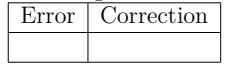
Ans:
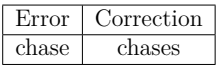
The singular subject "dog" requires the third-person singular "chases" with an "-s."
(iii) Anil shared some plans with Maya. Report Maya's question. (1 mark)
Will you join the science club?
Ans: Maya asked Anil whether he would join the science club.
(iv) A parent asked a teacher about a school event. Report the parent's question: (1 mark)
Is the annual function open to all parents?
Ans: The parent asked the teacher whether the annual function was open to all parents.
(v) There are ____ students in the music class. (1 mark)
(a) few/little
(b) some/any
(c) every/no
(d) much/many
Ans: (b)
"Some" is used in positive statements for countable "students"; "any" fits questions or negatives.
(vi) Select the option that identifies the error and supplies the correction for the following line: (1 mark)
He sing beautifully in the choir.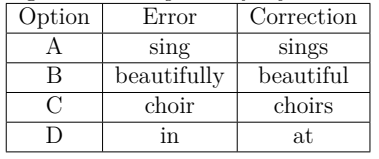
Ans: (a)
The subject "He" requires the third- person singular "sings" in simple present tense
(vii) Should we practice for the concert tomorrow? Select the correct modal: (1 mark)
(a) can
(b) should
(c) might
(d) may
Ans: (b)
"Should" suggests obligation or recommendation, fitting a question about practicing for a concert.
(viii) She ____ a song at the school event last week. (1 mark)
(a) sings
(b) sang
(c) was singing
(d) is singing
Ans: (b)
The past simple "sang" aligns with the spe- cific past event "last week."
(ix) Fill in the blank by choosing the correct option to complete a line from a notice: (1 mark)
Students ____ attend the music workshop.
(a) could
(b) must
(c) will
(d) may
Ans: (b)
Must" indicates obligation in a notice, ensuring students attend the workshop.
(x) Complete the line from a poem by filling the blank with the correct option: (1 mark)
The breeze ____ softly through the trees, / Whispering secrets of the night.
(a) blows, whispers
(b) blew, whispered
(c) had blown, whispering
(d) blows, whispering
Ans: (b)
Past tense "blew" and "whispered" suit the poem's narrative past setting.
(xi) Complete the given narrative by filling in the blank with the correct option:
Listening to music ____ stress and uplifts mood. (1 mark)
(a) is reducing
(b) reduces
(c) reduce
(d) will reduce
Ans: (b)
The singular subject "Listening to music" takes the third-person singular "reduces" for a general fact.
(xii) Neither the guitar nor the drums ____ in tune. (1 mark)
(a) is
(b) are
(c) were
(d) was
Ans: (a)
The singular subject in "Neither the guitar nor the drums" agrees with the singular "is."
Q4. Write a descriptive paragraph in about 100-120 words on "A Morning Walk in the Park". [5 Marks]
Ans: A Morning Walk in the Park** A morning walk in the park rejuvenates me. Crisp air fills my lungs, and dew-kissed grass sparkles under the rising sun. Birds chirp melodiously, blending with the rustle of leaves. Joggers and walkers create a lively yet peaceful atmosphere. The scent of blooming flowers uplifts my spirit. I stroll along winding paths, feeling energized and connected to nature. This daily ritual clears my mind, preparing me for the day with a sense of calm and vitality.
Q5. Write a diary entry in about 100-120 words about a day when you achieved something significant. [5 Marks]
Ans: 25th November 2024, 10 Tuesday, 8:30 PM
Dear Diary,
Today, I won first prize in the school debate on con- servation! After weeks of researching and practicing, my confident arguments earned thunderous applause. The gleaming trophy boosted my self-esteem, and sharing the mo- ment with my family felt incredible. This achievement has motivated me to participate in more competitions, pushing my limits. I'm grateful for the support and excited for future challenges!
Yours,
Priya
Section C
Q6. Read the given extracts and answer the questions for ANY ONE of the two given:
(i) Prose Extract: [5 Marks]
He was a strict man, always busy with his work. She thought he was different from other fathers, who played with their children.
(a) Who is the 'he' referred to in the extract? (1 mark)
Ans: a. The 'he' is Kezia's father.
(b) Why did the girl think her father was different from others? Answer in about 40 words. (2 marks)
Ans: Kezia thought her father was different because he was strict and always busy with work, unlike other fathers who spent time playing with their children. His serious demeanor and lack of playfulness made him seem distant to her.
(c) Which of the following is NOT true about the father's behavior? (1 mark)
(i) He was strict.
(ii) He was always busy.
(iii) He played often with his daughter.
(iv) He seemed different to his daughter.
Ans: (c)
The extract states he was busy and strict, not playful, unlike other fathers.
(d) What does the phrase 'always busy' suggest about the father's lifestyle? (1 mark)
Ans: The phrase 'always busy' suggests the father's lifestyle was demanding, dominated by work commitments, leaving little time for family interactions or leisure.
OR
(ii) Poetry Extract: [5 Marks]
I shall be telling this with a sigh / Somewhere ages and ages hence...
(a) What emotion does the speaker express in the poem? (1 mark)
Ans: The speaker expresses regret and contemplation.
(b) How does the poet convey the significance of the speaker's choice? Answer in about 40 words. (2 marks)
Ans: The poet conveys the significance of the speaker's choice by reflecting on how choosing the less-traveled path shaped their life's course. The sigh and future storytelling emphasize the lasting impact of this pivotal decision.
(c) Identify the poetic device used in the line Somewhere ages and ages hence. (1 mark)
(i) Repetition
(ii) Metaphor
(iii) Simile
(iv) Alliteration
Ans: (a)
The phrase "ages and ages" repeats "ages" for emphasis, reinforcing the passage of time.
(d) What does the phrase 'with a sigh' suggest about the speaker's reflection? (1 mark)
Ans: The phrase 'with a sigh' suggests the speaker reflects on their choice with a mix of regret and acceptance, indicating emotional complexity about its consequences.
Q7. Read the given extracts and answer the questions for ANY ONE of the two given:
(i) Poetry Extract: [5 Marks]
When the wind blows, it's like a friend, / But when it storms, it's fierce and wild...
(a) What is personified in the poem? (1 mark)
Ans: The wind is personified in the poem.
(b) How does the poet contrast the wind's nature? Answer in about 40 words. (2 marks)
Ans: The poet contrasts the wind's nature as both gentle, like a supportive friend, and destructive, like a fierce storm. This duality highlights its unpredictable power, capable of nurturing or challenging, reflecting life's varied experiences.
(c) Identify the poetic device used in the line It's like a friend. (1 mark)
(i) Metaphor
(ii) Simile
(iii) Personification
(iv) Alliteration
Ans: (ii)
The comparison "like a friend" uses "like," making it a simile.
(d) What does the phrase 'fierce and wild' suggest about the wind? (1 mark)
Ans: The phrase 'fierce and wild' suggests the wind's untamed, powerful nature during storms, evoking its ability to cause disruption and chaos.
OR
(ii) Prose Extract: [5 Marks]
Toto was not the sort of pet we could keep for long. His mischief was too much to handle.
(a) Who is Toto in the extract? (1 mark)
Ans: Toto is a mischievous monkey pet.
(b) Why was Toto difficult to keep as a pet? Answer in about 40 words. (2 marks)
Ans: Toto was difficult to keep due to his constant mischief, such as breaking items and escaping, which created chaos. His unpredictable behavior overwhelmed the family, making him an unmanageable pet despite their affec- tion.
(c) Which of the following is NOT true about Toto? (1 mark)
(i) He was a pet.
(ii) He was mischievous.
(iii) He was easy to manage.
(iv) He caused trouble.
Ans: (c)
The extract notes his mischief was "too much to handle," indicating he was not easy to manage.
(d) What does the phrase 'too much to handle' suggest about Toto's behavior? (1 mark)
Ans: The phrase 'too much to handle' suggests Toto's behavior was excessively disruptive, causing significant trouble that the family struggled to control.
Q8. Answer ANY FOUR of the following five questions in about 40-50 words: [4 x 3 = 12 Marks]
(i) How does the narrator view the idea of learning in old schools compared to their current system?
Ans: The narrator views old schools as interactive and social, with human teachers fostering group learning and fun, unlike the current mechanical system. The mechanical teacher's solitary, screen-based lessons lack engagement, making learning feel isolated and repetitive.
(ii) How did the scientist's childhood curiosity influence his later achievements?
Ans: The scientist's childhood curiosity, sparked by a compass and love for math, drove him to question natural phenomena deeply. This inquisitiveness led to groundbreaking theories like relativity, shaping his monumental contributions to physics.
(iii) How does the musician's determination help her succeed despite challenges?
Ans: The musician's determination to overcome deafness through sensing vibrations and relentless practice enabled her success. Her mentor's guidance and her unwavering commitment allowed her to master percussion, achieving excellence despite significant challenges.
(iv) What role does the father play in changing his daughter's perception of him?
Ans: The father's comforting actions, like soothing his daughter during a nightmare, shift her view from fear to affection. His unexpected kindness reveals a caring side, transforming their relationship into one of trust and warmth.
(v) Describe the poet's desire for solitude in the poem about a peaceful island.
Ans: The poet desires solitude on a peaceful island, yearning for escape from urban chaos. The imagery of a simple cabin and tranquil lake reflects a longing for simplicity and introspection, finding peace in nature's embrace.
Q9. Answer ANY TWO of the following three questions in about 40-50 words: [2 x 3 = 6 Marks]
(i) How does Iswaran entertain his employer with his stories?
Ans: Iswaran entertains Mahendra with vivid, suspenseful stories, blending reality with dramatic exaggeration. His engaging narrative style captivates Mahendra, making ordinary events thrilling and fostering a sense of wonder and anticipation.
(ii) How does the boy's loss at the fair affect his behavior?
Ans: The boy's loss at the fair causes panic, leading him to cry and search desperately for his parents. This traumatic experience shifts his focus from material desires to valuing his parents' presence, reflecting emotional maturity.
(iii) What makes the kingdom's rulers foolish?
Ans: The kingdom's rulers are foolish due to their illogical decisions, like reversing day and night or arbitrary justice. These impractical policies create chaos and inefficiency, undermining governance and causing societal disruption.
Q10. Answer ANY ONE of the following two questions in about 100-120 words: [6 Marks]
(i) Discuss how the scientist's passion for learning shaped his contributions to society.
Ans: The scientist's passion for learning, exemplified by Albert Einstein's curiosity about a compass and mathematics, shaped his societal contributions. His relentless pursuit of knowledge led to the theory of relativity, revolutionizing physics and inspiring technological advancements. Despite facing skepticism, his dedication to questioning norms drove breakthroughs that reshaped sci- entific understanding. His work fostered global progress, demonstrating how passion can overcome barriers and benefit humanity. This legacy encourages others to pursue knowledge with fervor, impacting society profoundly.
(ii) Analyze the theme of resilience in the poem about facing the wind's challenges.
Ans: The theme of resilience in the poem about facing the wind's challenges is central, as the speaker vows to grow stronger against adversity. The wind, personified as friend or foe, symbolizes life's trials, testing one's fortitude. The speaker's resolve to thrive despite storms reflects inner strength and adaptability. This resilience inspires readers to confront challenges with courage, empha- sizing personal growth through perseverance. The poem's imagery reinforces the power of standing firm, offering a universal message of endurance.
Q11. Answer ANY ONE of the following two questions in about 100-120 words: [6 Marks]
(i) How does Toto's behavior impact the family's daily life?
Ans: Toto's mischievous behavior signif- icantly impacts the family's daily life by creating constant chaos. His acts, like breaking dishes or escaping, require ongoing supervision and cleanup, disrupting routines. The family's efforts to manage him strain their time and resources, turning simple tasks into challenges. Despite their affection, Toto's antics force adjustments, highlighting the diffi- culties of keeping an unmanageable pet. This dynamic underscores the balance between love and practicality in pet ownership.
(ii) How does the kingdom's unusual system lead to its downfall?
Ans: The kingdom's unusual system, with reversed routines and arbitrary justice, leads to its downfall by creating societal chaos. Illogical policies, like executing innocents or disrupting day-night cycles, cause ineffi- ciency and unrest among citizens. This destabilizes governance, as unfair punishments and impractical schedules erode trust and functionality. The system's flaws expose the dangers of foolish leadership, leading to collapse under the weight of its own absurdity. The narrative highlights the need for rational governance to sustain order.
FAQs on Half Yearly Class 9 English Set 2 (Solutions)
| 1. What topics are typically covered in the Class 9 English Half Yearly exam? |  |
| 2. How can students prepare effectively for the Class 9 English Half Yearly exam? | |
| 3. What is the importance of reading comprehension in the Class 9 English exam? | |
| 4. Are there any specific tips for writing essays in the Class 9 English exam? | |
| 5. How can students improve their grammar skills for the English exam? | |




