Half Yearly Class 9 English Set 3 (Solutions)

Time Allowed: 3 Hours
Maximum Marks: 80
General Instructions:
1. This question paper comprises 11 questions. All questions are compulsory.
2. The question paper contains THREE sections:
- Section A: Reading Skills
- Section B: Grammar and Creative Writing Skills
- Section C: Literature Textbook
3. Attempt questions based on specific instructions for each part.
Syllabus of Section C: The half-yearly question paper is framed from the following chapters:
Beehive Prose: The Fun They Had, The Sound of Music, The Little Girl, A Truly Beautiful Mind.
Poems: The Road Not Taken, Wind, Rain on The Roof, The Lake Isle of Innisfree.
Moments: The Lost Child, The adventures of Toto, Iswaran the Storyteller, In the kingdom of fools.
Section A
Q1. Read the text given below: [10 Marks]
The integration of financial literacy into school curricula is increasingly recognized as a critical component of preparing students for adulthood. Understanding concepts such as budgeting, saving, investing, and managing debt empowers young people to make in- formed financial decisions, fostering independence and long-term economic stability. Fi- nancial literacy education equips students with practical skills, such as creating a monthly budget or understanding interest rates, which are essential for navigating personal fi- nances. It also cultivates critical thinking, as students analyze financial scenarios, weigh risks, and evaluate options, such as choosing between a savings account and a stock investment. Beyond individual benefits, financial literacy contributes to societal well-being by reducing poverty, preventing debt accumulation, and promoting economic resilience. For instance, a student who understands the dangers of high-interest credit card debt is less likely to fall into financial traps. Moreover, financial education fosters a sense of responsibility, encouraging students to plan for future goals, such as higher education or homeownership, while avoiding impulsive spending driven by consumer culture.
Despite its importance, financial literacy faces significant barriers in schools. Many educational systems prioritize academic subjects like mathematics and science, leaving little room for practical life skills in the curriculum. Teachers often lack specialized training in financial education, making it challenging to deliver engaging and accurate lessons. Additionally, socioeconomic disparities mean that students from low-income backgrounds may have limited exposure to financial role models or resources, perpetuating cycles of financial mismanagement. The rise of digital financial tools, such as mobile banking apps and cryptocurrencies, adds complexity, as students must navigate both traditional and emerging financial systems. Misinformation from social media influencers promoting get-rich-quick schemes further complicates learning, leading some students to adopt risky financial behaviors. To address these challenges, schools can introduce dedicated financial literacy courses or integrate financial concepts into existing subjects, such as mathematics through budgeting exercises or social studies through economic policy discussions. Partnerships with local banks or financial advisors can provide workshops, simulations, or mentorship programs, offering real-world insights. Governments should invest in teacher training and develop standardized financial literacy modules to ensure consistency and quality. Community involvement is also vital, as parents can reinforce lessons by dis- cussing household budgets or savings goals with their children. Technology can enhance learning through interactive budgeting apps or online financial literacy games, making the subject accessible and engaging. By prioritizing financial literacy, schools can em- power students to take control of their financial futures, reducing economic inequality and building a generation of informed, responsible citizens capable of thriving in an in- creasingly complex financial landscape. Financial education is not just a skill; it is a foundation for personal empowerment and societal progress.
Answer the following questions based on the passage:
(i) List two benefits of financial literacy for students mentioned in the passage. (1 mark)
Ans: (a) Empowering informed financial decisions.
(b) Promoting economic resilience.
(ii) Select the option that corresponds to the meaning of the sentence: (1 mark)
Financial literacy fosters a sense of responsibility.
(A) It encourages impulsive spending.
(B) It promotes accountability in financial decisions.
(C) It focuses only on academic skills.
(D) It ignores economic planning.
Ans: (b)
(iii) Explain in about 40 words why financial literacy is challenging to implement in schools. (2 marks)
Ans: Financial literacy is challenging to implement due to curriculum focus on academic subjects, lack of teacher training, and socioeconomic disparities limiting exposure to financial resources.
(iv) What is the writer's tone in the line: By prioritizing financial literacy, schools can empower students to take control of their financial futures. Justify in about 40 words. (2 marks)
Ans: The tone is optimistic and motivational. The writer highlights schools' potential to empower students financially, expressing confidence in literacy's role in fostering independence.
(v) The phrase 'economic resilience' in the passage refers to: (1 mark)
(a) The ability to withstand financial challenges.
(b) The growth of academic skills.
(c) The expansion of digital banking.
(d) The accumulation of debt.
Ans: (a)
(vi) In sets a-e below, identify two sets of antonyms. (1 mark)
(a) empower and weaken
(b) stability and instability
(c) promote and encourage
(d) responsibility and carelessness
(e) access and availability
Options:
(A) a and b
(B) b and d
(C) c and e
(D) a and d
Ans: (d)
(vii) Complete the sentence appropriately: Schools can promote financial literacy by ____. (1 mark)
Ans: Schools can promote financial literacy by integrating financial concepts into math classes.
(viii) Complete the following sentence: Misinformation from social media can lead to ____. (1 mark)
Ans: Misinformation from social media can lead to risky financial behaviors.
Q2. Read the passage given below: [10 Marks]
The practice of mindfulness in schools is gaining traction as a powerful tool for en- hancing students' mental health, focus, and emotional well-being. Mindfulness, which involves being fully present and aware in the moment, helps students manage stress, im- prove concentration, and develop emotional resilience. Activities such as meditation, deep breathing exercises, or guided reflection enable students to calm their minds, reducing anxiety and enhancing their ability to cope with academic and personal challenges. For example, a short mindfulness session before a test can help students clear their thoughts and perform better. Mindfulness also fosters empathy and compassion, as students learn to understand their own emotions and those of others, improving relationships with peers and teachers. In educational settings, mindfulness programs create a positive classroom environment, encouraging attentiveness and reducing disruptive behavior. However, im- plementing mindfulness in schools faces obstacles, including limited teacher training and skepticism about its effectiveness. The academic curriculum is often packed, leaving little time for mindfulness practices, and some parents may view it as unrelated to traditional education. Additionally, students from high-stress environments may find it difficult to engage without proper support. To overcome these barriers, schools can offer professional development for teachers, equipping them with skills to lead mindfulness sessions. Inte- grating mindfulness into daily routines, such as starting the day with a brief meditation, can make it a seamless part of school life. Partnerships with mental health organiza- tions can provide resources and expertise, while parental engagement through workshops can build support. Technology, such as mindfulness apps or online guided meditations, can make the practice accessible and appealing to students. By prioritizing mindfulness, schools can nurture students who are mentally balanced, emotionally intelligent, and better equipped to navigate life's challenges, fostering a culture of well-being that benefits both individuals and the broader community.
Answer the following questions based on the passage:
(i) Infer one reason why mindfulness is challenging to implement in schools. (1 mark)
Ans: Limited teacher training hinders mindfulness implementation.
(ii) Select the appropriate option to complete the following sentence: Mindfulness helps students develop: (1 mark)
1. Emotional resilience
2. Academic stress
3. Concentration
4. Isolation
5. Empathy
(a) 1, 3, 5
(b) 2, 4
(c) 1, 2, 3
(d) 3, 4, 5
Ans: (a)
(iii) Analyze in about 40 words how mindfulness benefits students' classroom performance. (2 marks)
Ans: Mindfulness improves classroom performance by enhancing concentration, reducing anxiety, and fostering attentiveness, enabling students to engage more effectively with lessons.
(iv) Give two reasons why mindfulness is important for students. (2 marks)
Ans: It reduces stress and fosters empathy.
(v) Complete the following analogy correctly with a word/phrase from the passage: (1 mark)
mindfulness : empathy : : exercise : ____ (Clue: Just as mindfulness fosters empathy, exercise fosters something.)
Ans: mindfulness : empathy : : exercise : fitness
(vi) Mindfulness enhances ____ by helping students manage stress. (1 mark)
Ans: Mindfulness enhances mental well-being by helping students manage stress.
(vii) Complete the following sentence: (1 mark)
Schools can encourage mindfulness by ____.
Ans: Schools can encourage mindfulness by starting the day with brief meditation.
(viii) Select the appropriate option to complete the following sentence: (1 mark)
Limited teacher training leads to:
(a) Increased mindfulness practices
(b) Challenges in implementing mindfulness
(c) Better student focus
(d) More academic success
Ans: (b)
Section B
Q3. Complete ANY TEN of twelve of the following tasks, as directed: [10 Marks]
(i) Fill in the blank by using the correct form of the word in the bracket: (1 mark)
They ____ (play) football yesterday.
Ans: They played football yesterday. (Simple past tense.)
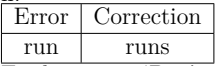
(ii) Identify the error and supply the correction for the following: The boy run fast in the race. (1 mark)
Use the given format for your response: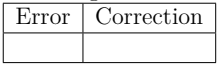
Ans:
'Boy' is singular, requiring 'runs'.
(iii) Maya shared some plans with Anil. Report Anil's question: Will you attend the art exhibition? (1 mark)
Ans: Anil asked Maya whether she would attend the art exhibition.
(iv) A student asked a teacher about a project. Report the student's question: Can we submit the project next week? (1 mark)
Ans: The student asked the teacher whether they could submit the project next week.
(v) There are ____ apples in the basket. (1 mark)
(i) much/many
(ii) some/any
(iii) every/no
(iv) few/little
Ans: (ii)
'Some' for positive statements about 'apples'.
(vi) Select the option that identifies the error and supplies the correction for the following line: She dance gracefully at the event. (1 mark)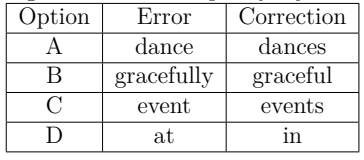
Ans: (a)
'She' requires 'dances'.
(vii) Can I borrow your notebook for the class? Select the correct modal: (1 mark)
(a) can
(b) might
(c) may
(d) should
Ans: (a)
Requesting permission.
(viii) He ____ a picture at the art exhibition last Saturday. (1 mark)
(a) paints
(b) painted
(c) was painting
(d) is painting
Ans: (b)
Past tense for last Saturday.
(ix) Fill in the blank by choosing the correct option to complete a line from a notice: (1 mark)
All students ____ participate in the cultural fest.
(a) could
(b) must
(c) will
(d) may
Ans: (b)
Obligation for notice.
(x) Complete the line from a story by filling the blank with the correct option: (1 mark)
The river ____ gently, / Carrying leaves to the sea.
(a) flows, carries
(b) flowed, carried
(c) had flowed, carrying
(d) flows, carrying
Ans: (b)
Past tense for narrative
(xi) Complete the given narrative by filling in the blank with the correct option: (1 mark)
Reading books ____ knowledge and creativity.
(a) is enhancing
(b) enhances
(c) enhance
(d) will enhance
Ans: (b)
Present tense for fact.
(xii) Neither the pen nor the pencil ____ on the desk. (1 mark)
(a) is
(b) are
(c) were
(d) was
Ans: (a)
'Neither...nor' agrees with 'pencil'.
Q4. Write a descriptive paragraph in about 100-120 words on "A Visit to a Historical Monument". [5 Marks]
OR
Write a descriptive paragraph in about 100-120 words describing your favorite book.
Ans: Visiting the Red Fort was awe-inspiring. Its towering red sandstone walls whispered history. Intricate carvings adorned the Diwan-i-Aam, and the lush gardens bloomed vi- brantly. The flag hoisted high stirred pride. I felt connected to India's past, imagining emperors' lives.
OR
The Hobbit is my favorite book. Tolkien's vivid world of hobbits, dragons, and adven- tures captivates me. Bilbo's bravery inspires me to face challenges. The lush Shire and thrilling battles spark my imagination, making every reread magical.
Q5. Write a diary entry in about 100-120 words about a day when you learned something new. [5 Marks]
OR
Write a story in about 100-120 words based on the given clues: One morning, I found an old key in my backyard...
Ans: 22nd November 2024, Friday, 9:00 PM
Dear Diary,
Today, I learned to bake a cake at a school workshop! Mixing batter and decorating with icing was fun. My chocolate cake was a hit with friends. I'm excited to try new recipes and share treats!
Yours,
AnanyaOR
One morning, I found an old key in my backyard under a stone. It unlocked a rusty chest in the attic, revealing a journal of my great-grandfather's travels. Following its map, I discovered a hidden park, vowing to explore more.
Section C
Q6. Read the given extracts and answer the questions for ANY ONE of the two given:
i. Prose Extract: [5 Marks]
He was a brilliant man, but his ideas were often misunderstood. People thought he was odd because he loved to play the violin and think deeply.
(a) Who is the 'he' referred to in the extract? (1 mark)
Ans: Albert Einstein.
(b) Why did people find the man's behavior unusual? Answer in about 40 words. (2 marks)
Ans: People found Einstein's behavior unusual because he spent much time in deep thought and played the violin passionately, unlike the more conventional social interactions ex- pected of others during his time. His introspective nature set him apart.
(c) Which of the following is NOT true about the man? (1 mark)
(i) He was brilliant.
(ii) His ideas were always accepted.
(iii) He enjoyed playing the violin.
(iv) He was a deep thinker.
Ans: (b)
The extract states his ideas were often misunderstood, indicating they were not always accepted by others.
(d) What does the phrase 'often misunderstood' suggest about the man's ideas? (1 mark)
Ans: The phrase 'often misunderstood' suggests that Einstein's ideas were complex and un- conventional, making it difficult for people to grasp their significance, leading to frequent misinterpretations.
OR
ii. Poetry Extract: [5 Marks]
Softly, in the dusk, a woman is singing to me; / Taking me back down the vista of years...
(a) What is the woman doing in the poem? (1 mark)
Ans: The woman is singing to the speaker.
(b) How does the poet convey the effect of the woman's singing? Answer in about 40 words. (2 marks)
Ans: The poet conveys the effect of the woman's singing by describing how it transports the speaker back through memories, evoking nostalgia and a deep emotional connection to the past. The soft tone enhances this reflective mood.
(c) Identify the poetic device used in the line down the vista of years. (1 mark)
(i) Metaphor
(ii) Simile
(iii) Alliteration
(iv) Personification
Ans: (i)
'Vista of years' compares time to a visual expanse without using 'like' or 'as', making it a metaphor.
(d) What does the phrase 'vista of years' suggest about the speaker's memories? (1 mark)
Ans: The phrase 'vista of years' suggests that the speaker's memories are vast and far- reaching, stretching back over a long period, evoking a sense of timeless reflection.
Q7. Read the given extracts and answer the questions for ANY ONE of the two given:
i. Poetry Extract: [5 Marks]
And I shall have some peace there, for peace comes dropping slow...
(a) Where does the speaker seek peace in the poem? (1 mark)
Ans: The speaker seeks peace in Innisfree.
(b) How does the poet describe the process of finding peace? Answer in about 40 words. (2 marks)
Ans: The poet describes finding peace as a gradual process, achieved through the serene environment of Innisfree, where natural elements like lake waters contribute to a slow, calming experience that restores tranquility.
(c) Identify the poetic device used in the line peace comes dropping slow. (1 mark)
(i) Metaphor
(ii) Simile
(iii) Personification
(iv) Alliteration
Ans: (iii)
Peace is given the human action of 'dropping slow', personifying it as an entity that arrives gently.
(d) What does the phrase 'dropping slow' suggest about peace? (1 mark)
Ans: The phrase 'dropping slow' suggests that peace is not immediate but arrives gradually, like gentle rain, requiring time and a calm setting to fully manifest.
OR
(ii) Prose Extract: [5 Marks]
Iswaran would narrate his stories with such vivid details that Mahendra would listen, completely engrossed.
(a) Who is Iswaran in the extract? (1 mark)
Ans: Iswaran is Mahendra's cook and storyteller.
(b) How did Iswaran's storytelling affect Mahendra? Answer in about 40 words. (2 marks)
Ans: Iswaran's storytelling captivated Mahendra, holding his complete attention with vivid details and dramatic flair, making the narratives so engaging that Mahendra was fully immersed in the tales.
(c) Which of the following is NOT true about Iswaran's stories? (1 mark)
(i) They were vivid.
(ii) They captivated Mahendra.
(iii) They were always factual.
(iv) They were narrated with detail.
Ans: (iii)
Iswaran's stories often included exaggerated or imaginative elements, not always grounded in fact.
(d) What does the phrase 'completely engrossed' suggest about Mahendra's reaction? (1 mark)
Ans: The phrase 'completely engrossed' suggests that Mahendra was entirely absorbed and captivated by Iswaran's stories, indicating a deep level of interest and attention.
Q8. Answer ANY FOUR of the following five questions in about 40-50 words: [4 x 3 = 12 Marks]
(i) How does the narrator compare the old schooling system to the mechanical teacher?
Ans: The narrator contrasts the old schooling system, where human teachers fostered inter- active learning in groups, with the mechanical teacher's rigid, solitary method. The old system is depicted as more engaging, encouraging social bonds among students.
(ii) How did the scientist's unique thinking lead to his achievements?
Ans: The scientist's unconventional thinking, driven by curiosity about a compass and love for mathematics, led to groundbreaking theories like relativity. His ability to question norms and explore abstract concepts resulted in significant scientific advancements.
(iii) How does the girl's perception of her father change over time?
Ans: Initially, the girl fears her strict father, viewing him as distant. Over time, his com- forting actions, like soothing her during a nightmare, transform her perception, fostering affection and a deeper emotional connection.
(iv) What obstacles does the musician overcome to pursue her passion?
Ans: The musician, facing deafness, overcomes her inability to hear by sensing vibrations and practicing tirelessly. With mentor support, she adapts her techniques, mastering her art and succeeding in her passion for music.
(v) Describe the poet's emotions when reflecting on the wind's power.
Ans: The poet expresses both awe at the wind's formidable strength and resilience in facing its challenges, urging inner fortitude. This duality reflects admiration for nature's force and a resolve to withstand adversity.
Q9. Answer ANY TWO of the following three questions in about 40-50 words: [2 x 3 = 6 Marks]
(i) How does the boy's experience at the fair shape his understanding of his parents?
Ans: The boy's experience at the fair, where he panics after getting lost, deepens his appre- ciation for his parents' presence. His longing for toys fades, replaced by a realization of their emotional importance, strengthening his attachment to them.
(ii) How does Toto's mischief affect the family's routine?
Ans: Toto's mischievous acts, like breaking dishes or escaping, disrupt the family's daily routine, requiring constant monitoring and cleanup. His unpredictable behavior creates chaos, forcing the family to adjust their schedules to manage him.
(iii) What makes the kingdom's justice system flawed?
Ans: The kingdom's justice system is flawed due to its arbitrary decisions, like reversing day and night or punishing innocents. This illogical approach creates confusion and un- fairness, undermining trust and causing societal imbalance.
Q10. Answer ANY ONE of the following two questions in about 100-120 words: [6 Marks]
(i) Discuss how the scientist's determination helped him overcome societal challenges.
Ans: The scientist's determination was key in overcoming societal challenges. Albert Einstein faced skepticism for his unconventional ideas and struggled with rigid academic systems. His persistence in exploring abstract concepts like relativity, despite being misunder- stood, led to revolutionary scientific contributions. By staying true to his curiosity and working independently, he overcame barriers, inspiring others to persevere through doubt and adversity. His success highlights the value of resilience in achieving greatness.
(ii) Analyze the theme of nature in the poem about seeking peace on an island.
Ans: The poem's theme of nature as a source of peace is central, with Innisfree symbolizing an idyllic escape from urban chaos. The poet's imagery of lake waters and tranquil glades reflects a deep yearning for simplicity. Nature's serene elements, like birdsong and calm waters, restore the speaker's soul. This connection underscores nature's healing power, offering a timeless retreat for introspection and renewal.
Q11. Answer ANY ONE of the following two questions in about 100-120 words: [6 Marks]
(i) How does Iswaran's storytelling influence Mahendra's view of the world?
Ans: Iswaran's storytelling profoundly influences Mahendra's worldview by infusing it with imagination and suspense. His vivid, dramatic narratives, blending reality with exagger- ation, captivate Mahendra, making ordinary events seem extraordinary. This storytelling style sparks Mahendra's curiosity, encouraging him to see the world through a more imag- inative and engaging lens, enriching his perception of everyday life.
(ii) How does the kingdom's unusual system lead to unexpected consequences?
Ans: The kingdom's unusual system, with reversed routines and arbitrary justice, leads to chaos and unintended consequences. Decisions like executing an innocent person due to flawed logic create unrest and inefficiency. This disrupts society, as citizens struggle with impractical schedules and unfair punishments, ultimately destabilizing the king- dom's governance and order.
FAQs on Half Yearly Class 9 English Set 3 (Solutions)
| 1. What topics are covered in the Class 9 English Half Yearly Exam? |  |
| 2. How can I effectively prepare for the Class 9 English Half Yearly Exam? | |
| 3. What types of questions can I expect in the Class 9 English Half Yearly Exam? | |
| 4. Are there any recommended study materials for the Class 9 English Half Yearly Exam? | |
| 5. How important is time management during the Class 9 English Half Yearly Exam? | |