CTET & State TET Exam > CTET & State TET Notes > Child Development and Pedagogy for CTET Preparation > Cheat Sheet: Cognitive Development Theory
Cheat Sheet: Cognitive Development Theory

Jean Piaget, a Swiss psychologist with a zoology background, developed a groundbreaking theory of cognitive development. His work with Alfred Binet on intelligence testing sparked his interest in how children think and learn. Piaget's constructivist approach emphasises that children actively build their understanding of the world through universal stages, though his theory is critiqued for its limited focus on cultural influences.
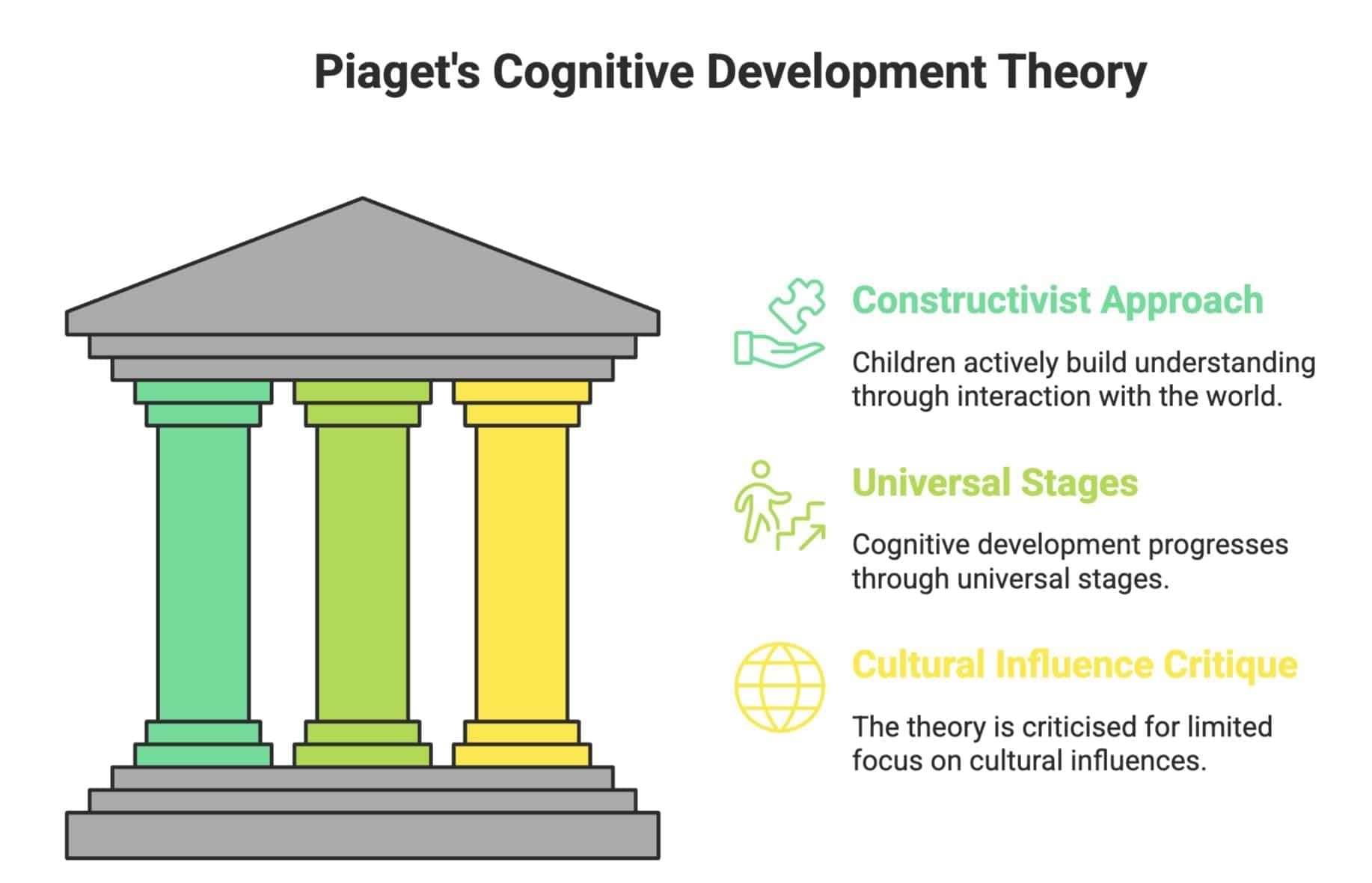
Key Concepts
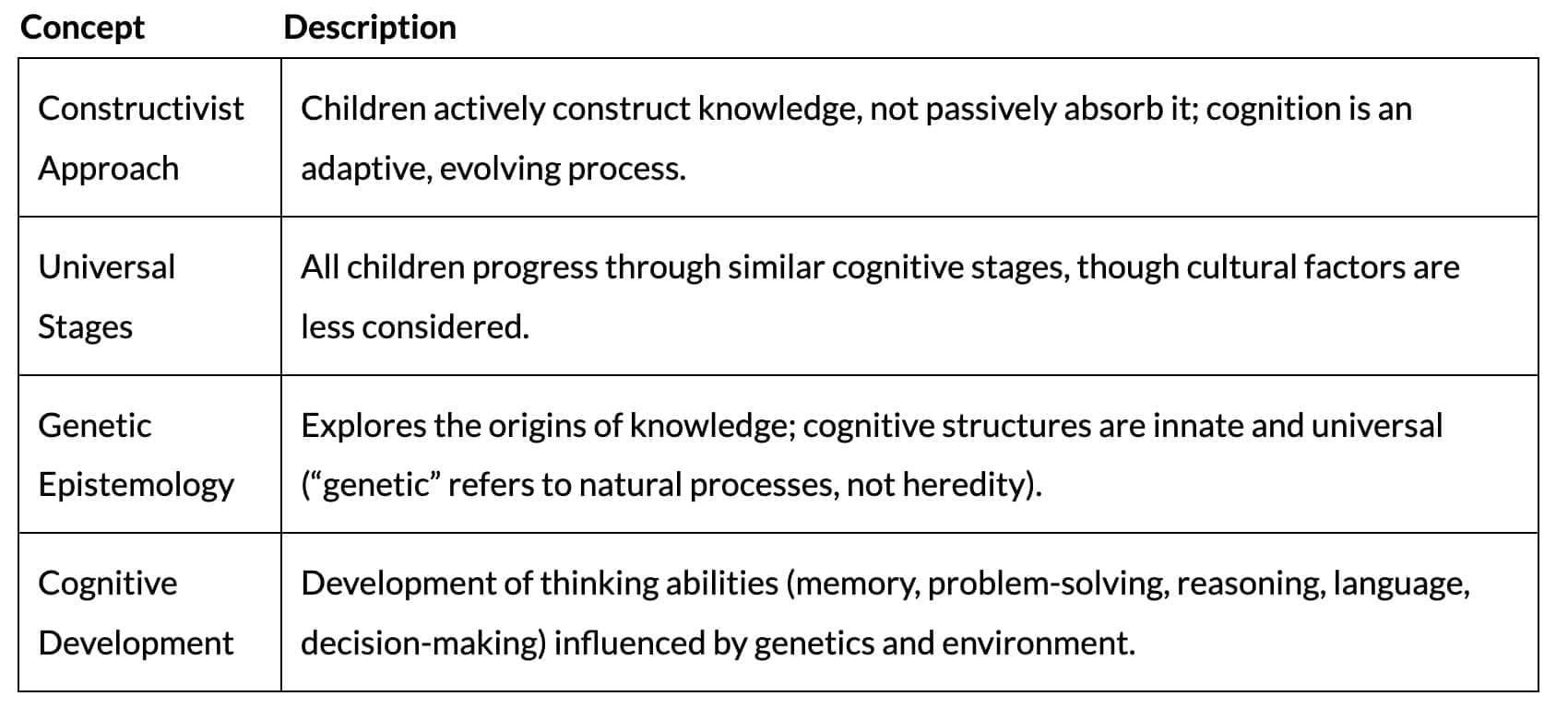
Basics of Learning and Cognitive Growth
- Biological Growth: Heredity plays a key role in cognitive development.
- Daily Activities: Work, socialising, and educational discussions foster cognitive growth.
- Social Experiences: Help children understand the meaning behind actions.
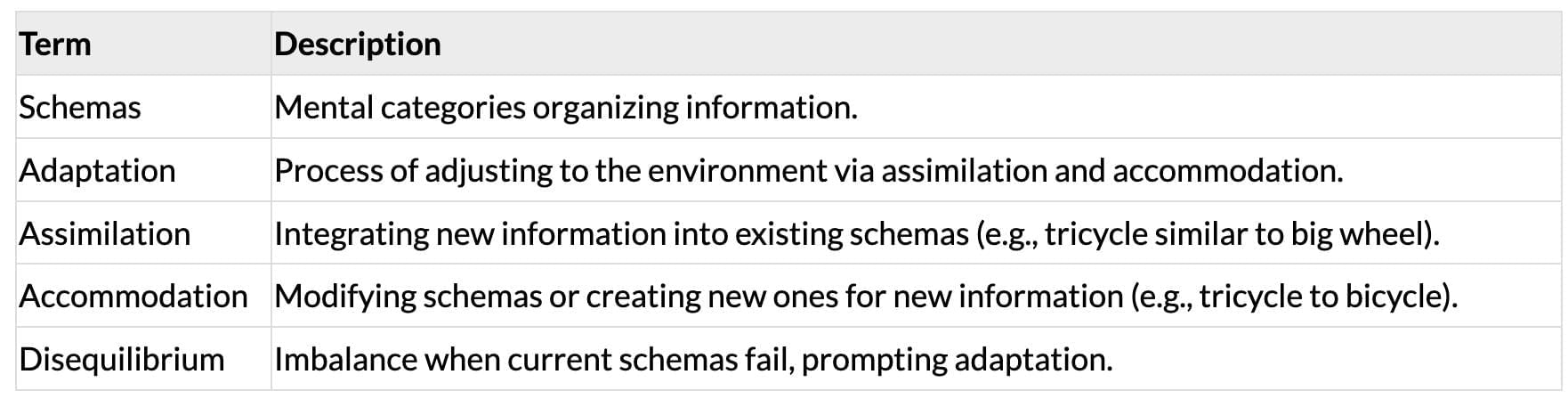
- Disequilibrium and Equilibration: Disequilibrium (mismatch between known and new information) drives equilibration, balancing understanding with new knowledge.
Conceptual Frameworks and Cognitive Adaptation
Four Stages of Cognitive Development
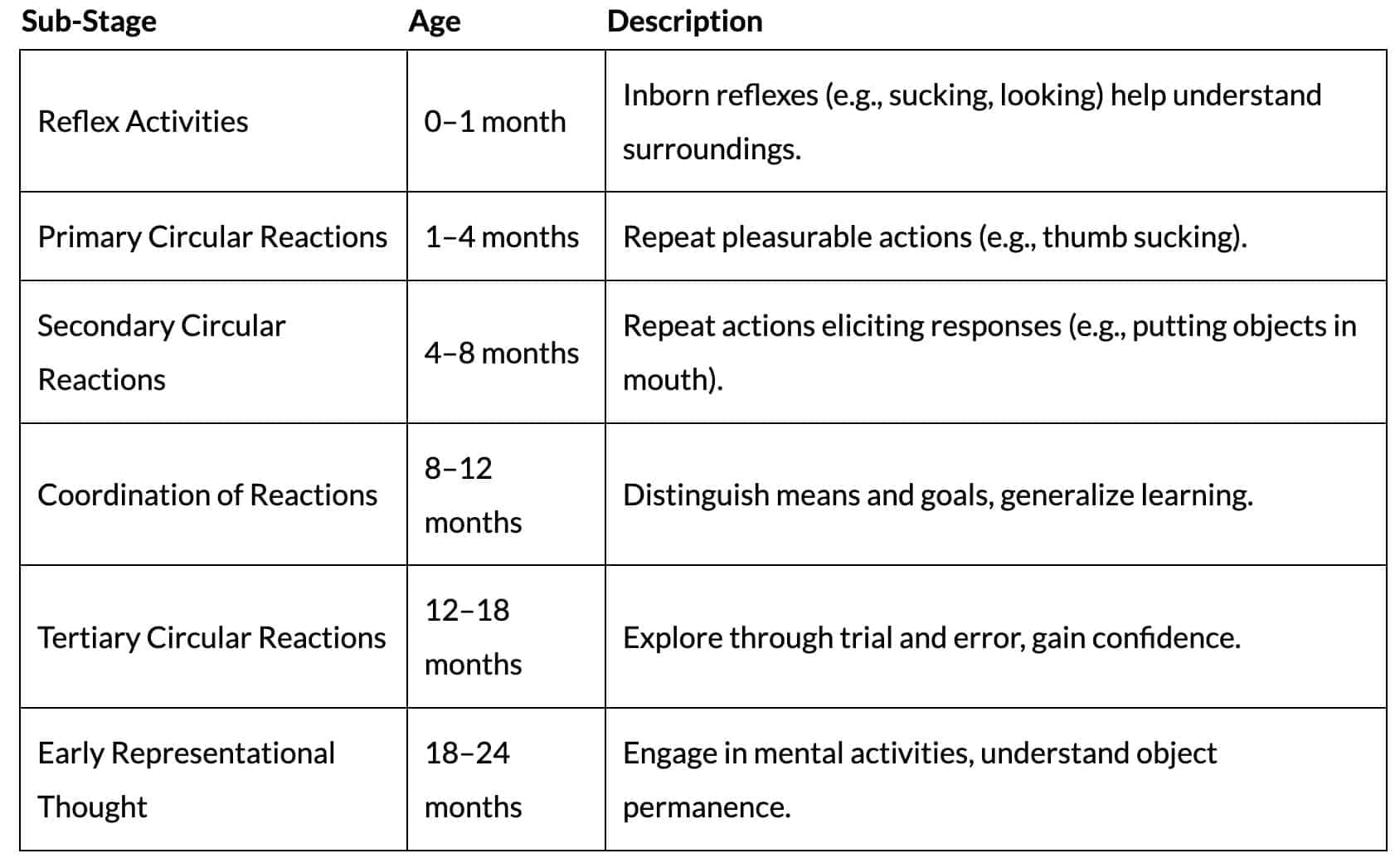
1. Sensorimotor Stage (0-2 Years)
- Children learn through senses and motor skills, exploring by seeing, hearing, touching, moving.
- Develop body movement control, object permanence (objects exist when not visible), and goal-directed activities (e.g., catching a ball).
- Progress from basic to complex actions fosters logical thinking.
2. Preoperational Stage (2-7 Years)
- Children process thoughts actively but lack logical operations; divided into pre-conceptual (2-4 years) and intuitive (4-7 years) stages.
- Exhibit egocentrism (focus on own perspective), animism (inanimate objects have feelings), and semiotic function (use symbols, language, gestures).
- Struggle with moral realism, reversible thinking, and conservation (e.g., same volume in different containers).
- Engage in collective monologues (talk in groups without engaging others) due to egocentrism.
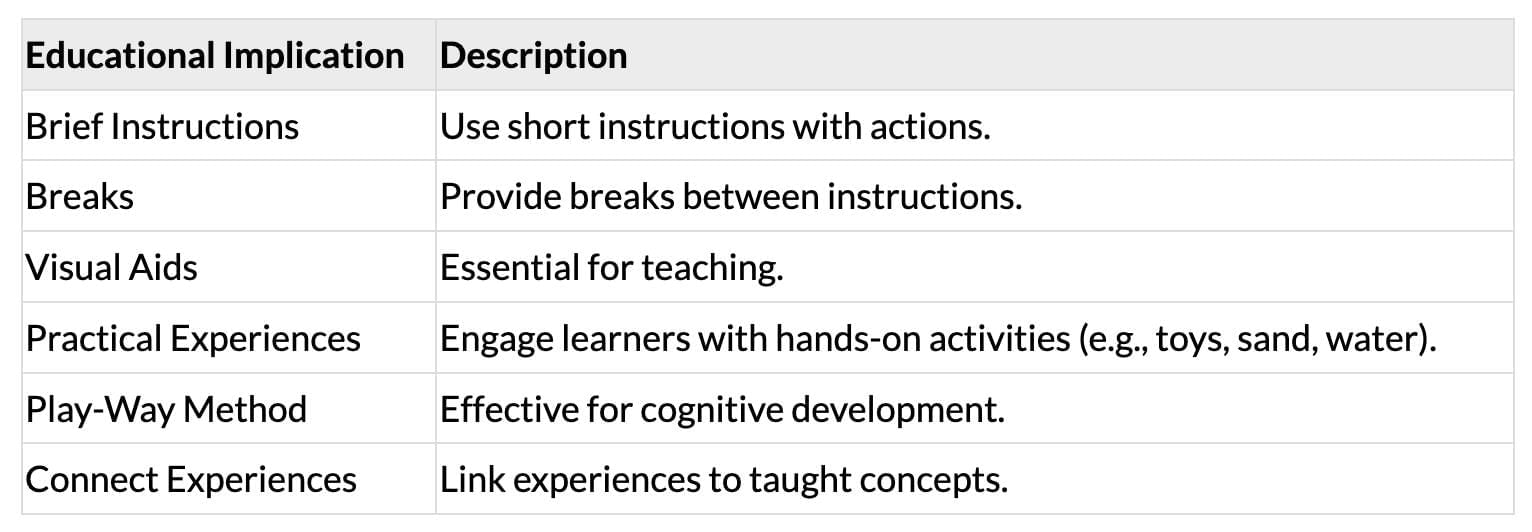
3. Concrete Operational Stage (7-11 Years)
- Children perform operations on concrete objects, applying logical reasoning to tangible problems.
- Understand conservation (quantity remains the same despite appearance changes), but struggle with abstract concepts.
- Improved manipulation of objects and relationships compared to preoperational stage.
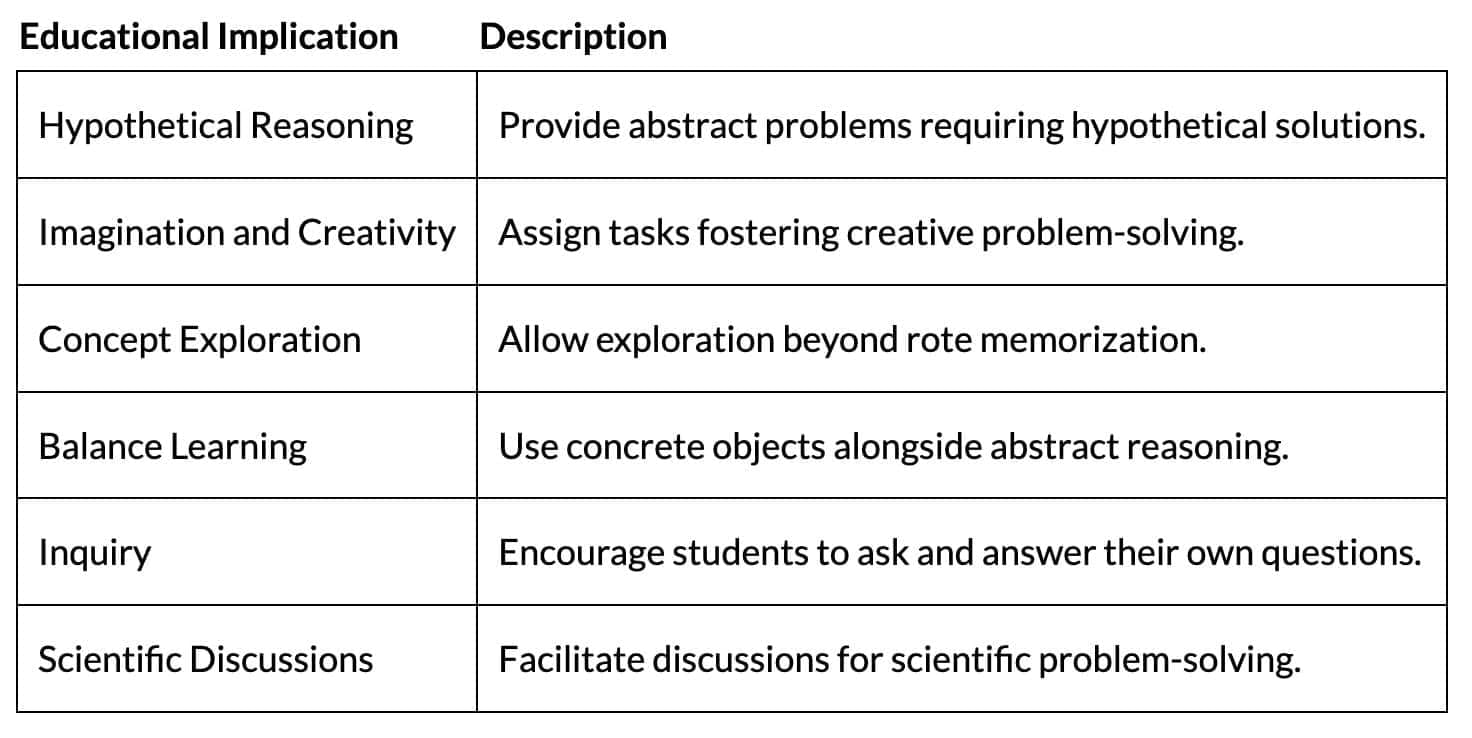
4. Formal Operational Stage (11 Years-Adulthood)
- Develop abstract thinking, understanding complex ideas (e.g., numbers, variables).
- Use hypothetico-deductive reasoning to systematically deduce solutions, exploring possibilities.
- Exhibit adolescent egocentrism (self-consciousness, feeling observed), lessening general egocentrism.
- Risk of overemphasising abstraction, neglecting practical realities.
The document Cheat Sheet: Cognitive Development Theory is a part of the CTET & State TET Course Child Development and Pedagogy for CTET Preparation.
All you need of CTET & State TET at this link: CTET & State TET
FAQs on Cheat Sheet: Cognitive Development Theory
| 1. What are the key stages of cognitive development according to Piaget's theory? |  |
Ans.Piaget's theory outlines four key stages of cognitive development: the Sensorimotor stage (birth to 2 years), where infants learn through sensory experiences and motor activities; the Preoperational stage (2 to 7 years), characterized by symbolic thinking and egocentrism; the Concrete Operational stage (7 to 11 years), where children begin to think logically about concrete events; and the Formal Operational stage (11 years and up), which involves abstract reasoning and hypothetical thinking.
| 2. How does cognitive growth influence learning in children? | |
Ans.Cognitive growth is crucial for learning as it affects how children process information, solve problems, and understand the world around them. As cognitive abilities develop, children become better at organizing their thoughts, which enhances their capacity to learn new concepts and apply knowledge in different contexts.
| 3. What is the importance of conceptual frameworks in cognitive adaptation? | |
Ans.Conceptual frameworks provide a structure for understanding how knowledge is organized and integrated. They help individuals make sense of new information by relating it to what they already know, facilitating cognitive adaptation. This is essential for effective learning, as it allows learners to build upon existing knowledge and adapt to new situations.
| 4. How can educators support cognitive development in the classroom? | |
Ans.Educators can support cognitive development by creating an engaging learning environment that encourages exploration and critical thinking. Strategies include using hands-on activities, promoting collaborative learning, providing opportunities for problem-solving, and offering feedback that challenges students to think at higher levels.
| 5. What role do social interactions play in cognitive development? | |
Ans.Social interactions are fundamental to cognitive development as they provide opportunities for children to learn from peers and adults. Through discussions, collaborative tasks, and social play, children develop language skills, gain new perspectives, and enhance their reasoning abilities, all of which contribute to their cognitive growth.
About this Document

4.67/5 Rating

Apr 25, 2026 Last updated
Related Exams
Document Description: Cheat Sheet: Cognitive Development Theory for CTET & State TET 2026 is part of Child Development and Pedagogy for CTET Preparation preparation. The notes and questions for Cheat Sheet: Cognitive Development Theory have been prepared according to the CTET & State TET exam syllabus. Information about Cheat Sheet: Cognitive Development Theory covers topics like and Cheat Sheet: Cognitive Development Theory Example, for CTET & State TET 2026 Exam. Find important definitions, questions, notes, meanings, examples, exercises and tests below for Cheat Sheet: Cognitive Development Theory.
Introduction of Cheat Sheet: Cognitive Development Theory in English is available as part of our Child Development and Pedagogy for CTET Preparation for CTET & State TET & Cheat Sheet: Cognitive Development Theory in Hindi for Child Development and Pedagogy for CTET Preparation course. Download more important topics related with notes, lectures and mock test series for CTET & State TET Exam by signing up for free. CTET & State TET: Cheat Sheet: Cognitive Development Theory
Description
Cheat Sheet: Cognitive Development Theory of Child Development & Pedagogy to help you remember important concepts with short tricks. Start learning for CTET & State TET exam & improve retention with EduRev.
Information about Cheat Sheet: Cognitive Development Theory
In this doc you can find the meaning of Cheat Sheet: Cognitive Development Theory defined & explained in the simplest way possible. Besides explaining types of Cheat Sheet: Cognitive Development Theory theory, EduRev gives you an ample number of questions to practice Cheat Sheet: Cognitive Development Theory tests, examples and also practice CTET & State TET tests



Related Searches
past year papers, Viva Questions, ppt, Important questions, Sample Paper, MCQs, shortcuts and tricks, Objective type Questions, Exam, Cheat Sheet: Cognitive Development Theory, Semester Notes, video lectures, study material, Cheat Sheet: Cognitive Development Theory, Free, pdf , Previous Year Questions with Solutions, Cheat Sheet: Cognitive Development Theory, Extra Questions, mock tests for examination, Summary, practice quizzes;