UPSC Exam > UPSC Notes > Environment CSE > Mind Map: Environmental Impact Assessment
Mind Map: Environmental Impact Assessment

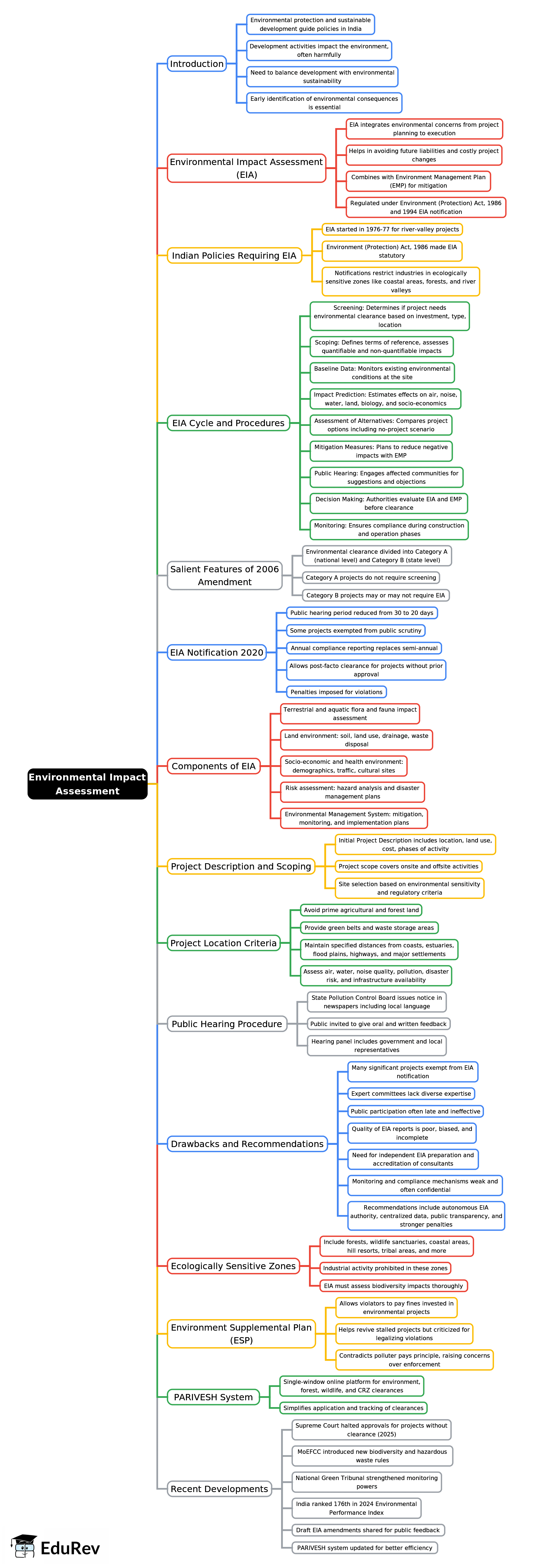
Environmental Impact Assessment - 1
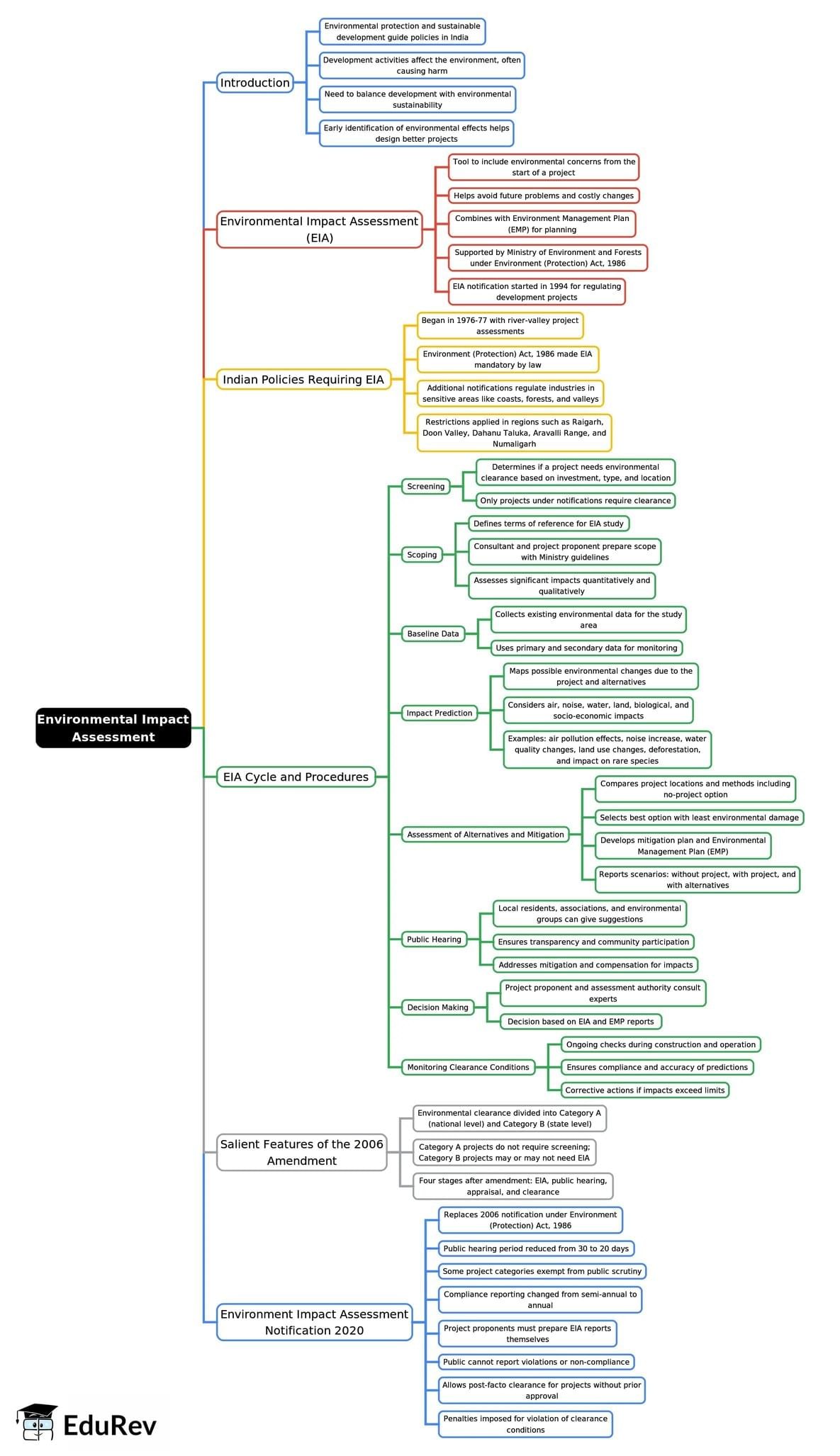
Environmental Impact Assessment - 2
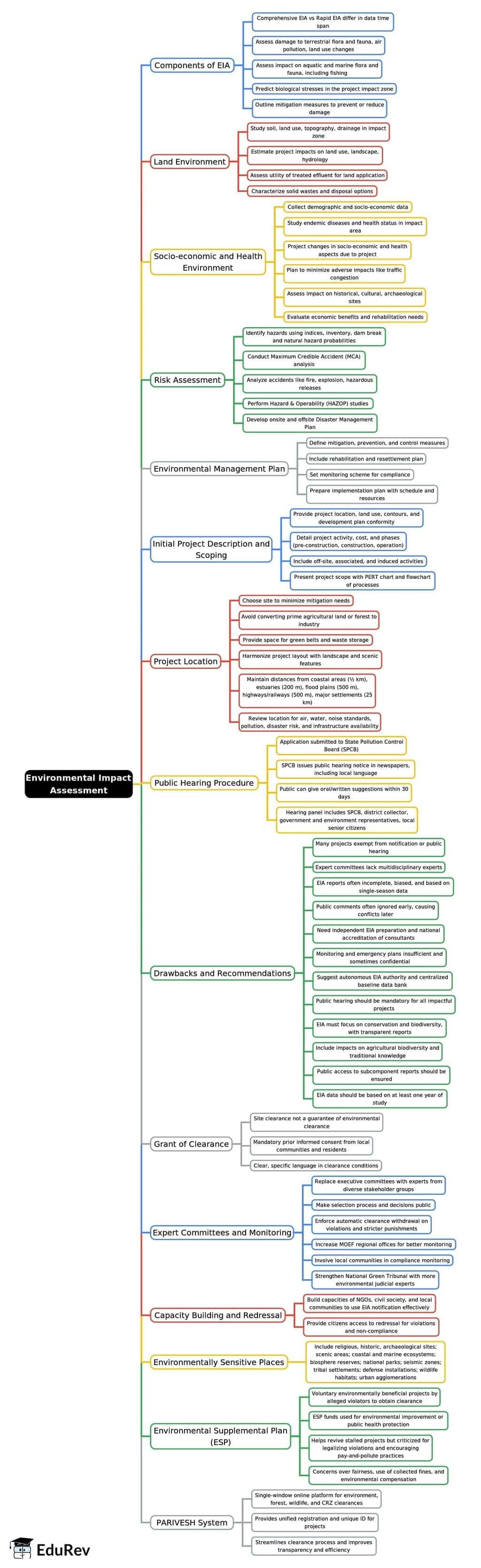
Environmental Impact Assessment - 3
The document Mind Map: Environmental Impact Assessment is a part of the UPSC Course Environment for UPSC CSE.
All you need of UPSC at this link: UPSC
FAQs on Mind Map: Environmental Impact Assessment
| 1. What is the purpose of Environmental Impact Assessment (EIA) in India? |  |
Ans. The purpose of Environmental Impact Assessment (EIA) in India is to evaluate the potential environmental effects of a proposed project before it is approved. EIA aims to ensure that decision-makers consider environmental impacts, facilitating sustainable development. It helps in identifying, predicting, and assessing the potential adverse effects of projects on the environment and recommends measures to mitigate these impacts.
| 2. What are the key steps involved in the EIA process? | |
Ans. The key steps involved in the EIA process include screening, scoping, impact assessment, mitigation measures, public consultation, decision-making, and monitoring. Screening determines if a project requires EIA, scoping identifies the significant impacts to be assessed, and the impact assessment evaluates these impacts. Public consultation engages stakeholders, and the final decision is made based on the assessment report, followed by monitoring to ensure compliance with the recommended measures.
| 3. What are the legal frameworks governing EIA in India? | |
Ans. The legal frameworks governing EIA in India include the Environment (Protection) Act, 1986, and the EIA Notification, which was first issued in 1994 and has undergone several amendments. These laws outline the procedures for conducting EIA, establishing the criteria for categorizing projects, and specifying the roles and responsibilities of various stakeholders involved in the EIA process.
| 4. How does public participation influence the EIA process? | |
Ans. Public participation is crucial in the EIA process as it allows stakeholders, including local communities and NGOs, to voice their concerns and provide input on potential environmental impacts. This engagement helps ensure that the EIA considers diverse perspectives and local knowledge, ultimately leading to more informed decision-making and enhancing the transparency and accountability of the process.
| 5. What are some common challenges faced in the EIA process? | |
Ans. Common challenges in the EIA process include inadequate baseline data, lack of skilled professionals, insufficient public participation, and political interference. Additionally, there may be challenges related to the enforcement of EIA recommendations and monitoring compliance, which can undermine the effectiveness of the assessment and its ability to protect the environment.
About this Document

4.84/5 Rating

Apr 18, 2026 Last updated
Related Exams
Document Description: Mind Map: Environmental Impact Assessment for UPSC 2026 is part of Environment for UPSC CSE preparation. The notes and questions for Mind Map: Environmental Impact Assessment have been prepared according to the UPSC exam syllabus. Information about Mind Map: Environmental Impact Assessment covers topics like and Mind Map: Environmental Impact Assessment Example, for UPSC 2026 Exam. Find important definitions, questions, notes, meanings, examples, exercises and tests below for Mind Map: Environmental Impact Assessment.
Introduction of Mind Map: Environmental Impact Assessment in English is available as part of our Environment for UPSC CSE for UPSC & Mind Map: Environmental Impact Assessment in Hindi for Environment for UPSC CSE course. Download more important topics related with notes, lectures and mock test series for UPSC Exam by signing up for free. UPSC: Mind Map: Environmental Impact Assessment
Description
Mind Map: Environmental Impact Assessment of Environment provides you one-page visual summary of the chapter covering all the important topics. Download the PDF from EduRev.
Information about Mind Map: Environmental Impact Assessment
In this doc you can find the meaning of Mind Map: Environmental Impact Assessment defined & explained in the simplest way possible. Besides explaining types of Mind Map: Environmental Impact Assessment theory, EduRev gives you an ample number of questions to practice Mind Map: Environmental Impact Assessment tests, examples and also practice UPSC tests



Related Searches
Summary, Viva Questions, MCQs, Exam, Sample Paper, shortcuts and tricks, Important questions, past year papers, Mind Map: Environmental Impact Assessment, ppt, mock tests for examination, study material, Objective type Questions, Free, Mind Map: Environmental Impact Assessment, Semester Notes, Previous Year Questions with Solutions, Extra Questions, Mind Map: Environmental Impact Assessment, video lectures, pdf , practice quizzes;