This chapter focuses on the significance of a constitution, its purpose in establishing a framework for governance, and the historical process of drafting the Indian Constitution. Below is a concise Q&A set to help you prepare for class tests, school exams, or board-level assessments with key, repetitive questions.
Key Questions
1. What is a Constitution, and why is it needed?
Solution:
A constitution is a set of fundamental principles or laws that outlines how a government is structured and operates. It is essential for several reasons:
It provides basic rules for governing society.
It helps coordinate actions between citizens and the government.
It limits arbitrary power, ensuring that no one can act without legal authority.
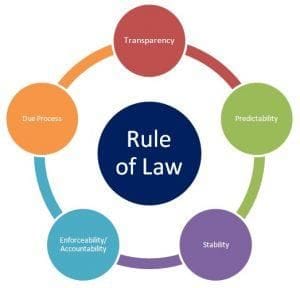
It establishes the rule of law, creating a framework for governance.
2. What are the main functions of a Constitution?
Solution:
The constitution serves several key functions, including:
Defining Government Structure: It establishes the organs of government (legislature, executive, judiciary) and allocates powers among them.
Limiting Power: It specifies fundamental rights of citizens that no government can violate.
Regulating Authority: It determines who has the power to make and enforce laws, ensuring accountability and order.
Amending Procedures: It provides mechanisms for amendment, balancing change with stability.
These functions allow the constitution to act as a supreme law that organises government, protects citizens, and enables just governance.
3. Why is it important to demarcate powers and responsibilities in a Constitution?
Solution:
Clear demarcation of powers is essential in a constitution for several reasons:
It prevents any single branch of government from gaining unchecked control.
By defining specific roles for the legislature, executive, and judiciary, it establishes a system of checks and balances.
This oversight helps to prevent abuse of power and maintains a fair balance.
Without clear separation, conflicts may arise between institutions, such as between central and state governments, leading to injustice.
4. Why should the Constitution place limitations on the rulers?
Solution:
Limiting the powers of rulers is crucial for several reasons:
It prevents the rise of dictatorship and protects citizens' rights.
The constitution guarantees fundamental rights, such as freedom of speech and equality, which the government cannot violate.
It establishes legal procedures and independent courts to hold rulers accountable.
Without these limits, leaders could act arbitrarily; with them, even powerful officials are bound by law.
5. Explain the concept of constitutionalism.
Solution:
Constitutionalism refers to the idea that government power is exercised under the rule of law and with the consent of the people. It ensures that:
Government decisions follow legal procedures.
Rulers cannot act arbitrarily; they must engage in rational debate.
The Constitution is supreme, not individuals.
There are limits on government authority.
Additionally, it requires laws to be created through transparent and agreed-upon processes, protecting citizens' fundamental rights.
6. How was the Indian Constitution made, and who drafted it?
Solution:
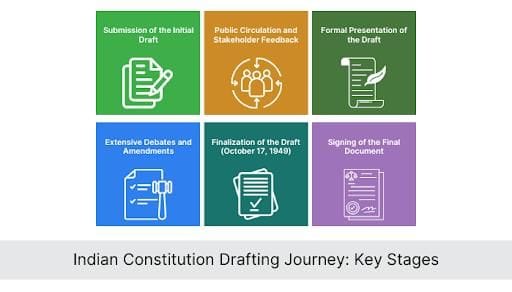
The Indian Constitution was created by the Constituent Assembly, which first convened on 9 December 1946. This Assembly was formed with members indirectly elected by provincial legislatures during British rule. Key points include:
The Assembly included leaders from various provinces and communities.
Dr. B.R. Ambedkar served as the Chairman of the Drafting Committee, playing a crucial role in shaping the Constitution.
The Constitution was adopted on 26 November 1949 and came into effect on 26 January 1950.
The process involved extensive debates and discussions, ensuring diverse perspectives were considered. Ultimately, the Constitution aimed to secure rights for all citizens, regardless of their background.
7. Who moved the Objective Resolution in the Constituent Assembly, and why was it significant?
Solution:
The Objective Resolution was introduced by Pt. Jawaharlal Nehru on 13 December 1946. Its significance lies in the following points:
It declared India's intention to become an independent and sovereign republic.
It outlined essential ideals such as justice, liberty, and equality that the Constitution should uphold.
This resolution reflected the fundamental aspirations of the Indian people.
It served as a guiding vision for the drafting of the Constitution.
8. What factors determine the effectiveness of a Constitution?
Solution:
A Constitution's effectiveness depends on:
Mode of Promulgation: Whether it was created by credible, popular leaders or imposed by an external force.
Substantive Provisions: It must provide justice, equality, and freedom so that all groups have reasons to accept it.
Balanced Institutional Design: Power should be distributed across institutions (Legislature, Executive, Judiciary, Election Commission) to prevent concentration and misuse.
9. What is meant by saying that the Constitution expresses the 'fundamental identity of a people'?
Solution:
The Constitution is not only a legal document; it also expresses the collective identity of the people. Before a Constitution, people may have many identities such as religion, caste, language, or region. But by agreeing on a common set of rules and values, they form a single political community. The Constitution defines the values that bind people together, such as democracy, equality, and secularism. It also limits what citizens and governments can do, creating a shared moral identity. For India, it created a new identity based not on religion or ethnicity, but on citizenship and common values. Thus, it expresses the unity and fundamental identity of the Indian people.
10. How do Fundamental Rights and Directive Principles of State Policy reflect the aspirations of the people?
Solution:
Fundamental Rights and Directive Principles of State Policy reflect the aspirations of the people in the following ways:
Fundamental Rights protect individual freedoms, such as equality before the law and freedom of speech.
These rights are enforceable, ensuring that people can seek justice when their liberties are threatened.
Directive Principles provide guidelines for the government to promote social and economic welfare.
They focus on areas like fair wages, education, and healthcare, aiming for a just society.
Together, these elements embody the people's hopes for democracy and social justice.
11. Why is the Constitution described as a "living document"? How can it be amended?
Solution:
The Constitution is referred to as a 'living document' because it can be amended to meet the evolving needs of society. It includes specific procedures for making changes that maintain a balance between rigidity and flexibility:
Some amendments require a special majority in Parliament, along with state ratification.
Others can be made with a simple parliamentary majority.
This structure ensures that the Constitution remains relevant and respected over time. It has been amended multiple times to address new challenges while preserving its core principles.
12. What are some salient features of the Indian Constitution? From which countries or sources did the Indian Constitution borrow features?
Solution:
Some key features include:
Written and Lengthy: It is a detailed written document (one of the longest in the world).
Federal Structure: India is a Union of States with powers divided between the Centre and the states.
Parliamentary Government: The executive (Prime Minister and Council of Ministers) is responsible to the legislature.
Fundamental Rights: It guarantees basic rights (equality, freedom of speech, etc.) to citizens.
Independent Judiciary: Courts have the power of judicial review to protect the Constitution
Secular and Socialist: It explicitly commits to secularism and aims to reduce inequality.
Amendability: It provides both rigid and flexible procedures for amendment
These features combine to make the Indian Constitution a unique document suited to India's needs.
The framers drew on several other constitutions. For example:
British: Parliamentary system, rule of law, single citizenship
American: Fundamental Rights and an independent judiciary (similar to the U.S. Bill of Rights)
Canadian: Federal structure with residuary powers to the Centre (and the term "Union of States").
Irish: Directive Principles of State Policy (inspired by Ireland)
Other influences include France (republican form, abolition of royal titles), Germany (emergency provisions), and South Africa (judicial independence). The Indian Constitution is often called a "bag of borrowing" from many sources
13. What is meant by an unwritten constitution? From where does the Constitution derive its authority?
Solution:
An unwritten constitution is not contained in a single document. Instead, it is based on:
Statutes (laws enacted by the legislature)
Judicial decisions (court rulings that interpret laws)
Customs (practices that have developed over time)
For example, the United Kingdom has an unwritten constitution that relies on Acts of Parliament and conventions. In contrast, India has a fully written constitution that serves as its supreme legal document. The authority of a constitution comes from 'We, the People of India', meaning it is created by the people and for the people. It was adopted by the Constituent Assembly, which represented the citizens. This indicates that ultimate sovereignty lies with the people, and the constitution is legitimate due to popular consent.
14. What does the phrase "rule of law" mean, and why is it important? Why is the Constitution important for promoting equality and social justice?
Solution:
Rule of law means that all actions by the government and individuals are governed by clear laws, rather than arbitrary decisions by rulers. Key points include:
The law is supreme and applies equally to everyone, including leaders.
This principle prevents arbitrary or tyrannical rule.
It ensures fairness and protects citizens' rights.
It is a cornerstone of constitutionalism, requiring those in power to follow legal rules.
The Constitution promotes equality and social justice in several ways:
It guarantees equal rights and prohibits discrimination, such as the abolition of untouchability and reservations for Scheduled Castes/Tribes.
The Directive Principles instruct the state to implement measures like fair wages, education, and welfare schemes.
These provisions aim to reduce economic disparities and ensure the government actively works towards social justice.
They reflect the aspirations of an egalitarian society.
15. Who is known as the Father of the Indian Constitution, and what role did he play? How does the Constitution ensure that power is not concentrated in one institution?
Solution:
Dr. B.R. Ambedkar is known as the Father of the Indian Constitution. He served as the Chairman of the Drafting Committee and was the principal architect of the constitutional text. He played a key role in shaping many provisions, especially those related to social justice, equality, and the rights of marginalised groups.
The Constitution ensures that power is not concentrated in one institution by:
Distributing power among various branches of government, such as the Legislature, Executive, and Judiciary.
Implementing a system of checks and balances to prevent any single institution from dominating.
Creating independent bodies, like the Election Commission, to oversee and regulate processes.
Tips for Preparation
Understand concepts clearly; avoid rote learning.
Focus on frequently asked questions from past papers.
Memorise key terms from the Preamble and Objective Resolution.
Be ready to explain the significance of features like federalism, secularism, and judicial review.
Write answers in points for better clarity in long-answer questions.
Practice writing short notes on topics like Constitutionalism, Living Document, and the Role of Constituent Assembly.
Revise with the NCERT textbook along with sample papers and previous year questions.
FAQs on Sure Shot Questions for Board Exams: Constitution: Why and How?
1. What is the importance of studying the Constitution in humanities and arts education?
Ans. Studying the Constitution is essential in humanities and arts education as it provides a foundational understanding of the legal and ethical frameworks that govern society. It helps students appreciate the principles of democracy, human rights, and the rule of law, which are integral to various disciplines within humanities and arts. Furthermore, knowledge of the Constitution encourages critical thinking and civic engagement.
2. How can students effectively prepare for board exams on the topic of the Constitution?
Ans. Students can prepare effectively for board exams on the Constitution by focusing on key concepts, such as fundamental rights, duties, and the structure of government. It is advisable to review past exam papers, engage in discussions, and utilize study guides or resources that highlight significant amendments and landmark Supreme Court cases. Group study sessions can also enhance understanding through collaborative learning.
3. What are some sure-shot questions that often appear in board exams related to the Constitution?
Ans. Commonly asked questions in board exams regarding the Constitution might include: 1) Explain the significance of the Preamble. 2) Discuss the separation of powers among the legislative, executive, and judicial branches. 3) What are the fundamental rights guaranteed by the Constitution? 4) Describe the process of amending the Constitution. 5) Analyze a landmark Supreme Court case and its impact on constitutional law.
4. What are the key topics students should focus on when studying the Constitution for exams?
Ans. Key topics to focus on while studying the Constitution include the Preamble, fundamental rights and duties, the structure of government (legislative, executive, judicial), the process of amendments, significant amendments (like the 1st, 10th, and 44th), and landmark Supreme Court cases. Understanding the historical context in which the Constitution was framed, including debates and influences, is also crucial.
5. Why is it important to understand the historical context of the Constitution when preparing for exams?
Ans. Understanding the historical context of the Constitution is important as it provides insight into the framers' intentions and the socio-political environment of the time. This knowledge helps students grasp why certain provisions were included and how they have evolved. It also aids in analyzing contemporary issues related to constitutional interpretation and application, making students more informed and critical thinkers.
shortcuts and tricks, Semester Notes, practice quizzes, Important questions, study material, video lectures, Sure Shot Questions for Board Exams: Constitution: Why and How?, past year papers, Viva Questions, Extra Questions, Previous Year Questions with Solutions, pdf , Free, Sample Paper, Objective type Questions, ppt, Summary, mock tests for examination, Sure Shot Questions for Board Exams: Constitution: Why and How?, Exam, MCQs, Sure Shot Questions for Board Exams: Constitution: Why and How?;