Cheat Sheet: Special Officer for Linguistic Minorities


Introduction
This chapter explains the office of the Commissioner for Linguistic Minorities (CLM), a constitutional body established under Article 350-B to safeguard the rights of linguistic minorities in India. It covers the CLM's establishment, structure, role, functions, objectives, vision, and mission, highlighting its importance in promoting inclusive development and national unity for linguistic minorities.
Establishment of the Commissioner for Linguistic Minorities
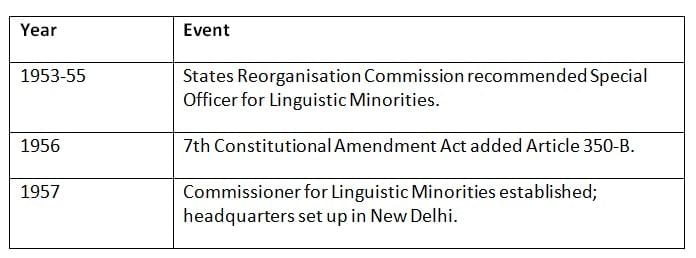
The CLM was created following recommendations from the States Reorganisation Commission to address the constitutional protections for linguistic minorities, formalized through a constitutional amendment.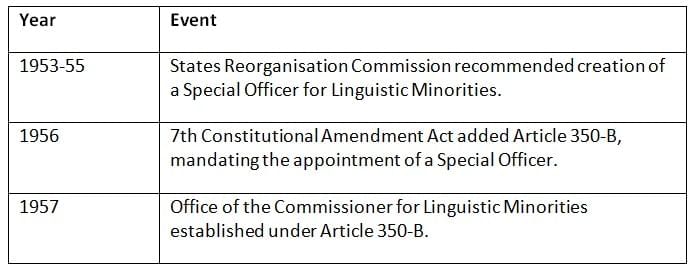
Key Points: The CLM, established in 1957, reflects India's commitment to protecting linguistic diversity through a dedicated constitutional office.
Constitutional Provisions
Article 350-B outlines the framework for the CLM, focusing on monitoring and reporting on safeguards for linguistic minorities.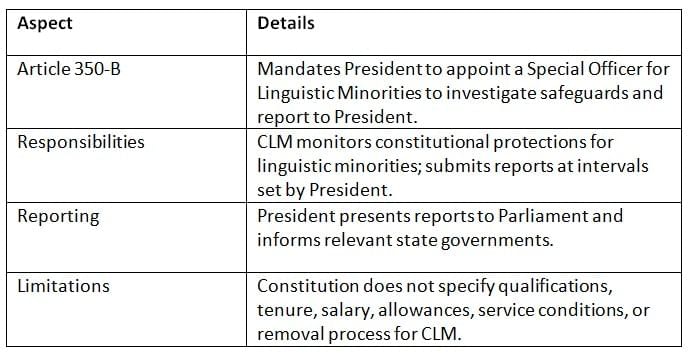
Key Points: Article 350-B ensures the CLM's role in safeguarding linguistic minorities, but lacks detailed provisions on its operational framework.
Structure of the Commissioner for Linguistic Minorities
The CLM operates with a central headquarters and regional offices, supported by state nodal officers, under the Ministry of Minority Affairs.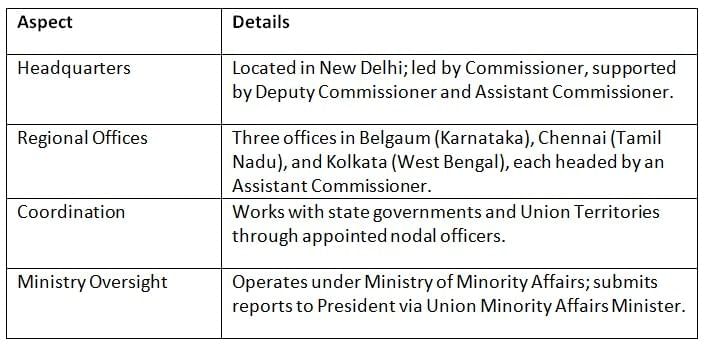
Key Points: The CLM's structured network ensures effective monitoring of linguistic minority safeguards across India.
Role of the Commissioner for Linguistic Minorities
The CLM collaborates with states and Union Territories to ensure implementation of safeguards and address grievances of linguistic minorities.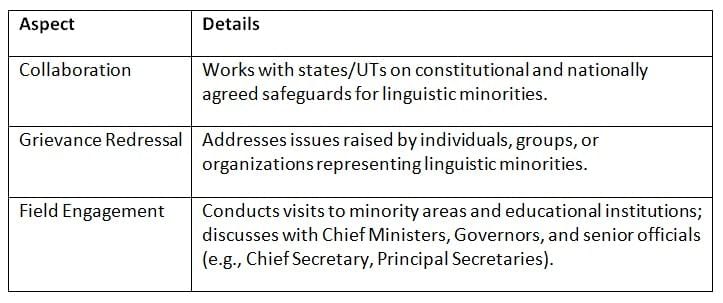
Key Points: The CLM's proactive engagement with stakeholders ensures effective implementation of safeguards and resolution of minority concerns.
Vision and Mission
The CLM's vision and mission focus on enhancing constitutional protections to promote equality and inclusive development for linguistic minorities.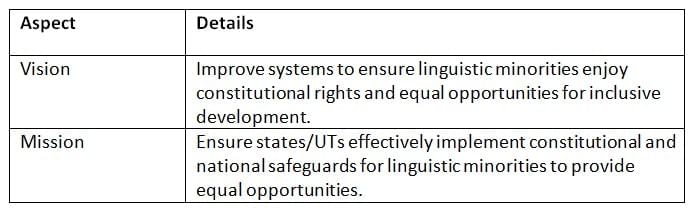
Key Points: The CLM's vision and mission emphasize rights protection and inclusive growth for linguistic minorities through robust safeguard implementation.
Functions and Objectives
The CLM's functions and objectives aim to monitor safeguards, raise awareness, and address grievances to support linguistic minority welfare.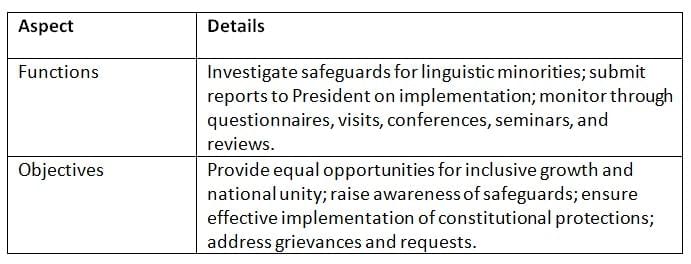
Key Points: The CLM's functions and objectives ensure comprehensive oversight and promotion of linguistic minority rights, fostering national integration.
Chronology for Quick Revision
Conclusion
This chapter underscores the Commissioner for Linguistic Minorities as a vital constitutional body under Article 350-B, dedicated to safeguarding the rights of linguistic minorities in India. Established in 1957, the CLM monitors constitutional protections, addresses grievances, and promotes inclusive development through field visits and stakeholder engagement. Its vision and mission focus on equal opportunities and effective safeguard implementation, supported by a structured network of offices. Despite undefined tenure and qualifications, the CLM plays a crucial role in fostering linguistic diversity and national unity, ensuring equitable growth for minority communities.
FAQs on Cheat Sheet: Special Officer for Linguistic Minorities
| 1. What is the purpose of establishing the Commissioner for Linguistic Minorities? |  |
| 2. What are the constitutional provisions related to the Commissioner for Linguistic Minorities? | |
| 3. What is the structure of the Commissioner for Linguistic Minorities? | |
| 4. What are the key functions and objectives of the Commissioner for Linguistic Minorities? | |
| 5. What is the vision and mission of the Commissioner for Linguistic Minorities? | |




