Cheat Sheet: Attorney General of India


Introduction
This chapter explains the role of the Attorney General of India (AG), the highest legal officer established under Article 76 of the Constitution. It covers the AG's appointment, duties, rights, limitations, and relationship with other legal officers like the Solicitor General, highlighting their critical role in upholding the Constitution and advising the Government of India.
Appointment and Term of the Attorney General
The AG is appointed by the President with specific eligibility criteria, serving at the President's pleasure without a fixed constitutional term.
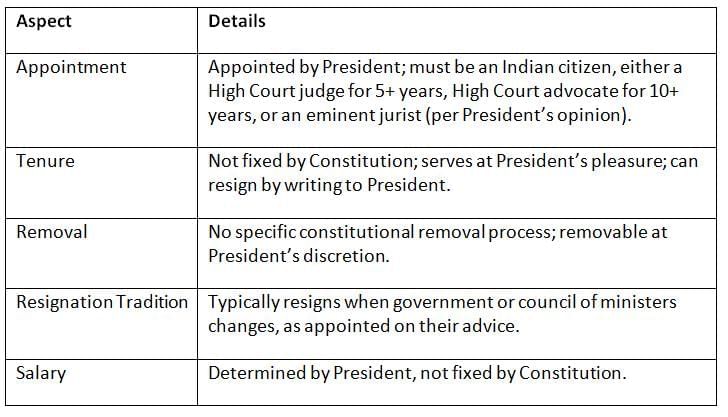
Key Points: The AG's flexible tenure and eligibility criteria ensure a qualified legal expert serves as the government's advisor, aligned with the ruling administration.
Duties and Functions of the Attorney General
The AG acts as the primary legal advisor to the Government of India, representing it in key judicial proceedings and performing constitutionally assigned roles.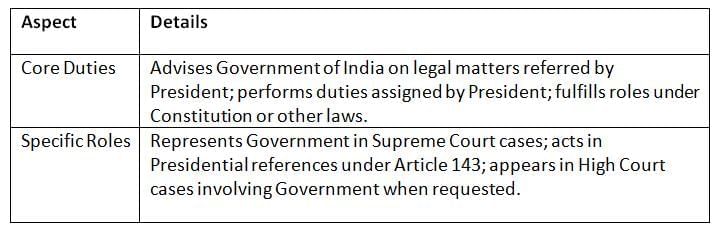
Key Points: The AG's duties focus on legal advisory and representation, ensuring the government's actions align with constitutional and legal frameworks.
Rights and Limitations of the Attorney General
The AG enjoys significant rights to perform duties effectively but faces restrictions to prevent conflicts of interest.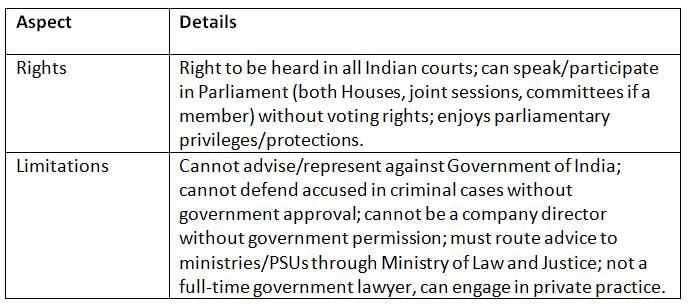
Key Points: The AG's rights ensure effective legal representation, while limitations safeguard impartiality and prevent conflicts with government interests.
Solicitor General and Other Legal Officers
The Solicitor General and Additional Solicitor General assist the AG, but only the AG's role is constitutionally recognized.
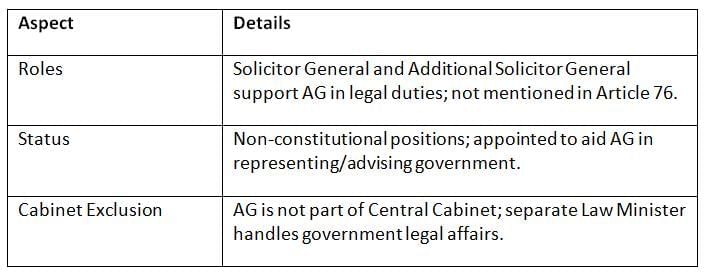
Key Points: The Solicitor General and others play a supportive role, but the AG remains the sole constitutional legal officer, distinct from the Cabinet's Law Minister.
Chronology for Quick Revision

Conclusion
This chapter underscores the Attorney General of India's pivotal role as the highest legal officer under Article 76, serving as the Government of India's primary legal advisor and representative. Appointed by the President with flexible tenure, the AG ensures constitutional compliance through advice and court representation. With rights to access courts and Parliament, balanced by strict limitations to avoid conflicts, the AG upholds legal integrity. Supported by non-constitutional officers like the Solicitor General, the AG remains distinct from the Cabinet, reinforcing India's legal and democratic framework. Enhancing clarity in tenure and removal processes could further strengthen this vital institution.
FAQs on Cheat Sheet: Attorney General of India
| 1. What is the appointment process for the Attorney General of India? |  |
| 2. What are the primary duties and functions of the Attorney General of India? | |
| 3. What rights and limitations does the Attorney General of India have? | |
| 4. Who is the Solicitor General, and how does their role differ from that of the Attorney General? | |
| 5. Can you provide a brief chronology of the key events related to the position of Attorney General in India? | |




