UPSC Exam > UPSC Notes > Indian Polity CSE > Infographic: Electoral Reforms
Infographic: Electoral Reforms

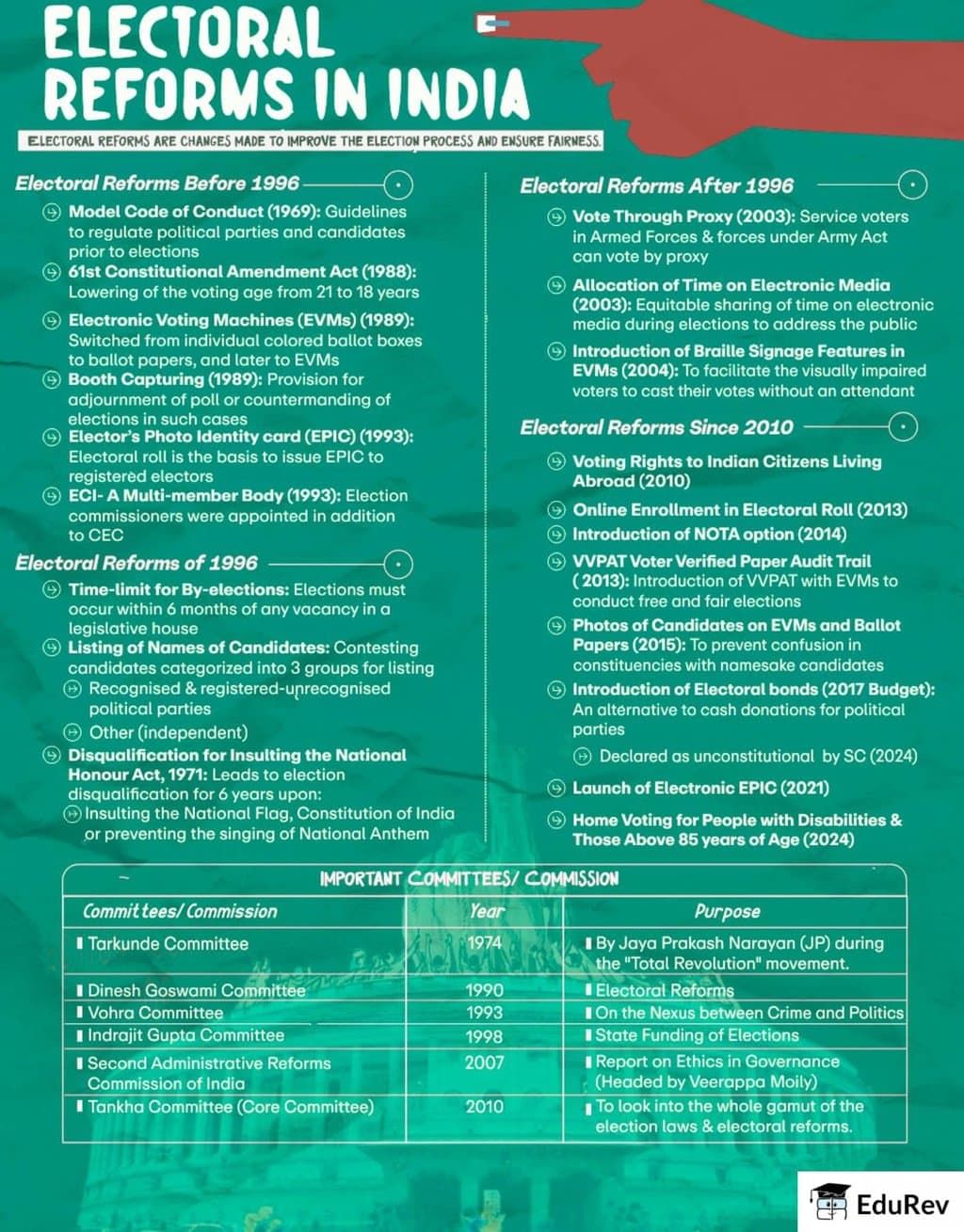
The document Infographic: Electoral Reforms is a part of the UPSC Course Indian Polity for UPSC CSE.
All you need of UPSC at this link: UPSC
FAQs on Infographic: Electoral Reforms
| 1. What are electoral reforms and why are they necessary in a democratic system? |  |
Ans.Electoral reforms refer to changes and improvements made to the electoral process to enhance its fairness, transparency, and efficiency. They are necessary to ensure free and fair elections, reduce electoral malpractices, and increase public trust in the democratic system. Reforms may address issues like voter registration, election funding, and the conduct of political parties.
| 2. What are some common types of electoral reforms? | |
Ans.Common types of electoral reforms include the introduction of electronic voting machines, implementing proportional representation systems, establishing independent election commissions, improving the transparency of campaign financing, and enhancing voter education programs. These reforms aim to make the electoral process more accessible and equitable.
| 3. How do electoral reforms impact voter turnout? | |
Ans.Electoral reforms can significantly impact voter turnout by making the voting process easier and more accessible. For instance, measures such as online voter registration, extended voting hours, and the implementation of mail-in ballots can encourage more people to participate in elections. Higher voter turnout is often seen as a sign of a healthy democracy.
| 4. What role do political parties play in the electoral reform process? | |
Ans.Political parties play a crucial role in the electoral reform process as they are often the primary stakeholders in elections. They can advocate for reforms that benefit their interests, negotiate changes in electoral laws, and influence public opinion on the need for reforms. Their cooperation is essential for the successful implementation of reforms.
| 5. What challenges are commonly faced in implementing electoral reforms? | |
Ans.Common challenges in implementing electoral reforms include resistance from established political parties, lack of political will, bureaucratic hurdles, and inadequate public awareness. Additionally, entrenched interests may oppose changes that threaten their power or influence, making it difficult to achieve consensus on necessary reforms.
About this Document

4.78/5 Rating

Apr 18, 2026 Last updated
Related Exams
Document Description: Infographic: Electoral Reforms for UPSC 2026 is part of Indian Polity for UPSC CSE preparation. The notes and questions for Infographic: Electoral Reforms have been prepared according to the UPSC exam syllabus. Information about Infographic: Electoral Reforms covers topics like and Infographic: Electoral Reforms Example, for UPSC 2026 Exam. Find important definitions, questions, notes, meanings, examples, exercises and tests below for Infographic: Electoral Reforms.
Introduction of Infographic: Electoral Reforms in English is available as part of our Indian Polity for UPSC CSE for UPSC & Infographic: Electoral Reforms in Hindi for Indian Polity for UPSC CSE course. Download more important topics related with notes, lectures and mock test series for UPSC Exam by signing up for free. UPSC: Infographic: Electoral Reforms
Description
Infographic: Electoral Reforms of Indian Polity provides you one-page visual summary of the chapter covering all the important topics. Download the PDF from EduRev.
Information about Infographic: Electoral Reforms
In this doc you can find the meaning of Infographic: Electoral Reforms defined & explained in the simplest way possible. Besides explaining types of Infographic: Electoral Reforms theory, EduRev gives you an ample number of questions to practice Infographic: Electoral Reforms tests, examples and also practice UPSC tests



Related Searches
video lectures, Sample Paper, mock tests for examination, Exam, Summary, practice quizzes, ppt, MCQs, study material, Semester Notes, Infographic: Electoral Reforms, Viva Questions, Objective type Questions, Infographic: Electoral Reforms, Important questions, Previous Year Questions with Solutions, Infographic: Electoral Reforms, pdf , past year papers, Extra Questions, shortcuts and tricks, Free;