SSC CGL Exam > SSC CGL Notes > General Awareness > Infographic: Acid Rain
Infographic: Acid Rain

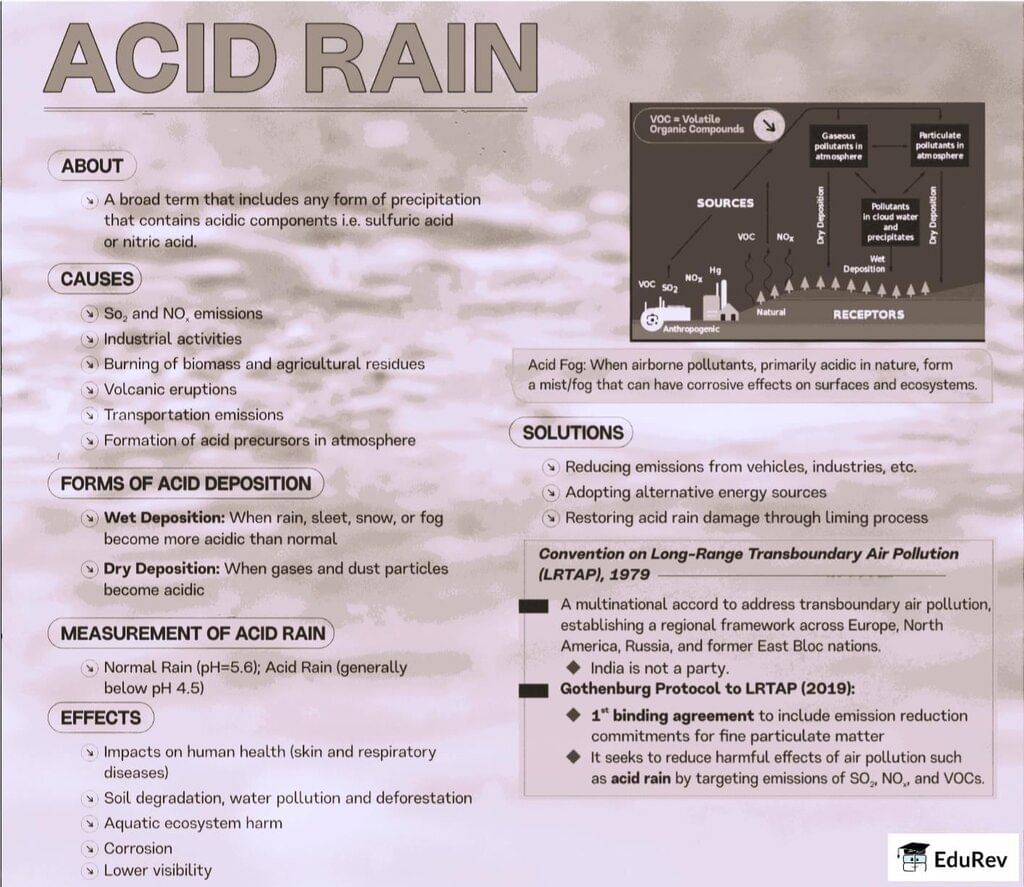
The document Infographic: Acid Rain is a part of the SSC CGL Course General Awareness for SSC CGL.
All you need of SSC CGL at this link: SSC CGL
FAQs on Infographic: Acid Rain
| 1. What is acid rain and how is it formed? |  |
Ans. Acid rain refers to any form of precipitation (rain, snow, sleet, or hail) that has a pH level lower than 5.6, making it acidic. It is formed when sulfur dioxide (SO₂) and nitrogen oxides (NOₓ) are released into the atmosphere, primarily from burning fossil fuels. These gases react with water vapor, oxygen, and other chemicals in the atmosphere to form sulfuric acid (H₂SO₄) and nitric acid (HNO₃), which then fall to the ground as acid rain.
| 2. What are the environmental impacts of acid rain? | |
Ans. Acid rain has several detrimental effects on the environment. It can lead to the acidification of lakes and streams, harming aquatic life by reducing the availability of essential minerals and increasing toxic metals. It also damages forests by leaching nutrients from the soil and harming tree foliage. Additionally, acid rain can degrade buildings and monuments, especially those made of limestone and marble, leading to increased maintenance costs.
| 3. How does acid rain affect human health? | |
Ans. While acid rain does not pose a direct health risk to humans, the pollutants that cause it—sulfur dioxide and nitrogen oxides—can contribute to respiratory problems such as asthma and bronchitis. These pollutants can form fine particulate matter that, when inhaled, can exacerbate cardiovascular issues and compromise overall respiratory health.
| 4. What measures can be taken to reduce acid rain? | |
Ans. To reduce acid rain, several measures can be implemented, including the use of cleaner energy sources such as wind, solar, and hydroelectric power, which produce little to no sulfur dioxide and nitrogen oxides. Regulations and legislation, such as emissions trading systems and the implementation of scrubbers in power plants, can also help minimize emissions. Public awareness campaigns and promoting energy efficiency in homes and industries can further contribute to reducing the pollutants responsible for acid rain.
| 5. What is the significance of the Clean Air Act in relation to acid rain? | |
Ans. The Clean Air Act is critical in addressing the issue of acid rain as it sets regulations to control air pollution from stationary and mobile sources. Amendments to the Act have specifically targeted reductions in sulfur dioxide and nitrogen oxide emissions, which are the primary contributors to acid rain. The implementation of these regulations has led to significant decreases in emissions, contributing to the overall reduction of acid rain in many regions.
About this Document

4.69/5 Rating

Apr 21, 2026 Last updated
Related Exams
Document Description: Infographic: Acid Rain for SSC CGL 2026 is part of General Awareness for SSC CGL preparation. The notes and questions for Infographic: Acid Rain have been prepared according to the SSC CGL exam syllabus. Information about Infographic: Acid Rain covers topics like and Infographic: Acid Rain Example, for SSC CGL 2026 Exam. Find important definitions, questions, notes, meanings, examples, exercises and tests below for Infographic: Acid Rain.
Introduction of Infographic: Acid Rain in English is available as part of our General Awareness for SSC CGL for SSC CGL & Infographic: Acid Rain in Hindi for General Awareness for SSC CGL course. Download more important topics related with notes, lectures and mock test series for SSC CGL Exam by signing up for free. SSC CGL: Infographic: Acid Rain
Description
Infographic: Acid Rain of General Awareness provides you one-page visual summary of the chapter covering all the important topics. Download the PDF from EduRev.
Information about Infographic: Acid Rain
In this doc you can find the meaning of Infographic: Acid Rain defined & explained in the simplest way possible. Besides explaining types of Infographic: Acid Rain theory, EduRev gives you an ample number of questions to practice Infographic: Acid Rain tests, examples and also practice SSC CGL tests



Related Searches
Semester Notes, Previous Year Questions with Solutions, shortcuts and tricks, practice quizzes, Viva Questions, mock tests for examination, ppt, Infographic: Acid Rain, Exam, Infographic: Acid Rain, video lectures, pdf , Summary, Extra Questions, Free, Important questions, Objective type Questions, MCQs, past year papers, Infographic: Acid Rain, Sample Paper, study material;