UPSC Exam > UPSC Notes > Geography CSE > Infographic: Western Ghats
Infographic: Western Ghats

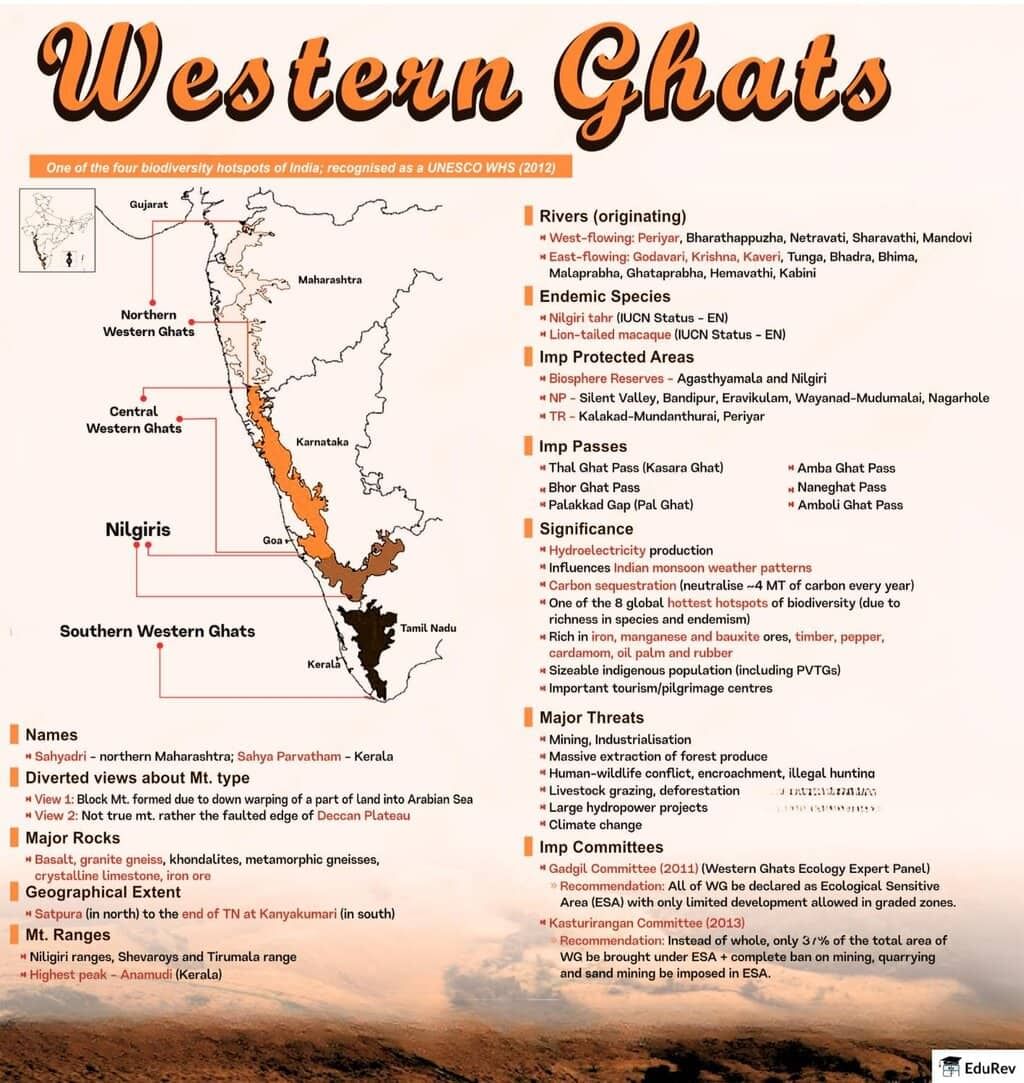
The document Infographic: Western Ghats is a part of the UPSC Course Geography for UPSC CSE.
All you need of UPSC at this link: UPSC
FAQs on Infographic: Western Ghats
| 1. What are the key ecological features of the Western Ghats? |  |
Ans. The Western Ghats are a mountain range that runs parallel to the western coast of India. They are known for their rich biodiversity, hosting over 7,400 species of flowering plants, 139 mammal species, 508 bird species, 6,000 insect species, and 600 species of freshwater fish. The region is recognized as one of the eight "hottest hotspots" of biological diversity in the world, with numerous endemic species, including the Nilgiri Tahr and the Malabar Grey Hornbill.
| 2. Why are the Western Ghats considered a UNESCO World Heritage Site? | |
Ans. The Western Ghats were designated as a UNESCO World Heritage Site in recognition of their outstanding universal value in terms of biodiversity and ecology. This designation highlights the region's unique ecosystems, significant number of endemic species, and the critical role it plays in water regulation and climate stabilization in the Indian subcontinent.
| 3. What are the main threats to the Western Ghats ecosystem? | |
Ans. The Western Ghats face several threats, including deforestation due to agricultural expansion, urbanization, and industrial development. Additionally, mining activities, construction of dams, and climate change have led to habitat loss and fragmentation. Invasive species and pollution further exacerbate the challenges faced by this delicate ecosystem.
| 4. How do the Western Ghats contribute to the Indian economy? | |
Ans. The Western Ghats significantly contribute to the Indian economy through agriculture, tourism, and forestry. The region is known for its production of coffee, tea, spices, and rubber, which are vital for both local and national markets. Additionally, eco-tourism and adventure tourism attract visitors, providing income and employment opportunities for local communities.
| 5. What conservation measures are being implemented to protect the Western Ghats? | |
Ans. Various conservation measures are underway to protect the Western Ghats, including the establishment of protected areas like national parks and wildlife sanctuaries. The Indian government, along with non-governmental organizations, promotes sustainable land-use practices, reforestation initiatives, and awareness programs aimed at conserving biodiversity. Additionally, community involvement in conservation efforts is encouraged to ensure the sustainable management of resources.
About this Document

4.96/5 Rating

Apr 29, 2026 Last updated
Related Exams
Document Description: Infographic: Western Ghats for UPSC 2026 is part of Geography for UPSC CSE preparation. The notes and questions for Infographic: Western Ghats have been prepared according to the UPSC exam syllabus. Information about Infographic: Western Ghats covers topics like and Infographic: Western Ghats Example, for UPSC 2026 Exam. Find important definitions, questions, notes, meanings, examples, exercises and tests below for Infographic: Western Ghats.
Introduction of Infographic: Western Ghats in English is available as part of our Geography for UPSC CSE for UPSC & Infographic: Western Ghats in Hindi for Geography for UPSC CSE course. Download more important topics related with notes, lectures and mock test series for UPSC Exam by signing up for free. UPSC: Infographic: Western Ghats
Description
Infographic: Western Ghats of Geography provides you one-page visual summary of the chapter covering all the important topics. Download the PDF from EduRev.
Information about Infographic: Western Ghats
In this doc you can find the meaning of Infographic: Western Ghats defined & explained in the simplest way possible. Besides explaining types of Infographic: Western Ghats theory, EduRev gives you an ample number of questions to practice Infographic: Western Ghats tests, examples and also practice UPSC tests


Related Searches
pdf , Extra Questions, shortcuts and tricks, Previous Year Questions with Solutions, MCQs, video lectures, Infographic: Western Ghats, mock tests for examination, Objective type Questions, past year papers, Free, Infographic: Western Ghats, Summary, Infographic: Western Ghats, Semester Notes, Exam, study material, practice quizzes, ppt, Important questions, Viva Questions, Sample Paper;