CBSE Class 10 > Class 10 Notes > Social Studies (SST) > Mnemonics: Gender, Religion and Caste
Mnemonics: Gender, Religion and Caste

1. Introduction to Social Diversity
Mnemonic: DIVERSITY
- D - Defines India's vibrant democracy.
- I - Includes gender, religion, caste differences.
- V - Values diversity to strengthen politics.
- E - Enriches democratic institutions.
- R - Recognizes social differences as healthy.
- S - Supports fair political discourse.
- I - Integrates diverse voices in governance.
- T - Tests democracy with diverse expressions.
- Y - Yields stronger unity through diversity.
Explanation: "DIVERSITY" shows how social differences enhance India's democracy.
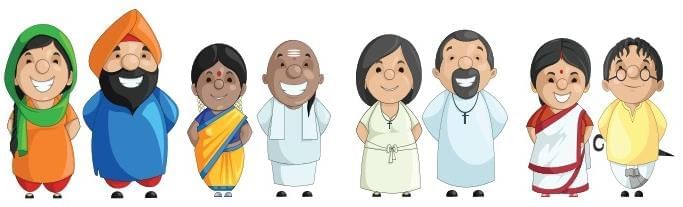
2. Gender and Politics
Mnemonic: GENDER
- G - Groups boys, girls with social roles.
- E - Expects women to handle household tasks.
- N - Notes women's undervalued work outside home.
- D - Denies women equal political roles.
- E - Empowers women through feminist movements.
- R - Reveals ongoing gender inequalities.
Explanation: "GENDER" highlights how gender roles limit women's political participation.
3. Religion, Communalism, and Politics
Mnemonic: RELIGION
- R - Raises religious diversity in politics.
- E - Encourages ethical principles in governance.
- L - Limits mixing religion with politics.
- I - Identifies communalism as a democracy threat.
- G - Guards against religious group dominance.
- I - Integrates diverse religious values fairly.
- O - Opposes biased family laws.
- N - Needs protection for religious minorities.
Explanation: "RELIGION" shows the complex role of religion in politics and the dangers of communalism.
4. Secular State
Mnemonic: SECULAR
- S - Supports no official religion in India.
- E - Ensures freedom to follow any religion.
- C - Combats communalism for unity.
- U - Upholds constitutional equality for all.
- L - Limits discrimination based on religion.
- A - Allows state to ensure fair religious practices.
- R - Rejects communal propaganda actively.
Explanation: "SECULAR" highlights India's commitment to secularism to counter communalism.
5. Caste and Politics
Mnemonic: CASTE
- C - Creates hereditary occupational divisions.
- A - Allows exclusion of 'outcaste' groups.
- S - Shapes economic and social inequalities.
- T - Transforms through legal, social changes.
- E - Endures in marriage, untouchability practices.
Explanation: "CASTE" explains the caste system's impact on society and politics.
The document Mnemonics: Gender, Religion and Caste is a part of the Class 10 Course Social Studies (SST) Class 10.
All you need of Class 10 at this link: Class 10
FAQs on Mnemonics: Gender, Religion and Caste
| 1. What is social diversity, and why is it important in society? |  |
Ans.Social diversity refers to the variety of different social groups within a society, including differences in ethnicity, religion, culture, and gender. It is important because it fosters understanding, tolerance, and cooperation among different community members, enriching social interactions and contributing to a more inclusive society.
| 2. How do religion and communalism influence politics? | |
Ans.Religion and communalism can significantly influence politics by shaping individuals' beliefs and values, which affect their political choices. Communalism often leads to the prioritization of community interests over national interests, sometimes resulting in tensions and conflicts. Political parties may exploit religious sentiments to gain support, which can impact governance and social harmony.
| 3. What defines a secular state, and what are its key characteristics? | |
Ans.A secular state is one that maintains a separation between religion and government, ensuring that the state does not favor or discriminate against any religion. Key characteristics include equal treatment of all religions, freedom of religion for all citizens, and the absence of religious influence in political processes and laws.
| 4. How does caste affect politics in society? | |
Ans.Caste can significantly influence politics by affecting voting patterns, party alliances, and representation in government. Political parties may cater to specific caste groups to secure votes, leading to caste-based politics. This can result in social divisions, where policies may favor certain castes over others, impacting social equity and justice.
| 5. What roles do gender and caste play in social diversity? | |
Ans.Gender and caste are crucial dimensions of social diversity, as they shape individuals' experiences and opportunities. Gender roles can influence access to education, employment, and participation in politics, while caste can impose restrictions and privileges based on social hierarchy. Understanding these factors is essential for promoting equality and inclusivity in society.
About this Document

4.74/5 Rating

Apr 29, 2026 Last updated
Document Description: Mnemonics: Gender, Religion and Caste for Class 10 2026 is part of Social Studies (SST) Class 10 preparation. The notes and questions for Mnemonics: Gender, Religion and Caste have been prepared according to the Class 10 exam syllabus. Information about Mnemonics: Gender, Religion and Caste covers topics like and Mnemonics: Gender, Religion and Caste Example, for Class 10 2026 Exam. Find important definitions, questions, notes, meanings, examples, exercises and tests below for Mnemonics: Gender, Religion and Caste.
Introduction of Mnemonics: Gender, Religion and Caste in English is available as part of our Social Studies (SST) Class 10 for Class 10 & Mnemonics: Gender, Religion and Caste in Hindi for Social Studies (SST) Class 10 course. Download more important topics related with notes, lectures and mock test series for Class 10 Exam by signing up for free. Class 10: Mnemonics: Gender, Religion and Caste
Description
Mnemonics: Gender, Religion & Caste of SST to help you remember important concepts with short tricks. Start learning for Class 10 exam & improve retention with EduRev.
Information about Mnemonics: Gender, Religion and Caste
In this doc you can find the meaning of Mnemonics: Gender, Religion and Caste defined & explained in the simplest way possible. Besides explaining types of Mnemonics: Gender, Religion and Caste theory, EduRev gives you an ample number of questions to practice Mnemonics: Gender, Religion and Caste tests, examples and also practice Class 10 tests



Related Searches
video lectures, Semester Notes, Mnemonics: Gender, study material, shortcuts and tricks, Exam, Religion and Caste, Religion and Caste, practice quizzes, Religion and Caste, Extra Questions, Summary, past year papers, MCQs, ppt, Mnemonics: Gender, Mnemonics: Gender, Viva Questions, Objective type Questions, Important questions, pdf , Sample Paper, mock tests for examination, Free, Previous Year Questions with Solutions;