Grade 4 Exam > Grade 4 Notes > Chapter Notes: Social Studies Skills
Chapter Notes: Social Studies Skills

Introduction
Social studies skills help us learn about the world and its history in a clear way. In this chapter, we will explore how to tell the difference between facts and opinions and how to read and create timelines using BCE and CE. These skills are important because they help us understand information correctly and organize events from the past. By learning these skills, you will be able to think carefully about what you read and share history in an organized way.
Identify Facts and Opinions
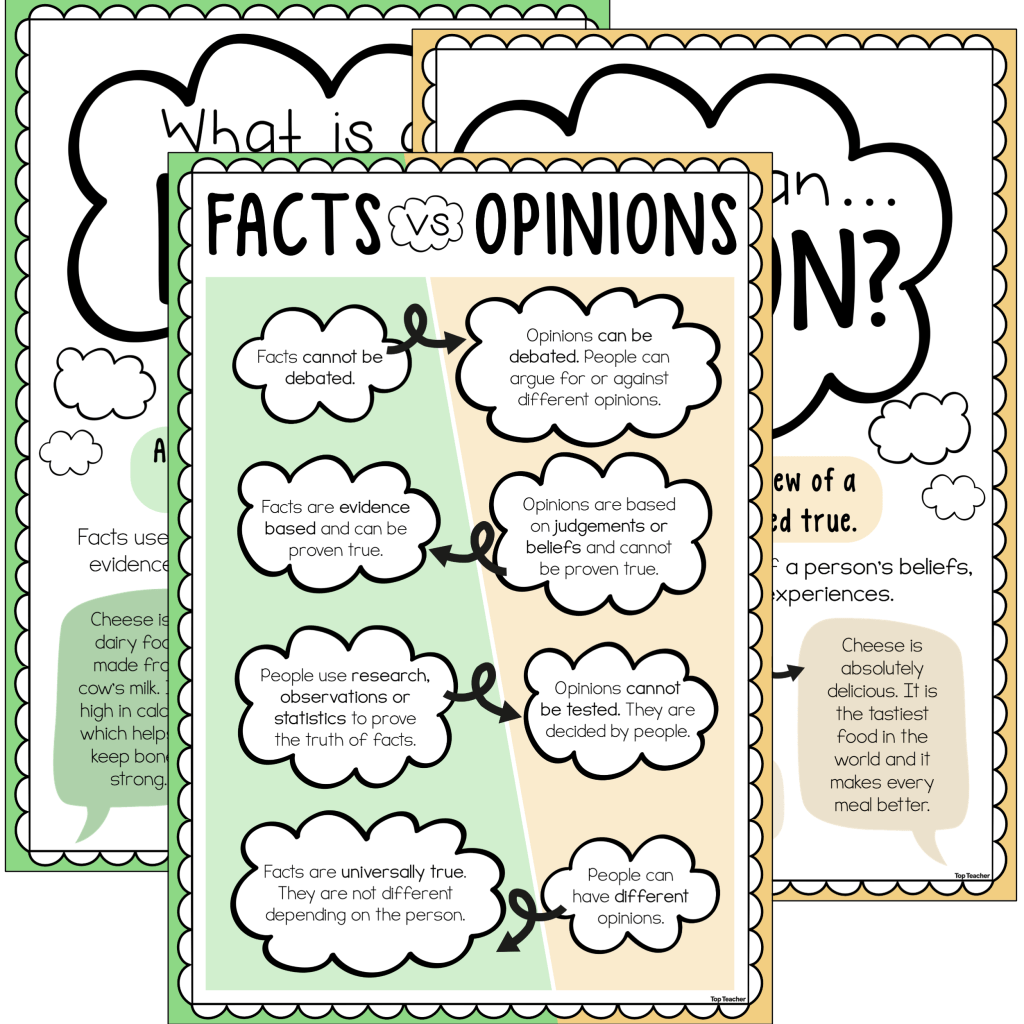
- A fact is something that is true and can be checked or proven.
- Facts are based on real information, like dates, events, or things that really happened.
- For example, "The United States became a country in 1776" is a fact because it can be checked in history books.
- An opinion is what someone thinks or feels about something.
- Opinions cannot be proven true or false because they depend on a person's thoughts or beliefs.
- For example, "Summer is the best season" is an opinion because not everyone agrees, and it depends on how someone feels.
- To identify a fact, ask, "Can this be proven with evidence?"
- To identify an opinion, ask, "Is this what someone thinks or feels?"
- Some sentences mix facts and opinions, so you need to look carefully to separate them.
- For example, in the sentence "George Washington was a great president because he was brave," the part about George Washington being a president is a fact, but calling him great and brave is an opinion.
- Learning to separate facts from opinions helps us understand information better and make good decisions.
- When reading, look for words like "best," "worst," "should," or "believe" to spot opinions.
- Facts often include numbers, dates, or specific details that can be checked.
Practice reading sentences and deciding if they are facts, opinions, or a mix of both.
Reading and Creating Timelines with BCE and CE

- A timeline is a way to show events in the order they happened.
- Timelines help us understand how events in history are connected.
- BCE stands for "Before Common Era," which means the time before the year 1.
- CE stands for "Common Era," which means the time from the year 1 to now.
- Years in BCE count backward, so 200 BCE happened after 300 BCE because it is closer to the year 1.
- Years in CE count forward, so 100 CE happened before 200 CE.
- To read a timeline, look at the dates and events in order from left to right or top to bottom.
- Timelines can show important events like inventions, battles, or when people lived.
- For example, a timeline might show that the Great Pyramid was built in 2600 BCE and the Declaration of Independence was signed in 1776 CE.
- To create a timeline, first pick the events you want to include.
- Write down the dates for each event and make sure they are correct.
- Arrange the events in order from the earliest date to the latest date.
- Draw a line and mark the dates on it, placing each event in the right spot.
- Use BCE for events before the year 1 and CE for events after the year 1.
- Make sure the timeline is clear, with dates and events labeled neatly.
- Check that the events are in the correct order to avoid confusion.
- Timelines can cover a short time, like a year, or a long time, like thousands of years.
Practice reading timelines to understand when things happened in history.
FAQs on Chapter Notes: Social Studies Skills
| 1. What are the main differences between facts and opinions? |  |
Ans.Facts are statements that can be proven true or false based on evidence, while opinions are personal beliefs or interpretations that cannot be proven true or false. For example, "The Earth revolves around the Sun" is a fact, whereas "I think summer is the best season" is an opinion.
| 2. How do you create a timeline using BCE and CE? | |
Ans.To create a timeline using BCE (Before Common Era) and CE (Common Era), first, identify the significant events you want to include. Then, arrange these events chronologically, placing BCE dates on the left side of the timeline and CE dates on the right. For example, you may include "Fall of Rome (476 CE)" and "Construction of the Great Pyramid (c. 2580-2560 BCE)" to illustrate the timeline's flow.
| 3. Why is it important to differentiate between facts and opinions in social studies? | |
Ans.Differentiating between facts and opinions in social studies is crucial because it helps students analyze historical events and understand different perspectives. Recognizing facts allows for a clearer understanding of events, while acknowledging opinions can foster critical thinking and discussion about how history is interpreted.
| 4. What are some examples of historical events that can be represented on a timeline? | |
Ans.Examples of historical events that can be represented on a timeline include the signing of the Magna Carta (1215 CE), the discovery of America by Christopher Columbus (1492 CE), and the start of World War I (1914 CE). These events help illustrate the progression of history and the context in which they occurred.
| 5. How can timelines enhance understanding of historical events? | |
Ans.Timelines enhance understanding of historical events by providing a visual representation of the sequence and duration of events. They allow students to see relationships between events and understand cause-and-effect scenarios, making it easier to grasp how historical developments are interconnected over time.
About this Document

4.9/5 Rating

Apr 19, 2026 Last updated
Related Exams
Document Description: Chapter Notes: Social Studies Skills for Grade 4 2026 is part of Grade 4 preparation. The notes and questions for Chapter Notes: Social Studies Skills have been prepared according to the Grade 4 exam syllabus. Information about Chapter Notes: Social Studies Skills covers topics like and Chapter Notes: Social Studies Skills Example, for Grade 4 2026 Exam. Find important definitions, questions, notes, meanings, examples, exercises and tests below for Chapter Notes: Social Studies Skills.
Introduction of Chapter Notes: Social Studies Skills in English is available as part of our Grade 4 preparation & Chapter Notes: Social Studies Skills in Hindi for Grade 4 courses. Download more important topics, notes, lectures and mock test series for Grade 4 Exam by signing up for free. Grade 4: Chapter Notes: Social Studies Skills
Description
Chapter Notes: Social Studies Skills of covers all the important topics, helping you prepare for the Grade 4 exam on EduRev. Start for free!
Information about Chapter Notes: Social Studies Skills
In this doc you can find the meaning of Chapter Notes: Social Studies Skills defined & explained in the simplest way possible. Besides explaining types of Chapter Notes: Social Studies Skills theory, EduRev gives you an ample number of questions to practice Chapter Notes: Social Studies Skills tests, examples and also practice Grade 4 tests.
Related Searches
Objective type Questions, study material, MCQs, past year papers, Important questions, Extra Questions, ppt, Semester Notes, shortcuts and tricks, video lectures, mock tests for examination, Viva Questions, Sample Paper, Chapter Notes: Social Studies Skills, Chapter Notes: Social Studies Skills, Chapter Notes: Social Studies Skills, Previous Year Questions with Solutions, practice quizzes, Free, Summary, Exam, pdf ;