NEET PG Exam > NEET PG Notes > Ophthalmology > Mind Map: Neurophthalmology -1
Mind Map: Neurophthalmology -1

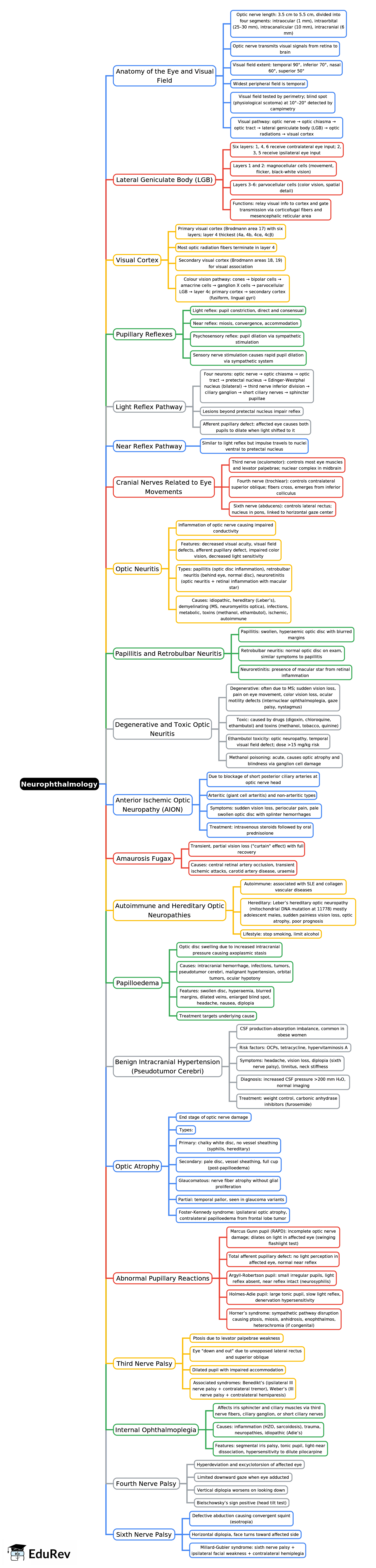
The document Mind Map: Neurophthalmology -1 is a part of the NEET PG Course Ophthalmology.
All you need of NEET PG at this link: NEET PG
FAQs on Mind Map: Neurophthalmology -1
| 1. What is neuro-ophthalmology, and how does it differ from general ophthalmology? |  |
Ans.Neuro-ophthalmology is a subspecialty that focuses on the relationship between the nervous system and visual function. It encompasses the diagnosis and treatment of conditions that affect the optic nerve, visual pathways, and the areas of the brain responsible for processing visual information. Unlike general ophthalmology, which primarily deals with eye diseases and surgical interventions, neuro-ophthalmology addresses complex issues involving neurological disorders that may impact vision.
| 2. What are common neurological conditions that can affect vision? | |
Ans.Common neurological conditions that can affect vision include multiple sclerosis, which may cause optic neuritis; stroke, leading to visual field deficits; and brain tumors that can compress the optic pathways. Other conditions include myasthenia gravis, which can cause fluctuating vision problems, and idiopathic intracranial hypertension, which can result in papilledema and visual disturbances. Understanding these conditions is crucial for neuro-ophthalmologists in diagnosing and developing treatment plans.
| 3. How is the visual field assessed in neuro-ophthalmology? | |
Ans.Visual field assessment in neuro-ophthalmology is typically performed using automated perimetry, which can detect peripheral vision loss and central scotomas. Other methods include confrontational visual field testing and the use of specific visual field charts. These assessments are essential for diagnosing conditions like glaucoma, retinal diseases, and neurological disorders affecting the optic pathways. A detailed visual field analysis helps in monitoring disease progression and treatment efficacy.
| 4. What role do imaging techniques play in neuro-ophthalmology? | |
Ans.Imaging techniques such as MRI (Magnetic Resonance Imaging) and CT (Computed Tomography) scans play a critical role in neuro-ophthalmology. They help visualize the brain and optic pathways to identify abnormalities such as tumors, lesions, or demyelination. MRI is particularly valuable for assessing conditions like multiple sclerosis or pituitary tumors, while CT scans can be useful in evaluating acute neurological events like strokes. These imaging modalities aid in making accurate diagnoses and formulating treatment strategies.
| 5. What are some common treatments for neuro-ophthalmic disorders? | |
Ans.Treatments for neuro-ophthalmic disorders vary based on the underlying condition. Options may include corticosteroids for inflammatory conditions like optic neuritis, surgical interventions for tumors or lesions, and management of systemic diseases such as diabetes or hypertension that can affect vision. Rehabilitation services, including vision therapy, may also be recommended for patients experiencing visual field deficits or other vision-related challenges. A multidisciplinary approach is often necessary for optimal patient care.
About this Document

4.67/5 Rating

Apr 26, 2026 Last updated
Related Exams
Document Description: Mind Map: Neurophthalmology -1 for NEET PG 2026 is part of Ophthalmology preparation. The notes and questions for Mind Map: Neurophthalmology -1 have been prepared according to the NEET PG exam syllabus. Information about Mind Map: Neurophthalmology -1 covers topics like and Mind Map: Neurophthalmology -1 Example, for NEET PG 2026 Exam. Find important definitions, questions, notes, meanings, examples, exercises and tests below for Mind Map: Neurophthalmology -1.
Introduction of Mind Map: Neurophthalmology -1 in English is available as part of our Ophthalmology for NEET PG & Mind Map: Neurophthalmology -1 in Hindi for Ophthalmology course. Download more important topics related with notes, lectures and mock test series for NEET PG Exam by signing up for free. NEET PG: Mind Map: Neurophthalmology -1
Description
Mind Map: Neurophthalmology of Ophthalmology provides you one-page visual summary of the chapter covering all the important topics. Download the PDF from EduRev.
Information about Mind Map: Neurophthalmology -1
In this doc you can find the meaning of Mind Map: Neurophthalmology -1 defined & explained in the simplest way possible. Besides explaining types of Mind Map: Neurophthalmology -1 theory, EduRev gives you an ample number of questions to practice Mind Map: Neurophthalmology -1 tests, examples and also practice NEET PG tests


Related Searches
video lectures, Sample Paper, Extra Questions, Important questions, Mind Map: Neurophthalmology -1, Semester Notes, practice quizzes, Mind Map: Neurophthalmology -1, Summary, Previous Year Questions with Solutions, MCQs, Free, ppt, pdf , Viva Questions, mock tests for examination, Mind Map: Neurophthalmology -1, past year papers, shortcuts and tricks, Exam, study material, Objective type Questions;