NEET PG Exam > NEET PG Notes > Ophthalmology > Mind Map: Neurophthalmology -2
Mind Map: Neurophthalmology -2

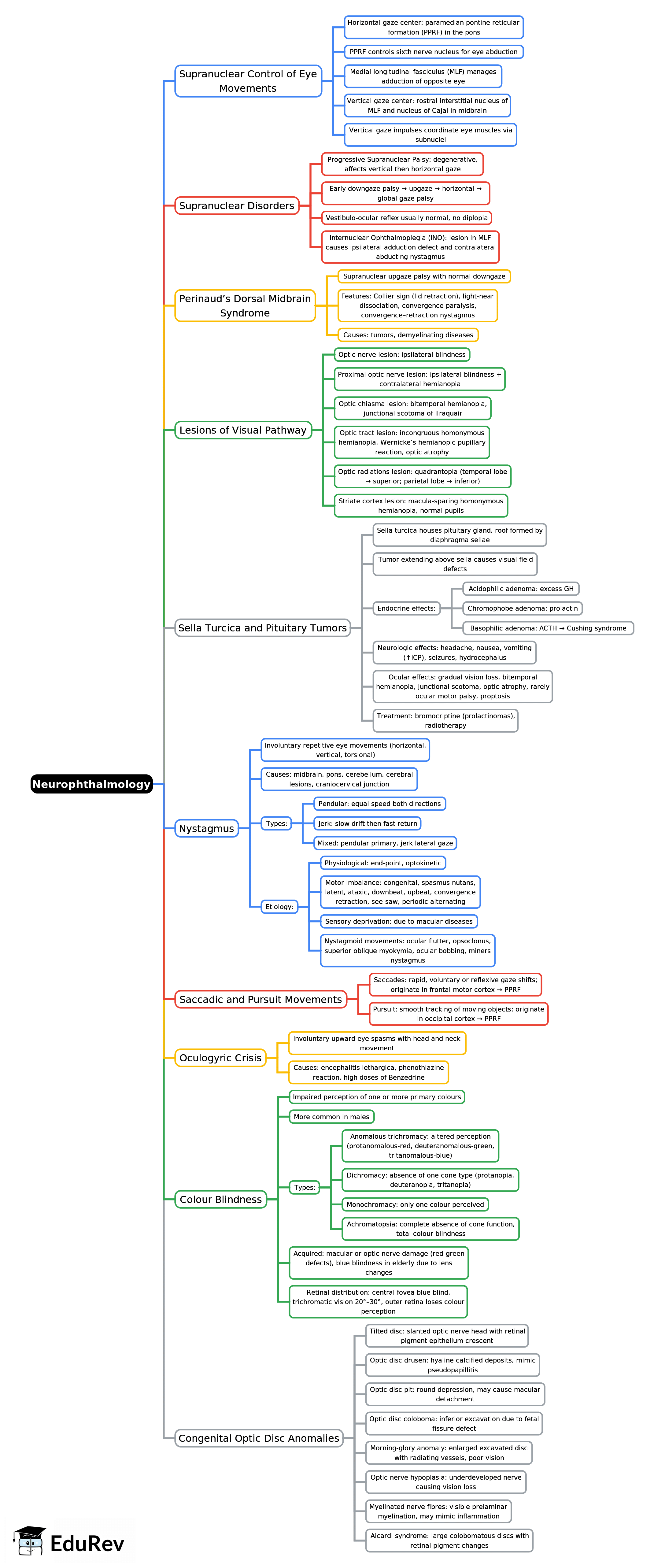
The document Mind Map: Neurophthalmology -2 is a part of the NEET PG Course Ophthalmology.
All you need of NEET PG at this link: NEET PG
FAQs on Mind Map: Neurophthalmology -2
| 1. What is neuro-ophthalmology and why is it important in medical practice? |  |
Ans. Neuro-ophthalmology is a specialized branch of medicine that focuses on the relationship between the nervous system and the visual system. It is crucial because it addresses complex conditions that involve both neurological and ocular disorders, such as optic neuritis, papilledema, and visual field defects. Understanding neuro-ophthalmology is essential for diagnosing and managing patients with visual disturbances that may signal underlying neurological issues.
| 2. What are common neuro-ophthalmological conditions that candidates should be familiar with for NEET PG? | |
Ans. Candidates preparing for NEET PG should be familiar with conditions such as optic neuritis, cranial nerve palsies (especially cranial nerves II, III, IV, and VI), idiopathic intracranial hypertension, and visual field defects. Additionally, understanding the implications of systemic conditions like multiple sclerosis and diabetes mellitus on vision is important.
| 3. How do neuro-ophthalmologists assess visual function in patients? | |
Ans. Neuro-ophthalmologists assess visual function using a variety of methods, including visual acuity tests, visual field testing, color vision tests, and pupil examination. Advanced imaging techniques like optical coherence tomography (OCT) and magnetic resonance imaging (MRI) may also be employed to evaluate structural changes in the optic nerve and brain that could affect vision.
| 4. What role does imaging play in neuro-ophthalmology? | |
Ans. Imaging is a critical component in neuro-ophthalmology as it helps in diagnosing and understanding the underlying causes of visual symptoms. Techniques such as MRI and CT scans are used to identify lesions, tumors, or vascular abnormalities that may be affecting the optic nerve or visual pathways. This information is vital for tailoring appropriate treatment strategies.
| 5. How can knowledge of neuro-ophthalmology improve patient outcomes in clinical practice? | |
Ans. Knowledge of neuro-ophthalmology enhances clinical practice by enabling healthcare professionals to recognize and manage conditions that may present with visual symptoms but are rooted in neurological disorders. This interdisciplinary understanding can lead to timely referrals, appropriate investigations, and effective treatment plans, ultimately improving patient outcomes and quality of life.
About this Document

4.87/5 Rating

Apr 26, 2026 Last updated
Related Exams
Document Description: Mind Map: Neurophthalmology -2 for NEET PG 2026 is part of Ophthalmology preparation. The notes and questions for Mind Map: Neurophthalmology -2 have been prepared according to the NEET PG exam syllabus. Information about Mind Map: Neurophthalmology -2 covers topics like and Mind Map: Neurophthalmology -2 Example, for NEET PG 2026 Exam. Find important definitions, questions, notes, meanings, examples, exercises and tests below for Mind Map: Neurophthalmology -2.
Introduction of Mind Map: Neurophthalmology -2 in English is available as part of our Ophthalmology for NEET PG & Mind Map: Neurophthalmology -2 in Hindi for Ophthalmology course. Download more important topics related with notes, lectures and mock test series for NEET PG Exam by signing up for free. NEET PG: Mind Map: Neurophthalmology -2
Description
Mind Map: Neurophthalmology of Ophthalmology provides you one-page visual summary of the chapter covering all the important topics. Download the PDF from EduRev.
Information about Mind Map: Neurophthalmology -2
In this doc you can find the meaning of Mind Map: Neurophthalmology -2 defined & explained in the simplest way possible. Besides explaining types of Mind Map: Neurophthalmology -2 theory, EduRev gives you an ample number of questions to practice Mind Map: Neurophthalmology -2 tests, examples and also practice NEET PG tests


Related Searches
Important questions, shortcuts and tricks, Summary, past year papers, Mind Map: Neurophthalmology -2, ppt, study material, practice quizzes, Objective type Questions, Mind Map: Neurophthalmology -2, Previous Year Questions with Solutions, pdf , Mind Map: Neurophthalmology -2, video lectures, Semester Notes, Extra Questions, Free, Viva Questions, Sample Paper, Exam, MCQs, mock tests for examination;