NEET PG Exam > NEET PG Notes > Pathology > Mind Map: Cardiovascular System -1
Mind Map: Cardiovascular System -1

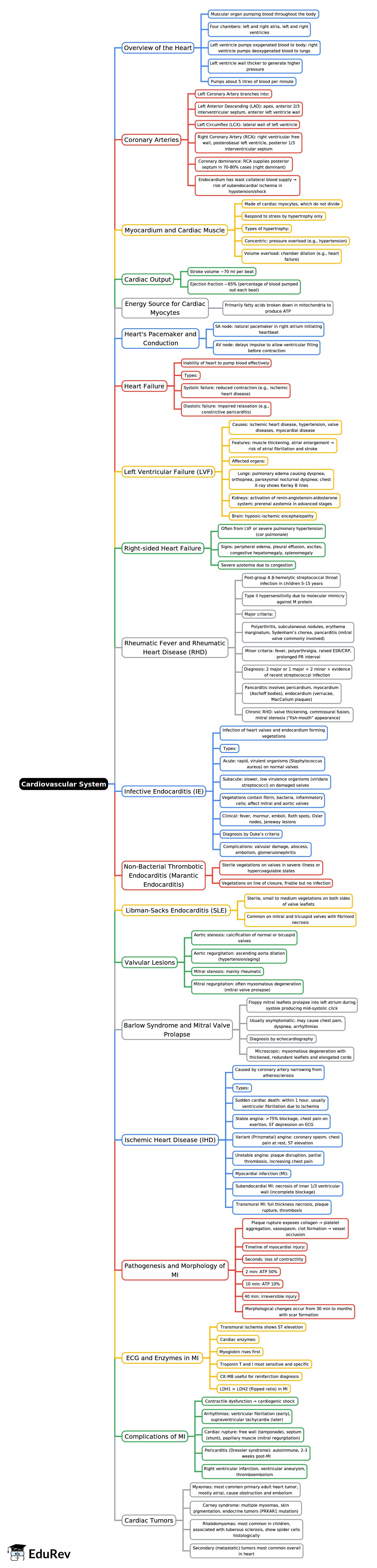
FAQs on Mind Map: Cardiovascular System -1
| 1. What are the main components of the cardiovascular system? |  |
Ans. The cardiovascular system consists of the heart, blood vessels (arteries, veins, and capillaries), and blood. The heart is a muscular organ that pumps blood throughout the body, while blood vessels facilitate the transportation of blood to and from various tissues. Blood, which comprises red blood cells, white blood cells, platelets, and plasma, is essential for delivering oxygen and nutrients to cells, as well as removing waste products.
| 2. How does the heart function in the cardiovascular system? | |
Ans. The heart functions as a pump that maintains blood circulation. It has four chambers: the right atrium, right ventricle, left atrium, and left ventricle. Deoxygenated blood enters the right atrium, moves to the right ventricle, and is pumped to the lungs for oxygenation. Oxygenated blood returns to the left atrium, flows into the left ventricle, and is pumped through the aorta to supply the body. The heart's rhythmic contractions are regulated by electrical signals, primarily originating from the sinoatrial (SA) node.
| 3. What is the significance of blood pressure in the cardiovascular system? | |
Ans. Blood pressure is a critical measure of the force exerted by circulating blood on the walls of blood vessels. It is expressed as two values: systolic pressure (the pressure during heartbeats) and diastolic pressure (the pressure when the heart is at rest). Maintaining normal blood pressure is vital for ensuring adequate blood flow to organs and tissues. Abnormal blood pressure levels can indicate cardiovascular problems, such as hypertension or hypotension, which can lead to serious health issues if not managed properly.
| 4. What are common cardiovascular diseases and their risk factors? | |
Ans. Common cardiovascular diseases include coronary artery disease, heart failure, arrhythmias, and stroke. Risk factors for these diseases often include hypertension, high cholesterol, smoking, diabetes, obesity, sedentary lifestyle, and genetic predisposition. Lifestyle modifications such as a balanced diet, regular exercise, and smoking cessation can help reduce the risk of developing these diseases.
| 5. How can lifestyle changes impact cardiovascular health? | |
Ans. Lifestyle changes can significantly improve cardiovascular health by reducing risk factors associated with heart disease. A balanced diet low in saturated fats, cholesterol, and sodium, combined with regular physical activity, can help maintain healthy weight and blood pressure levels. Additionally, avoiding tobacco use and managing stress are essential for promoting heart health. These changes can lead to better overall cardiovascular function and a reduced risk of developing serious conditions.
About this Document

4.83/5 Rating

Apr 26, 2026 Last updated
Related Exams
Document Description: Mind Map: Cardiovascular System -1 for NEET PG 2026 is part of Pathology preparation. The notes and questions for Mind Map: Cardiovascular System -1 have been prepared according to the NEET PG exam syllabus. Information about Mind Map: Cardiovascular System -1 covers topics like and Mind Map: Cardiovascular System -1 Example, for NEET PG 2026 Exam. Find important definitions, questions, notes, meanings, examples, exercises and tests below for Mind Map: Cardiovascular System -1.
Introduction of Mind Map: Cardiovascular System -1 in English is available as part of our Pathology for NEET PG & Mind Map: Cardiovascular System -1 in Hindi for Pathology course. Download more important topics related with notes, lectures and mock test series for NEET PG Exam by signing up for free. NEET PG: Mind Map: Cardiovascular System -1
Description
Mind Map: Cardiovascular System of Pathology provides you one-page visual summary of the chapter covering all the important topics. Download the PDF from EduRev.
Information about Mind Map: Cardiovascular System -1
In this doc you can find the meaning of Mind Map: Cardiovascular System -1 defined & explained in the simplest way possible. Besides explaining types of Mind Map: Cardiovascular System -1 theory, EduRev gives you an ample number of questions to practice Mind Map: Cardiovascular System -1 tests, examples and also practice NEET PG tests


Related Searches
Semester Notes, Free, Summary, shortcuts and tricks, Objective type Questions, study material, Mind Map: Cardiovascular System -1, mock tests for examination, ppt, Exam, Mind Map: Cardiovascular System -1, Important questions, Sample Paper, Extra Questions, pdf , past year papers, Previous Year Questions with Solutions, Viva Questions, practice quizzes, Mind Map: Cardiovascular System -1, video lectures, MCQs;