NEET PG Exam > NEET PG Notes > Pathology > Mind Map: Genital System and Breast -1
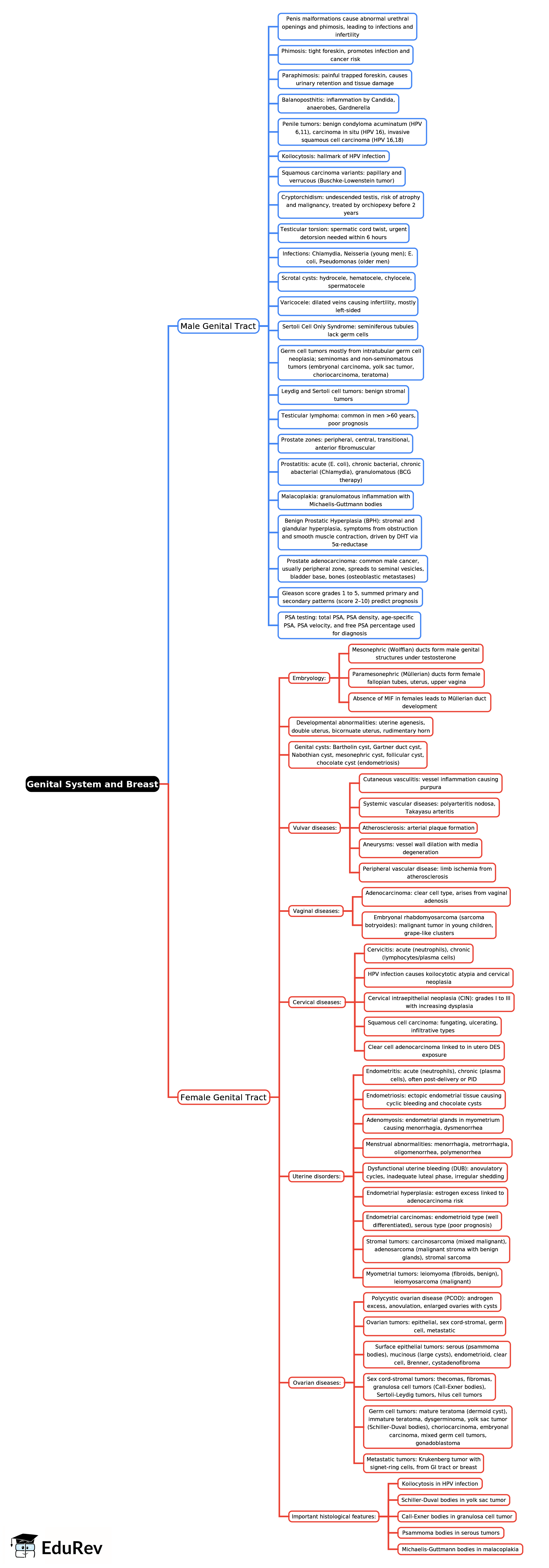
Mind Map: Genital System and Breast -1

FAQs on Mind Map: Genital System and Breast -1
| 1. What are the main components of the male and female genital systems? |  |
Ans. The male genital system primarily consists of the testes, epididymis, vas deferens, seminal vesicles, prostate gland, and penis. The female genital system includes the ovaries, fallopian tubes, uterus, vagina, and external genitalia (vulva). Each component plays a crucial role in reproduction, hormone production, and sexual function.
| 2. How do hormones regulate the functions of the genital system? | |
Ans. Hormones such as testosterone in males and estrogen and progesterone in females are vital for regulating the genital system. In males, testosterone is responsible for the development of male characteristics and the production of sperm. In females, estrogen and progesterone regulate the menstrual cycle, ovulation, and preparation of the uterus for potential pregnancy.
| 3. What are common disorders of the genital system that candidates should be aware of for exams? | |
Ans. Candidates should be familiar with disorders such as polycystic ovary syndrome (PCOS), endometriosis, erectile dysfunction, testicular torsion, and sexually transmitted infections (STIs). Understanding the etiology, symptoms, diagnosis, and management of these conditions is essential for both clinical practice and exam preparation.
| 4. What is the significance of breast anatomy and physiology in the context of the genital system? | |
Ans. Breast anatomy is crucial as it plays a role in lactation and is influenced by hormonal changes during the menstrual cycle and pregnancy. The breasts consist of glandular tissue, adipose tissue, and connective tissue. Understanding the physiological changes and potential pathologies, such as breast cancer or mastitis, is important for medical practitioners.
| 5. How do the genital system and breast health relate to overall women's health? | |
Ans. The health of the genital system and breasts is integral to overall women's health, as they are interconnected through hormonal regulation and reproductive functions. Regular screenings, such as Pap smears and mammograms, are essential for the early detection of abnormalities. Awareness of these aspects can lead to better health outcomes and informed health decisions.
About this Document

4.80/5 Rating

Apr 26, 2026 Last updated
Related Exams
Document Description: Mind Map: Genital System and Breast -1 for NEET PG 2026 is part of Pathology preparation. The notes and questions for Mind Map: Genital System and Breast -1 have been prepared according to the NEET PG exam syllabus. Information about Mind Map: Genital System and Breast -1 covers topics like and Mind Map: Genital System and Breast -1 Example, for NEET PG 2026 Exam. Find important definitions, questions, notes, meanings, examples, exercises and tests below for Mind Map: Genital System and Breast -1.
Introduction of Mind Map: Genital System and Breast -1 in English is available as part of our Pathology for NEET PG & Mind Map: Genital System and Breast -1 in Hindi for Pathology course. Download more important topics related with notes, lectures and mock test series for NEET PG Exam by signing up for free. NEET PG: Mind Map: Genital System and Breast -1
Description
Mind Map: Genital System & Breast of Pathology provides you one-page visual summary of the chapter covering all the important topics. Download the PDF from EduRev.
Information about Mind Map: Genital System and Breast -1
In this doc you can find the meaning of Mind Map: Genital System and Breast -1 defined & explained in the simplest way possible. Besides explaining types of Mind Map: Genital System and Breast -1 theory, EduRev gives you an ample number of questions to practice Mind Map: Genital System and Breast -1 tests, examples and also practice NEET PG tests


Related Searches
Free, Previous Year Questions with Solutions, practice quizzes, Mind Map: Genital System and Breast -1, ppt, video lectures, MCQs, past year papers, study material, Sample Paper, mock tests for examination, shortcuts and tricks, Semester Notes, Viva Questions, Mind Map: Genital System and Breast -1, Summary, Objective type Questions, Extra Questions, Important questions, Mind Map: Genital System and Breast -1, Exam, pdf ;