CA Foundation Exam > CA Foundation Notes > Business Laws > Cheatsheet: Indian Regulatory Framework
Cheatsheet: Indian Regulatory Framework


Introduction
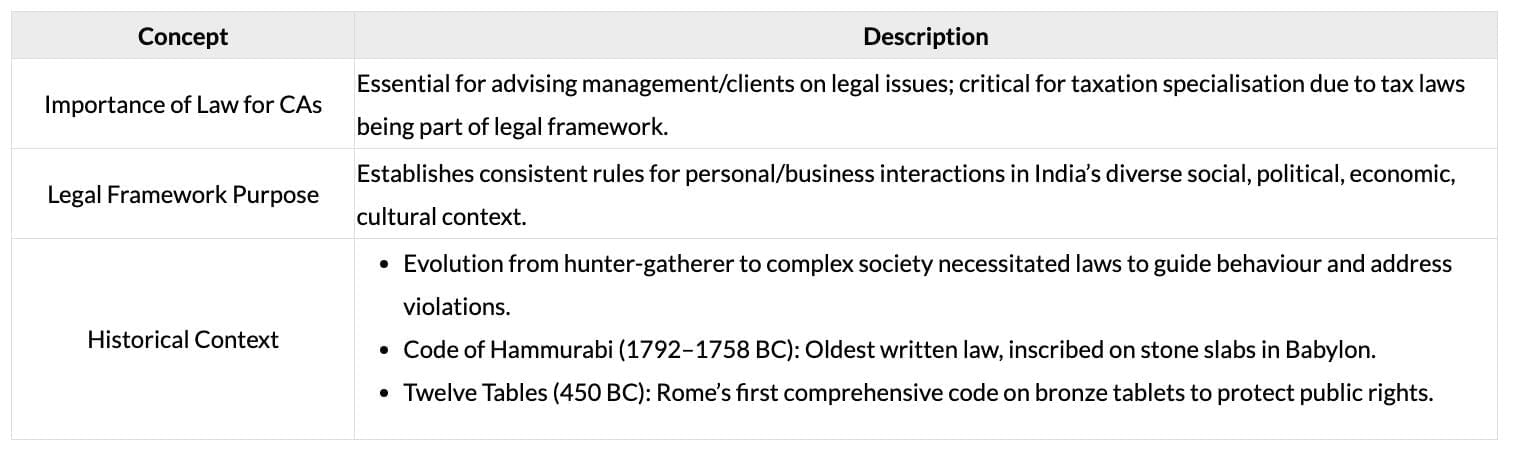
What is Law?

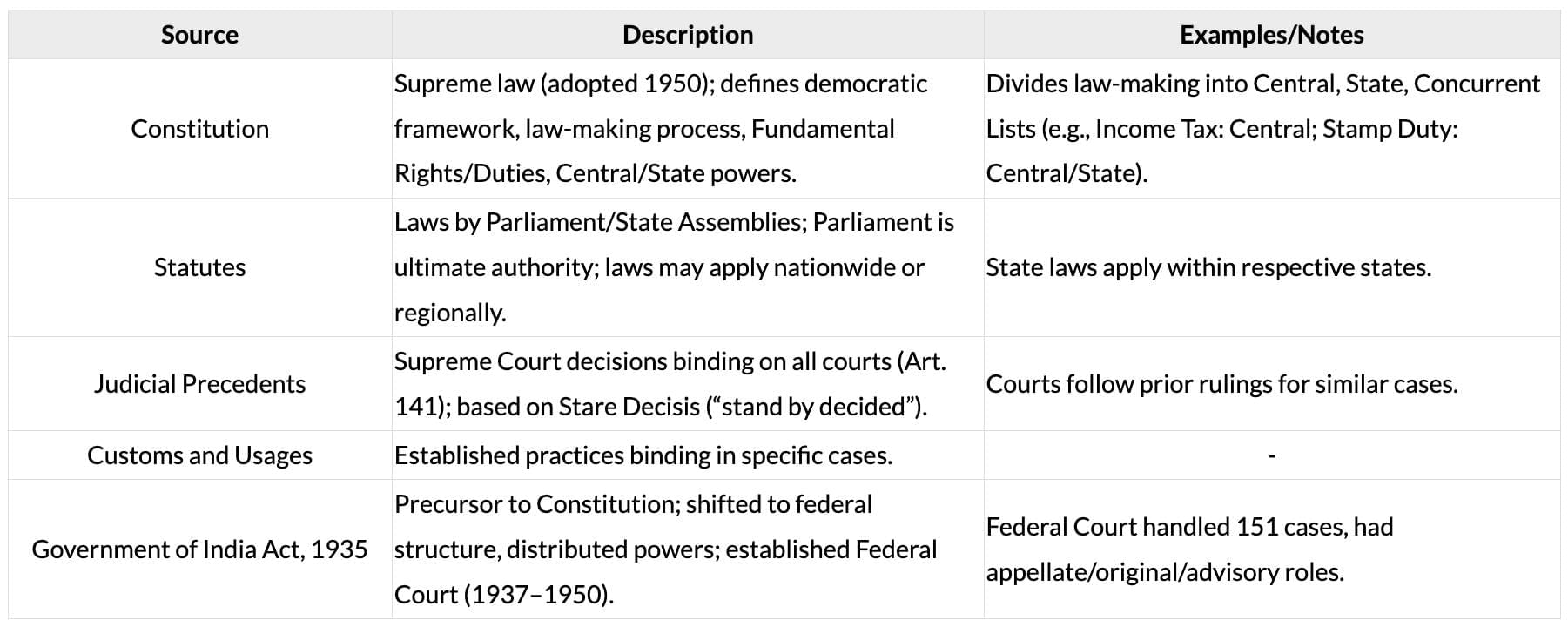
Sources of Law
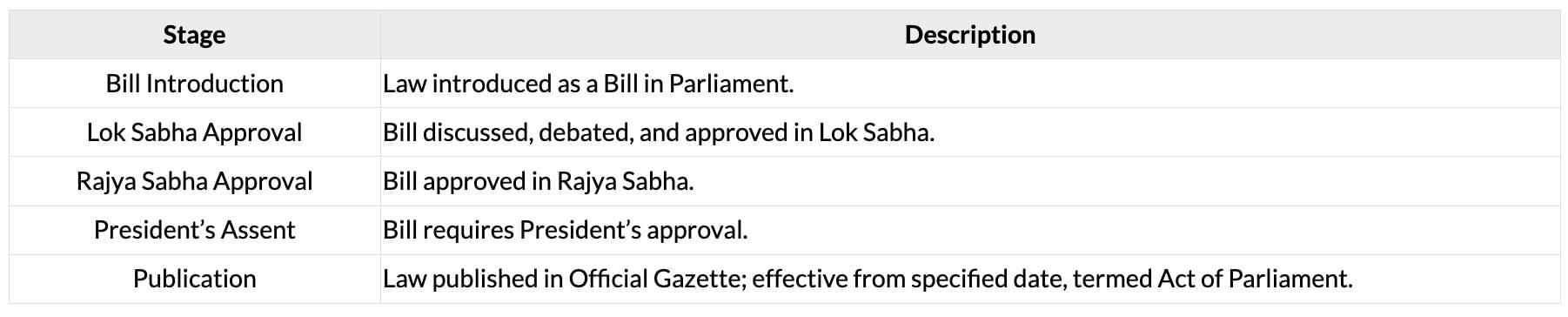
Process of Making a Law
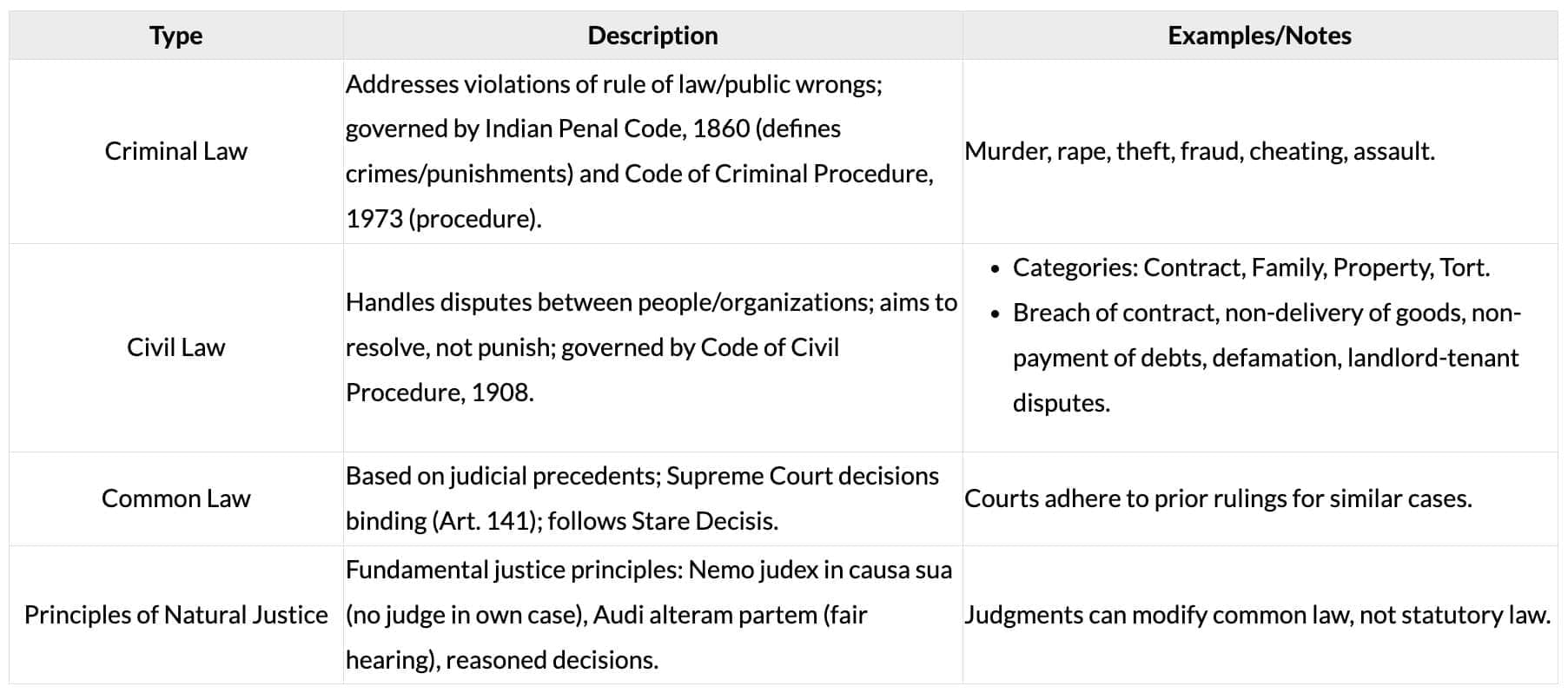
Types of Laws
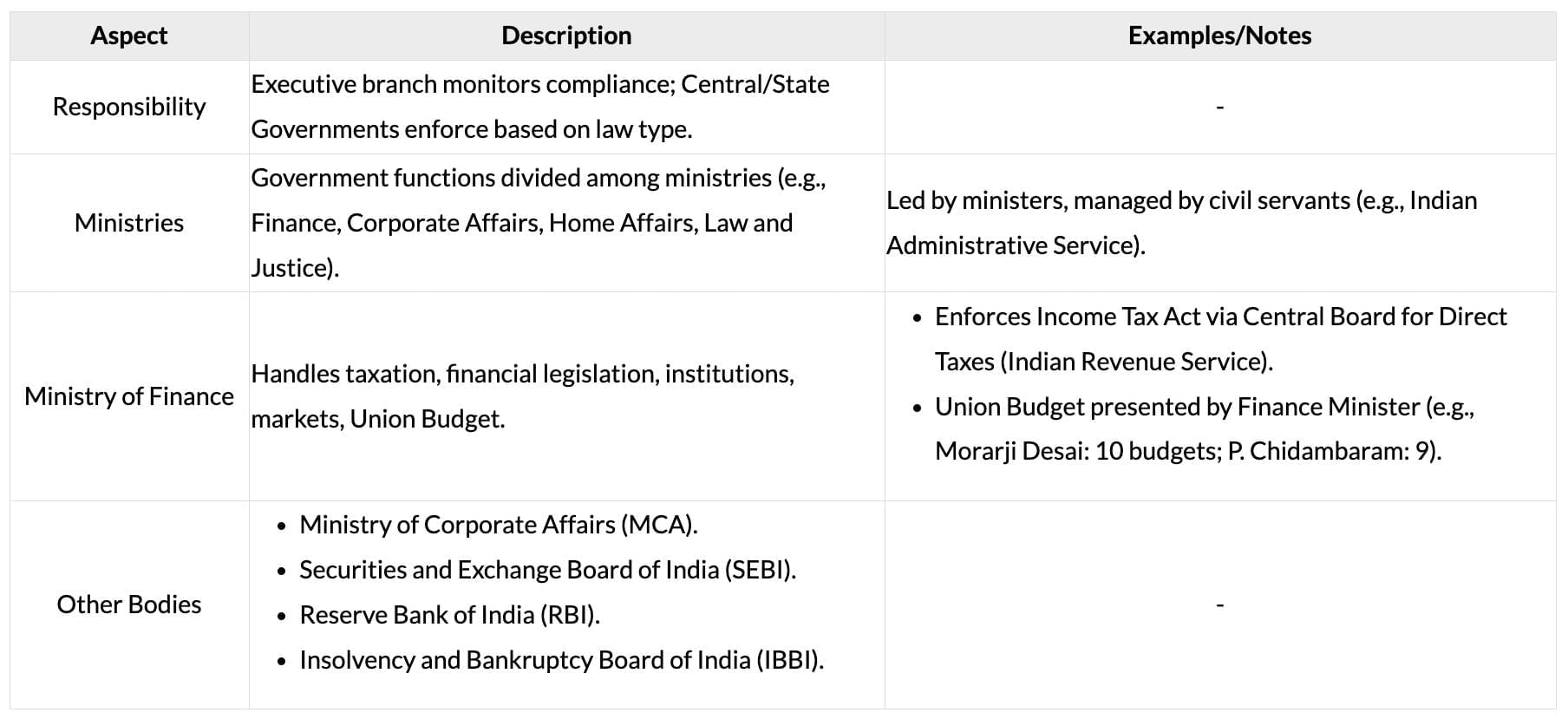
Enforcing the Law
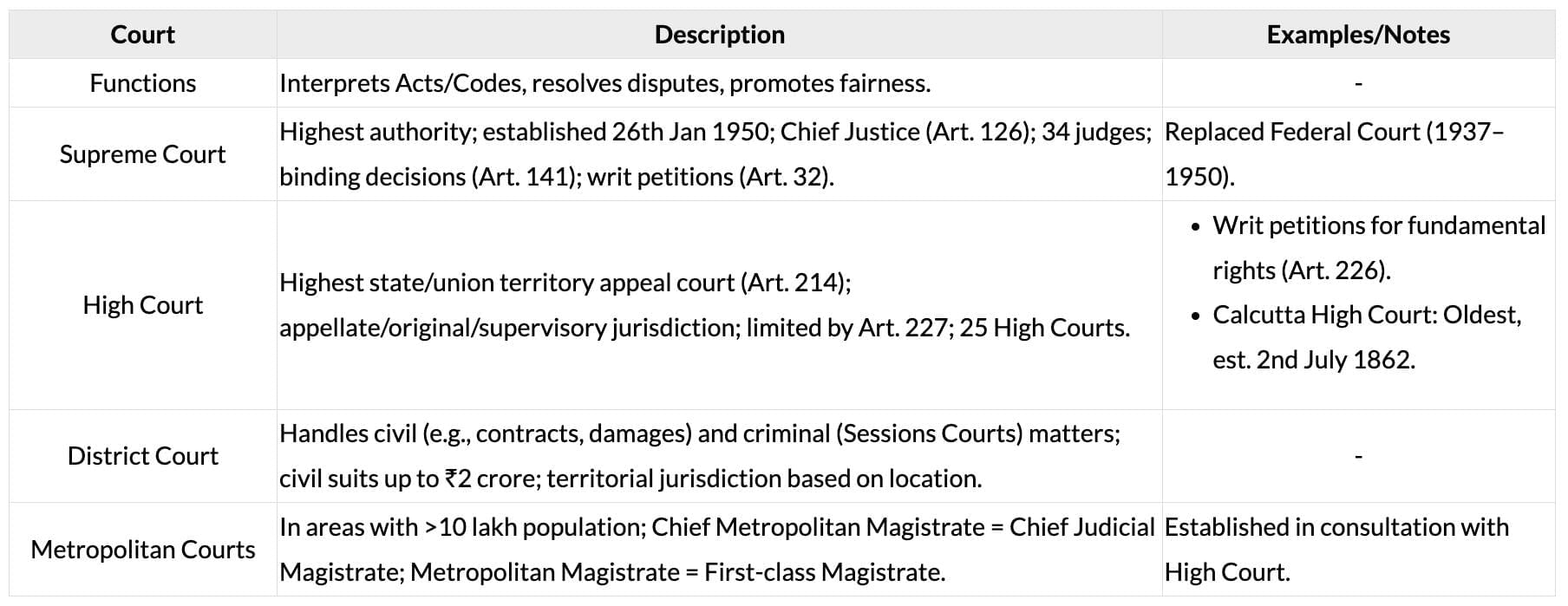
Indian Judicial System
The document Cheatsheet: Indian Regulatory Framework is a part of the CA Foundation Course Business Laws for CA Foundation.
All you need of CA Foundation at this link: CA Foundation
FAQs on Cheatsheet: Indian Regulatory Framework
| 1. What is the definition of law and its significance in society? |  |
Ans. Law can be defined as a system of rules created and enforced through social or governmental institutions to regulate behavior. It is significant in society as it maintains order, protects individual rights, resolves disputes, and promotes social justice. Without law, society would lack a framework for resolving conflicts and ensuring that individuals act in a manner that is acceptable to the community.
| 2. What are the primary sources of law in the Indian legal system? | |
Ans. The primary sources of law in the Indian legal system include the Constitution of India, statutes enacted by the legislature, judicial precedents (case laws), and customs that have gained legal recognition. The Constitution is the supreme law, while statutes are laws passed by Parliament and state legislatures. Judicial precedents are legal principles established through court decisions, and customs refer to long-standing practices that the law recognizes.
| 3. How is a law made in India? | |
Ans. The process of making a law in India involves several stages. It begins with the drafting of a bill, which can be proposed by the government or by individual members of the legislature. The bill then goes through various readings and discussions in both houses of Parliament. After being approved by both houses, the bill is sent to the President for assent. Once the President signs the bill, it becomes law. This process ensures that multiple viewpoints are considered before a law is enacted.
| 4. What are the different types of laws recognized in India? | |
Ans. The different types of laws recognized in India include criminal law, civil law, constitutional law, administrative law, and international law. Criminal law deals with offenses against the state, while civil law addresses disputes between individuals. Constitutional law focuses on the interpretation and implementation of the Constitution, administrative law governs the activities of administrative agencies, and international law regulates the relationships between countries.
| 5. How is the law enforced in India, and what role does the judiciary play? | |
Ans. In India, law enforcement is primarily the responsibility of the police and other law enforcement agencies, which investigate crimes and apprehend offenders. The judiciary plays a crucial role in enforcing the law by interpreting statutes, adjudicating disputes, and ensuring justice is served. Courts have the authority to review the actions of government bodies and protect the rights of individuals, thereby maintaining the rule of law in society.
About this Document

4.91/5 Rating

Apr 19, 2026 Last updated
Related Exams
Document Description: Cheatsheet: Indian Regulatory Framework for CA Foundation 2026 is part of Business Laws for CA Foundation preparation. The notes and questions for Cheatsheet: Indian Regulatory Framework have been prepared according to the CA Foundation exam syllabus. Information about Cheatsheet: Indian Regulatory Framework covers topics like and Cheatsheet: Indian Regulatory Framework Example, for CA Foundation 2026 Exam. Find important definitions, questions, notes, meanings, examples, exercises and tests below for Cheatsheet: Indian Regulatory Framework.
Introduction of Cheatsheet: Indian Regulatory Framework in English is available as part of our Business Laws for CA Foundation for CA Foundation & Cheatsheet: Indian Regulatory Framework in Hindi for Business Laws for CA Foundation course. Download more important topics related with notes, lectures and mock test series for CA Foundation Exam by signing up for free. CA Foundation: Cheatsheet: Indian Regulatory Framework
Description
Cheatsheet: Indian Regulatory Framework of Business Laws to help you remember important concepts with short tricks. Start learning for CA Foundation exam & improve retention with EduRev.
Information about Cheatsheet: Indian Regulatory Framework
In this doc you can find the meaning of Cheatsheet: Indian Regulatory Framework defined & explained in the simplest way possible. Besides explaining types of Cheatsheet: Indian Regulatory Framework theory, EduRev gives you an ample number of questions to practice Cheatsheet: Indian Regulatory Framework tests, examples and also practice CA Foundation tests



Related Searches
Cheatsheet: Indian Regulatory Framework, Summary, Free, Cheatsheet: Indian Regulatory Framework, study material, Semester Notes, mock tests for examination, Previous Year Questions with Solutions, Extra Questions, Objective type Questions, Cheatsheet: Indian Regulatory Framework, Exam, Important questions, past year papers, video lectures, MCQs, shortcuts and tricks, Viva Questions, Sample Paper, practice quizzes, pdf , ppt;