CA Foundation Exam > CA Foundation Notes > Accounting > Cheatsheet: Basic Accounting Procedures - Journal Entries
Cheatsheet: Basic Accounting Procedures - Journal Entries


Double Entry System
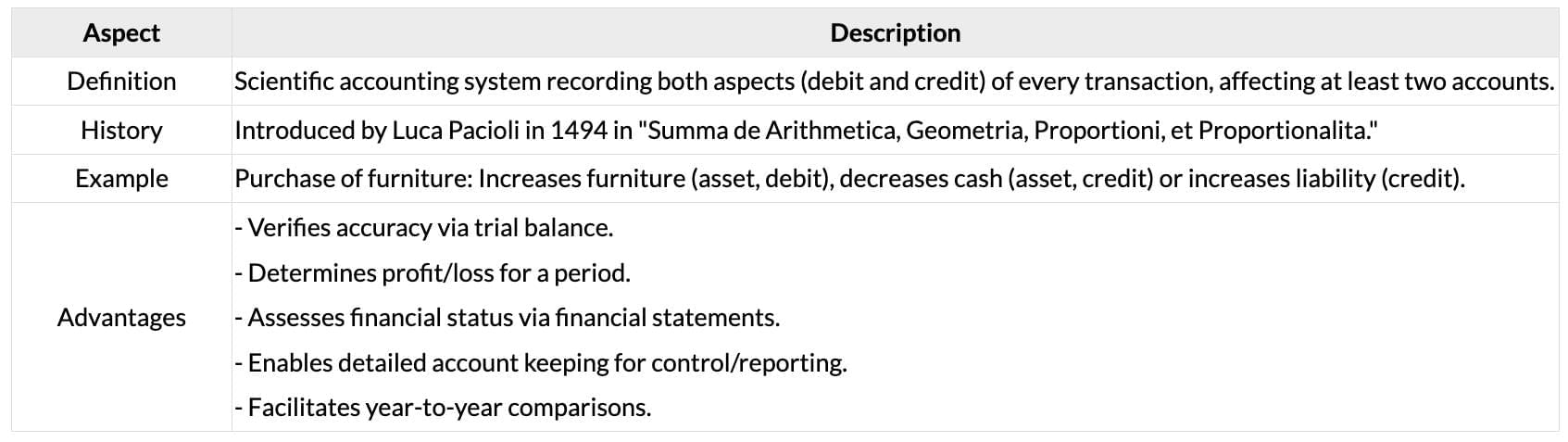
T-Account Structure

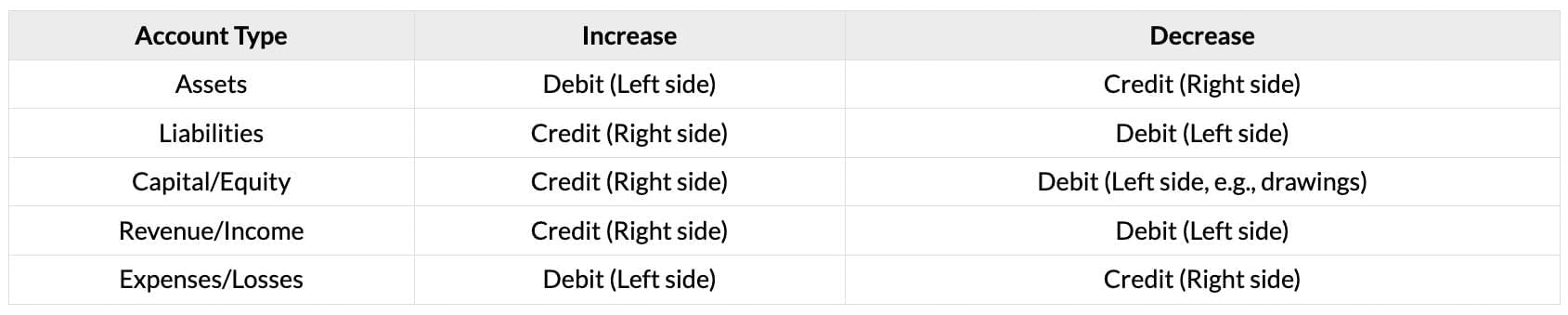
Debit and Credit Rules
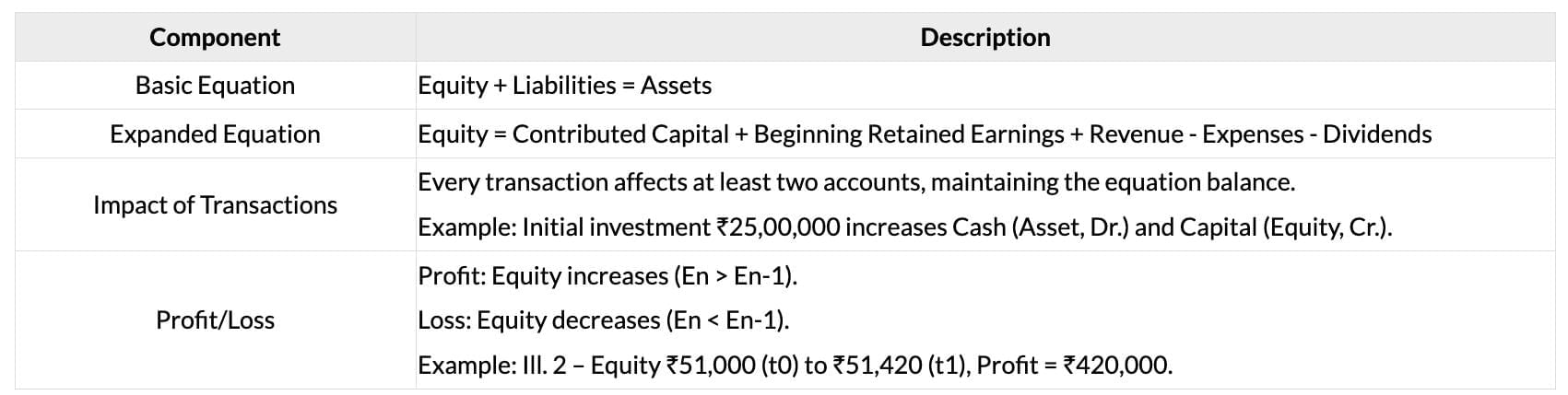
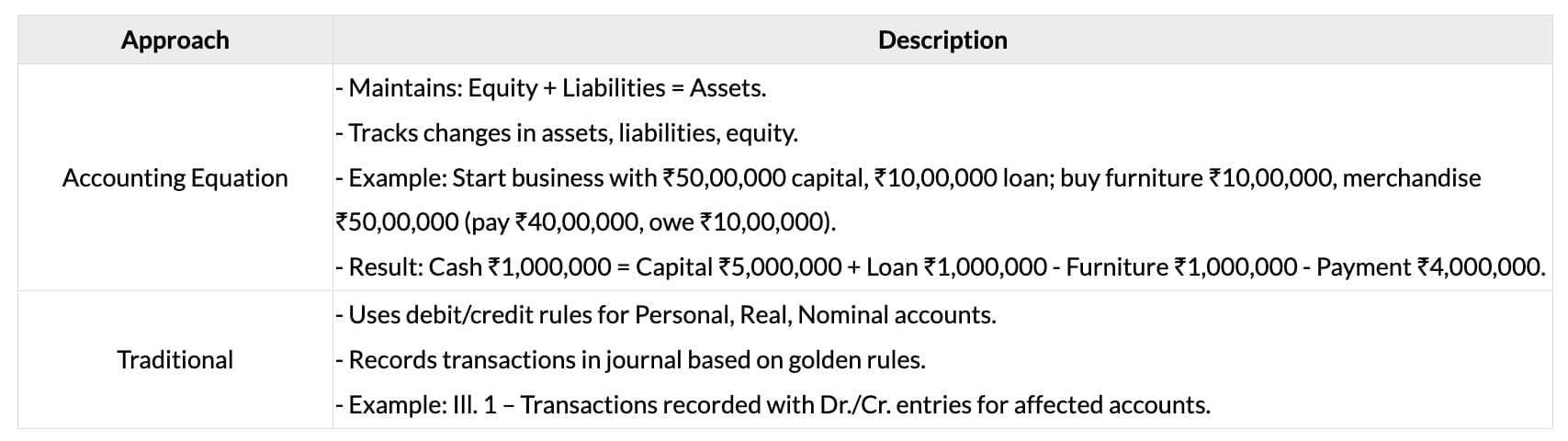
Accounting Equation
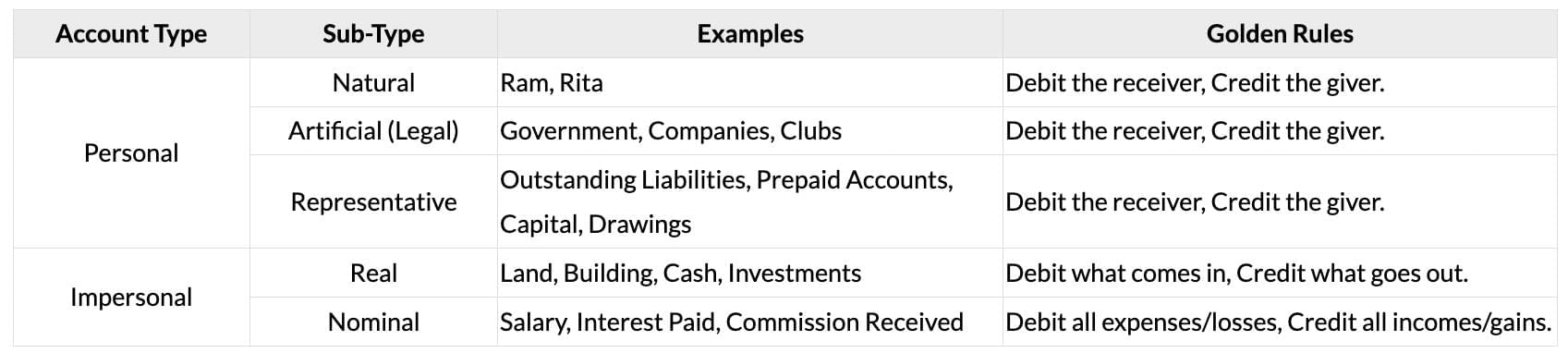
Classification of Accounts
Transaction Recording Approaches
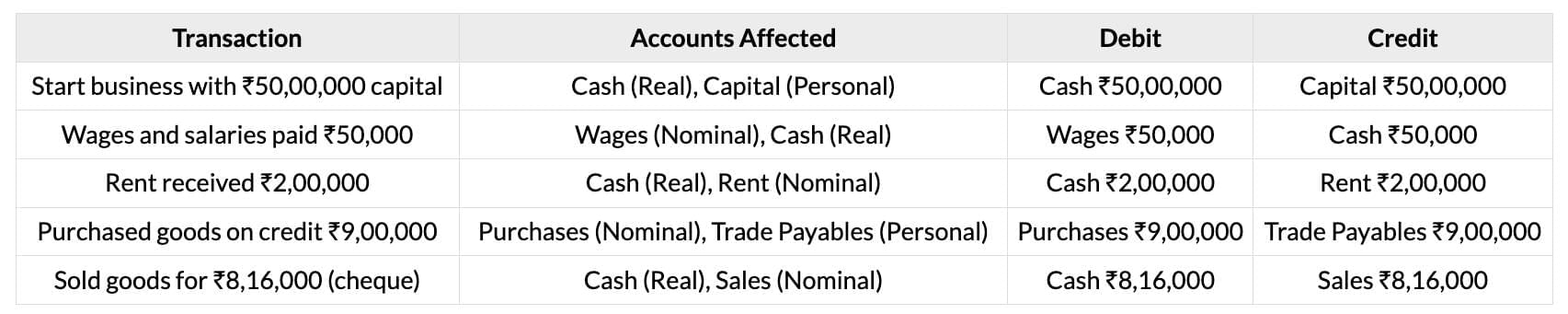
Transaction Examples
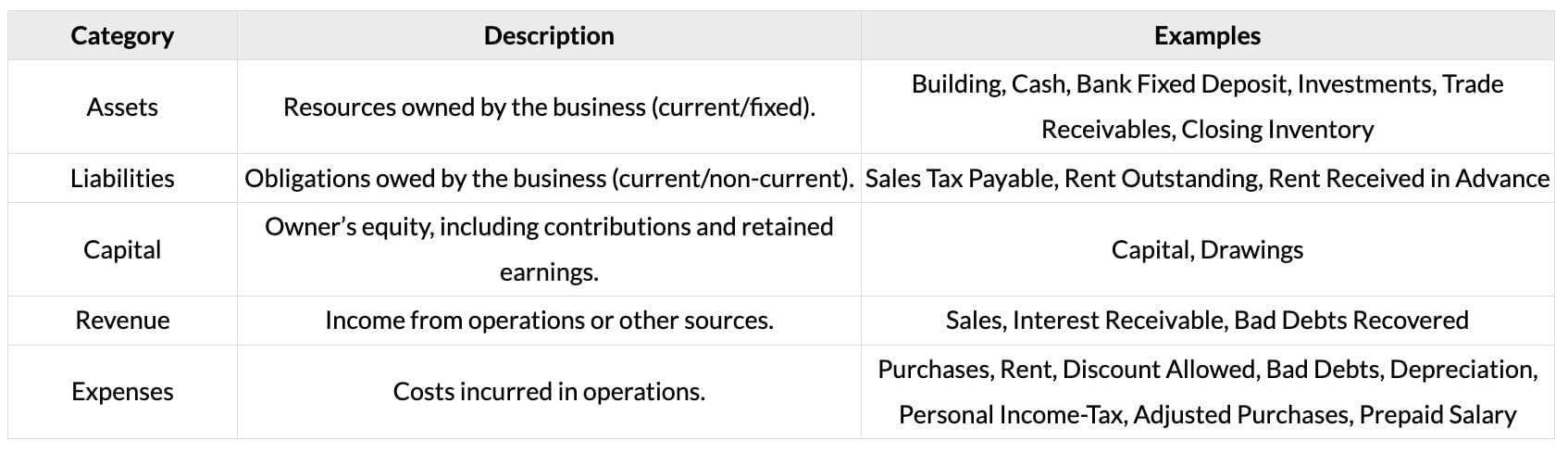
Modern Classification of Accounts
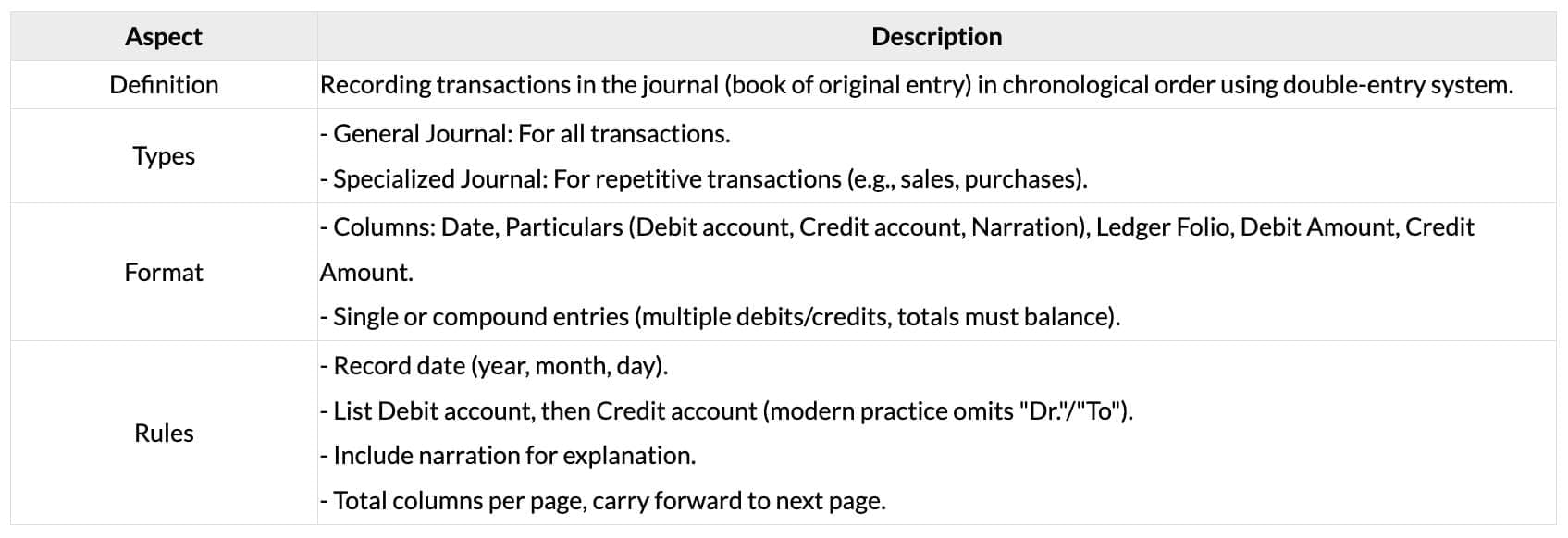
Journalising Process
GST Overview
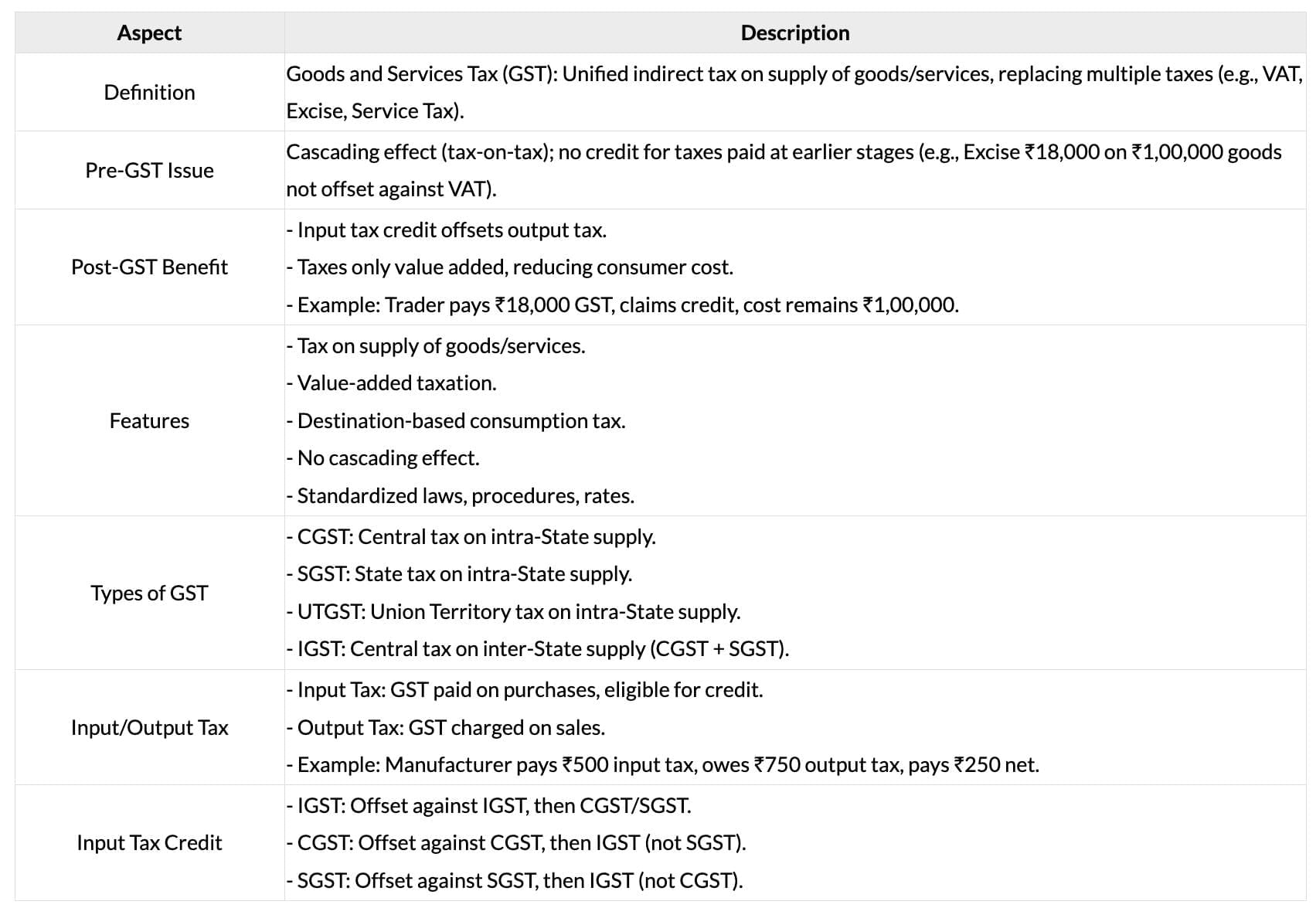
GST Journal Entries

Advantages of Journal

The document Cheatsheet: Basic Accounting Procedures - Journal Entries is a part of the CA Foundation Course Accounting for CA Foundation.
All you need of CA Foundation at this link: CA Foundation
FAQs on Cheatsheet: Basic Accounting Procedures - Journal Entries
| 1. What is the double entry system in accounting? |  |
Ans. The double entry system is an accounting method that records each transaction in two accounts, ensuring that the accounting equation (Assets = Liabilities + Equity) remains balanced. Each transaction affects both a debit and a credit entry, which helps maintain accurate financial records and provides a complete picture of a business's financial position.
| 2. How do I structure a T-account? | |
Ans. A T-account is structured in a "T" shape, where the left side represents debits and the right side represents credits. The account title is placed at the top. When recording transactions, debits are entered on the left side and credits on the right, allowing for easy tracking of balances and changes in each account.
| 3. What are the basic rules for debit and credit in accounting? | |
Ans. The basic rules for debit and credit are: 1. Assets increase with debits and decrease with credits. 2. Liabilities increase with credits and decrease with debits. 3. Equity increases with credits and decreases with debits. 4. Revenues increase with credits and decrease with debits. 5. Expenses increase with debits and decrease with credits.
| 4. Can you explain the journalising process in accounting? | |
Ans. The journalising process involves recording financial transactions in a journal, which is the first step in the accounting cycle. Each entry includes the date of the transaction, the accounts affected, the amounts debited and credited, and a brief description. This systematic approach helps ensure that all transactions are documented accurately before they are posted to the respective accounts in the ledger.
| 5. What is GST and how does it affect accounting practices? | |
Ans. GST, or Goods and Services Tax, is a value-added tax levied on the supply of goods and services. It affects accounting practices by requiring businesses to track GST collected on sales and GST paid on purchases separately. Companies must ensure proper accounting for GST to comply with tax regulations, maintain accurate records, and prepare necessary tax returns accurately.
About this Document

4.64/5 Rating

Apr 18, 2026 Last updated
Related Exams
Document Description: Cheatsheet: Basic Accounting Procedures - Journal Entries for CA Foundation 2026 is part of Accounting for CA Foundation preparation. The notes and questions for Cheatsheet: Basic Accounting Procedures - Journal Entries have been prepared according to the CA Foundation exam syllabus. Information about Cheatsheet: Basic Accounting Procedures - Journal Entries covers topics like and Cheatsheet: Basic Accounting Procedures - Journal Entries Example, for CA Foundation 2026 Exam. Find important definitions, questions, notes, meanings, examples, exercises and tests below for Cheatsheet: Basic Accounting Procedures - Journal Entries.
Introduction of Cheatsheet: Basic Accounting Procedures - Journal Entries in English is available as part of our Accounting for CA Foundation for CA Foundation & Cheatsheet: Basic Accounting Procedures - Journal Entries in Hindi for Accounting for CA Foundation course. Download more important topics related with notes, lectures and mock test series for CA Foundation Exam by signing up for free. CA Foundation: Cheatsheet: Basic Accounting Procedures - Journal Entries
Description
Cheatsheet: Basic Accounting Procedures of Accounting to help you remember important concepts with short tricks. Start learning for CA Foundation exam & improve retention with EduRev.
Information about Cheatsheet: Basic Accounting Procedures - Journal Entries
In this doc you can find the meaning of Cheatsheet: Basic Accounting Procedures - Journal Entries defined & explained in the simplest way possible. Besides explaining types of Cheatsheet: Basic Accounting Procedures - Journal Entries theory, EduRev gives you an ample number of questions to practice Cheatsheet: Basic Accounting Procedures - Journal Entries tests, examples and also practice CA Foundation tests



Related Searches
Extra Questions, Summary, ppt, Objective type Questions, Previous Year Questions with Solutions, Sample Paper, Cheatsheet: Basic Accounting Procedures - Journal Entries, MCQs, Viva Questions, past year papers, pdf , shortcuts and tricks, practice quizzes, Cheatsheet: Basic Accounting Procedures - Journal Entries, study material, mock tests for examination, Cheatsheet: Basic Accounting Procedures - Journal Entries, Semester Notes, Important questions, Exam, video lectures, Free;