BPSC (Bihar) Exam > BPSC (Bihar) Notes > Geography for State PSC Exams > Cheat Sheet: Soils
Cheat Sheet: Soils


What is Soil?
- Soil is the top layer of the Earth's surface, composed of minerals, organic matter, water, and air.
- It supports plant life and is vital for agriculture, ecology, and water retention.
Genesis of Soils (Soil Formation)
Soil formation is a result of weathering of rocks and organic activity, influenced by: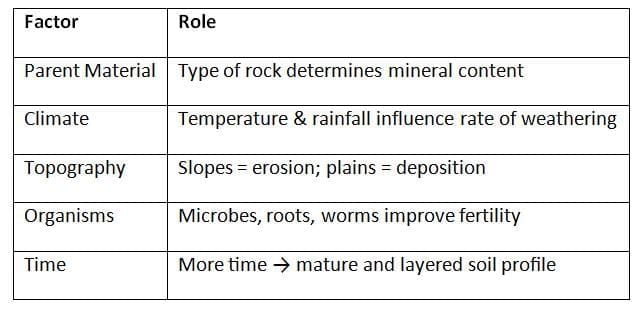
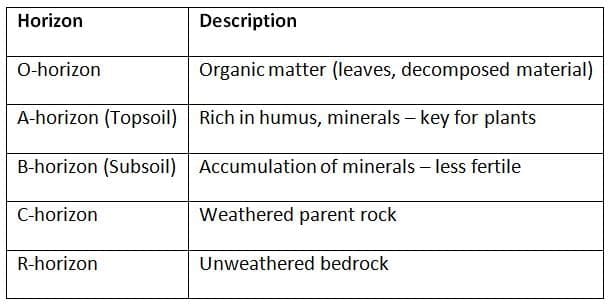
Soil Profile (Soil Horizons)
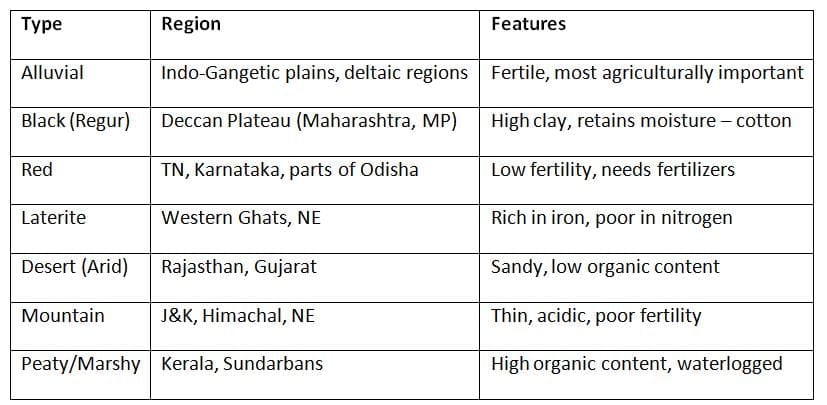
Classification & Distribution of Soils in India
Soil Erosion and Degradation
Causes:
- Deforestation
- Overgrazing
- Faulty farming practices
- Mining and industrial waste
Types:
- Sheet erosion (thin layer removed)
- Rill and gully erosion (channels form)
- Wind erosion (in arid areas)
Consequences:
- Loss of topsoil and fertility
- Sedimentation of rivers
- Desertification
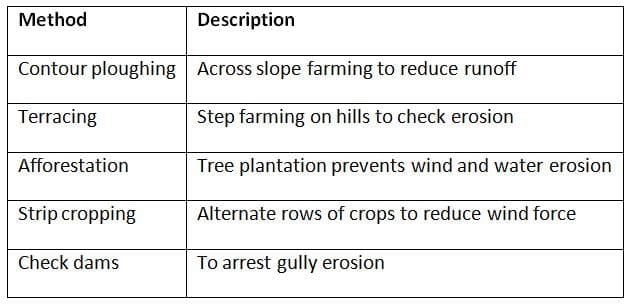
Soil Conservation Measures
Social Forestry & Agroforestry
- Social Forestry: Tree planting on community lands to meet local needs and reduce pressure on forests.
- Agroforestry: Integrating trees + crops + livestock on same land → sustainable use and income.
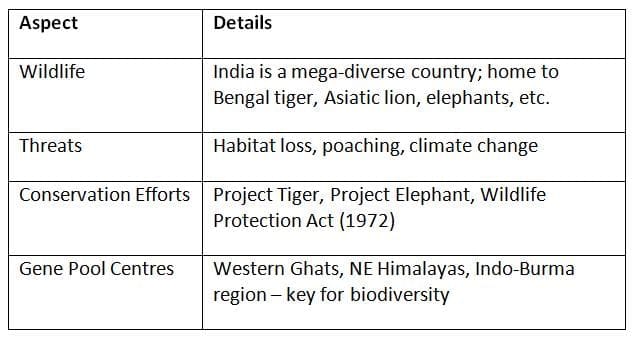
Wildlife & Major Gene Pool Centres
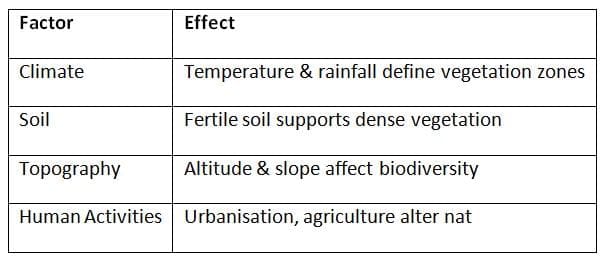
Factors Influencing Distribution of Plants & Animals
The document Cheat Sheet: Soils is a part of the BPSC (Bihar) Course Geography for State PSC Exams.
All you need of BPSC (Bihar) at this link: BPSC (Bihar)
FAQs on Cheat Sheet: Soils
| 1. What is soil and what are its primary components? |  |
Ans. Soil is a natural resource that forms the upper layer of the Earth's crust, consisting of a mixture of organic matter, minerals, gases, liquids, and living organisms. The primary components of soil include minerals (such as sand, silt, and clay), organic matter (decomposed plant and animal material), water, and air. These components interact to support plant life and various ecological functions.
| 2. How does soil formation occur, and what are the main processes involved? | |
Ans. Soil formation, also known as soil genesis, occurs through a series of processes that include weathering of parent rock, accumulation of organic matter, and the influence of climatic conditions. The main processes involved are physical weathering (breaking down rocks into smaller particles), chemical weathering (altering the chemical composition of minerals), biological activity (contribution of organisms like plants, animals, and microbes), and the role of topography which affects drainage and erosion.
| 3. What are soil horizons, and how are they structured within a soil profile? | |
Ans. Soil horizons are distinct layers within a soil profile that differ in composition, texture, and color. The typical soil profile consists of several horizons: the O horizon (organic layer rich in decomposed material), the A horizon (topsoil with a mixture of organic and mineral content), the E horizon (eluviation layer where minerals and nutrients leach out), the B horizon (subsoil where materials accumulate), and the C horizon (weathered parent material). Below these is the bedrock, which is the source of the minerals in the soil.
| 4. What are the main causes of soil erosion and degradation, and why is it a concern? | |
Ans. Soil erosion and degradation are primarily caused by factors such as deforestation, overgrazing, improper agricultural practices, urbanization, and natural forces like wind and water. These processes lead to the loss of fertile topsoil, reduced soil quality, and diminished agricultural productivity, which can threaten food security and lead to desertification and loss of biodiversity.
| 5. What are some effective soil conservation measures that can be implemented? | |
Ans. Effective soil conservation measures include practices such as contour plowing, terracing, crop rotation, cover cropping, and the use of organic fertilizers. These techniques help reduce soil erosion, improve soil fertility, and enhance water retention. Additionally, reforestation and afforestation can help stabilize soil and restore degraded land, contributing to sustainable land management.
About this Document

4.88/5 Rating

Apr 21, 2026 Last updated
Related Exams
Document Description: Cheat Sheet: Soils for BPSC (Bihar) 2026 is part of Geography for State PSC Exams preparation. The notes and questions for Cheat Sheet: Soils have been prepared according to the BPSC (Bihar) exam syllabus. Information about Cheat Sheet: Soils covers topics like and Cheat Sheet: Soils Example, for BPSC (Bihar) 2026 Exam. Find important definitions, questions, notes, meanings, examples, exercises and tests below for Cheat Sheet: Soils.
Introduction of Cheat Sheet: Soils in English is available as part of our Geography for State PSC Exams for BPSC (Bihar) & Cheat Sheet: Soils in Hindi for Geography for State PSC Exams course. Download more important topics related with notes, lectures and mock test series for BPSC (Bihar) Exam by signing up for free. BPSC (Bihar): Cheat Sheet: Soils
Description
Cheat Sheet: Soils of Geography to help you remember important concepts with short tricks. Start learning for BPSC (Bihar) exam & improve retention with EduRev.
Information about Cheat Sheet: Soils
In this doc you can find the meaning of Cheat Sheet: Soils defined & explained in the simplest way possible. Besides explaining types of Cheat Sheet: Soils theory, EduRev gives you an ample number of questions to practice Cheat Sheet: Soils tests, examples and also practice BPSC (Bihar) tests



Related Searches
Free, Exam, past year papers, shortcuts and tricks, Cheat Sheet: Soils, Previous Year Questions with Solutions, Summary, practice quizzes, Important questions, pdf , Cheat Sheet: Soils, Sample Paper, Objective type Questions, study material, Extra Questions, Viva Questions, video lectures, MCQs, Cheat Sheet: Soils, ppt, Semester Notes, mock tests for examination;