UPSC Exam > UPSC Notes > Indian Economy CSE > Cheat Sheet: Growth, Development and Happiness
Cheat Sheet: Growth, Development and Happiness


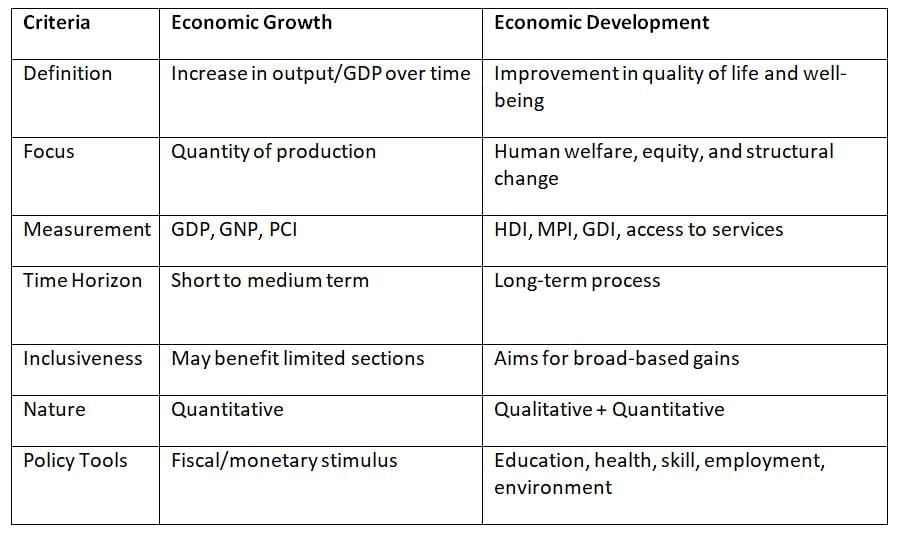
Economic Growth vs Economic Development
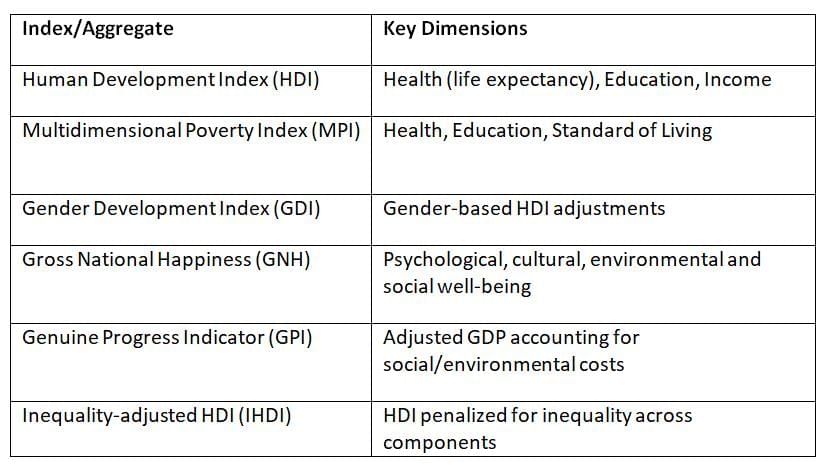
Measurement of Development
Happiness and Well-being
- Happiness reflects subjective well-being influenced by economic and non-economic factors.
- Components used in global surveys:
- Per capita income
- Social support systems
- Healthy life expectancy
- Freedom to make life choices
- Trust in government and low corruption
- Generosity and social cohesion
- India ranked 118 out of 146 in the World Happiness Report 2025
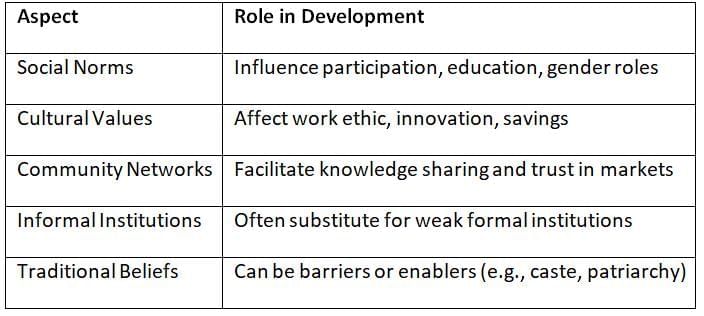
Social Norms, Culture and Development
Values and Economics
- Economic decisions are influenced by moral, ethical, and cultural values.
- Values affect:
- Trust and cooperation in transactions
- Attitude towards risk, saving, and investment
- Responsibility toward environment and future generations
- Social and moral incentives often matter alongside material incentives.
Human Behaviour and Development
- Classical economics assumes rational, self-interested agents.
- Behavioural economics shows:
- Decisions often guided by biases (e.g., loss aversion, framing)
- Social influences (peer pressure, identity) affect economic choices
- Policies using "nudges" can improve outcomes (e.g., defaults in pension schemes)
- Development interventions must consider real human behaviour, not idealised models.
The document Cheat Sheet: Growth, Development and Happiness is a part of the UPSC Course Indian Economy for UPSC CSE.
All you need of UPSC at this link: UPSC
FAQs on Cheat Sheet: Growth, Development and Happiness
| 1. What is the difference between economic growth and economic development? |  |
Ans.Economic growth refers to an increase in the output of goods and services in an economy, typically measured by the rise in Gross Domestic Product (GDP). In contrast, economic development encompasses broader aspects, including improvements in living standards, education, health, and environmental sustainability. While growth is quantitative, development is qualitative, focusing on enhancing the overall well-being of the population.
| 2. How is economic development measured? | |
Ans.Economic development can be measured using various indicators beyond GDP. Common metrics include the Human Development Index (HDI), which combines life expectancy, education level, and per capita income; poverty rates; inequality measures; and access to essential services such as healthcare and education. These indicators provide a more holistic view of a country's development status.
| 3. What role does happiness and well-being play in economic development? | |
Ans.Happiness and well-being are increasingly recognized as crucial components of economic development. Policies aimed at enhancing well-being can lead to a more productive workforce, lower healthcare costs, and greater social cohesion. Surveys and studies often show that higher levels of happiness correlate with better economic outcomes, making well-being an important goal alongside traditional economic indicators.
| 4. How do social norms and culture influence economic development? | |
Ans.Social norms and culture significantly impact economic development by shaping behaviors, values, and priorities within a society. Cultural attitudes towards education, work ethic, gender roles, and innovation can either facilitate or hinder economic progress. For instance, cultures that prioritize education tend to have higher innovation rates, leading to faster economic development.
| 5. What is the relationship between values and economics in the context of development? | |
Ans.Values play a critical role in economics, especially concerning development. The ethical framework within which economic decisions are made can influence policies, resource allocation, and priorities. Societies that value inclusivity and sustainability are likely to pursue development strategies that promote equitable growth and environmental stewardship, contrasting with those that prioritize short-term profits over long-term welfare.
About this Document

4.84/5 Rating

Apr 30, 2026 Last updated
Related Exams
Document Description: Cheat Sheet: Growth, Development and Happiness for UPSC 2026 is part of Indian Economy for UPSC CSE preparation. The notes and questions for Cheat Sheet: Growth, Development and Happiness have been prepared according to the UPSC exam syllabus. Information about Cheat Sheet: Growth, Development and Happiness covers topics like and Cheat Sheet: Growth, Development and Happiness Example, for UPSC 2026 Exam. Find important definitions, questions, notes, meanings, examples, exercises and tests below for Cheat Sheet: Growth, Development and Happiness.
Introduction of Cheat Sheet: Growth, Development and Happiness in English is available as part of our Indian Economy for UPSC CSE for UPSC & Cheat Sheet: Growth, Development and Happiness in Hindi for Indian Economy for UPSC CSE course. Download more important topics related with notes, lectures and mock test series for UPSC Exam by signing up for free. UPSC: Cheat Sheet: Growth, Development and Happiness
Description
Cheat Sheet: Growth, Development & Happiness of Indian Economy to help you remember important concepts with short tricks. Start learning for UPSC exam & improve retention with EduRev.
Information about Cheat Sheet: Growth, Development and Happiness
In this doc you can find the meaning of Cheat Sheet: Growth, Development and Happiness defined & explained in the simplest way possible. Besides explaining types of Cheat Sheet: Growth, Development and Happiness theory, EduRev gives you an ample number of questions to practice Cheat Sheet: Growth, Development and Happiness tests, examples and also practice UPSC tests



Related Searches
Development and Happiness, Development and Happiness, Cheat Sheet: Growth, Objective type Questions, Exam, past year papers, Development and Happiness, practice quizzes, Important questions, video lectures, Viva Questions, mock tests for examination, MCQs, ppt, Cheat Sheet: Growth, study material, Sample Paper, Summary, Cheat Sheet: Growth, Previous Year Questions with Solutions, Extra Questions, Free, Semester Notes, pdf , shortcuts and tricks;