PIB Summary - 22nd July 2025

Efforts to Reduce Coal Import Dependency
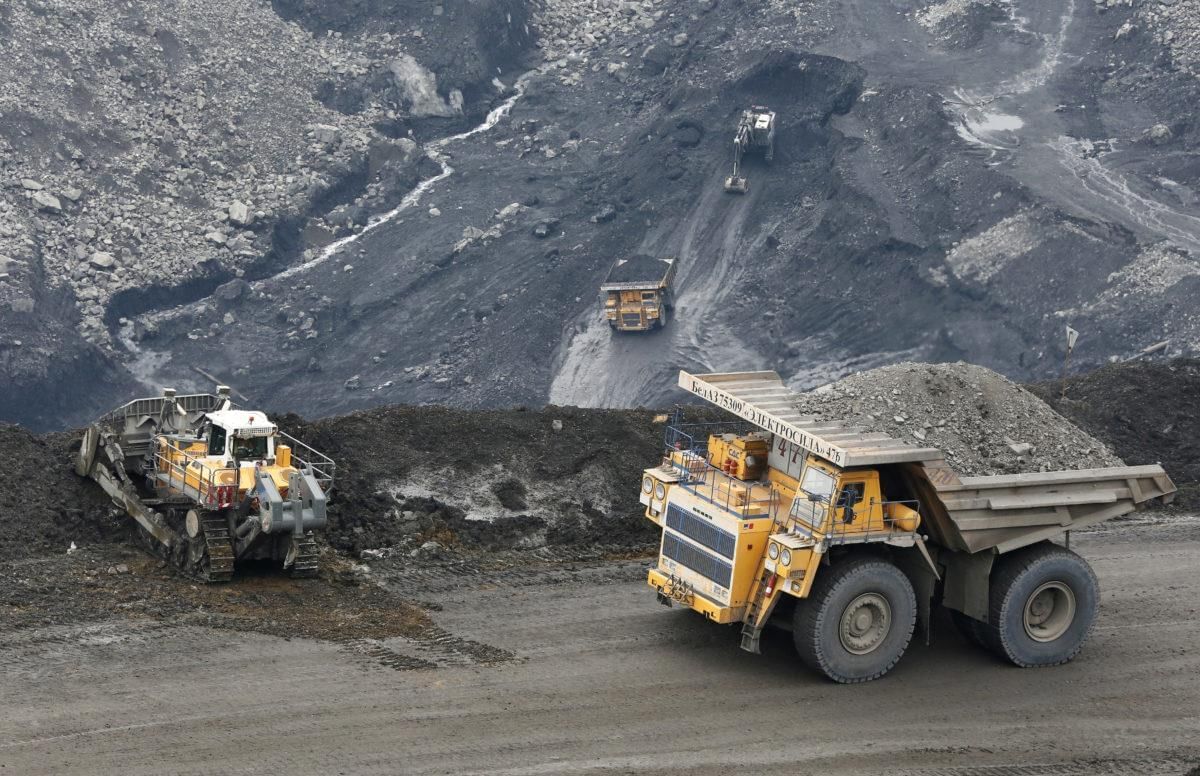
Introduction
- India, despite being the second-largest producer of coal in the world, imported 243.62 million tonnes (MT) of coal in the fiscal year 2024-25. This situation underscores strategic and sectoral deficiencies in the domestic supply of coal, particularly for coking coal needed by coastal power plants.
- To address this issue and reduce dependency on coal imports, the Indian government has initiated various policy reforms, production-linked incentives, and infrastructure improvements. The goal is to achieve 1.5 billion tonnes (BT) of domestic coal production by the fiscal year 2029-30, thereby saving significant foreign exchange.
Policy-Level Measures to Reduce Coal Import Dependency
Enhanced Annual Contracted Quantity (ACQ)
- The Annual Contracted Quantity (ACQ) has been increased to 100% of the normative requirement. This is an improvement from the previous levels of 90% for non-coastal plants and 70% for coastal plants.
- This change aims to boost domestic coal supply and reduce reliance on imports.
Full PPA Fulfilment via Domestic Linkages (2022)
- In 2022, a policy was introduced requiring coal companies to meet the full Power Purchase Agreement (PPA) obligations of existing linkage holders.
- This mandate is irrespective of the ACQ or trigger levels, ensuring a steady supply of domestic coal for power plants.
Non-Regulated Sector (NRS) Linkage Reform (2020)
- The linkage tenure for coking coal under the Non-Regulated Sector (NRS) linkage auction was extended to 30 years.
- This reform aims to encourage domestic usage of coking coal and reduce import dependency.
Import Regulation via CIMS (2020)
- In 2020, the import category under the Coal Import Monitoring System (CIMS) was revised from "Free" to "Free with compulsory registration."
- This change facilitates better tracking of coal imports and enables timely policy responses.
Import Substitution Strategy (2020 onwards)
- An Inter-Ministerial Committee was established to focus on replacing substitutable coal imports with domestic supplies.
- A Strategy Paper on Coal Import Substitution was released to guide this initiative.
Sector-Specific Interventions
Steel Sector - New Coking Coal Policy (2024)
- In 2024, a new sub-sector was created under the NRS auctions: "Steel using Coking Coal through WDO Route."
- This policy aims to enhance the availability of washed coking coal and promote the consumption of domestic coking coal in the steel sector.
Coking Coal Mission
- The Coking Coal Mission was launched to improve the domestic supply of coking coal for the steel sector.
- The focus of this mission includes enhancing exploration, production, and washing infrastructure for coking coal.
Imported Coal-Based (ICB) Power Plants - SHAKTI Policy 2025
- Under the revised SHAKTI Policy 2025, Imported Coal-Based (ICB) power plants became eligible for coal supplies.
- This policy change aims to reduce the reliance on coal imports by allowing existing FSA holders to procure coal beyond ACQ limits.
Coal Production Boost: Strategic & Legal Reforms
Mines and Minerals (Development and Regulation) Amendment Act, 2021
- The amendment allows captive coal mine owners (excluding atomic energy projects) to sell up to 50% of their production in the open market after meeting their end-use requirements.
Commercial Coal Mining (2020 onwards)
- A revenue-sharing model was introduced with rebates for early production of 50%.
- Rebates are also available for coal gasification and liquefaction projects.
- Foreign Direct Investment (FDI) is permitted up to 100% via the automatic route.
- The bidding process is made transparent with liberal terms, such as no usage restrictions and low upfront fees.
Single Window Clearance + Project Management Unit (PMU)
- This initiative aims to fast-track environmental and statutory approvals necessary for operationalizing coal blocks.
Company-Level Steps to Enhance Domestic Production
Coal India Ltd (CIL)
- In underground (UG) mines, CIL is adopting advanced technologies such as Continuous Miners (CMs), Longwall (LW), and Highwall (HW) mining methods.
- In open cast (OC) mines, the focus is on using high-capacity Heavy Earth Moving Machinery (HEMM), Surface Miners, Excavators, and Dumpers.
- CIL is also piloting digital mining initiatives in seven mega mines to enhance efficiency and productivity.
Singareni Collieries Co. Ltd (SCCL)
- SCCL is prioritizing obtaining necessary permissions and improving infrastructure such as Coal Handling Plants (CHPs), Crushers, and Weigh Bins.
- These improvements aim to facilitate faster production and evacuation of coal from mines.
Impact Assessment
Import Reduction (FY24-25)
- Coal Imports:
- FY 2023-24: 264.53 MT
- FY 2024-25: 243.62 MT
- Reduction: 20.91 MT
- Forex Savings: ₹60,681.67 Crores in FY 2024-25
Current Import Share:
- Most coal demand is now met indigenously, with imports limited to non-substitutable or essential grades.
- Examples of imported grades include low ash coking coal, which is critical for certain industrial processes.
Future Vision & Infrastructure
Coal Logistic Plan & Policy (Feb 2024):
- The focus is on building infrastructure to enable efficient coal evacuation.
- The goal is to handle the projected 1.5 Billion Tonnes (BT) of domestic coal production by FY 2029-30.
Conclusion: A Shift Toward Coal Aatmanirbharta
- India is implementing a comprehensive strategy to enhance coal self-sufficiency.
- The approach includes policy flexibility, technological modernization, legal reforms, and infrastructure alignment to achieve greater coal Aatmanirbharta (self-reliance).
SASCI Scheme of the Ministry of Tourism
Objective & Strategic Vision
- Purpose: To transform iconic Indian tourist destinations into globally competitive tourism hubs by supporting capital investment projects initiated by State Governments.
- Core Goal: Enhance the end-to-end tourist experience, enable sustainable development, and promote Brand India tourism internationally.
Key Features of the SASCI Scheme
Funding & Implementation: Central financial support under the SASCI scheme is available until 31st March 2026. The responsibility for implementation lies with the State Governments. Projects must be completed within 2 years of receiving sanction.
Selection Criteria for Projects: Projects are evaluated based on various parameters, including:
- Connectivity
- Tourism ecosystem
- Carrying capacity
- Sustainability (both ecological and operational)
- Marketing plans
- Impact and value creation
Value Chain Approach: The scheme aims to strengthen all stages of the tourism value chain, including infrastructure, tourist experience, capacity building, branding, and maintenance.
Promotional Strategy
The Ministry actively promotes SASCI projects and Indian tourism destinations through various channels, including social media, web platforms, global expos, and domestic outreach.
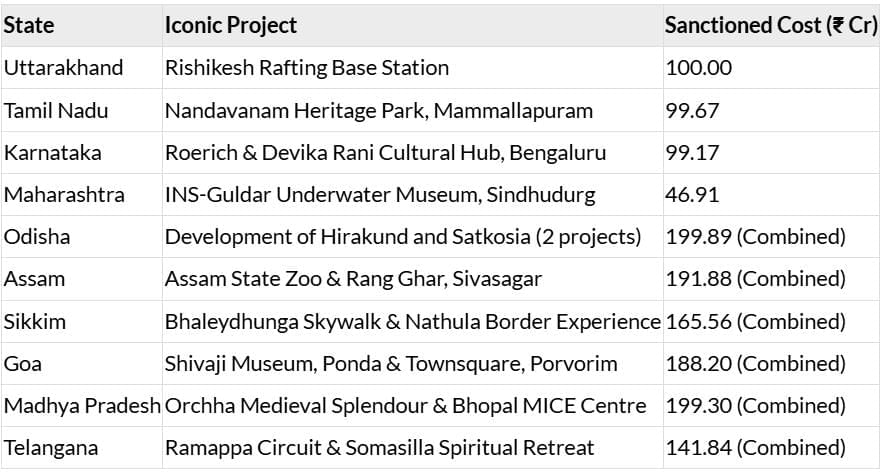
State-Wise Notable Projects (Examples)
Thematic Clusters (Across India)
- Eco-Tourism & Lakes:
- Ashtamudi (Kerala), Umiam Lake (Meghalaya), Tilaiyya (Jharkhand), Loktak (Manipur)
- Spiritual & Cultural Tourism: Bateshwar (UP), Shrawasti (Buddhist Circuit, UP), Bhaghat Singh Heritage Street (Punjab)
- Adventure & Nature: Pasighat (Arunachal), Nathula Border (Sikkim), Garden of Flowers (TN)
- MICE & Convention Hubs: Bhopal, Mawkhanu (Meghalaya), Dhordo (Gujarat), Raipur (Chhattisgarh)
- Heritage Conservation: Gandikota (AP), Jalmahal & Amber (Rajasthan), Rang Ghar (Assam)
Strategic Outcomes Expected
- Job creation driven by tourism in Tier-2/3 cities and rural areas.
- Improved global competitiveness of India's tourism offerings.
- Strengthened federalism in tourism between State and Centre.
- Increased tourist footfall, both domestic and international.
- Enhanced India's cultural diplomacy and soft power.
Looking Ahead: Targets & Alignment
- Timeline Alignment: The schemes are aligned with India's Vision @2047 tourism goals and the G20 heritage tourism initiative.
- Convergence Potential: SASCI has the potential to align with other initiatives such as Swadesh Darshan 2.0, Dekho Apna Desh, and PM Gati Shakti for connectivity support.
FAQs on PIB Summary - 22nd July 2025
| 1. What are the main objectives of efforts to reduce coal import dependency? |  |
| 2. How does the SASCI scheme aim to promote sustainable tourism? | |
| 3. What are the potential economic impacts of reducing coal imports? | |
| 4. What role does the government play in supporting the transition away from coal dependency? | |
| 5. What are the environmental benefits of reducing coal dependency? | |




