UPSC Exam > UPSC Notes > Indian Economy CSE > Cheat Sheet: Tax Structure in India
Cheat Sheet: Tax Structure in India


Basic Concepts
- Tax: A compulsory financial charge imposed by the government to fund public expenditures.
- Incidence of Tax: The entity legally responsible to pay the tax.
- Impact of Tax: The entity that ultimately bears the economic burden of the tax.
Types of Taxes
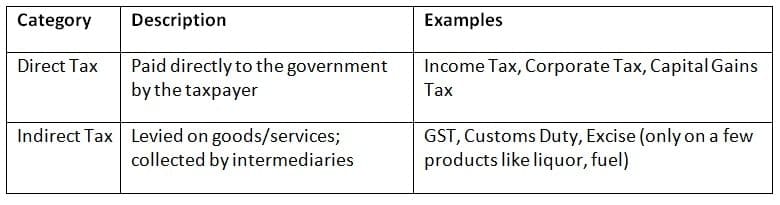
Forms of Taxation
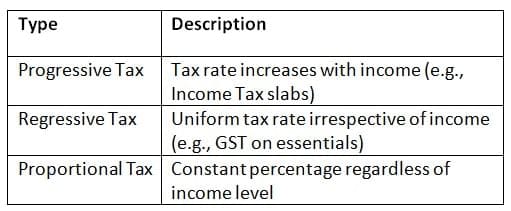
GST (Goods and Services Tax)
- Introduced in 2017 via the 101st Constitutional Amendment.
- Subsumed many indirect taxes like VAT, Service Tax, Excise Duty.
- GST Structure: CGST + SGST (for intra-state) and IGST (for inter-state).
- Council: GST Council chaired by Union Finance Minister.
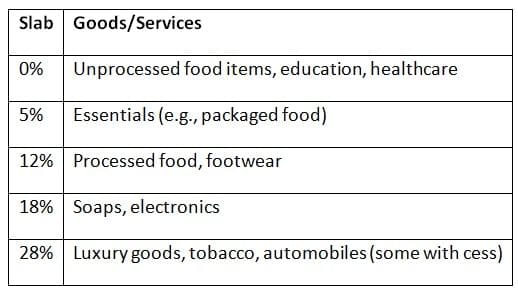
GST Rates (as of 2025)
Income Tax Slabs (FY 2025-26)
New Regime (without exemptions):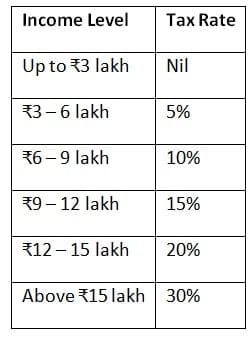
Note: Rebate under Section 87A applies for income up to ₹7 lakh (tax liability = zero).
Old Regime (with exemptions):
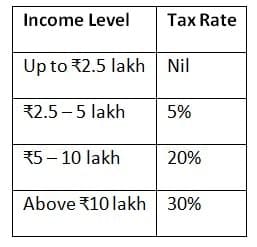
Higher education cess: 4% on total tax liability.
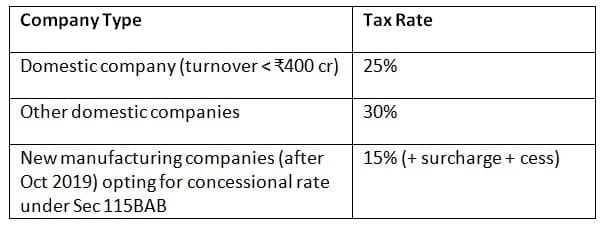
Corporate Tax (2025)
Other Important Taxes
- Capital Gains Tax:
- STCG (less than 1 year): 15% (on equities)
- LTCG (more than 1 year): 10% (above ₹1 lakh, without indexation)
- Minimum Alternate Tax (MAT): 15% (for companies not paying regular tax)
- Securities Transaction Tax (STT): Levied on equity trades.
- Commodities Transaction Tax (CTT): On commodity derivatives.
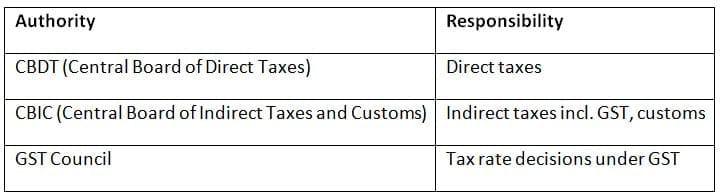
Tax Administration in India
Tax Reforms
- Direct Tax Code (DTC): Proposed simplification (not yet implemented).
- Faceless Assessment: Reduced discretion and corruption.
- PAN-Aadhaar Linkage: Mandatory to reduce evasion.
- TDS & TCS: Tax deducted/collected at source to widen the tax base.
Tax Expenditure
- Refers to revenue foregone due to exemptions/deductions.
- Reported in the Statement of Revenue Impact of Tax Incentives.
The document Cheat Sheet: Tax Structure in India is a part of the UPSC Course Indian Economy for UPSC CSE.
All you need of UPSC at this link: UPSC
FAQs on Cheat Sheet: Tax Structure in India
| 1. What are the main types of taxes in India? |  |
Ans. The main types of taxes in India can be broadly classified into two categories: direct taxes and indirect taxes. Direct taxes are those that are levied directly on the income or wealth of individuals and corporations, such as income tax and corporate tax. Indirect taxes are imposed on goods and services, which include taxes like Goods and Services Tax (GST), excise duty, and customs duty.
| 2. What is Goods and Services Tax (GST) and its significance? | |
Ans. Goods and Services Tax (GST) is a comprehensive tax system implemented in India to replace multiple indirect taxes levied by the central and state governments. It aims to streamline the tax structure by creating a single tax regime for the entire country, thereby reducing the overall tax burden on consumers. GST is significant as it promotes transparency, prevents tax evasion, and enhances compliance among businesses.
| 3. How are GST rates structured in India? | |
Ans. GST rates in India are categorized into several slabs: 0%, 5%, 12%, 18%, and 28%. Essential goods and services typically fall under lower tax rates, while luxury items are taxed at higher rates. Additionally, certain goods may have specific rates, and there are exemptions for some items, ensuring that basic necessities remain affordable for the general public.
| 4. What are the income tax slabs for individuals in India? | |
Ans. The income tax slabs for individuals in India are structured progressively, meaning that higher income levels are taxed at higher rates. The slabs vary based on the individual's age, with specific provisions for senior citizens and super senior citizens. Generally, income tax rates can range from a lower percentage for individuals earning below a certain threshold to higher percentages for those with higher incomes, ensuring a fair tax system that considers the taxpayer's ability to pay.
| 5. What role does tax administration play in India? | |
Ans. Tax administration in India is crucial for the effective implementation and enforcement of tax laws. It involves the collection of taxes, ensuring compliance, and addressing disputes. The principal body responsible for tax administration is the Income Tax Department for direct taxes and the Goods and Services Tax Network for indirect taxes. A robust tax administration system is essential for maximizing revenue collection and promoting economic growth through efficient tax practices.
About this Document

4.72/5 Rating

Apr 19, 2026 Last updated
Related Exams
Document Description: Cheat Sheet: Tax Structure in India for UPSC 2026 is part of Indian Economy for UPSC CSE preparation. The notes and questions for Cheat Sheet: Tax Structure in India have been prepared according to the UPSC exam syllabus. Information about Cheat Sheet: Tax Structure in India covers topics like and Cheat Sheet: Tax Structure in India Example, for UPSC 2026 Exam. Find important definitions, questions, notes, meanings, examples, exercises and tests below for Cheat Sheet: Tax Structure in India.
Introduction of Cheat Sheet: Tax Structure in India in English is available as part of our Indian Economy for UPSC CSE for UPSC & Cheat Sheet: Tax Structure in India in Hindi for Indian Economy for UPSC CSE course. Download more important topics related with notes, lectures and mock test series for UPSC Exam by signing up for free. UPSC: Cheat Sheet: Tax Structure in India
Description
Cheat Sheet: Tax Structure in India of Indian Economy to help you remember important concepts with short tricks. Start learning for UPSC exam & improve retention with EduRev.
Information about Cheat Sheet: Tax Structure in India
In this doc you can find the meaning of Cheat Sheet: Tax Structure in India defined & explained in the simplest way possible. Besides explaining types of Cheat Sheet: Tax Structure in India theory, EduRev gives you an ample number of questions to practice Cheat Sheet: Tax Structure in India tests, examples and also practice UPSC tests



Related Searches
Free, video lectures, past year papers, practice quizzes, shortcuts and tricks, Exam, Sample Paper, study material, Summary, Cheat Sheet: Tax Structure in India, Viva Questions, Extra Questions, Semester Notes, Objective type Questions, ppt, Cheat Sheet: Tax Structure in India, pdf , MCQs, Previous Year Questions with Solutions, Cheat Sheet: Tax Structure in India, mock tests for examination, Important questions;