CBSE Class 5  >  Class 5 Notes  >  English Santoor - New NCERT  >  NCERT Solutions: Glass Bangles

NCERT Solutions: Glass Bangles

Let us Think (Page 123)

A. Answer the following questions
Q1: How were glass bangles made in Ravi's small workshop?
Ans: In Ravi's workshop, glass was heated in a furnace, carefully shaped into bangles, decorated with colors and designs, and cooled to make them strong and beautiful.
Q2: Who was Ananya? How did she help Ravi?
Ans: Ananya was Ravi's daughter. She helped by creating modern designs like floral patterns and geometric shapes, combining them with traditional bangle designs for a special Diwali collection.
Q3: How did the success of the new bangles help the community?
Ans: The success of the new bangles created more work for local artisans and generated jobs in packing and transportation, benefiting the entire community.

B. Think and discuss
Q1: If you were in Ananya's place, what other modern designs or colours would you add to make the bangles more attractive?
Ans: I would add sparkly glitter patterns and bright neon colours like pink and green to make the bangles shiny and attractive for young people.
 Q2: Ravi and Ananya felt proud seeing people wearing their bangles on Diwali night. Have you ever created something (drawing, writing, or a project) that made you happy? Share your experience with the class.
Ans: I made a colourful rangoli for Diwali, and my family loved it. I felt happy and proud seeing everyone admire it during the festival.
 Q3: Make a list of things that you buy from local markets during festivals.
Ans:

1. Sweets
2. Diyas
3. Flowers
4. Rangoli colours
5. Decorations

Let us Learn (Page 124)

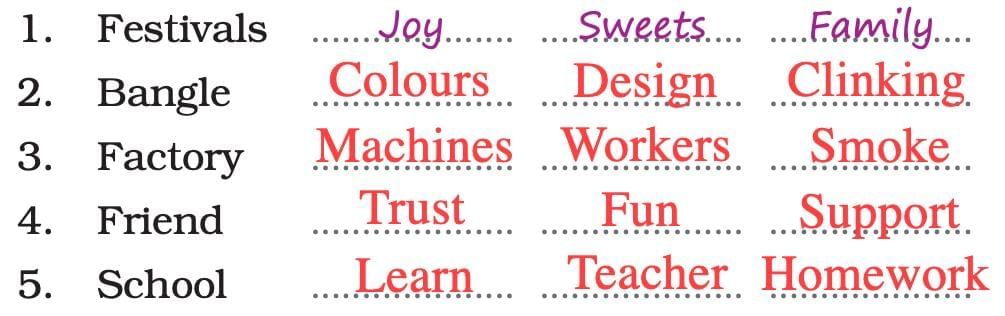
A. For each word, list three other words you associate with it.Let us Learn (Page 124)
Ans:
Let us Learn (Page 124)

B. Use capital letters, full stop, comma, and question mark wherever necessary. Rewrite the following sentences with proper punctuation.

Ans:

1. The air was filled with the clinking of bangles.
2. On Diwali night, the streets of Firozabad were lit with lamps and lights.
3. Did Ravi like Ananya's new designs at first?
4. Ravi and Ananya made a special collection for Diwali.
5. Did the customers love the new bangles?

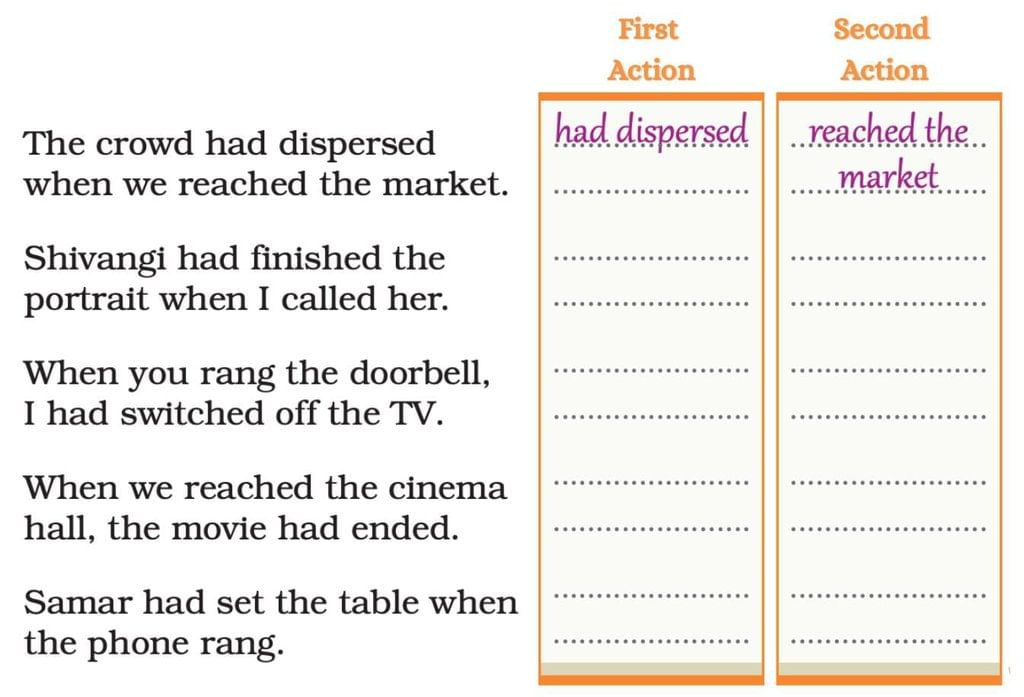
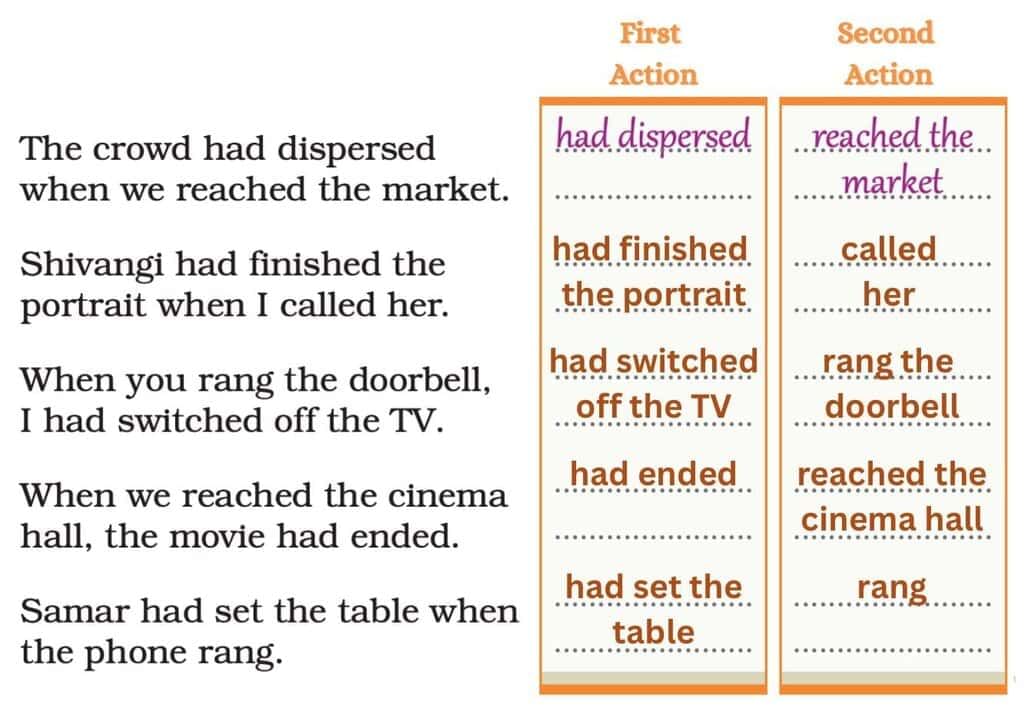
C. Identify the first action and second action in the given sentences

Let us Learn (Page 124)

Let us Learn (Page 124)

Ans:Let us Learn (Page 124)
 
Q: Write more sentences like the ones given previously with the help of your classmates.
Ans:

1. I had finished my homework before my friend arrived.
2. The rain had stopped when we went outside to play.
3. She had cooked dinner before the guests came.

Let us Speak (Page 126)

Q1: Try speaking the following lines. Start slow and gradually increase your speed.
Ans: This is a classroom activity. Practice saying:

a. Red lorry, blue lorry.
b. Babli bought beautiful bangles, but the bangles broke.
c. Ravi read a red book.
d. Green glass globes glow green.
e. Ten tiny turtles take turns talking.

Start slowly, then say faster, and count how many times you say them correctly.
 Q2: Glass bangles are an important part of the Indian culture, especially during festivals. Are there any crafts or traditions in your region that are linked to festivals? Share with your class.
Ans: Example Response:
In my region, we make rangoli with coloured powders during Diwali. It's a tradition to decorate homes and bring good luck. Share your region's traditions with the class.

Let us Listen (Page 127)

A. Your teacher will read out the paragraph given below. Listen carefully.

Let us Listen (Page 127)

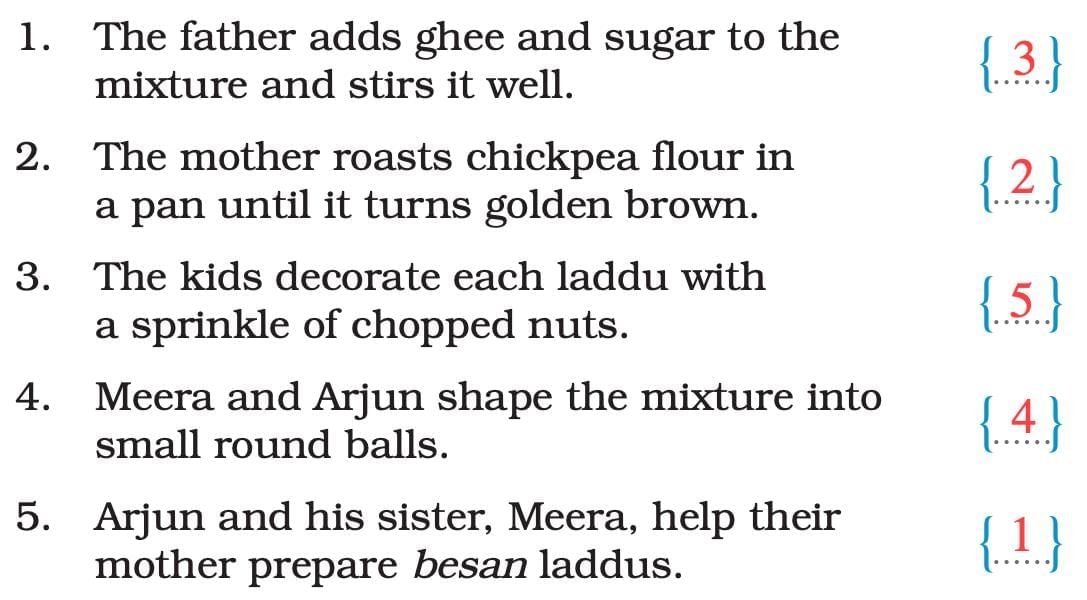
Q: Write the correct sequence of steps that Aarav, Meera, and their parents take to prepare the laddus.

Let us Listen (Page 127)Ans:
Let us Listen (Page 127)

Let us Write (Page 128)

A. Write a paragraph of 80-100 words on how you recently celebrated a festival.
Ans: Last Diwali, I celebrated with my family. We woke up early and made a colourful rangoli outside our house. My mom cooked delicious sweets like laddus and halwa. We visited our grandparents, shared gifts, and ate a big meal together. In the evening, we lit diyas and burst firecrackers with friends. I loved the bright lights and the happy feeling of being with everyone. We also prayed to Goddess Lakshmi for good luck. It was a joyful day full of fun and tasty food!
B. Look at the pictures given below. 

Let us Write (Page 128)

Q: Discuss with your teacher and write a paragraph of 100-120 words in your notebook.
Ans:  The Rock Garden in Chandigarh is a unique place created by Nek Chand. It is made from recycled materials like broken bangles, tiles, and stones. The garden has sculptures of animals, people, and buildings, all arranged in a beautiful, artistic way. I visited it with my family and loved the colourful mosaics and winding paths. The waterfalls and greenery made it peaceful. It shows how waste can be turned into art. I felt amazed by the creativity and enjoyed walking through the garden. It's a special place that teaches us to value creativity and care for the environment.

 
The document NCERT Solutions: Glass Bangles is a part of the Class 5 Course English Santoor Class 5 - New NCERT.
All you need of Class 5 at this link: Class 5

FAQs on NCERT Solutions: Glass Bangles

1. Why do glass bangles break so easily and what makes them so delicate?
Ans. Glass bangles break easily because glass is a brittle material that cannot bend or flex without cracking. Unlike metals, glass has no elasticity-when pressure or impact is applied, it shatters instantly rather than deforming. This fragility is central to understanding why glass bangle-making requires such skilled craftsmanship and careful handling throughout production and daily wear.
2. What are the main steps involved in making glass bangles the traditional way?
Ans. Traditional glass bangle-making involves heating glass rods until molten, then shaping them into circular forms using moulds and hand tools. Artisans roll the heated glass around a wooden or metal rod, cool it gradually to prevent cracking, and then polish the bangles for a smooth finish. This labour-intensive process demands years of training and precision to create uniform, crack-free bangles.
3. How do glass bangles differ from metal or plastic bangles in terms of durability?
Ans. Glass bangles are far more fragile than metal or plastic alternatives because glass lacks flexibility and cannot absorb shock. Metal bangles bend without breaking, while plastic deforms under pressure. Glass bangles offer aesthetic beauty and traditional value but require careful storage, handling, and wearing to prevent breakage, making them less practical for daily use compared to other materials.
4. What is the cultural and economic importance of glass bangle making in India?
Ans. Glass bangle-making is a significant CBSE Class 5 English topic highlighting traditional Indian craftsmanship and rural livelihoods. Artisans, particularly in regions like Uttar Pradesh, depend on this craft for income and cultural preservation. The industry represents skilled manual labour and heritage traditions, though it faces challenges from modern manufacturing and changing consumer preferences affecting bangle-maker communities.
5. What should students know about the challenges faced by glass bangle makers?
Ans. Glass bangle artisans face low wages, lack of job security, health risks from heat and chemicals, and competition from cheaper mass-produced bangles. Many work in poor conditions without safety equipment, risking respiratory issues and burns. Economic pressures force younger generations away from the craft, threatening this ancient tradition and the livelihoods of thousands of bangle-making families across India.
Explore Courses for Class 5 exam
Get EduRev Notes directly in your Google search
Related Searches
Exam, study material, past year papers, Sample Paper, Free, NCERT Solutions: Glass Bangles, ppt, shortcuts and tricks, mock tests for examination, Extra Questions, video lectures, Summary, Objective type Questions, MCQs, Important questions, Previous Year Questions with Solutions, Viva Questions, NCERT Solutions: Glass Bangles, Semester Notes, NCERT Solutions: Glass Bangles, practice quizzes, pdf ;