NCERT Solutions : What a Tank!


Let us Think (Page 68)
A. Answer the following questions
Q1: What do we use a water tank for?
Ans: We use a water tank to store water for drinking, farming, and other daily needs.
Q2: Where is Punjab located on the map of India?
Ans: Punjab is located in the northwest part of India.
Q3: How are the water tanks in Punjab made?
Ans: Water tanks in Punjab are made by creating a frame with steel rods, shaping it with concrete, and installing it on the roof of the house.
Q4: How do the unique shapes of water tanks reflect the identity of the house owners?
Ans: The unique shapes, like a tractor for farmers or a football for sports lovers, show the owner's profession or interests.
B. Think and answer
Q1: An overhead water tank is a way to store water. Do you know any other ways of storing water?
Ans: Other ways to store water include buckets, underground tanks, rainwater harvesting systems, and wells.
Q2: If you had to build a water tank, what would you make it look like? Why?
Ans: I would make my water tank look like a giant tree because it would blend with nature and look beautiful on the roof.
Let us Learn (Page 68)
A. Write the contractions for the following words.
 Ans:
Ans: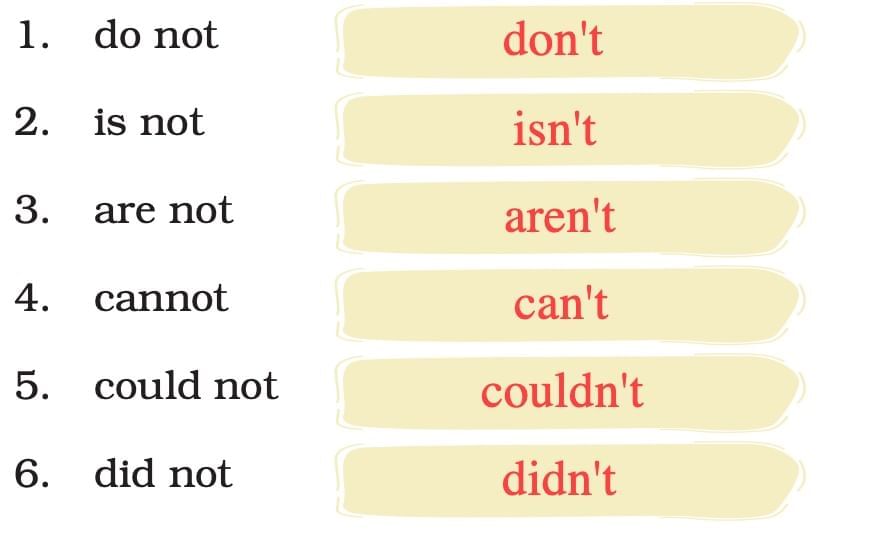
B. Rewrite the following underlined words using contracted forms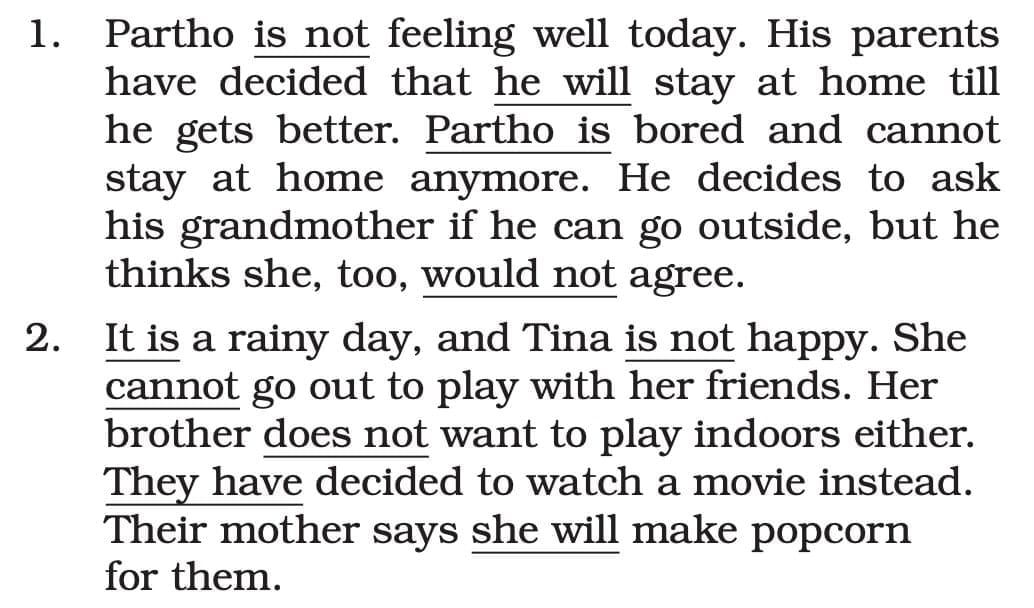
2. It is a rainy day, and Tina isn't happy. She can't go out to play with her friends. Her brother doesn't want to play indoors either. They have decided to watch a movie instead. Their mother says she will make popcorn for them.
C. Read the following
1. That's so creative!
2. He saw a rooster, a tractor, and a giant football, all made of cement!
3. Hurrah! India has won the match.
These sentences are examples of exclamatory sentences. Exclamatory sentences express strong emotions.
Q: Can you name any four emotions?
Ans: Happiness, surprise, excitement, amazement
An exclamatory sentence can be identified by the use of exclamatory words like 'Wow', 'Hurrah', 'Oh' and the use of an exclamation mark (!)
D. Find at least five exclamatory sentences from your Grade 4 English textbook and identify the emotions or feelings expressed in them.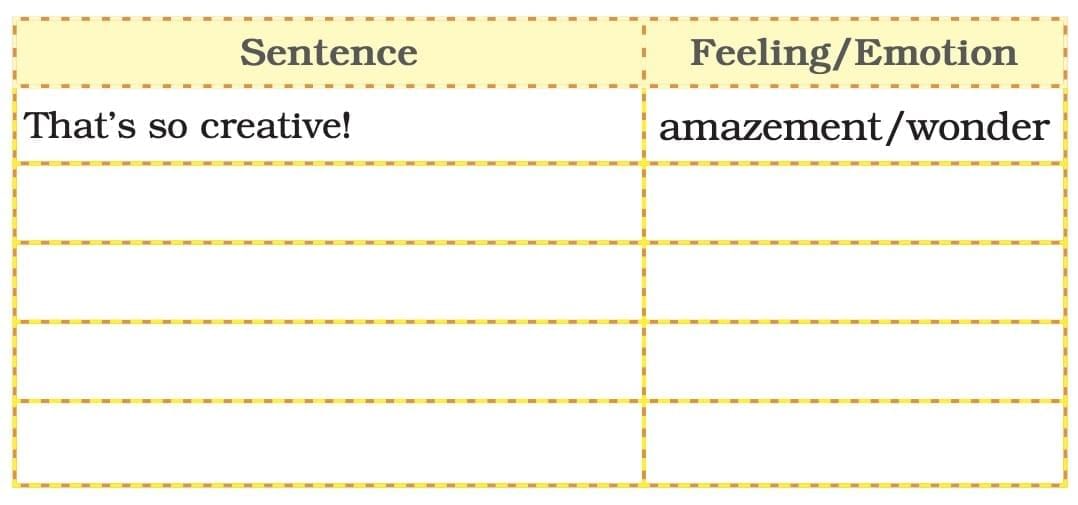 Ans: Example Response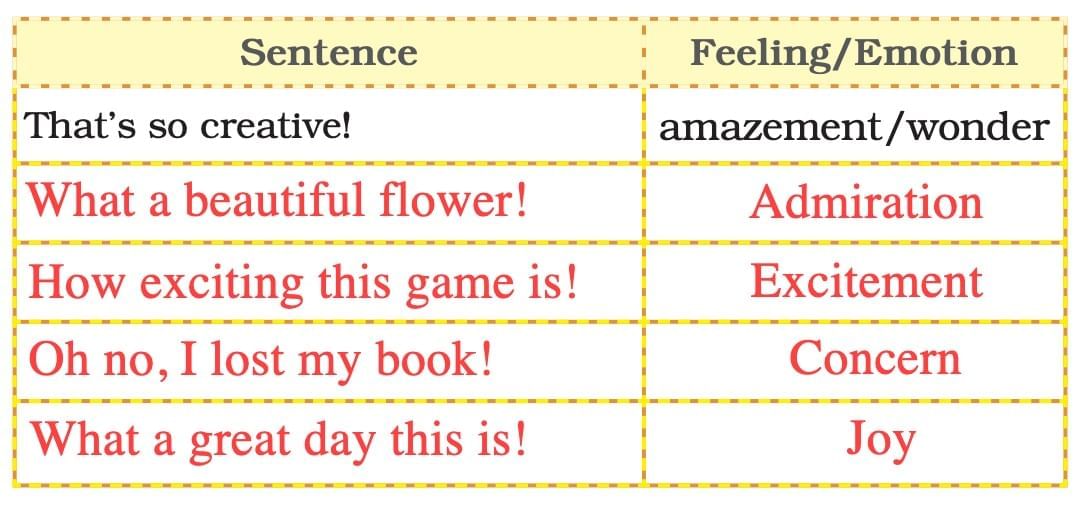
E. Look at the pictures of the animal families and read the words given below each of them.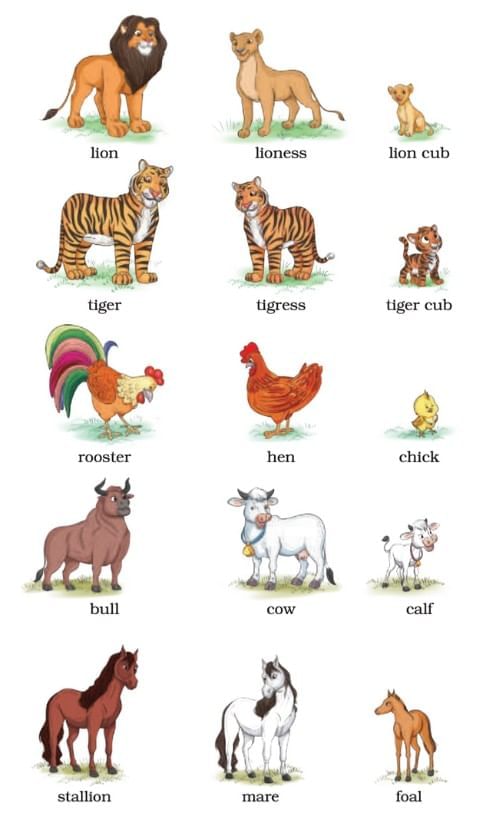
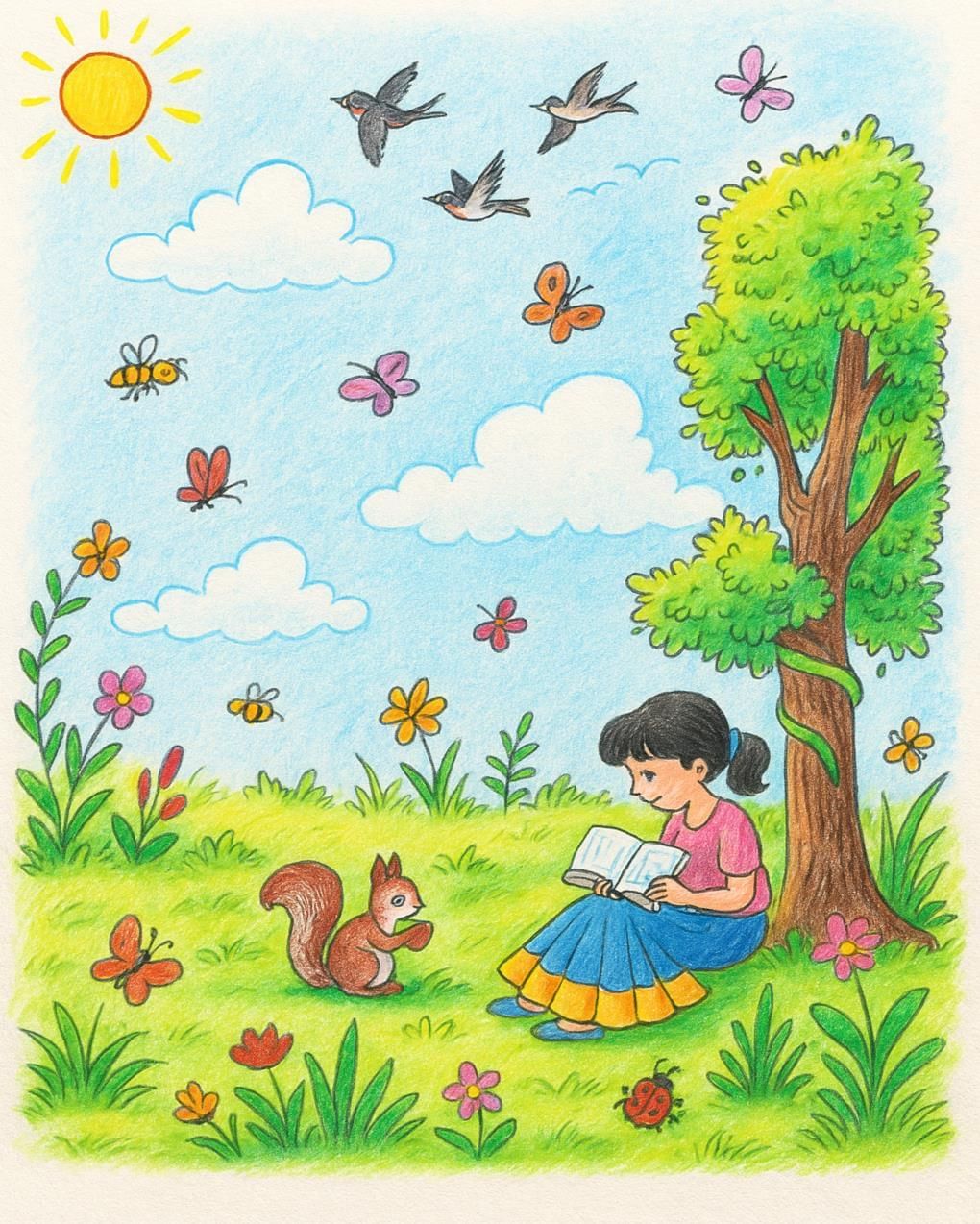
F. Look at the picture below. Would you like to add anything to this picture? Use your crayons and colour pencils to add to the picture.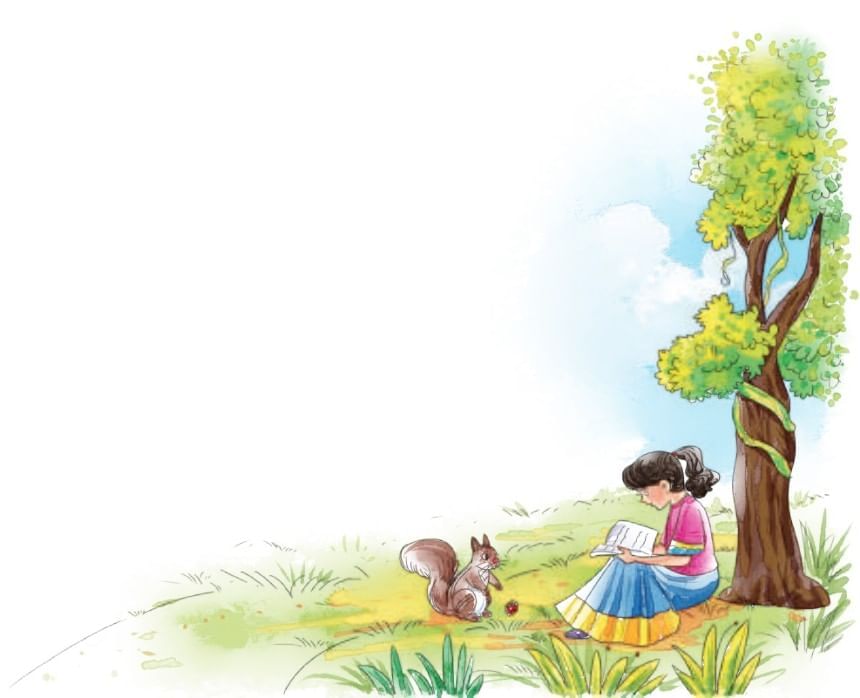
Example Response:
Let us Speak (Page 73)
There are many ways in which we can save water. The simplest way is to stop the wastage of water.
A. Sit in groups of three and discuss:
Q: How do we waste water in our daily lives?
Ans: Leaving the tap on while brushing teeth.
Q: What can we do to stop this wastage?
Ans: Use a mug for brushing.
B. Write at least three such examples and share with the class.
Ans:
1. Washing dishes under running water. Saving water: Use a bucket to soak dishes.
2. Taking long showers. Saving water: Take short showers.
3. Watering plants in the afternoon. Saving water: Water plants in the morning or evening.
C. Say aloud, 'What a tank!' and 'Water tank'.
Q: Do both phrases use the word 'tank'?
Ans: Yes
Q: Do they mean the same thing?
Ans: No
'What a tank!' expresses surprise, and 'Water tank' refers to a container.
Say aloud, 'I scream' and 'Ice cream'.
Q: Do both phrases sound the same?
Ans: Yes
Q: Do they mean the same thing?
Ans: No
'I scream' means shouting, and 'Ice cream' is a dessert.
Let us Listen (Page 74)
A. Choose the correct option.1. Why was Suma surprised in the morning?
Ans: b. There was no water in the tap.
2. How did people manage without water?
Ans: b. They bought bottles and waited for tankers.
3. What did Suma promise after the water supply was restored?
Ans: b. To never waste water again.
4. What activities were planned during the Water Conservation Week?
Ans: b. Poster-making and planting trees.
Ans: 5. What did Suma suggest to her parents?
c. To fix a rainwater harvesting system.
Let us Write (Page 76 -7)
A. Design a poster encouraging people to preserve and clean old water tanks.
Include:
• Topic: 'Save Our Water Tanks-A Community Awareness Campaign'
• A catchy slogan (e.g., 'Save Tanks, Save Lives!').
• A few bullet points on why tanks are important.
• An invitation to join a cleaning drive or awareness programme (mention the place and time of the cleaning drive).
Ans: This is a practical activity. Example poster content:
Topic: Save Our Water Tanks - A Community Awareness Campaign
Slogan: Save Tanks, Save Lives!
Why Tanks Are Important:
- Store water for drinking and farming.
- Protect against water scarcity.
- Keep communities healthy.
Invitation: Join our tank cleaning drive on Saturday, 10 AM, at the village pond!
Draw this in the space provided in the book.
Example Response: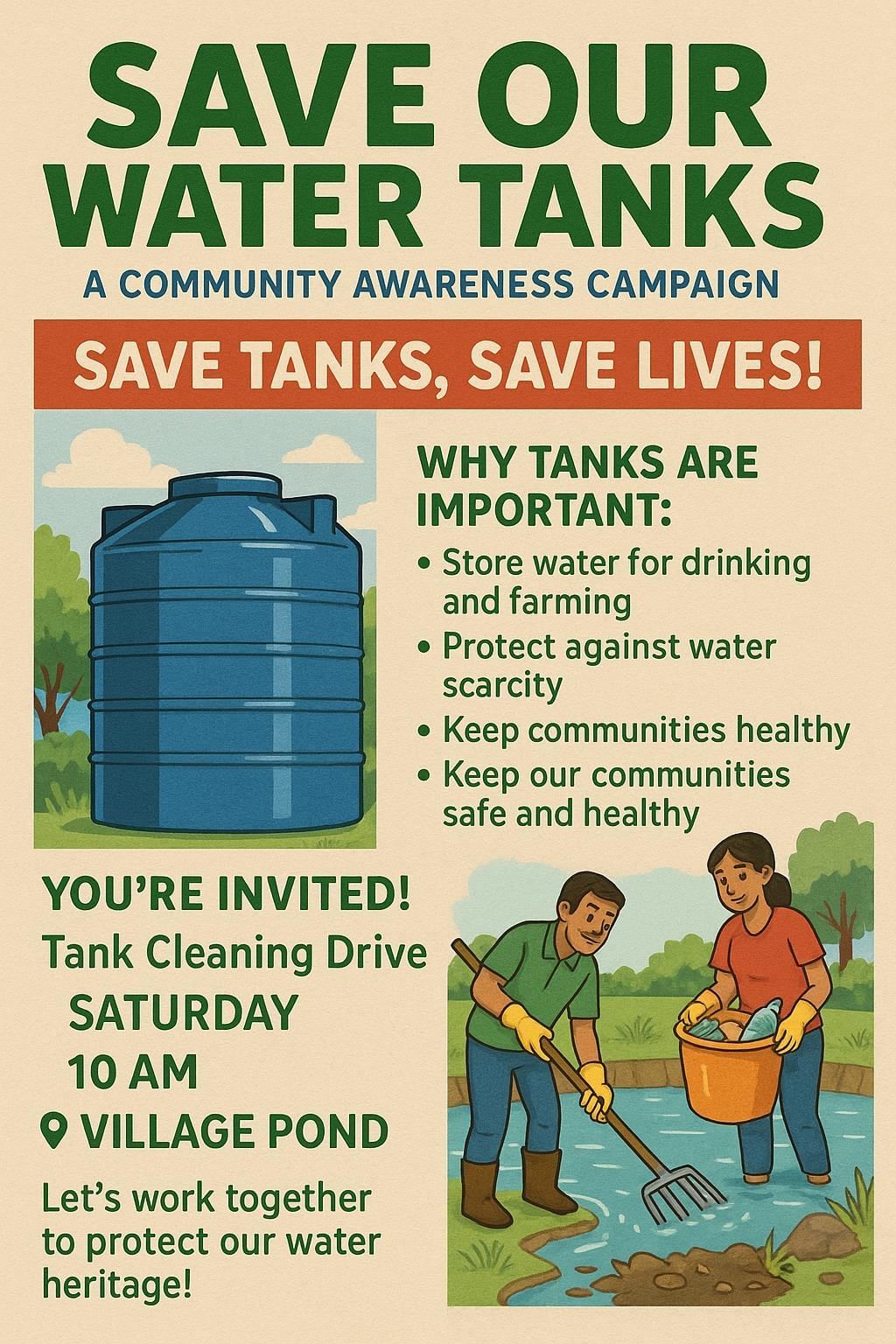
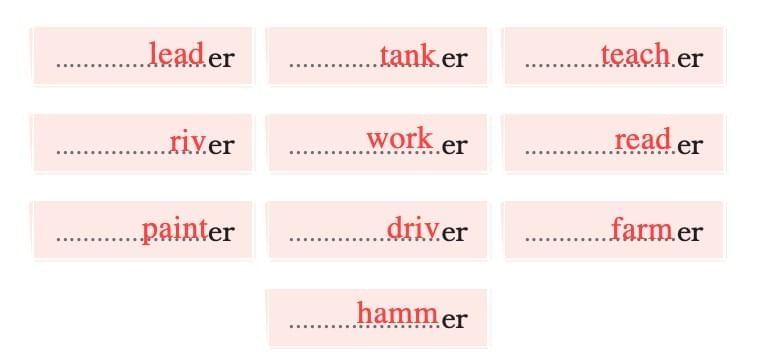
B. Write 10 words that end with 'er'.
For example: water

Let us Explore (Pages 77-78)
A. You have read a lot about tanks. Have you ever wondered how these tanks are cleaned? Find out about the techniques for cleaning water tanks. You may bring relevant pictures or photographs. Prepare a chart and put it up in your class.
Ans:
Techniques for cleaning water tanks:
- Draining: Begin by draining the water tank to remove any accumulated debris or stagnant water.
- Cleaning Solution: Prepare a cleaning solution of water and mild detergent or a specialized tank cleaning solution.
- Scrubbing: Use a long-handled brush to scrub the interior surfaces, including corners and hard-to-reach areas.
- Rinsing: Rinse the tank thoroughly with clean water to remove any cleaning residue.
- Drying: Allow the tank to dry completely.
- Disinfecting: Disinfect the tank using a suitable solution, like a chlorine- based disinfectant, following the manufacturer's instructions.
- Refilling: Refill the tank with fresh, potable water.
- Regular Maintenance: Periodically check the water quality and repeat the cleaning process as needed.
- Safety Precautions: Wear appropriate safety gear, such as gloves, eye protection, and a mask, during the cleaning process, especially when using chemicals.
- Professional Help: For larger tanks or if you encounter difficulties, consider hiring a professional water tank cleaning service.
B. Look at the pictures given below. The story may already be familiar to you.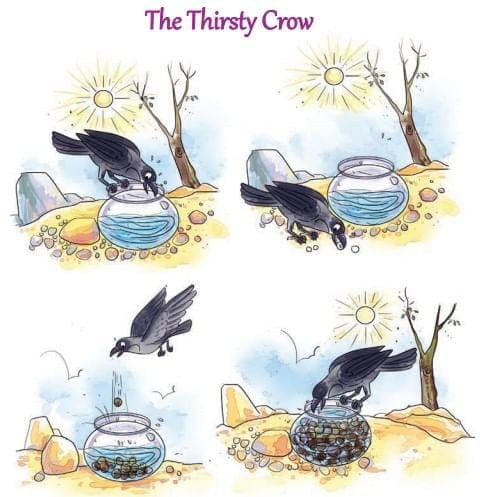 The crow has become famous for its innovative idea. Imagine that your school has invited the crow to interact with the students. Enact the event with the help of your teacher.
Ans: Classroom activity.
Note to the Teacher
You may assign the roles, such as the crow, school principal, teachers, school pupil leader, as well as technicians for mic testing, photographer, and videographer. The audience may consist of 15-20 students, some of whom may ask questions. Ensure that the whole class is involved in the activity.
FAQs on NCERT Solutions : What a Tank!
| 1. What is the main story about in "What a Tank!" chapter for Class 5? |  |
| 2. Who are the main characters in "What a Tank!" and what roles do they play? | |
| 3. Why did Kush decide to clean and repair the old tank in the story? | |
| 4. What challenges did Kush face while working on the tank restoration project? | |
| 5. How does "What a Tank!" teach important life lessons through storytelling in NCERT Class 5 English? | |