NCERT Solutions: Gilli Danda


Let us Think (Page 80)
A. Answer the following questions
Q1: Which game does the poem mention? What are the things needed to play this game?
Ans: The poem mentions Gilli Danda. The things needed are a small gilli (a short stick) and a danda (a long stick).
Q2: According to the poem, how do the players feel while playing Gilli Danda?
Ans: The players feel joyful and free while playing Gilli Danda.
Q3: What happens to the tiny gilli when the stick strikes it?
Ans: When the stick strikes the gilli, it flies up high into the sky.
Q4: Which lines tell us that the children are playing the game outside?
Ans: The lines "The small gilli, up high it flies, Underneath the bright blue skies. Laughing, playing, having fun, Under the golden rays of the sun!" show that the children are playing outside.
Q5: What is the meaning of the line "our game is so sound"?
Ans: The line "our game is so sound" means the game is fun, exciting, and enjoyable.
Q6: Which word in the poem shows 'happiness'?
Ans: The word "joy" shows happiness in the poem.
B. Think and discuss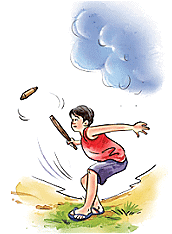
Q1: Do you enjoy playing outdoors? Why or why not?
Ans: Yes, I enjoy playing outdoors because it's fun, I can run freely, and it feels refreshing to play with friends under the open sky.
Q2: Name five outdoor games that you enjoy playing with your friends.
Ans:
1. Cricket
2. Football
3. Kho-Kho
4. Kabaddi
5. Hide and Seek
Let us Learn (Page 81)
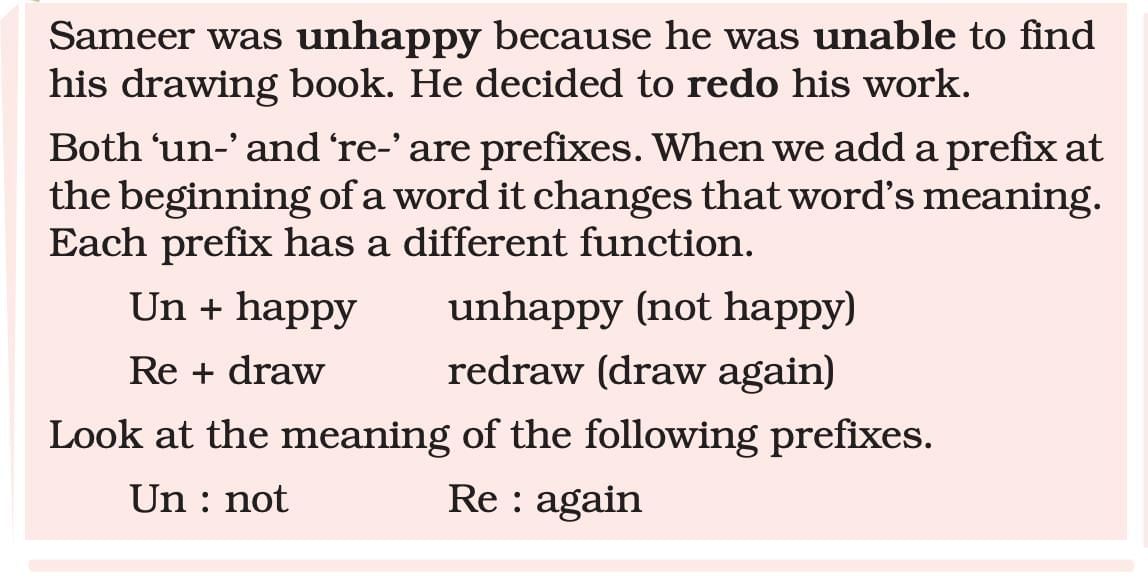
A. Add correct prefixes to the following words to create new words. Write the new word along with its meaning in the space given below.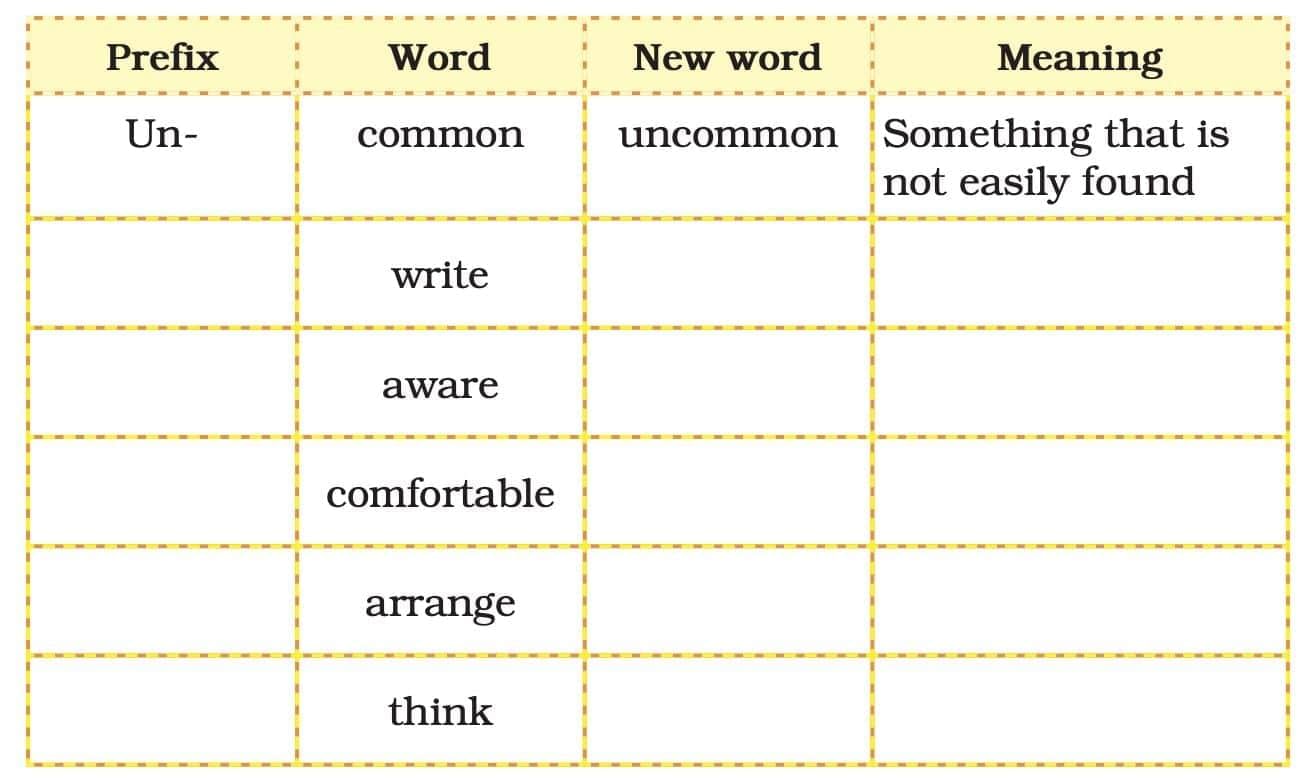
Ans: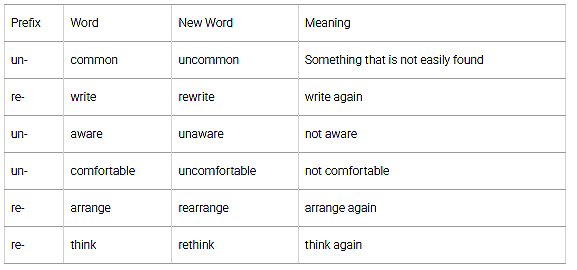
B. In the following table, encircle the nouns that you can see, taste, touch, or smell.
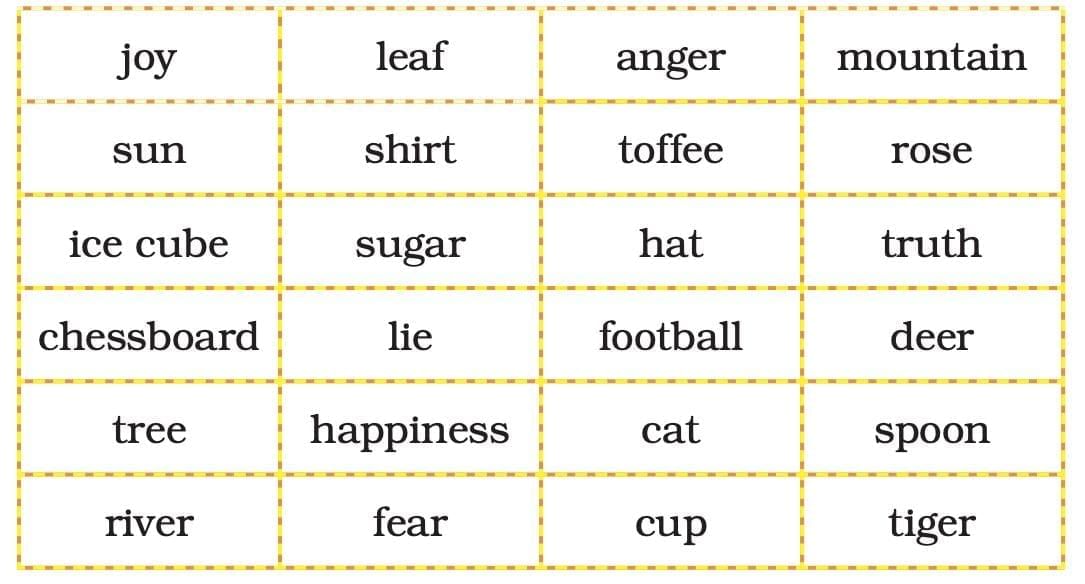
Ans:
The words that you have NOT encircled are abstract nouns. The word 'abstract' refers to something that has no physical shape. For example, 'sadness' is an abstract noun.'Happiness' and 'rose' are both nouns, but you can touch, see, and smell a rose. However, you cannot touch happiness. It is a feeling. Feelings, thoughts, ideas, etc., are all abstract nouns as they cannot be touched, smelt, or seen.
Additional Abstract Nouns: love, courage, sadness, honesty
Possessive pronouns indicate ownership or a relationship between people and things.
For example: 1. The book on the table is mine.
2. The red handbag is hers.
3. There is a new cycle near the gate. Is it yours?
C. Fill in the blanks with possessive pronouns
1. These crayons belong to me. These are..........................
2. The toy train belongs to Mudit. The toy train is ..........................
3. The house with the red roof belongs to my cousins. The house is ..........................
4. The little girl has bought a set of bowls to play Jal Tarang. The bowls belong to her. The bowls are ..........................
5. We have a cow with large brown eyes. The cow is ..........................
6. You should take better care of your things. After all, they belong to you. The things are..........................
Ans:
1. These crayons belong to me. These are mine.
2. The toy train belongs to Mudit. The toy train is his.
3. The house with the red roof belongs to my cousins. The house is theirs.
4. The little girl has bought a set of bowls to play Jal Tarang. The bowls are hers.
5. We have a cow with large brown eyes. The cow is ours.
6. You should take better care of your things. The things are yours.
Let us Speak (Page 84)

You may include the following information:
- The name of the game.
- Whether it is an indoor or outdoor game.
- Number of players needed.
- Material required for the game.
- Rules of the game along with safety instructions.
Hide and seek: This is an outdoor game. In this game, there are two persons. One person (the seeker) closes her/his eyes and counts while others hide. No material is required in this game.
Rope jumping: This is an outdoor game. This game is played individually or in groups. In this game, the child jumps over a rope swung underfoot and overhead.
Hopscotch: This is an outdoor game. In this game, a numbered grid on the ground, usually with squares numbered are made with a chalk. Each player takes turns throwing a marker (like a stone or coin) into the first square. Players hop through the squares, skipping the one with the marker. They can hop on one foot or both, depending on the square layout. Upon reaching the end, players turn around and hop back, picking up their marker on the way. Players continue tossing the marker into the next higher numbered square and repeating the process. They lose their turn if they step on a line, throw the marker outside the designated square, or lose their balance.
The first player to successfully complete all squares wins the game.
Cricket: This is an outdoor game. This game is played between two teams of eleven players. A ball, two bats, wickets, gloves, helmet and leg guards are required. The game is played in a big field with a rectangular pitch in the center, where a batsman tries to score runs by hitting a ball bowled by the opposing team's bowler with a bat.
Football: This is an outdoor game. In this game, two teams of 11 players, using any part of their bodies except their hands and arms, try to kick the ball into the opposing team's goal. Only the goalkeeper is permitted to handle the ball and may do so only within the penalty area surrounding the goal. The team that scores more goals wins.
Ludo: This is an indoor game. In this game, there are two to four players, where each player races their four tokens from start to finish based on dice rolls. Every player moves tokens around a cross-shaped board, with the goal of being the first to get all tokens to the home.
Chess: This is an indoor game. It is a two- player strategy board game played on a checkered board with 64 squares. Each player starts with 16 pieces: a king, a queen, two rooks, two bishops, two knights, and eight pawns. The goal is to checkmate the opponent's king, meaning it's under attack and has no way to escape capture. Chess is a game of skill, logic, and strategic thinking.
Let us Listen (Page 84)
Listen to the teacher and respond with a matching action.
Ans: This is a classroom activity. Follow the teacher's instructions:
1. "Swing and hit": Pretend to swing a danda.
2. "Watch it go": Raise arms as if watching the gilli fly.
3. "Laughing, playing": Giggle or clap hands.
4. "Shade your eyes from the sun": Place hands above eyebrows.
Let us Write (Page 85)
A. Find the meanings of the following words using a dictionary.
1. Quit 2. Gather 3. Swing 4. Underneath 5. Golden
Now, use each word in a sentence of your own.
Ans:
1. Quit: To stop or give up. Sentence: I will never quit playing Gilli Danda with my friends.
2. Gather: To come together. Sentence: We gather in the park to play games every evening.
3. Swing: To move back and forth or hit. Sentence: I swing the danda to hit the gilli high.
4. Underneath: Below or under something. Sentence: The gilli landed underneath the tree.
5. Golden: Bright yellow or precious. Sentence: The golden sun shines brightly during our game.
B. Rearrange the following to form a question and write them in your notebook. Remember to put a question mark at the end.
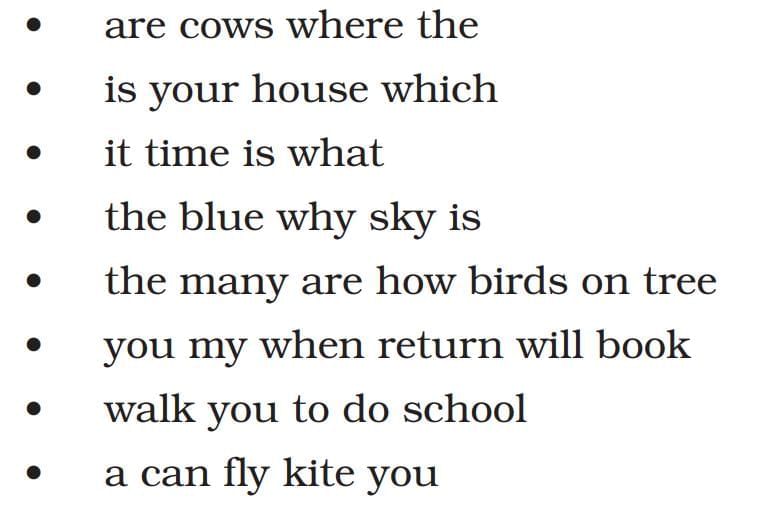
1. Where are the cows?
2. Which is your house?
3. What time is it?
4. Why is the sky blue?
5. How many birds are on the tree?
6. When will you return my book?
7. Do you walk to school?
8. Can you fly a kite?
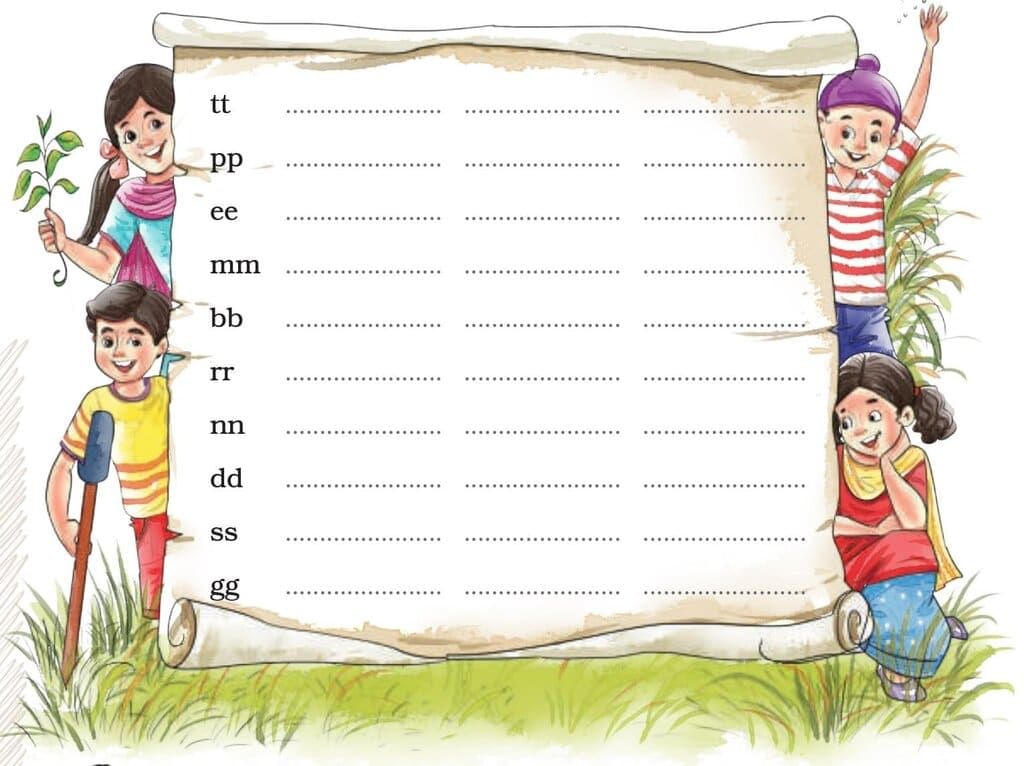
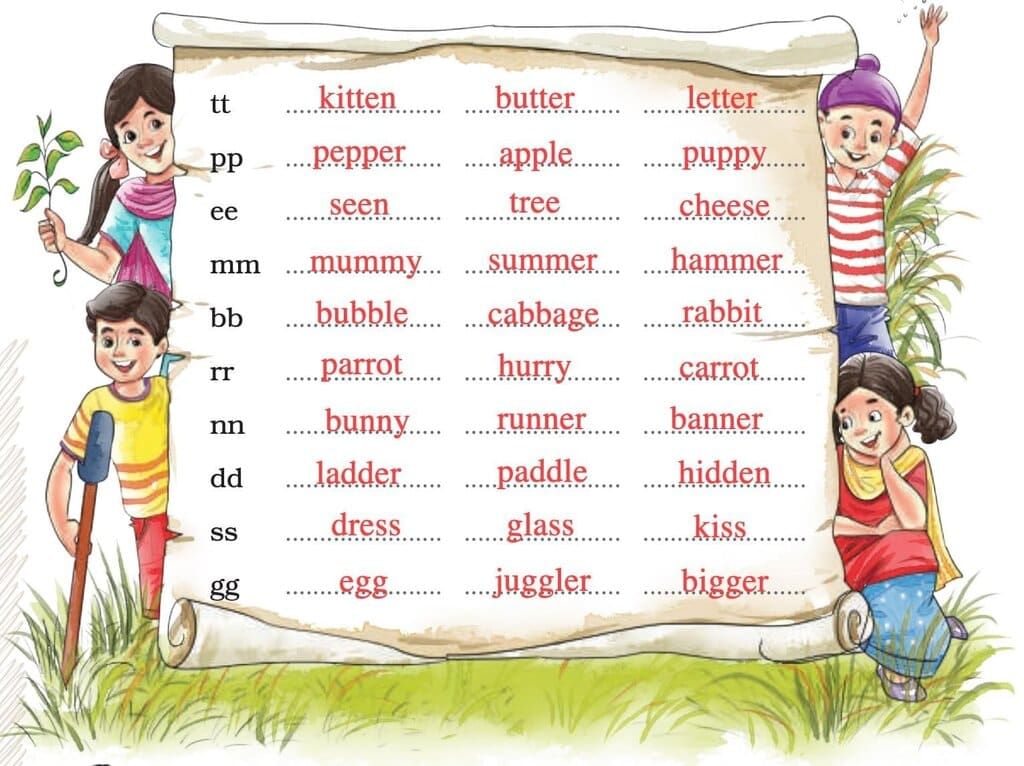
C. The word 'gilli ' has a double 'l' in it. Similarly, the words 'millet' and 'bullock' have a double 'l'.Now write three words having each of the double letters given below.
D. Circle the word that is different in meaning from the underlined word.

1. Miibi went to the market and bought an expensive toy.
precious costly cheap
Ans: cheap
2. Anju and Farida forgot to buy popcorn and juice for the picnic.
remembered revised ignored
Ans: revised
3. The moon continued to count the stars night after night.
stopped began started
Ans: stopped
4. I always complete my homework on time.
often never sometimes
Ans: never
5. There was excitement in the shop among the toys.
interest enjoyment boredom
Ans: boredom
6. Badal nervously told his mother about the dog he found on his way home.
sadly joyfully confidently
Ans: confidently
7. Everyone liked the vibrant colours of the bangles.
dull bright shiny
Ans: dull
8. The fort is known for its unique style of construction.
different unusual common
Ans: common
Let us Do (Pages 88-89)
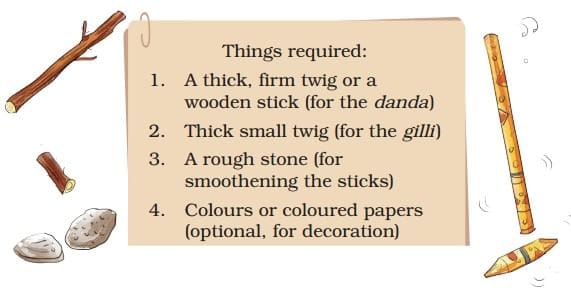
Steps: For the Danda (stick)
- Find a Stick
Use any thick, firm twig or discarded wooden stick. - Smoothen the Surface
Use a rough stone to smoothen the surface of the stick. - Decorate (Optional)
Make your stick attractive by painting it with colours or covering it with a coloured paper.
For the Gilli (small peg)
- Find a Small Stick
Use a small twig, or a piece of a discarded stick, about 3-4 inches long. - Shape the Ends
Sharpen both ends of the gilli using a rough stone to give it a proper shape. - Smoothen the Surface
Ensure it is smooth by rubbing it with a stone. - Decorate (Optional)
Colour or paint the gilli for an attractive look.
Final Touch: Test the gilli and danda to ensure they are easy to handle and are sturdy.
FAQs on NCERT Solutions: Gilli Danda
| 1. What is Gilli Danda and how is it played in the NCERT Class 5 English lesson? |  |
| 2. Why is Gilli Danda important for understanding Indian culture and heritage in CBSE Class 5 English? | |
| 3. What are the main rules and gameplay mechanics of Gilli Danda explained in the NCERT solutions? | |
| 4. How does learning about Gilli Danda help improve reading comprehension skills for Class 5 students? | |
| 5. What life lessons and values does the Gilli Danda story teach in the NCERT Class 5 English curriculum? | |