
- Telescope: Seen in science classrooms, observatories, or with astronomers. Used to observe distant objects like the Moon, stars, planets, and other objects in space.
- Hammer: Seen in homes or workshops. Used to drive nails into wood or break small objects.
- Camera: Seen at home, in studios or at events. Used to take photographs and record moments.
- Screwdriver: Seen in toolkits or repair shops. Used to tighten or loosen screws.
- Sickle: Seen with farmers in fields. Used to cut grass and crops by hand.
- Stethoscope: Seen in clinics or hospitals with doctors. Used to listen to the heart and breathing.
- Grater: Seen in kitchens. Used to shred vegetables, fruits or cheese into small pieces.
- Tongs: Seen in kitchens or at barbecues. Used to pick up hot or small items safely.
- Compass: Seen in school or drawing kits. Used to draw circles and measure distances on maps.
- Mouse: Seen with computers. Used to move the cursor and click on items on the screen.
- Saw: Seen in carpentry shops or at home. Used to cut wood or other materials.
CBSE Class 5 > Class 5 Notes > English Santoor - New NCERT > NCERT Solutions: Vocation
NCERT Solutions: Vocation
Let us Think (Page 108)
A. Answer the following questions
Q1: Who is the speaker in the poem?
Ans: The speaker is a young child who watches people on the road and imagines what their lives are like.
Q2: Why does the speaker want to be a hawker?
Ans: The speaker wants to be a hawker because the hawker appears free to walk about the streets all day, choose where to go and not follow strict rules, which seems exciting to the child.
Q3: What does he like about the gardener?
Ans: The speaker likes that the gardener can dig with his spade, get his clothes dirty, and work outdoors without being scolded. The child admires the gardener's freedom to work with soil and plants and to be outdoors in all kinds of weather even if he gets wet or sunburned.
Q4: What does the speaker compare the street lamp to?
Ans: The speaker compares the street lamp to a giant with one red eye, because its light looks like a single big glowing eye on the road.
Q5: On the basis of the poem that you have read, share the daily schedule of the speaker.
Ans: The speaker's day begins in the morning when, at about ten, he walks to school and notices the hawker on the way.
In the afternoon, when school finishes at four, he comes back and sees the gardener at work.
In the evening, as it grows dark, he is sent to bed and catches sight of the watchman who stays awake at night.
B. Think and discuss
Q1: Why does the speaker admire people with different vocations?
Ans: The speaker admires people with different vocations because each person seems to have a job that lets them do what they like in their own way. To the child, these jobs look less strict and more free compared with the speaker's school routine.
Q2: What are the things that you observe on your way to school and your way back home?
Ans: On my way to school and back home, I notice trees and birds, street vendors selling sweets and snacks, other children going to school, bicycles and buses, small shops, and people sweeping or talking by the road.
Let us Learn (Page 109)
A. Match the words with their meanings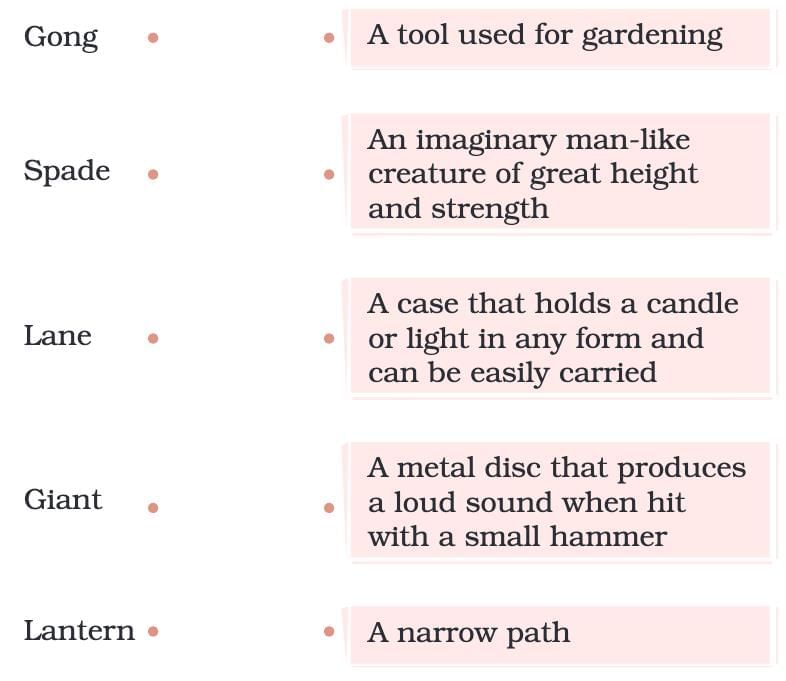
Ans: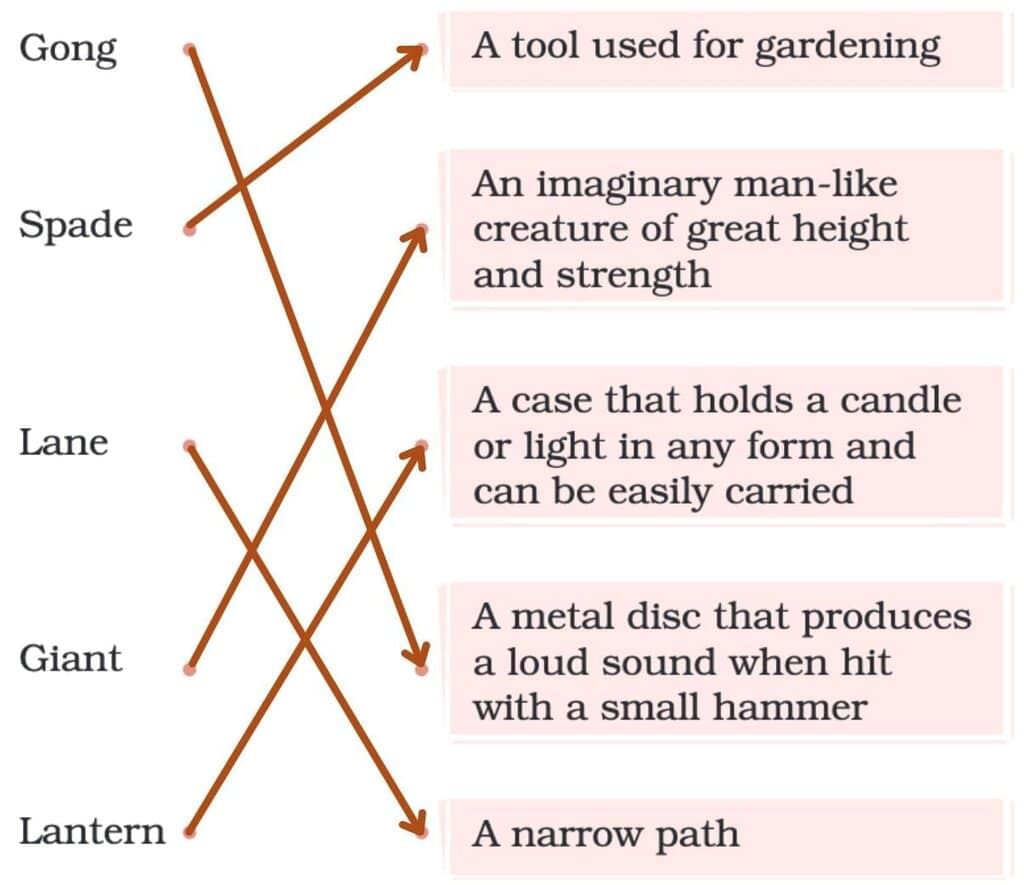
B. There is one mistake in each sentence given below. Underline the mistakes and rewrite the correct sentences in the given space. One example has been done for you.
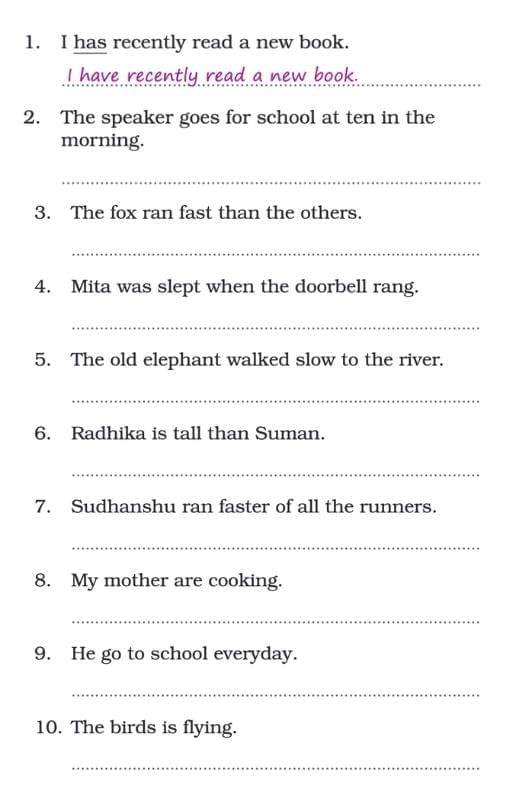
Ans:
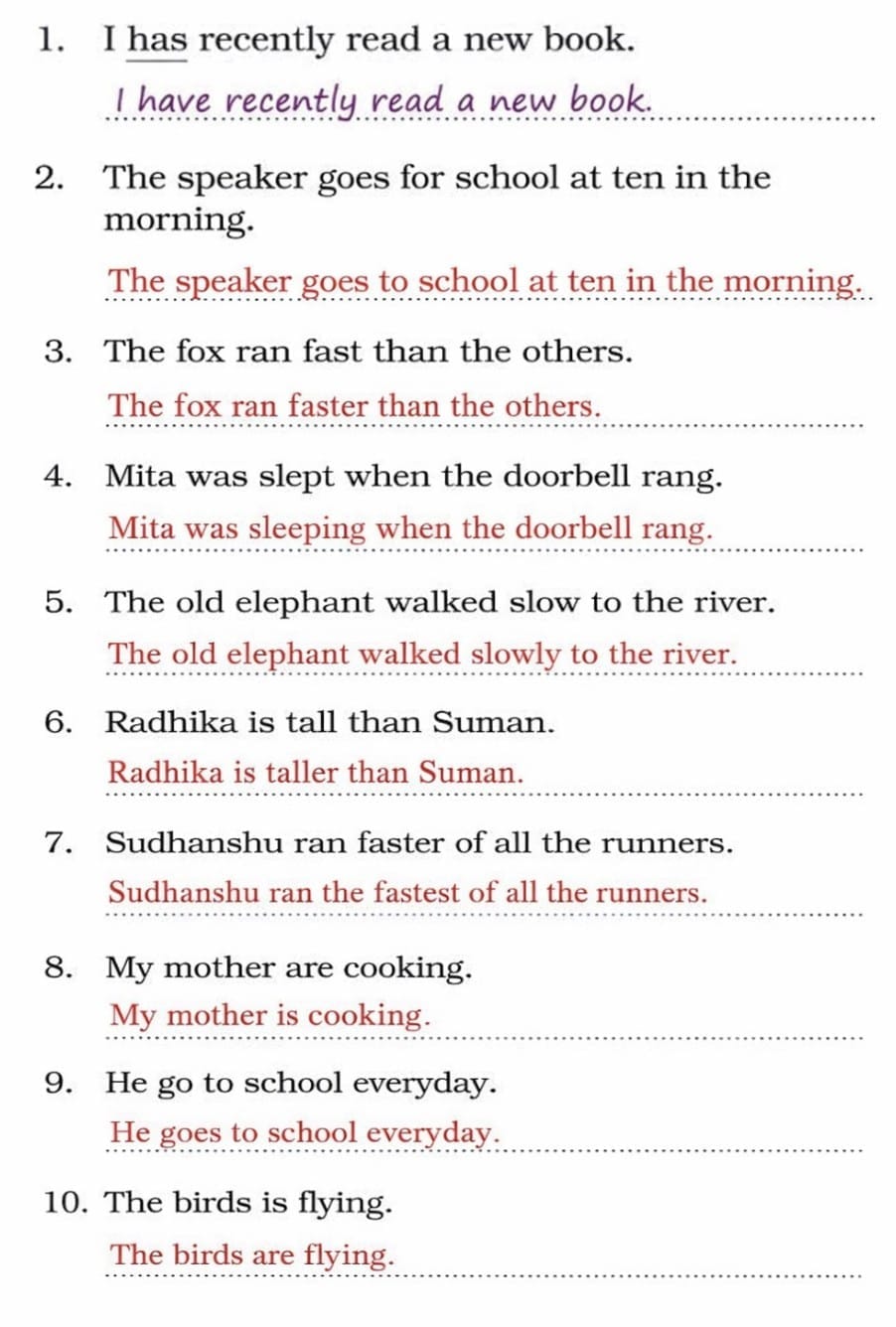
C. Look at the pictures and read the words written under them.
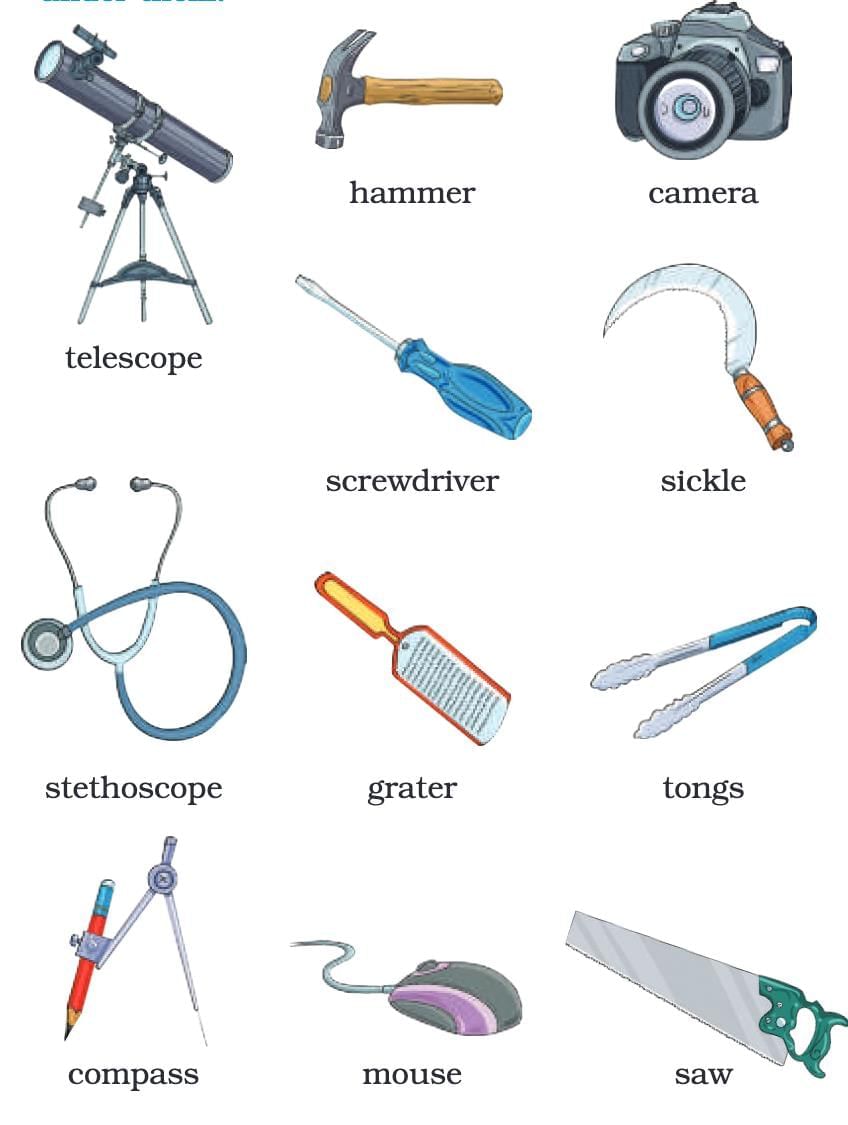
Have you seen these objects? Where have you seen them? What are they used for?
Ans:
Let us Listen (Page 112)
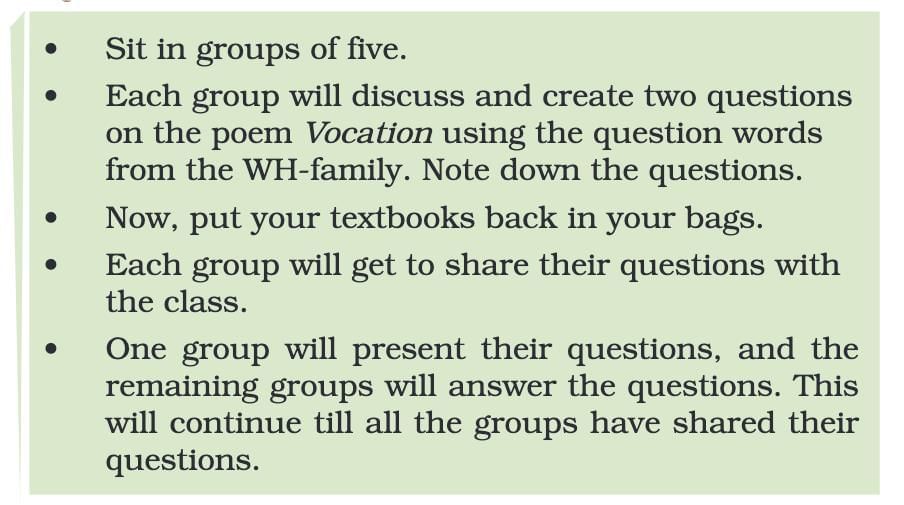
Discuss in groups, write two WH-questions, and share with the class.
Example questions:
1. What does the speaker see on the way to school in the morning?
2. Why does the speaker wish to be a watchman?
Discuss in groups, write two WH-questions, and share with the class.
Let us Speak (Page 112)
A. Listen and repeat.
Your teacher will say aloud the following words. Listen carefully and repeat after the teacher.
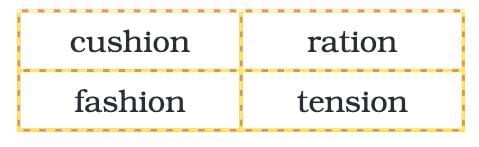
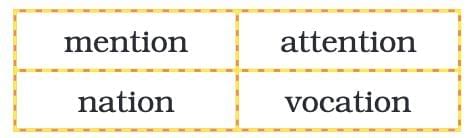
Ans: This is a classroom activity. Listen to the teacher say each word clearly and then repeat it. Try to copy the sounds and the stress. Practise with a friend so your pronunciation becomes stronger and clearer.
B. Listen and Repeat
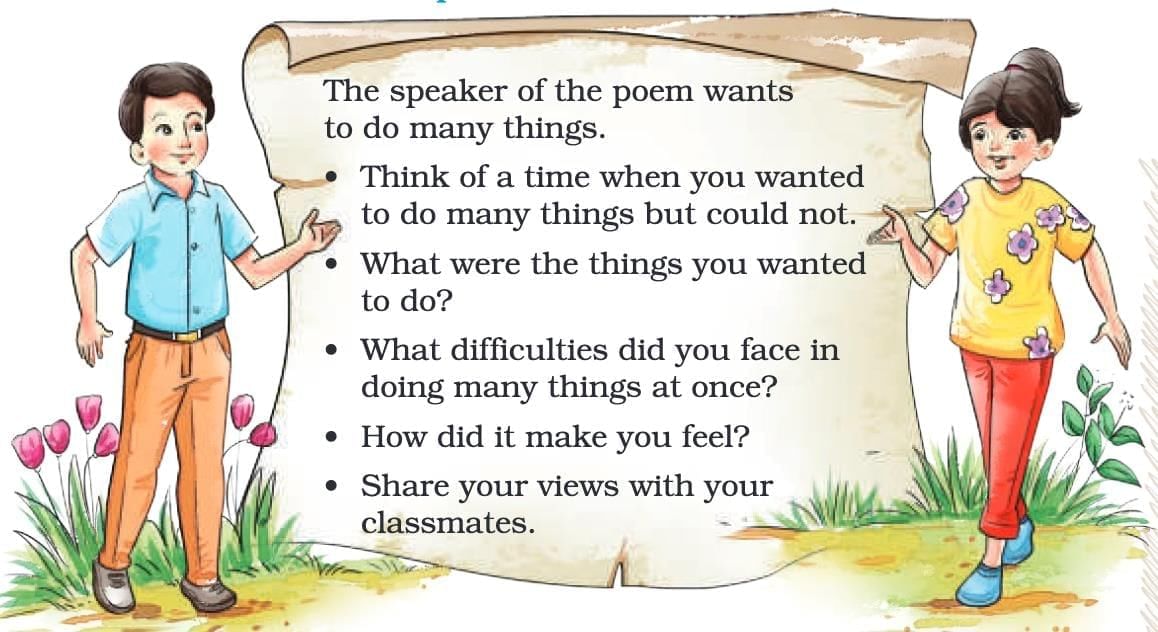
Ans: This is a classroom activity. Listen to the teacher's instructions, repeat the word pairs aloud, and practise saying them together with a classmate.
Let us Write (Page 114)
Q1: What's missing? Write a paragraph about the difficult parts of being a hawker, gardener, or watchman.
Ans:
Being a hawker, gardener, or watchman looks interesting, but each job has hard parts. A hawker must walk a lot while carrying heavy goods and may not always sell enough to earn money. A gardener works long hours outdoors, often under the hot sun or in rain, and gets tired from digging and bending. A watchman stays awake at night, which can be lonely and tiring, and sometimes he has to be alert for danger. All three jobs need hard work, patience and courage.
Q2: Write the vocations of three family members (50-60 words each).

Ans:
Mother: My mother is a teacher. She helps young children learn to read, write and solve math problems. Each day she plans lessons, teaches in the classroom and checks students' work. She explains things in simple ways so children understand. Her work is tiring but she feels happy when children learn something new.
Father: My father is a shopkeeper. He runs a small grocery shop in our neighbourhood. He opens the shop early, keeps the shelves full, greets customers and gives them what they need. He works many hours and sometimes helps people carry their shopping home. He enjoys meeting customers and serving the community.
Grandmother: My grandmother is a homemaker. She looks after our home by cooking meals, cleaning and taking care of everyone. She spends time gardening and often makes delicious food for us. Her work is not paid, but it keeps the family happy and healthy. She loves caring for us every day.
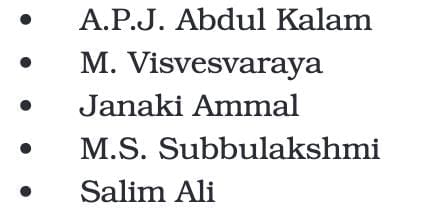
Q3: What vocations are the following people associated with?
Ans:
1. A.P.J. Abdul Kalam: Scientist and Former President - He was a rocket scientist and later served as India's President.
2. M. Visvesvaraya: Engineer - A famous engineer known for building dams and bridges.
3. Janaki Ammal: Botanist - A scientist who studied plants.
4. M.S. Subbulakshmi: Classical Singer - A celebrated Carnatic singer.
5. Salim Ali: Ornithologist (Bird Scientist) - He studied birds and their habits.
The document NCERT Solutions: Vocation is a part of the Class 5 Course English Santoor Class 5 - New NCERT.
All you need of Class 5 at this link: Class 5
FAQs on NCERT Solutions: Vocation
| 1. What does vocation mean and why is it important for my future? |  |
Ans. Vocation refers to a type of work or career that matches a person's skills, interests, and talents. It is important because choosing the right vocation helps individuals find fulfilling work, earn a living, and contribute meaningfully to society. Understanding your vocation early helps guide your educational choices and career planning.
| 2. How can I figure out what vocation is right for me in Class 5? | |
Ans. Students can explore different vocations by observing people in various professions, trying different activities and subjects, and reflecting on what they enjoy doing. Assessing personal strengths, interests, and aptitudes helps identify suitable career paths. Many schools encourage vocational exploration through projects, guest speakers, and practical activities to help learners discover their talents.
| 3. What's the difference between a job and a vocation for Class 5 students? | |
Ans. A job is simply paid work, while a vocation is a calling or profession that aligns with someone's passion and purpose. A vocation involves deeper commitment and satisfaction because it matches personal skills and values. Understanding this distinction helps students realize that vocational choices should reflect their genuine interests rather than just earning money.
| 4. Why do people choose different vocations and how does this affect society? | |
Ans. People choose different vocations based on their unique abilities, educational opportunities, and personal interests. Diverse vocational choices create a balanced society where various essential services-healthcare, education, agriculture, engineering-are fulfilled. This variety ensures communities function smoothly and allow individuals to contribute according to their strengths and preferences.
| 5. How can understanding vocations help me do better in my CBSE exams and choose my subjects wisely? | |
Ans. Understanding different vocations helps students select appropriate subjects that support their career goals. For instance, aspiring engineers benefit from excelling in mathematics and science. Early vocational awareness during Class 5 enables students to focus on subjects relevant to their interests, improving exam performance and academic motivation while building foundational skills.
About this Document

4.4K Views

4.61/5 Rating

Apr 21, 2026 Last updated
Related Exams
Document Description: NCERT Solutions: Vocation for Class 5 2026 is part of English Santoor Class 5 - New NCERT preparation. The notes and questions for NCERT Solutions: Vocation have been prepared according to the Class 5 exam syllabus. Information about NCERT Solutions: Vocation covers topics like and NCERT Solutions: Vocation Example, for Class 5 2026 Exam. Find important definitions, questions, notes, meanings, examples, exercises and tests below for NCERT Solutions: Vocation.
Introduction of NCERT Solutions: Vocation in English is available as part of our English Santoor Class 5 - New NCERT for Class 5 & NCERT Solutions: Vocation in Hindi for English Santoor Class 5 - New NCERT course. Download more important topics related with notes, lectures and mock test series for Class 5 Exam by signing up for free. Class 5: NCERT Solutions: Vocation
Description
NCERT Solutions: Vocation of English Santoor Class 5 provides all the questions of NCERT textbook with detailed solutions. Download free PDF from EduRev.
Information about NCERT Solutions: Vocation
In this doc you can find the meaning of NCERT Solutions: Vocation defined & explained in the simplest way possible. Besides explaining types of NCERT Solutions: Vocation theory, EduRev gives you an ample number of questions to practice NCERT Solutions: Vocation tests, examples and also practice Class 5 tests



Related Searches
NCERT Solutions: Vocation, Sample Paper, mock tests for examination, study material, Objective type Questions, Summary, NCERT Solutions: Vocation, Important questions, Free, shortcuts and tricks, MCQs, Viva Questions, NCERT Solutions: Vocation, ppt, video lectures, Semester Notes, Exam, Previous Year Questions with Solutions, past year papers, practice quizzes, Extra Questions, pdf ;