NCERT Solutions: The Invisible Living World: Beyond Our Naked Eye

Probe and Ponder
Q1: Have you ever wondered what you might see if the invisible world around you became visible?
Ans: Yes, it would be fascinating to see the microorganisms like bacteria, fungi, protozoa, and viruses that are constantly interacting with our environment and even inside our bodies. It would change how we perceive cleanliness, health, and the complexity of ecosystems around us.
Q2: How might your observation of this hidden world change the way you think about size, complexity, or even what counts as 'living'?
Ans: Observing this hidden world would reveal that even microscopic organisms exhibit complex behaviors such as movement, reproduction, response to stimuli, and forming colonies. This would deepen our understanding of what qualifies as a living being and show that size does not limit the complexity of life.
Q3: How do these tiny living beings interact with each other?
Ans: Yes, microorganisms constantly interact; some live symbiotically, while others compete for resources or prey on one another. For example, bacteria can help in digestion or cause diseases, and fungi can decompose organic matter, enriching the soil. These interactions form the foundation of many ecological processes.
Q4: Share your questions
Ans: Seeing the invisible world and learning about microorganisms sparks so many questions! Here are some questions you might have, and you can add your own:
- What do microorganisms eat to stay alive?
- Can microorganisms see or feel each other, or do they just bump into things?
- Why are some bacteria helpful (like in curd) and others harmful (like causing diseases)?
- How do microorganisms survive in tough places, like hot springs or salty water?
Keep the curiosity alive
Q1: Various parts of a cell are given below. Write them in the appropriate places in the following diagram: Nucleus, Cytoplasm, Chloroplast, Cell wall, Cell membrane, Nucleoid.
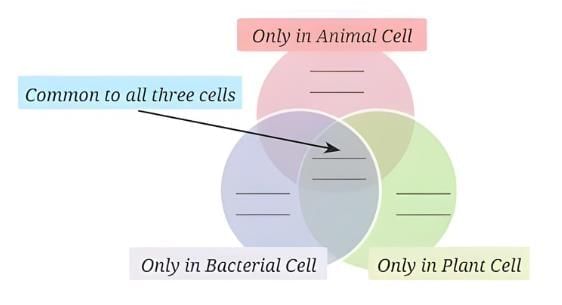 Ans:
Ans: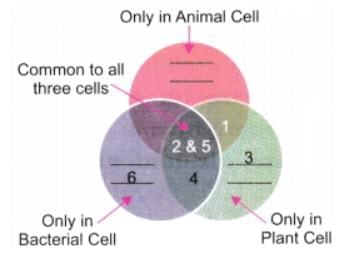
- Nucleus: Present in plant and animal cells (not in bacterial cells), controls the cell's activities.
- Cytoplasm: Jelly-like substance that fills the cell and contains all organelles.
- Chloroplast: Found only in plant cells, responsible for photosynthesis.
- Cell wall: Found in plant and bacterial cells, forms the outermost layer.
- Cell membrane: Found in all cells, located inside the cell wall in plant/bacterial cells or as the outer layer in animal cells.
- Nucleoid: Found only in bacterial cells; the region where DNA is located since bacteria don't have a true nucleus.
Q2: Aanandi took two test tubes and marked them A and B. She put two spoonfuls of sugar solution in each of the test tubes. In test tube B, she added a spoonful of yeast. Then she attached two incompletely inflated balloons to the mouth of each test tube. She kept the set-up in a warm place, away from sunlight.
(i) What do you predict will happen after 3-4 days? She observed that the balloon attached to test tube B was inflated. What can be a possible explanation for this?
(a) Water evaporated in test tube B and filled the balloon with water vapour.
(b) The warm atmosphere expanded the air inside test tube B, which inflated the balloon.
(c) Yeast produced a gas inside test tube B which inflated the balloon.
(d) Sugar reacted with warm air, which produced gas, eventually inflating the balloon.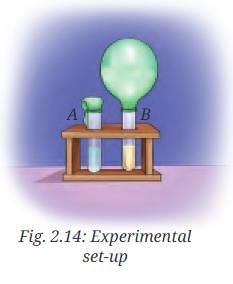
Ans: (c) Yeast produced a gas inside test tube B which inflated the balloon.
The yeast fermented the sugar, releasing carbon dioxide gas (CO2), which inflated the balloon.
(ii) She took another test tube, 1/4 filled with lime water. She removed the balloon from test tube B in such a manner that the gas inside the balloon did not escape. She attached the balloon to the test tube with lime water and shook it well. What do you think she wants to find out?
Ans: She wants to test whether the gas produced is carbon dioxide (CO2). If the lime water turns milky, it confirms the presence of CO2, because CO2 reacts with lime water to form calcium carbonate.
Q3: A farmer was planting wheat crops in his field. He added nitrogen-rich fertiliser to the soil to get a good yield of crops. In the neighbouring field, another farmer was growing bean crops, but she preferred not to add nitrogen fertiliser to get healthy crops. Can you think of the reasons?
Ans: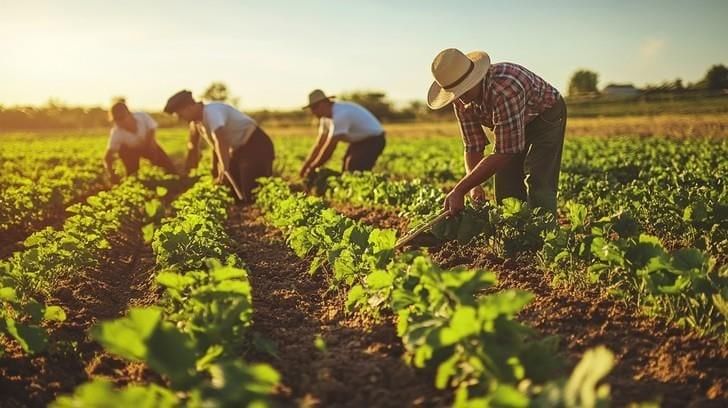 Beans are leguminous crops that form a symbiotic relationship with Rhizobium bacteria present in their root nodules. These bacteria fix nitrogen from the atmosphere into the soil, providing a natural source of nitrogen. Therefore, the second farmer does not need to add nitrogen-rich fertiliser.
Q4: Snehal dug two pits, A and B, in her garden. In pit A, she put fruit and vegetable peels and mixed it with dried leaves. In pit B, she dumped the same kind of waste without mixing it with dried leaves. She covered both the pits with soil and observed after 3 weeks. What is she trying to test?
Ans: She is trying to test the effectiveness of composting.
- In Pit A, the mixture of green waste (fruit/vegetable peels) and dry leaves provides the correct carbon-nitrogen balance needed for decomposition.
- Pit B lacks this balance and will decompose more slowly and may smell. This experiment shows that decomposing agents like microorganisms work better when both carbon-rich and nitrogen-rich materials are present.
Q5: Identify the following microorganisms:
(i) I live in every kind of environment, and inside your gut.
(ii) I make bread and cakes soft and fluffy.
(iii) I live in the roots of pulse crops and provide nutrients for their growth.
Ans:
(i) Bacteria: They live in all environments, like water, soil, air, and inside our gut, helping with digestion.
(ii) Yeast: This makes bread and cakes soft and fluffy by producing carbon dioxide gas during fermentation.
(iii) Rhizobium: This bacterium lives in root nodules of pulse crops (like beans) and traps nitrogen from the air to make nutrients for plants
Q6: Devise an experiment to test that microorganisms need optimal temperature, air, and moisture for their growth.
Ans: Set up 3 bread slices:
- Slice A: Warm, moist environment (near sink)
- Slice B: Dry environment (sealed container)
- Slice C: Cold environment (refrigerator)
After 3 days, observe: Slice A will have maximum microbial (fungal) growth.
Conclusion: Microorganisms grow best when temperature, moisture, and air are optimal.
Q7: Take 2 slices of bread. Place one slice in a plate near the sink. Place the other slice in the refrigerator. Compare after three days. Note your observations. Give reasons for your observations.
Ans:
- A bread slice near the sink will show fungal growth (mold).
- Slices in the refrigerator will likely have no or slower growth.
Reason: Warm and moist conditions near the sink promote microbial growth, while cold temperatures in the refrigerator inhibit it.
Q8: A student observes that when curd is left out for a day, it becomes more sour. What can be two possible explanations for this observation?
Ans: Two reasons why curd becomes more sour when left out for a day:
- Microorganisms (lactic acid bacteria) continue to grow and multiply, producing more lactic acid, which makes the curd more sour.
- Warmer temperature speeds up bacterial activity, increasing acid production and sourness.
Q9: Observe the set-up given in Fig. 2.15 and answer the following questions.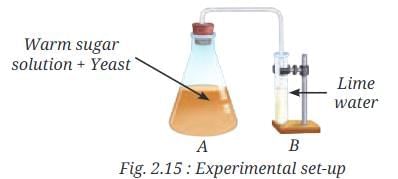
(i) What happens to the sugar solution in flask A?
Ans: The yeast ferments the sugar in the warm solution, producing carbon dioxide gas and a small amount of alcohol.
(ii) What do you observe in test tube B after four hours? Why do you think this happened?
Ans: Lime water in test tube B turns milky. This happens because CO2 produced in flask A travels through the delivery tube into flask B and reacts with lime water, confirming the presence of carbon dioxide.
(iii) What would happen if yeast was not added in flask A?
Ans: Fermentation would not occur, so no carbon dioxide would be produced. As a result, lime water would remain clear in test tube B.
Discover, design, and debate
Q1: India has a long history of biogas production. One of our oldest biogas plant was set up in late 1850s. Find out about the Biogas Program initiated by the Ministry of New and Renewable Energy, Government of India.
Ans: India has been producing biogas since the 1850s. The Ministry of New and Renewable Energy (MNRE) runs the National Biogas and Manure Management Programme (NBMMP) to promote biogas plants in rural areas.
Main Points:
Purpose: To provide clean fuel for cooking, improve sanitation, and reduce pollution.
Process: Microorganisms break down cow dung and other organic waste without oxygen, forming biogas (methane + carbon dioxide) and bio-manure.
Benefits: Gives clean fuel, reduces LPG use, and produces manure for crops.
Government Support: Subsidies are given to farmers and rural households.
Result: Millions of biogas plants have been set up across India.
Q2: Fermented food items like fermented soybeans and fermented bamboo shoots are consumed as traditional food in some parts of India. With the help of your parents and teachers, list some traditional food items from your area that utilise the process of fermentation. Investigate the ingredients used in the preparation of these fermented food items; the method of preparing them; the microorganism responsible for the fermentation of the food, and the cultural and nutritional importance of the fermented food.
Ans: Fermentation is a process where microorganisms like bacteria or yeast break down sugars to make food soft, tasty, and easy to digest.
Examples:
1. Curd (Dahi):
Ingredients: Milk and a little curd as starter.
Microorganism: Lactobacillus bacteria.
Importance: Helps digestion and is rich in calcium.
2. Idli/Dosa (South India):
Ingredients: Rice and urad dal batter.
Microorganisms: Lactobacillus and yeast.
Importance: Soft, fluffy, and healthy breakfast food.
3. Gundruk (Northeast India):
Ingredients: Leafy vegetables like mustard leaves.
Microorganism: Lactobacillus plantarum.
Importance: Preserves greens and adds flavour.
4. Kinema (Sikkim):
Ingredients: Soybeans.
Microorganism: Bacillus subtilis.
Importance: Rich in protein and used in local dishes.
Q3: Study the different parts of a macro fungus mushroom using a magnifying glass and microscope/foldscope. Take the help of students from senior classes and explore the internal structure of different parts of mushrooms under the microscope/foldscope in your school laboratory.
Ans: Mushrooms are macro-fungi, not plants. They can be studied using a magnifying glass or microscope.
Main Parts:
Cap: Umbrella-like top.
Gills: Thin layers under the cap where spores form.
Stalk: Supports the cap.
Ring & Base: Found in some mushrooms.
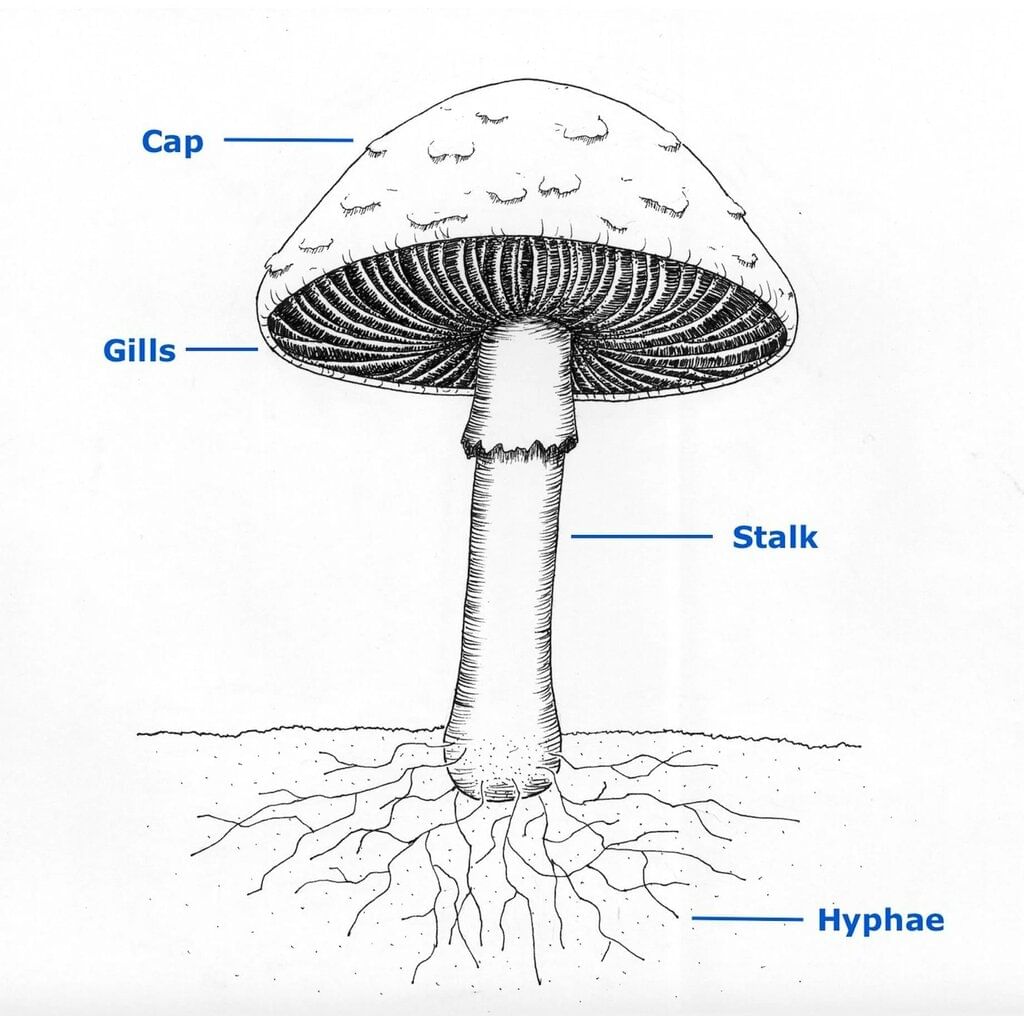
Under Microscope:
Spores: Tiny reproductive cells.
Hyphae: Thread-like structures forming the body.
Note: Some mushrooms are poisonous-study only edible or lab-provided ones.
Q4: Interact with an entrepreneur and learn the steps for cultivation of mushroom.
Ans: Mushroom farming needs little space and can be done at home or on a farm.
Steps:
Select type: Button or oyster mushrooms.
Prepare spawn: Buy good-quality spawn (mushroom seeds).
Substrate: Use straw or sawdust as the growing medium.
Mix and pack: Mix spawn with moist substrate and pack into bags.
Incubation: Keep in a dark, warm place (25-30°C) for 15-20 days.
Fruiting: Move bags to a cool, humid area until mushrooms grow.
Harvest: Cut mushrooms when the caps open.
Benefits:
Mushroom farming gives healthy food, income to farmers, and uses agricultural waste effectively.
Cultural and Economic Importance: Mushroom farming is eco-friendly, uses waste materials, and provides jobs. Mushrooms are nutritious (rich in protein, vitamins) and a meat substitute for vegetarians.
Design: Create a flowchart showing the steps of mushroom cultivation, from spawn to harvest. Add pictures or drawings to make it colorful.
Debate: Discuss: "Can mushroom farming be a good business for young people in villages?" Talk about costs, profits, and environmental benefits versus challenges like learning the process or finding buyers.
FAQs on NCERT Solutions: The Invisible Living World: Beyond Our Naked Eye
| 1. What are microorganisms and why can't we see them with our naked eyes? |  |
| 2. How do bacteria differ from fungi in terms of structure and characteristics? | |
| 3. What role do microorganisms play in food production and fermentation for Class 8 CBSE? | |
| 4. Why do some microorganisms cause diseases while others are beneficial to humans? | |
| 5. How can we observe microorganisms if they're invisible to the naked eye? | |