Q1: Consider the following statements: I. Without the atmosphere, temperature would be well below freezing point everywhere on the Earth's surface. II. Heat absorbed and trapped by the atmosphere maintains our planet's average temperature. III. Atmosphere's gases, like carbon dioxide, are particularly good at absorbing and trapping radiation. Which of the statements given above are correct? (2025) (a) I and III only (b) I and II only (c) I, II and III (d) II and III only
Solution:
Ans: (c) All three statements are accurate. Statement I correctly states that without an atmosphere, Earth's surface would lose heat quickly, resulting in much colder temperatures, similar to the Moon's surface. Statement II is also true, as the atmosphere retains heat through the greenhouse effect, which helps sustain temperatures suitable for life on Earth. Statement III is correct because gases such as carbon dioxide, methane, and water vapor absorb infrared radiation, driving the greenhouse effect. Thus, all three statements are valid, with Statements II and III explaining the mechanism by which the atmosphere, as described in Statement I, maintains Earth's temperature through the greenhouse effect.
Q2: Which of the following are the evidences of the phenomenon of continental drift? I. The belt of ancient rocks from Brazil coast matches with those from Western Africa. II. The gold deposits of Ghana are derived from the Brazil plateau when the two continents lay side by side. III. The Gondwana system of sediments from India is known to have its counterparts in six different landmasses of the Southern Hemisphere. Select the correct answer using the code given below. (2025) (a) I and III only (b) I and II only (c) I, II and III (d) II and III only
Solution:
Ans: (c) All three statements are accurate. Statement I correctly notes that ancient rock belts along Brazil's coast align with those in Western Africa, demonstrating geological continuity between the two regions.
Statement II is also true, as gold deposits in Ghana correspond with those on the Brazilian plateau, suggesting a common geological origin.
Statement III is correct, as Gondwana sediments in India share similarities with those in Antarctica, Australia, South Africa, South America, and Madagascar, evidenced by comparable fossils and environmental characteristics.
Thus, all three statements are valid, with Statements II and III supporting Statement I by providing evidence of shared geological features and origins, consistent with the historical connection of these regions within the Gondwana supercontinent.
Q3: Consider the following statements: Statement I: Scientific studies suggest that a shift is taking place in the Earth's rotation and axis. Statement II: Solar flares and associated coronal mass ejections bombarded the Earth's outermost atmosphere with tremendous amount of energy. Statement III: As the Earth's polar ice melts, the water tends to move towards the equator. Which one of the following is correct in respect of the above statements? (2025) (a) Both Statement II and Statement III are correct and both of them explain Statement I (b) Both Statement II and Statement III are correct but only one of them explains Statement I (c) Only one of the Statements II and III is correct and that explains Statement I (d) Neither Statement II nor Statement III is correct
Solution:
Ans: (b) All three statements are accurate. Statement I correctly states that Earth's rotation and axis are experiencing slight shifts due to internal mass redistribution, as supported by scientific studies.
Statement II is also true, noting that solar flares impact only the upper atmosphere and do not influence Earth's rotation, thus failing to explain the observed shifts.
Statement III is correct and provides an explanation for Statement I, as the melting of polar ice redistributes water toward the equator, changing Earth's mass distribution and affecting its spin and axis.
Therefore, Statements I and III are valid, with Statement III explaining the mechanism behind the rotational and axial shifts described in Statement I, while Statement II correctly identifies solar flares as irrelevant to these changes.
Q4: Consider the following statements: I. Anadyr in Siberia and Nome in Alaska are a few kilometers from each other, but when people are waking up and getting set for breakfast in these cities, it would be different days. II. When it is Monday in Anadyr, it is Tuesday in Nome. Which of the statements given above is/are correct? (2025) (a) I only (b) II only (c) Both I and II (d) Neither I nor II
Solution:
Ans: (a) Statement I is accurate, as the International Date Line causes Anadyr (Russia) and Nome (Alaska, USA), despite their geographical proximity, to have the same time of day but different calendar dates due to their positions on opposite sides of the line. Statement II is incorrect because it inaccurately states that when it's Monday in Anadyr, it's Tuesday in Nome. In reality, Anadyr is nearly 21 hours ahead of Nome, so when it's Monday in Anadyr, it's still Sunday in Nome.
Q5: Consider the following statements: Statement I: In the context of effect of water on rocks, chalk is known as a very permeable rock whereas clay is known as quite an impermeable or least permeable rock. Statement II: Chalk is porous and hence can absorb water. Statement III: Clay is not at all porous. Which one of the following is correct in respect of the above statements? (2025) (a) Both Statement II and Statement III are correct and both of them explain Statement I (b) Both Statement II and Statement III are correct but only one of them explains Statement I (c) Only one of the Statements II and III is correct and that explains Statement I (d) Neither Statement II nor Statement III is correct
Solution:
Ans: (c) Statement I is accurate, stating that chalk is permeable, allowing water to pass through easily, while clay is impermeable, restricting water flow. Statement II is also correct and supports Statement I by explaining that chalk's porous structure, with many small holes, enables it to hold and transmit water, contributing to its permeability. Statement III is incorrect because it inaccurately describes clay as porous with tiny pores that restrict water flow. While clay has small pores, its impermeable nature stems from these pores being so tightly packed that water movement is significantly hindered, but it is not non-porous. Thus, only Statements I and II are correct, with Statement II providing the explanation for chalk's permeability as described in Statement I.
Q6: Consider the following statements: Statement I: In January, in the Northern Hemisphere, the isotherms bend equatorward while crossing the landmasses, and poleward while crossing the oceans. Statement II: In January, the air over the oceans is warmer than that over the landmasses in the Northern Hemisphere. Which one of the following is correct in respect of the above statements? (2025) (a) Both Statement I and Statement II are correct and Statement II explains Statement I (b) Both Statement I and Statement II are correct but Statement II does not explain Statement I (c) Statement I is correct but Statement II is not correct (d) Statement I is not correct but Statement II is correct
Solution:
Ans: (a) Statement I is accurate, noting that in January, isotherms shift equatorward over land, which cools more rapidly, and poleward over oceans, which retain heat longer. Statement II is also correct, explaining that oceans remain warmer than land in January due to water's higher specific heat, which allows it to absorb and hold heat more effectively. Thus, both statements are valid, with Statement II providing the reason for the isotherm behavior described in Statement I, as the higher specific heat of water causes oceans to retain heat, influencing the direction of isotherms.
Q7: Consider the following statements: Statement I: The amount of dust particles in the atmosphere is more in subtropical and temperate areas than in equatorial and polar regions. Statement II: Subtropical and temperate areas have less dry winds. Which one of the following is correct in respect of the above statements? (2025) (a) Both Statement I and Statement II are correct and Statement II explains Statement I (b) Both Statement I and Statement II are correct but Statement II does not explain Statement I (c) Statement I is correct but Statement II is not correct (d) Statement I is not correct but Statement II is correct
Solution:
Ans: (c) Statement I is accurate, stating that subtropical and temperate regions experience higher dust levels due to dry conditions, limited vegetation, and strong winds, which promote dust generation and dispersal. Statement II is incorrect because it falsely claims that subtropical and temperate regions have fewer dry winds. In reality, these regions often experience more frequent and stronger dry winds, which contribute to lifting and spreading dust. Thus, only Statement I is correct.
Q8: On June 21 every year, which of the following latitude(s) experience(s) a sunlight of more than 12 hours? 1. Equator 2. Tropic of Cancer 3. Tropic of Capricorn 4. Arctic Circle Select the correct answer using the code given below: (2024) (a) 1 only (b) 2 only (c) 3 and 4 (d) 2 and 4
Solution:
Ans: (d) On June 21st, the Summer Solstice, the Earth's tilt causes the North Pole to reach its maximum inclination toward the Sun. Let's evaluate each option: Equator: The equator consistently receives 12 hours of daylight year-round, unaffected by seasonal changes. Tropic of Cancer: On June 21st, the Sun is directly overhead at the Tropic of Cancer, resulting in the longest day of the year for this latitude and areas north of it, with daylight exceeding 12 hours. Tropic of Capricorn: Located in the Southern Hemisphere, this latitude experiences its shortest day on June 21st, with less than 12 hours of daylight. Arctic Circle: On June 21st, the Arctic Circle experiences 24 hours of continuous daylight. Thus, both the Tropic of Cancer and the Arctic Circle have more than 12 hours of daylight on June 21st.
Q9: Which of the following is/are correct inference/inferences from isothermal maps in the month of January?. 1. The isotherms deviate to the north over the ocean and to the south over the continent. 2. The presence of cold ocean currents, Gulf Stream and North Atlantic Drift make the North Atlantic Ocean colder and the isotherms bend towards the north. Select the answer using the code given below: (2024) (a) 1 only (b) 2 only (c) Both 1 and 2 (d) Neither 1 nor 2
Solution:
Ans: (a) Understanding Isotherms and Their Behavior Isotherms are lines on a map that connect points of equal temperature. January in the Northern Hemisphere: January marks winter in the Northern Hemisphere. Land vs. Water Heating: Land heats and cools more rapidly than water, causing notable temperature contrasts between continents and oceans during winter. Statement 1: Correct In January, continents in the Northern Hemisphere are colder than oceans. Isotherms bend northward over oceans, reflecting warmer temperatures, and southward over continents, indicating colder temperatures. Statement 2: Incorrect The Gulf Stream and North Atlantic Drift are warm ocean currents, not cold. These currents transport warm water from the tropics toward Europe, warming the North Atlantic in winter. Consequently, isotherms bend northward over the North Atlantic due to these warm currents.
Conclusion: Only Statement 1 accurately reflects the behavior of isotherms in January.
Q10: With reference to "water vapour", which of the following statements is/are correct? 1. It is a gas, the amount of which decreases with altitude. 2. Its percentage is maximum at the poles. Select the answer using the code given below: (2024) (a) 1 only (b) 2 only (c) Both 1 and 2 (d) Neither 1 nor 2
Solution:
Ans: (a) Statement 1: Correct - Water vapour is indeed a gas, and its concentration generally decreases with altitude. This is because the air gets colder as we go higher, and colder air has a lower capacity to hold moisture. Statement 2: Incorrect - The percentage of water vapour in the atmosphere is highest near the equator and decreases as we move towards the poles. This is because the tropics receive the maximum solar radiation, leading to higher temperatures and more evaporation, which in turn increases the amount of water vapour in the air.
Q11: With reference to "Coriolis force", which of the following statements is/are correct? 1. It increases with increase in wind velocity. 2. It is maximum at the poles and is absent at the equator. Select the answer using the code given below: (2024) (a) 1 only (b) 2 only (c) Both 1 and 2 (d) Neither 1 nor 2
Solution:
Ans: (c) Coriolis Force: An inertial force affecting moving objects in a rotating system, like Earth, deflecting them right in the Northern Hemisphere and left in the Southern Hemisphere. Statement 1: Correct. The Coriolis force increases with higher wind speeds, as its magnitude scales with the object's velocity. Statement 2: Correct. The force is strongest at the poles, where Earth's rotation is fastest, and zero at the equator, where the surface moves parallel to the rotation axis. Thus, both statements are accurate.
Q12: Consider the following statements: Statement-I: Thickness of the troposphere at the equator is much greater as compared to poles. Statement-II: At the equator, heat is transported to great heights by strong convectional currents. Which one of the following is correct in respect of the above statements? (2024) (a) Both Statement-I and Statement-II are correct and Statement-II explains Statement-I (b) Both Statement-I and Statement-II are correct, but Statement-II does not explain Statement-I (c) Statement-I is correct, but Statement-II is incorrect (d) Statement-I is incorrect, but Statement-II is correct
Solution:
Ans: (a) Statement I: Correct. The troposphere is thicker at the equator than at the poles due to intense sunlight causing warmer temperatures and air expansion, increasing its height. Statement II: Correct. Convection, a key heat transfer mechanism, is driven by strong solar heating at the equator, where rising air currents transport heat upward, distributing it vertically in the troposphere. Statement II explains Statement I: The strong convection currents at the equator cause air to rise and expand, resulting in the troposphere's greater thickness in equatorial regions.
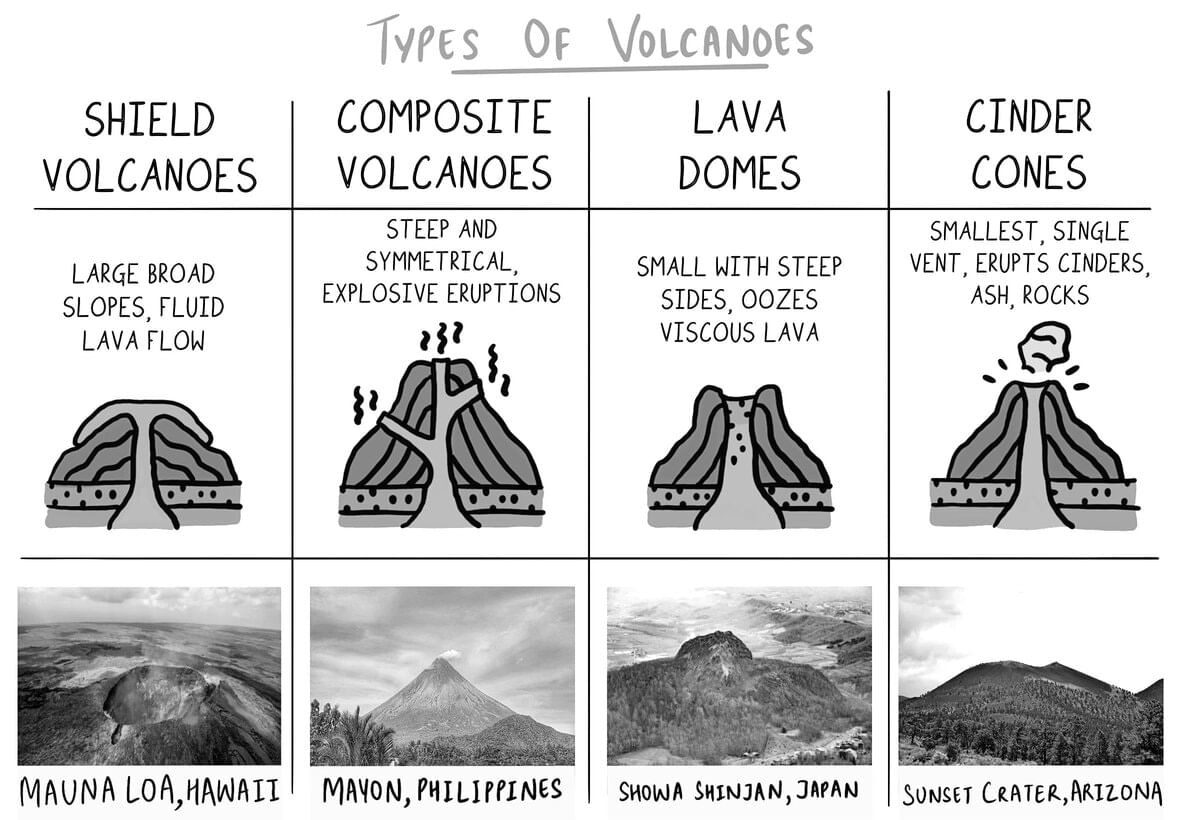
Q13: Consider the following: 1. Pyroclastic debris 2. Ash and dust 3. Nitrogen compounds 4. Sulphur compounds How many of the above are products of volcanic eruptions? (2024) (a) Only one (b) Only two (c) Only three (d) All four
Solution:
Ans: (d)
Pyroclastic debris: Fragmented material, like ash, pumice, cinders, and volcanic bombs, ejected during volcanic eruptions.
Ash and dust: Fine particles of volcanic rock and glass, transportable over long distances by wind.
Nitrogen compounds: Nitrogen gas from volcanoes can form compounds like ammonia and nitrogen oxides in the atmosphere.
Sulphur compounds: Sulphur dioxide (SO2), a major volcanic gas, causes respiratory irritation and acid rain; hydrogen sulphide (H2S) is released in smaller amounts.
All listed items (pyroclastic debris, ash and dust, nitrogen compounds, sulphur compounds) are volcanic eruption products.
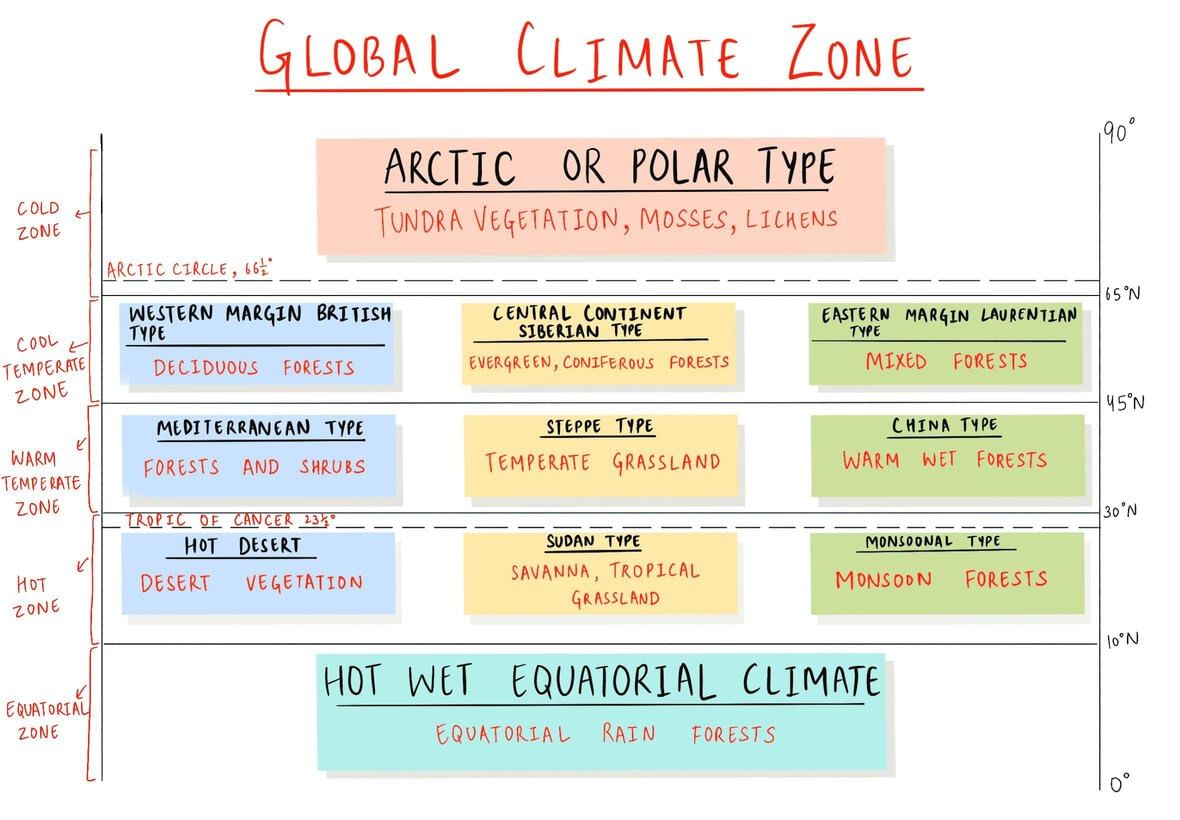
Q14: Consider the following description: 1. Annual and daily range of temperatures is low. 2. Precipitation occurs throughout the year. 3. Precipitation varies between 50 cm - 250 cm. What is this type of climate? (2024) (a) Equatorial climate (b) China type climate (c) Humid subtropical climate (d) Marine West coast climate
Solution:
Ans: (d)
The described climate aligns with a Marine West Coast Climate (Cfb) in the Köppen classification.
Low temperature range: Proximity to the ocean moderates temperatures, keeping summers cool and winters mild, resulting in minimal annual and daily temperature fluctuations compared to continental climates.
Year-round precipitation: Frequent rainfall occurs due to moist air from prevailing westerly winds, driven by cyclones, ensuring consistent precipitation in all seasons.
Precipitation range of 50-250 cm: This varies based on latitude, topography, and ocean proximity, fitting the typical precipitation patterns of marine west coast climates.
Q15: Consider the following statements: Statement-I: Rainfall is one of the reasons for weathering of rocks. Statement-II: Rain water contains carbon dioxide in solution. Statement-III: Rain water contains atmospheric oxygen. Which one of the following is correct in respect of the above statements? (2024) (a) Both Statement-II and Statement-III are correct and both of them explain Statement-I (b) Both Statement-II and Statement-III are correct, but only one of them explains Statement-I (c) Only one of the Statements II and III is correct and that explains Statement-I (d) Neither Statement-II nor Statement-III is correct
Solution:
Ans: (a)
Statements I, II, and III are all accurate. Statement I correctly notes that rainfall drives both physical and chemical weathering of rocks. Physical weathering results from the force of raindrops, particularly in heavy rain, while chemical weathering occurs when rainwater interacts with rock minerals, causing their decomposition.
Statement II is also true, as rainwater absorbs carbon dioxide from the air, forming weak carbonic acid (H2CO3). This mild acidity enhances chemical weathering by reacting with rock minerals.
Similarly, Statement III is correct because rainwater contains dissolved atmospheric oxygen, which facilitates oxidation of certain minerals in rocks, contributing to chemical weathering.
Thus, Statements II and III are both valid and provide explanations for Statement I, as the acidity from dissolved carbon dioxide and the presence of dissolved oxygen in rainwater drive the chemical weathering processes described.
FAQs on Physical Geography - Solved Questions (2024-2025)
1. What are the major landforms and their significance in physical geography?
Ans. Major landforms include mountains, plateaus, plains, hills, valleys, and deserts. Each landform has unique characteristics that influence climate, vegetation, and biodiversity. Mountains often create barriers to weather patterns and human movement, while plains are typically fertile areas that support agriculture. Understanding these landforms is essential for resource management, environmental planning, and disaster preparedness.
2. How do climatic factors influence physical geography?
Ans. Climatic factors such as temperature, precipitation, humidity, and wind patterns significantly influence physical geography. For example, areas with high rainfall often develop lush vegetation and diverse ecosystems, while arid regions are characterized by deserts. Climate also affects soil formation, erosion processes, and land use patterns, making it crucial for understanding geographical variations.
3. What role does plate tectonics play in shaping the Earth's surface?
Ans. Plate tectonics is the theory that explains the movement of the Earth's lithospheric plates. This movement leads to the formation of various geological features, including mountains, earthquakes, and volcanic activity. For instance, the collision of tectonic plates can create mountain ranges, while divergent boundaries can lead to the formation of new oceanic crust. Understanding plate tectonics is vital for assessing geological hazards and resource distribution.
4. What are the different types of natural disasters associated with physical geography?
Ans. Natural disasters associated with physical geography include earthquakes, tsunamis, volcanic eruptions, landslides, floods, and droughts. Each type of disaster has specific causes related to geographical features. For example, earthquakes occur along fault lines, while floods can result from heavy rainfall or snowmelt. Awareness of these disasters is essential for risk assessment and disaster management strategies.
5. How does human activity impact physical geography?
Ans. Human activities such as urbanization, deforestation, agriculture, and mining significantly impact physical geography. Urbanization can lead to land degradation and altered drainage patterns, while deforestation affects local climates and biodiversity. Agricultural practices can lead to soil erosion and changes in land use. Understanding the impact of human activity is crucial for sustainable development and environmental conservation.
Viva Questions, Physical Geography - Solved Questions (2024-2025), pdf , Free, Exam, Objective type Questions, Physical Geography - Solved Questions (2024-2025), mock tests for examination, Semester Notes, Extra Questions, ppt, past year papers, Sample Paper, Summary, video lectures, Physical Geography - Solved Questions (2024-2025), study material, Important questions, Previous Year Questions with Solutions, practice quizzes, MCQs, shortcuts and tricks;

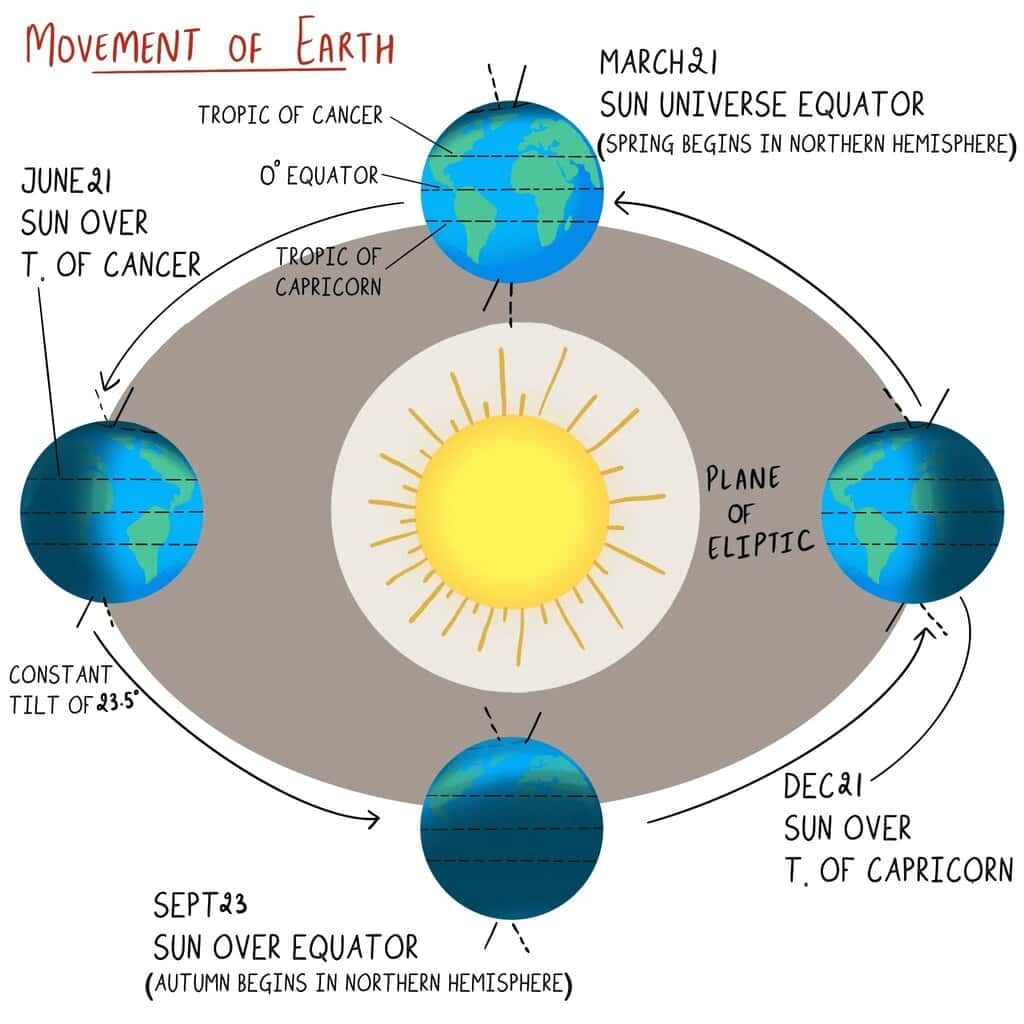 Thus, both the Tropic of Cancer and the Arctic Circle have more than 12 hours of daylight on June 21st.
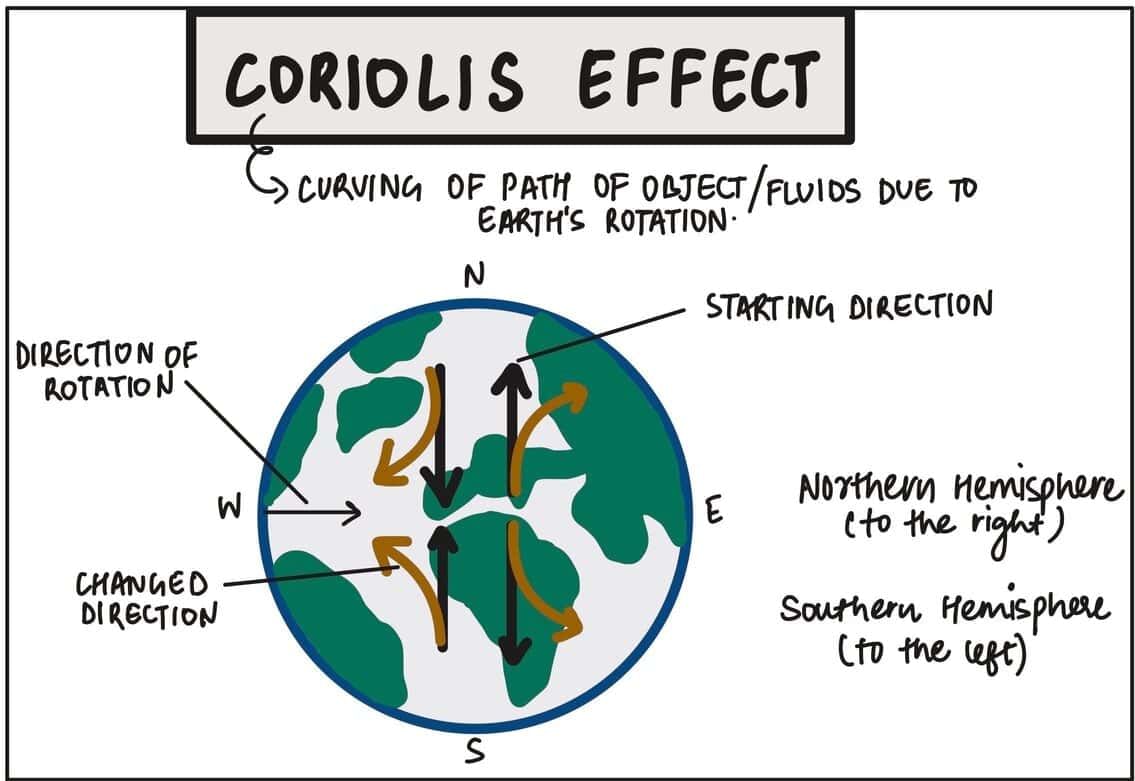 Thus, both statements are accurate.