Unit Test (Solutions) : The Gupta Era: An Age of Tireless Creativity

Attempt all questions. Time: 1 hour, M.M. 30
- Question numbers 1 to 5 carry 1 mark each.
- Question numbers 6 to 8 carry 2 marks each.
- Question numbers 9 to 11 carry 3 marks each.
- Question numbers 12 to 13 carry 5 marks each.
Q.1. What title or ambition is attributed to Samudragupta in the Prayāga Praśasti inscription composed by his court poet Harisena?
a) Chakravartin
b) Maharajadhiraja
c) Dharaṇi-bandha (unifier of the Earth)
d) Satyavadi (truthful king)
Ans: (c)
Explanation: Harisena, Samudragupta's court poet, praises him as dharaṇi-bandha, literally the "unifier of the Earth." This title emphasises Samudragupta's military success and political reach, suggesting he brought many territories under his authority and thus united a large part of the Indian subcontinent.
Samudragupta is described as dharaṇi-bandha (unifier of the Earth) by his court poet Harisena in the Prayāga Praśasti inscription.
Q.2. Who was the author of the prayāga praśhasti inscription?
a) Kālīdāsa
b) Harisena
c) Āryabhaṭa
d) Varāhamihira
Ans: (b)
Explanation: The Prayāga Praśasti inscription was composed by Harisena, who served as a court poet during the reign of Chandragupta II. Harisena recorded the achievements and titles of the Gupta rulers in this famous eulogy.
The prayāga praśhasti inscription was authored by Harisena, who was a court poet during the reign of Chandragupta II.
Q.3. The Gupta Empire covered most of which region of India?
a) South India
b) North and West India
c) Northeast India
d) Central India only
Ans: (b)
Explanation: The Gupta Empire principally dominated North and West India. During its peak, the empire controlled important plains and cities in these regions, which helped it become a centre of political power and cultural development.
The Gupta Empire primarily covered North and West India, marking a significant period of cultural and political development in these regions.
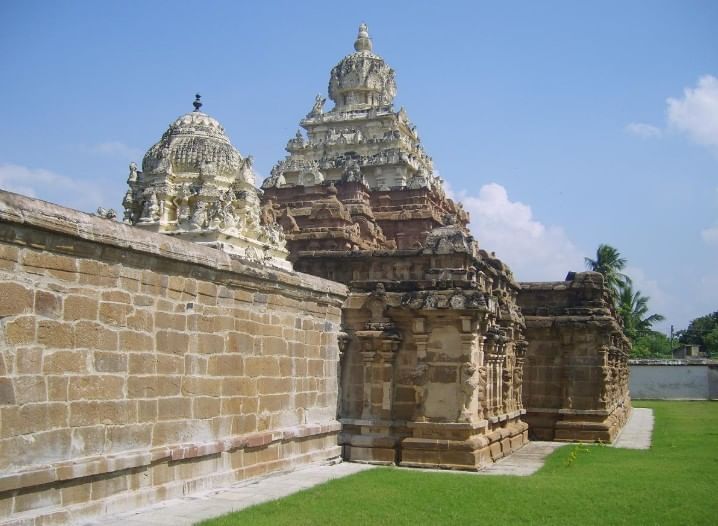
Q.4. The capital of the Pallavas was __________.
Ans: Kanchipuram
The capital of the Pallavas, Kanchipuram, was a major centre of learning, religion and culture in ancient South India. It became famous for its temples and scholarly activity and was often called the "city of a thousand temples".
Q5. Who wrote the Āryabhațīya? (1 mark)
Ans: Āryabhaṭa wrote the Āryabhaṭīya, a landmark work in mathematics and astronomy which summarises his main theories and methods.
Q6. Why is the Gupta period called the 'classical age' of India? (2 marks)
Ans: The Gupta period is called the 'classical age' of India because of several factors:
- Peace and stability: Relative political calm allowed culture and learning to flourish.
- Sanskrit literature: Great authors like Kālidāsa produced lasting works in poetry and drama.
- Scientific advances: Scholars such as Āryabhaṭa made important contributions to mathematics and astronomy.
- Art and architecture: Fine sculptures, temples and cave paintings developed into mature styles.
- Patronage of learning: Royal support helped institutions and scholars prosper, spreading knowledge widely.
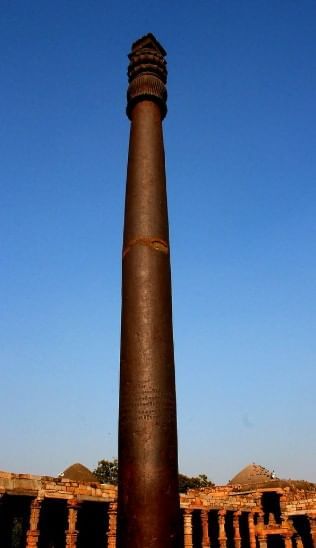
Q7. What was the significance of the Iron Pillar in Delhi? (2 marks)
Ans: The Iron Pillar in Delhi is a remarkable example of ancient Indian metalwork. Its significance includes:
- It dates to over 1,600 years ago and is associated with the reign of Chandragupta II.
- Originally placed near the Udayagiri caves, it was later moved to Delhi; its inscriptions praise a king and are linked to devotion to Vishnu.
- Despite its age, it shows little sign of rust, which demonstrates the high skill of ancient Indian metallurgists.
Q8. How did the Guptas use matrimonial alliances to strengthen their empire? (2 marks)
Ans: The Guptas used marriage alliances to build friendly ties and secure political support without war. For example, Chandragupta II's daughter, Prabhāvatī Gupta, married a prince of the Vākāṭaka dynasty. Such alliances helped maintain peace, extend influence, and create bonds between ruling families.
Q9. What were the key features of Gupta society as described by Faxian? (3 marks)
Ans: Faxian, the Chinese traveller who visited India in the early 5th century CE, recorded several features of Gupta society. His observations show a well-ordered and prosperous society:
- Contented population: People were numerous and appeared happy, living without intrusive official control.
- Agricultural system: Farmers on royal land paid a portion of their produce as tax, suggesting organised land revenue.
- Regular salaries: The king's guards and attendants received fixed pay, indicating formal administration.
- Prosperous towns: Cities were large and wealthy, with neat lanes and well-built houses.
- Charity and care: Wealthy merchants set up houses for the poor, orphans and the sick, providing food and medicines.
Q10. Describe the contributions of Kālidāsa to Sanskrit literature. (3 marks)
Ans: Kālidāsa is one of the greatest poets and playwrights in classical Sanskrit. His main contributions are:
- Meghadūtam (The Cloud Messenger): A lyric poem in which a separated lover sends a message via a cloud; noted for its vivid imagery and emotional depth.
- Shakuntala: A celebrated play about love and destiny that influenced later drama and literature.
- Vikramorvasiyam: A drama combining romance and mythological themes, showing his skill in characterisation and language.
Kālidāsa's language, imagery and depiction of human emotions set a high standard for later Sanskrit literature.
Q11. How did the Pallavas contribute to art and architecture? (3 marks)
Ans: The Pallavas greatly influenced South Indian art and architecture. Their key contributions include:
- Temples and rock-cut caves: They built notable rock-cut shrines and structural temples, many dedicated to Shiva.
- Kanchipuram as a centre: Their capital, Kanchipuram, became an important seat of learning and temple architecture.
- Sculptural detail: Their monuments display fine carving and designs that influenced later South Indian temple styles.
Q12. Explain the contributions of Āryabhața and Varāhamihira to science during the Gupta period. (5 marks)
Ans: Āryabhaṭa and Varāhamihira made lasting contributions to mathematics and astronomy during the Gupta age.
- Āryabhaṭa (c. 500 CE, Kusumapura): Author of the Aryabhatiya, he gave methods to calculate the motions of the Sun, Moon and planets and suggested that the Earth rotates on its axis, explaining day and night. He estimated the year as 365 days, 6 hours, 12 minutes and 30 seconds and provided explanations for eclipses.
- Varāhamihira (based in Ujjayinī): A scholar known for the Brihat Samhita, an encyclopaedic work covering astronomy, astrology, weather, architecture and agriculture. His work combined observation with practical rules and influenced later scientific thought.
Together, their works advanced observational methods and mathematical approaches that shaped Indian science for centuries.
Q13. Discuss how the Guptas promoted art, architecture, and literature in their empire. (5 marks)
Ans: The Gupta rulers actively supported and promoted creativity, leading to a rich cultural legacy. Their contributions include:
- Art: Centres like Sarnath produced refined sculptures, especially of the Buddha, showing calm expressions and elegant forms.
- Architecture: Rock-cut caves and temples such as the Ajanta Caves feature exquisite paintings and carvings that combine religious themes with artistic mastery.
- Literature: Royal patronage helped Sanskrit literature flourish, with poets like Kālidāsa creating enduring works.
- Science and mathematics: Scholars like Āryabhaṭa advanced mathematical and astronomical knowledge under Gupta patronage.
- Education: Institutions such as Nalanda University became important centres of learning, attracting students from across Asia.
By encouraging artists, architects and scholars, the Gupta rulers created an environment in which culture and learning thrived, leaving a lasting influence on Indian civilisation.
FAQs on Unit Test (Solutions) : The Gupta Era: An Age of Tireless Creativity
| 1. What are the key factors that contribute to the land becoming sacred in different cultures? |  |
| 2. How do historical events influence the perception of land as sacred? | |
| 3. Can the concept of sacred land differ between religions? | |
| 4. What role does nature play in defining sacred land? | |
| 5. How does the sanctity of land affect community identity and practices? | |