NCERT Solutions: Wisdom Paves the Way


Let us do these activities before we read (Page 27)
Ans: We seek advice from the elderly in our family because they have lived longer and seen many situations; their experience and good judgement help us avoid mistakes and make wiser decisions.
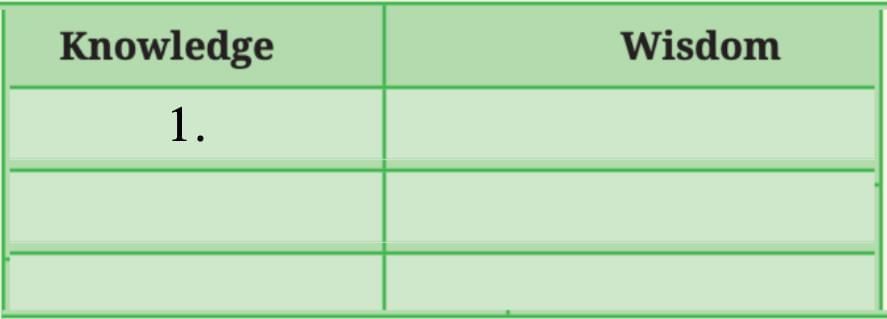
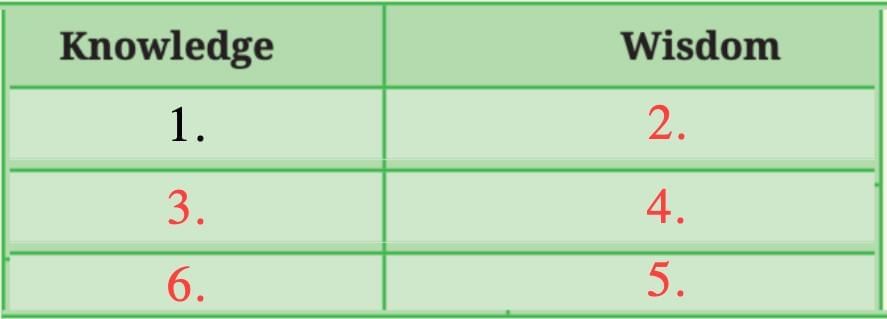
Work in pairs. Read the following situations and classify each one as either 'knowledge' or 'wisdom'. One example has been done for you. 1. Riya's understanding of plant care helped her grow a healthy vegetable garden in her backyard.
2. Mr. Kumar values time with family over chasing wealth.
3. Karuna's expertise in computer programming helped her develop a successful app.
4. Rohan understood the value of time management and created a timetable to complete his assignments systematically.
5. Ramesh chose to forgive his friend for a misunderstanding.
6. Ms. Vaijayanthi delivered a lecture on Indian Classical music at the cultural festival.
Ans:
Q3: Observe the picture. What do you think might have happened? Share your answers with your classmates and teacher.
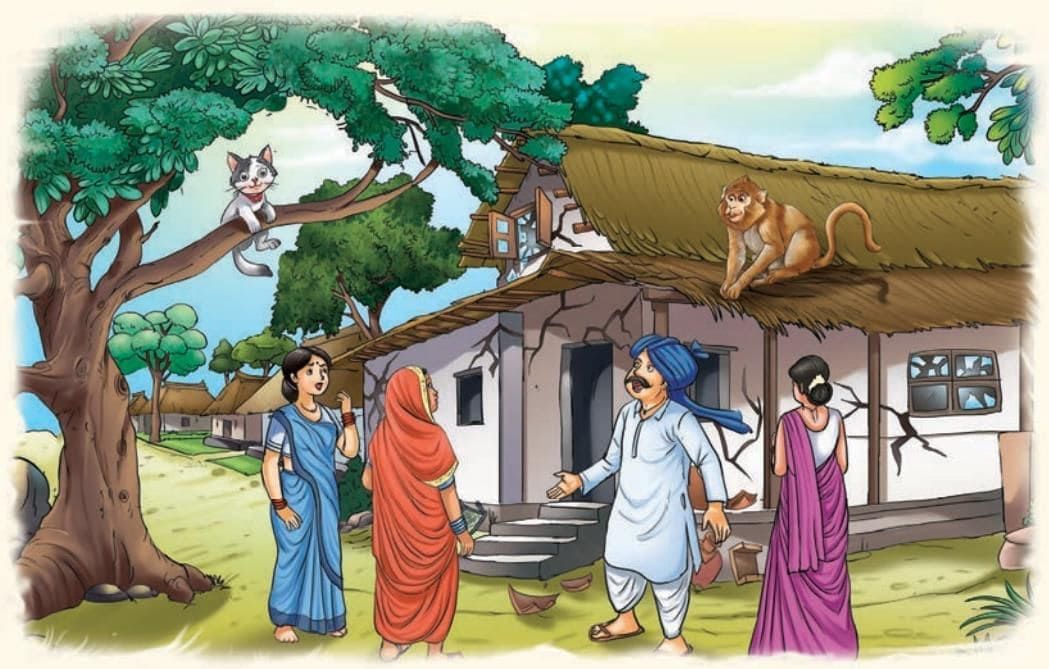
Ans: It appears that a strong natural event, such as an earthquake or a storm, has damaged the village. The house shows large cracks in the walls and a broken roof, and pieces of the roof lie on the ground. A monkey on the roof and a cat in the tree suggest that the animals were scared and disturbed. Four people stand outside, talking and likely planning what to do next. Their expressions and body language show worry and confusion. The scene indicates that the villagers will need help and should contact authorities or neighbours for immediate support.
Let us discuss (Page 32)
I. Complete the following sentences with suitable reasons. One example has been done for you. Share your answers with your classmates and teacher.
1. Shiv Datt said, "I believe it has been over a week, perhaps even longer," because it had been a long time since they left the village.
Ans: It had been a long time since they left the village.
2. Dev Datt said, "Indeed, we ought to be united in this hope. That is whywe press on towards Ujjain," because ___________________________.
Ans: He believed they should remain hopeful together and continue towards Ujjain so they might find work or receive help from the King.
3. Har Datt said, "Look there, friends. A camel has passed this way. Thetracks are fresh," because ___________________________.
Ans: He saw fresh camel tracks on the road, indicating that a camel had recently passed that way.
4. Shiv Datt said, "It appears to be a merchant, running as if pursued by trouble," because ___________________________.
Ans: The merchant was running quickly and looked worried, so Shiv Datt inferred he might be fleeing from some problem.
5. The merchant said, "How could you possibly know that? The poorcreature has been unwell for two weeks now. Surely you are a healer!" because ___________________________.
Ans: The young men described the camel's exact condition and symptoms without seeing it, which made the merchant think they had special medical knowledge about the animal.
6. Dev Datt said, "You are free to do as you wish, sir. If the King desiresour presence, we shall be waiting under that banyan tree yonder," because ___________________________.
Ans: He was confident they had done nothing wrong and was willing to meet the King if asked, showing calmness and honesty.
Let us discuss (Page 36)
1. The King makes the four young men his advisers, impressed by their skills. (8)
2. Ram Datt explains how he infers from the tracks that the camel is lame.
3. The King asks the merchant to clearly state his accusation.
4. The King praises the young men for their observations and dismisses the merchant's accusation.
5. Shiv Datt reveals that the camel is blind in its right eye, as it had only chewed on the leaves on the left side of the road.
6. Dev Datt explains his observation about the camel's pain and careful movement.
7. Har Datt clarifies how he knew that the camel had a short tail.
8. The merchant accuses the four men of knowing a lot about his missing camel.
Ans:
(8) The merchant accuses the four men of knowing a lot about his missing camel.
(3) The King asks the merchant to clearly state his accusation.
(2) Ram Datt explains how he infers from the tracks that the camel is lame.
(5) Shiv Datt reveals that the camel is blind in its right eye as it had only chewed on the leaves on the left side of the road.
(7) Har Datt clarifies how he knew that the camel has a short tail.
(6) Dev Datt explains his observation about the camel's pain and careful movement.
(4) The King praises the young men for their observations and dismisses the merchant's accusation.
(1) The King makes the four young men his advisers, impressed by their skills.
Let us think and reflect (Page 37)
I. Read the given extracts and answer the questions that follow.
Q1: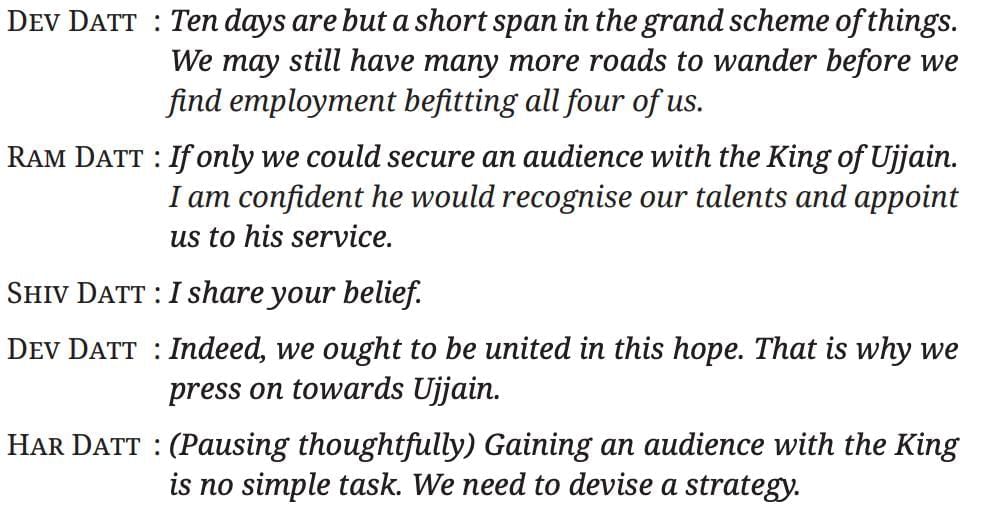
(i) Identify the false statement and rectify it.
A. Dev Datt believes that finding employment is an easy task
Ans: False
Rectified: Dev Datt believes that finding employment is a challenging task that may take time and effort.
B. Ram Datt is confident that the King would recognise their talents
Ans: True
(ii) What does Ram Datt's confidence in gaining the King's recognition tell us about him?
Ans: Ram Datt's confidence shows he is optimistic and self-assured; he trusts his and his friends' skills and believes that the King will notice and appreciate their ability.
(iii) Complete the sentence given below with the correct option from those given. In the line, 'That's why we press on towards Ujjain', the phrase 'press on' refers to __________.
A. walking with heavy steps
B. moving forward with determination
C. Slowing down frequently for rest
D. stopping briefly to save time
Ans: (B)
Explanation: The phrase 'press on' means to continue moving forward despite difficulties; here it shows the men's determination to reach Ujjain.
A. He is doubtful of their abilities and wants to give up.
B. He is eager to rush into the palace without preparation.
C. He is cautious and thoughtful, preferring to plan ahead.
D. He relies on others to make decisions for the group.
Ans: (C)
Explanation: Har Datt's suggestion to devise a strategy shows he is careful and likes to plan. He prefers thoughtful preparation rather than rushing into action.
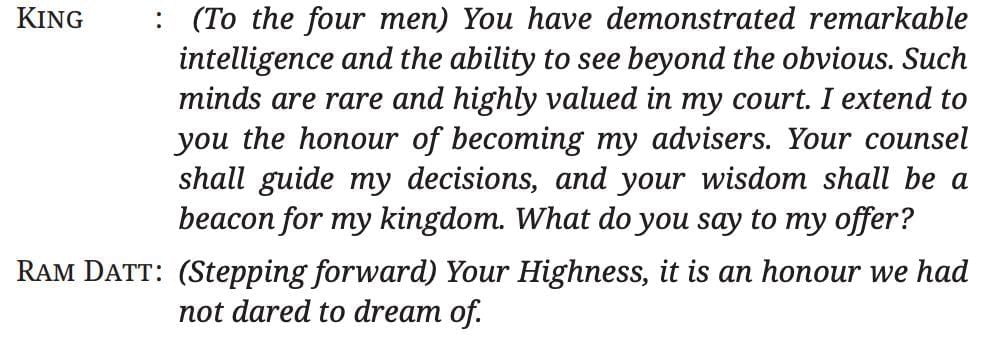
(i) Select the option that is true for both Assertion (A) and Reason (R).
(A): The Merchant left the court feeling humbled and ashamed.
(R): The King commanded that the four wise men join his court.
A. Both (A) and (R) are true, and (R) is the correct explanation of (A).
B. Both (A) and (R) are true, but (R) is not the correct explanation of (A).
C. (A) is true, but (R) is false.
D. (A) is false, but (R) is true
Ans:(A)
Explanation:
(i) Assertion: The Merchant left the court feeling humbled and ashamed. - True.
(ii) Reason: The King commanded that the four wise men join his court. - True.
(iii) Justification: Both statements are true, but the King's decision to appoint the men does not directly explain why the merchant felt ashamed. The merchant was ashamed because his false accusation was exposed and he realised his mistake; the King's command shows his approval of the men but is not the direct cause of the merchant's shame.
A. Challenge common beliefs with reasoning
B. interpret information in traditional ways
C. Notice details that others might overlook
D. Predict what is going to happen in the future
Ans: (C)
Explanation: 'See beyond the obvious' means noticing small but important details that others miss; the four men used such careful observation to draw conclusions about the camel.
Ram Datt described the King's offer as 'an honour we had notdared to dream of' because ___________.
Ans: Ram Datt described the King's offer as "an honour we had not dared to dream of" because it was a great and unexpected opportunity to serve as the King's advisers, something they hoped for but did not expect to receive.
Ans: The King's offer shows he values wisdom, fairness and ability. He rewards clever observations and merit, and he is willing to appoint people who can give sensible advice to help him rule wisely.
II. Answer the following questions
Ans: The dusty road indicates that their journey was long and tiring. They walked many days in heat and dust, which made the trip difficult and uncomfortable.
Ans: The merchant became suspicious because the men described the camel's condition without having seen it. This shows he is quick to doubt and jump to conclusions when faced with an explanation he cannot immediately understand.
Ans: Their clear and logical observations proved their intelligence to the King. Instead of being punished, they were praised and given an important chance to serve the King, which changes their fortune.
Ans: The King believed the men because they explained their observations step by step and gave sensible reasons for each detail. Their explanations were logical, while the merchant's accusation had no supporting proof.
Ans: Their skill in careful observation, logical thinking and clear explanation shows they can notice problems, understand them and advise the King sensibly. These qualities make them good advisers.
Ans: The merchant feels ashamed because his accusation was proved wrong in front of the King; the four men's correct observations exposed his mistake and made him realise he had judged them unfairly.
Let us learn (Page 39)
I. Complete the sentences by filling in the noun form of the textual words given in the brackets.
1. Some word games need a lot of thought and _________________. (deduce)
Ans: deduction
2. We need to make close _________________of animals in order to understand their behaviour. (observe)
Ans: observations
3. A detailed _________________ of the documents shows a lot of errors. (scrutinise)
Ans: scrutiny
4. You should not make any false ________________ against anyone. (accuse)
Ans: accusations
5. She was given an award in _________________of her contribution to literature. (recognise)
Ans: recognition
II. Match the expressions in Column 1 with their meanings in Column 2
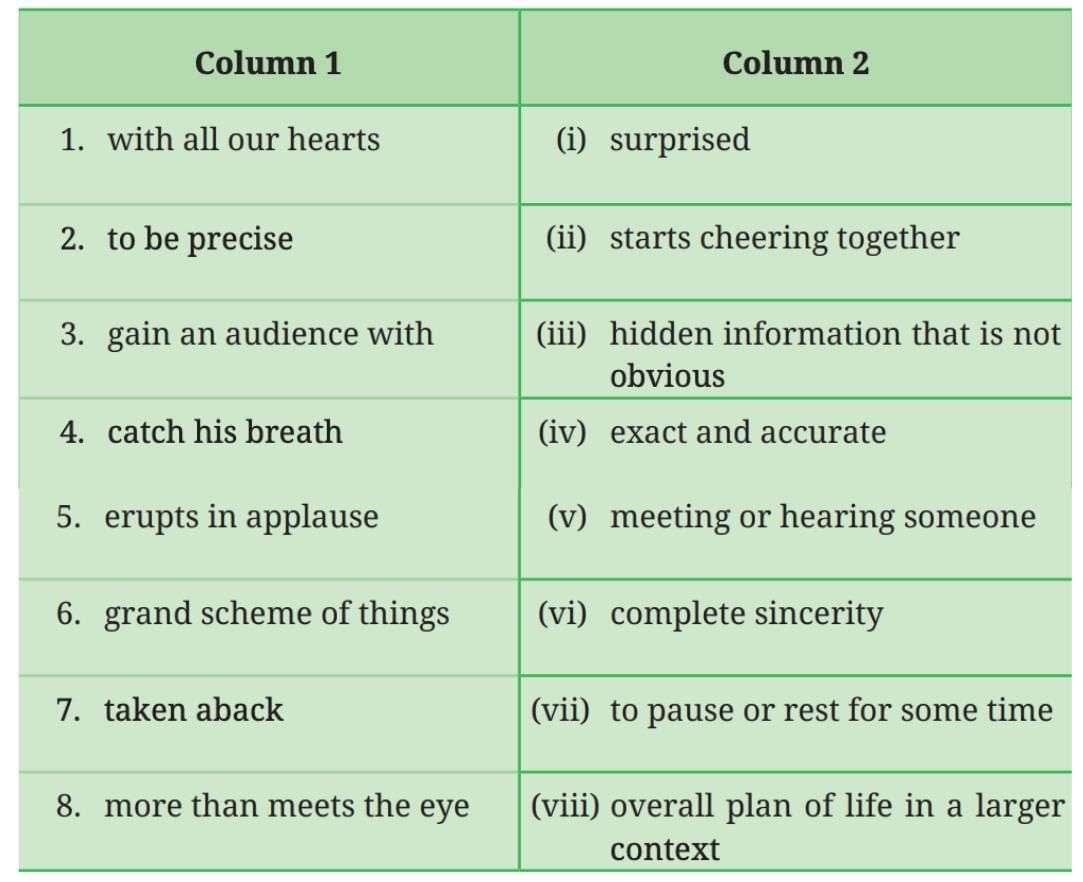
Ans:
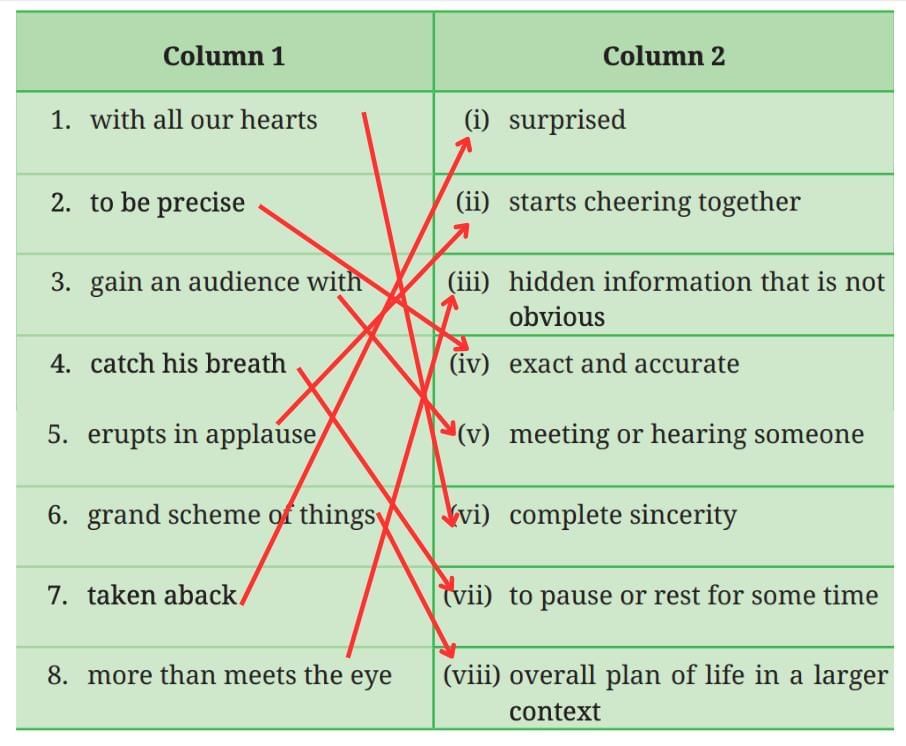
Now, make sentences using any five of the expressions from Column 1
1. With all our hearts, we thanked the doctor for saving our brother's life.
2. To be precise, the meeting starts at 10:15 a.m., not 10 o'clock.
3. She was finally able to gain an audience with the principal to discuss her concerns.
4. After running up the stairs, he stopped to catch his breath before speaking.
5. The crowd erupted in applause when the singer walked onto the stage.
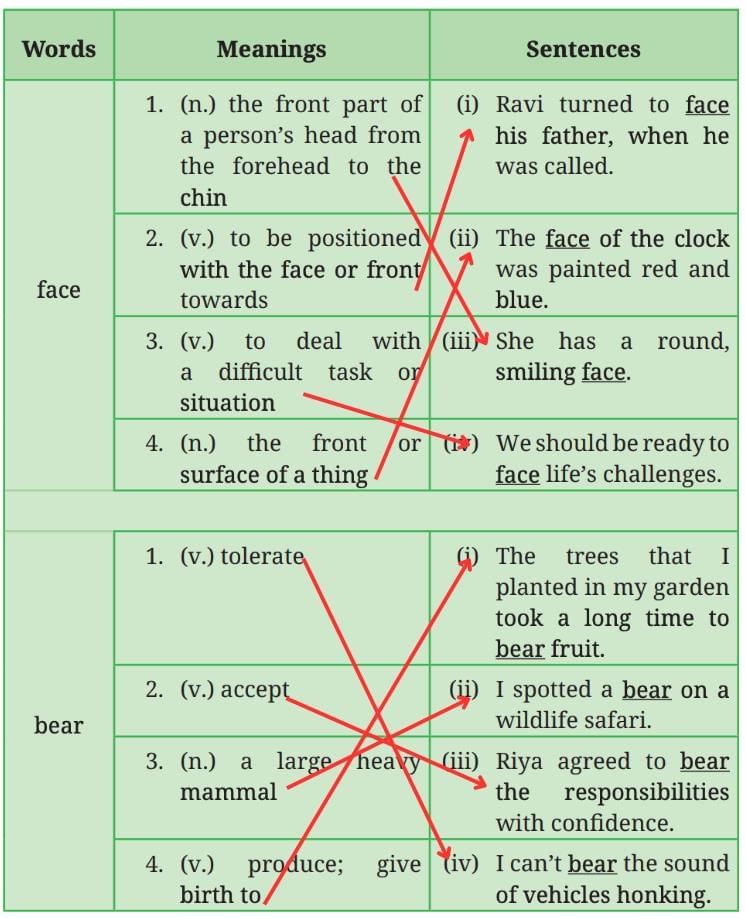
III. Match the different meanings of 'face' and 'bear' with the correct usage in the sentences given in the table below.
(n. stands for the word noun and v. stands for the word verb.)
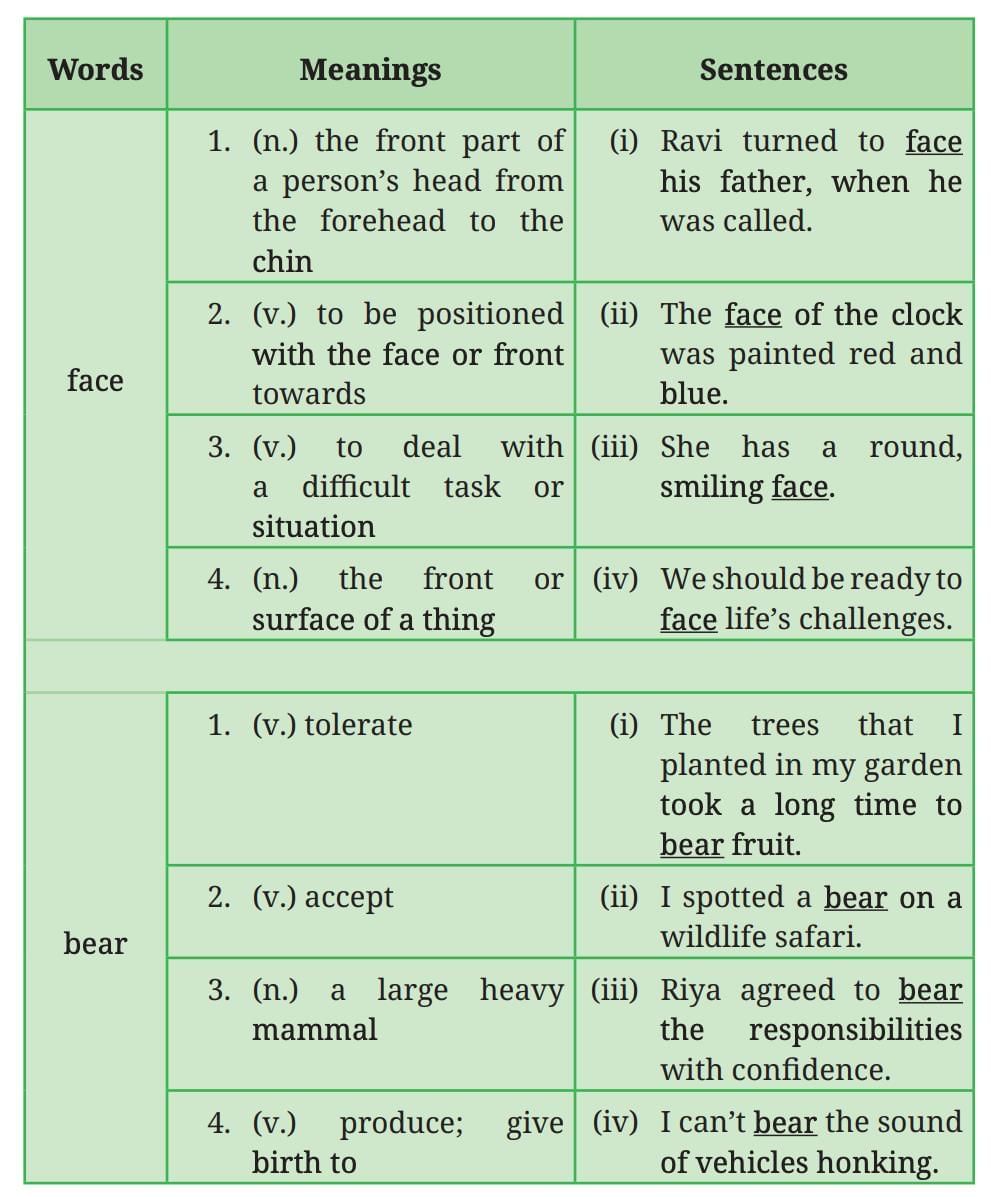
Ans:
IV. Match the highlighted words in the sentences in Column 1 with the functions they express in Column 2.
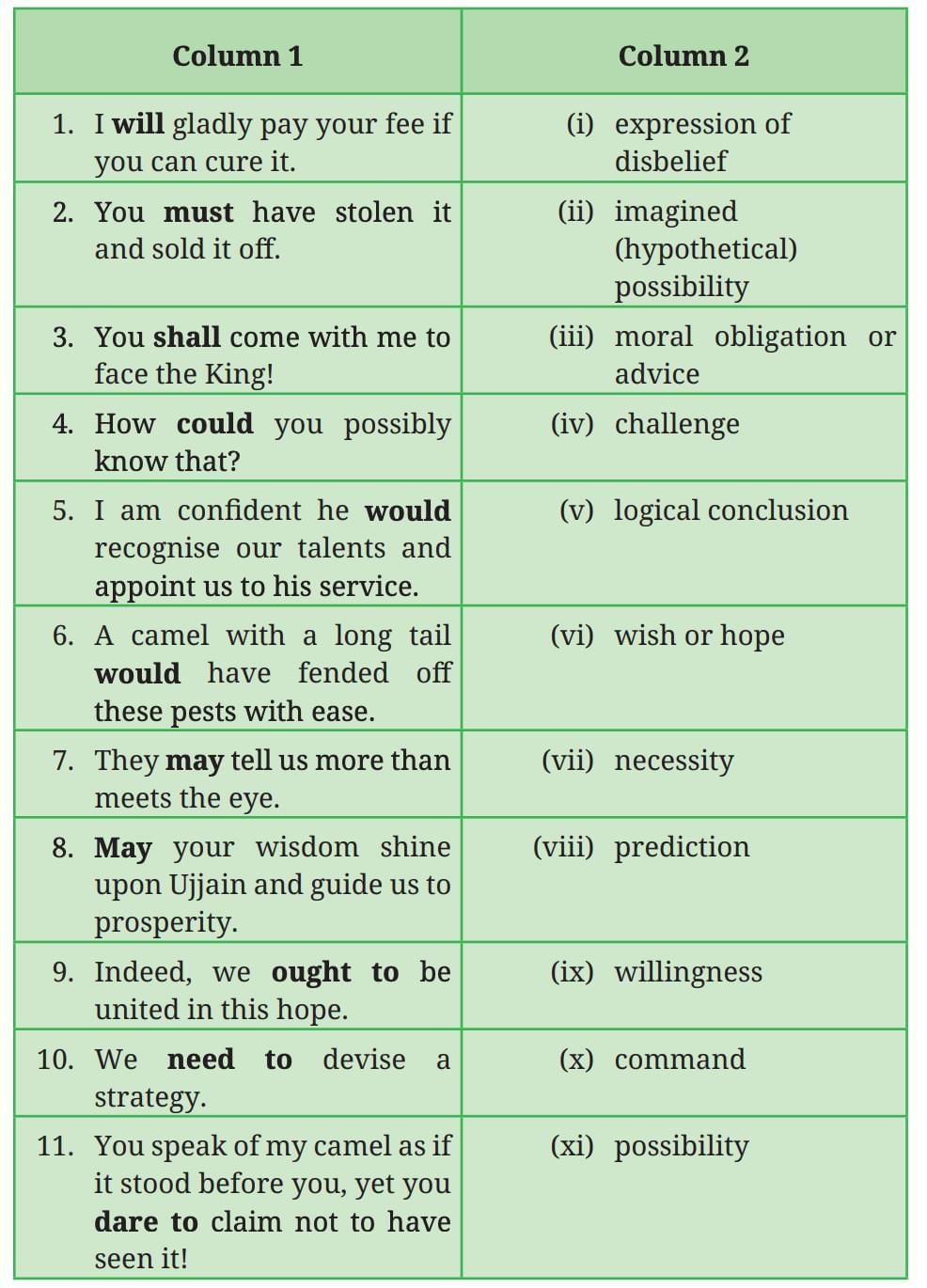
Ans:
1 - ix
2 - v
3 - x
4 - i
5 - viii
6 - ii
7 - xi
8 - vi
9 - iii
10 - vii
11 - iv
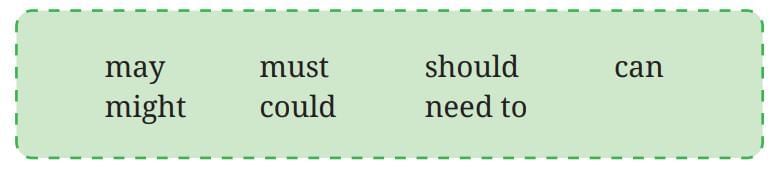
An old man, known for his wisdom, lived in a small village. One day, a young boy asked him, "How 1. _______ (ability) I become wise like you?" The old man smiled and said, "Wisdom 2._______ (necessity) be earned through patience. You 3. _______ (suggestion) listen, more than you speak." The boy thought for a while and replied, "It 4. _______ (weak possibility) take years, but I'll try." The old man nodded. "You 5._______(obligation) learn from your mistakes too. Wisdom 6. _______ (possibility)come slowly, but it always arrives for those who seek it." The boy knew he 7. _______ (ability) become wise if he followed the old man's advice.
Ans:
- can
- must
- should
- might
- need to
- may
- could
VI. Rewrite the following sentences using appropriate modal verbs. You may take clues from the highlighted words.
1. It is advisable for you to think before you speak.
Ans: You should think before you speak.
2. It is unnecessary to worry about things beyond your control.
Ans: You need not worry about things beyond your control.
3. It is not possible for a person to gain experience without taking risks.
Ans: A person cannot gain experience without taking risks.
4. It is essential to treat others with kindness, even when they disagree with you.
Ans: You must treat others with kindness, even when they disagree with you.
5. It is not allowed to interrupt when someone else is speaking.
Ans: You must not interrupt when someone else is speaking.
Let us listen (Page 42)
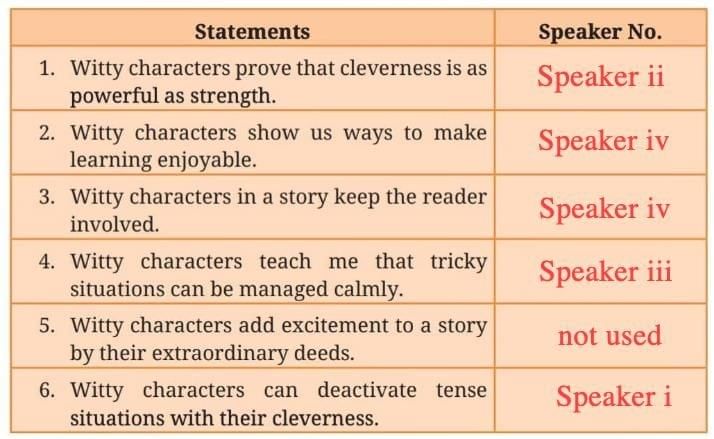
I. You will listen to four people sharing their thoughts on why they enjoy witty characters in stories. As you listen, match statements 1-6 given below to the speakers (i)-(iv). There are two statements you do not need.
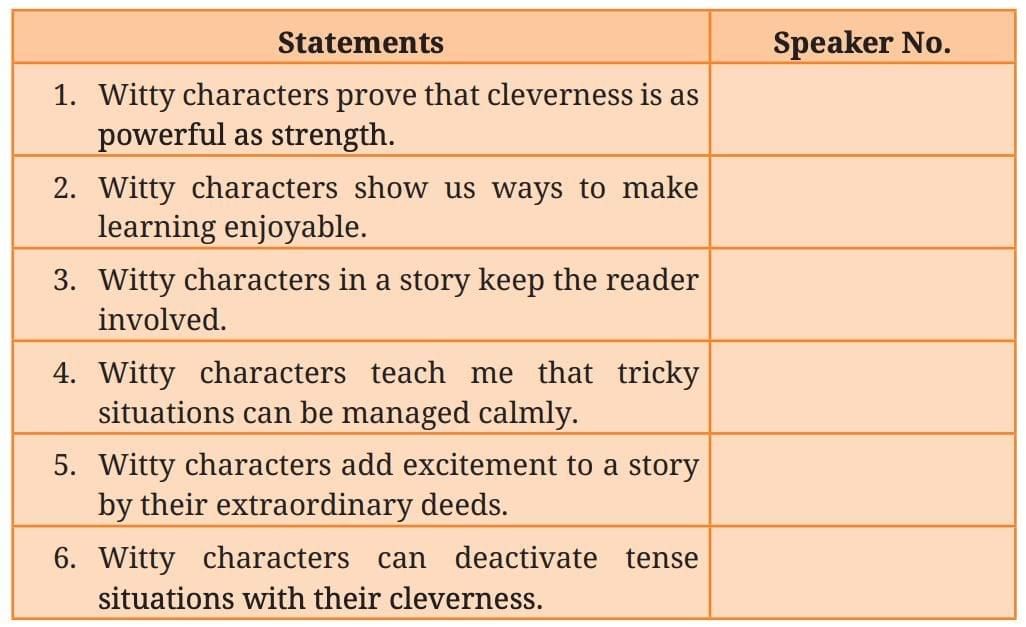
Ans:
Let us speak (Page 43)
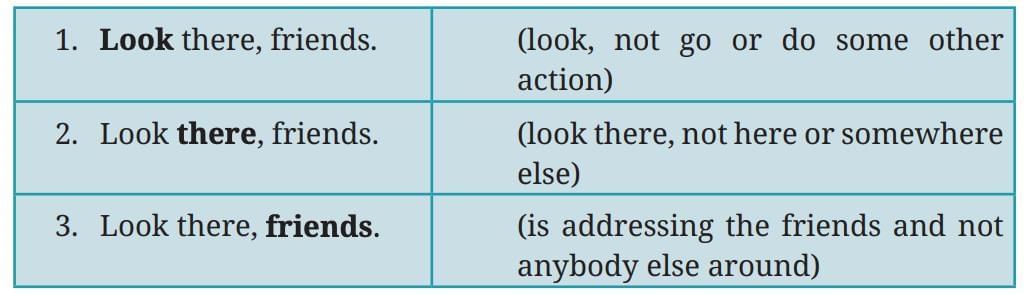
Now, work in pairs. Take turns to say the following sentences aloud by stressing on the highlighted words. Share the meanings of the sentences with each other and teacher.
- I take my dog for a walk in the evening.
- I take my dog for a walk in the evening.
- I take my dog for a walk in the evening.
- I take mydog for a walk in the evening.
- I take my dog for awalk in the evening.
- I take my dog for a walk in the evening.
Ans: This is a classroom activity. Practice saying the following sentences with stress on the highlighted words:
- I take my dog for a walk in the evening. (I, not someone else)
- I take my dog for a walk in the evening. (I perform the action of taking)
- I take my dog for a walk in the evening. (My dog, not someone else's)
- I take my dog for a walk in the evening. (Dog, not another pet)
- I take my dog for awalk in the evening. (A walk, not some other activity)
- I take my dog for a walk in the evening. (Evening, not another time)
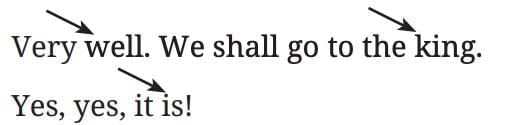
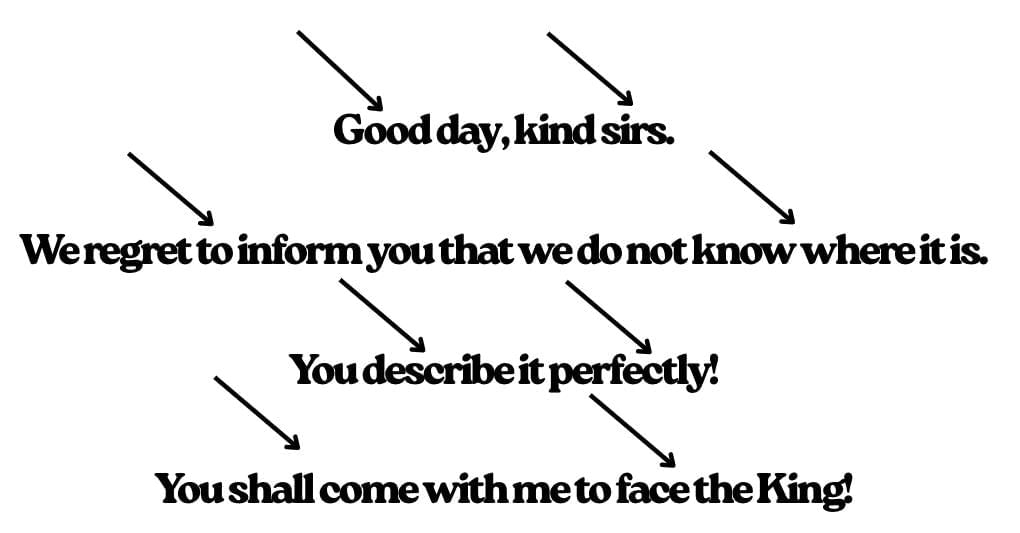
Now, practise by saying the following sentences with the correct intonation.
- Good day, kind sirs.
- We regret to inform you that we do not know where it is.
- You describe it perfectly!
- You shall come with me to face the King!
Ans: This is a classroom activity. Practice saying the sentences above using a falling tone at the end to show statements and exclamations.
Let us write (Page 44)
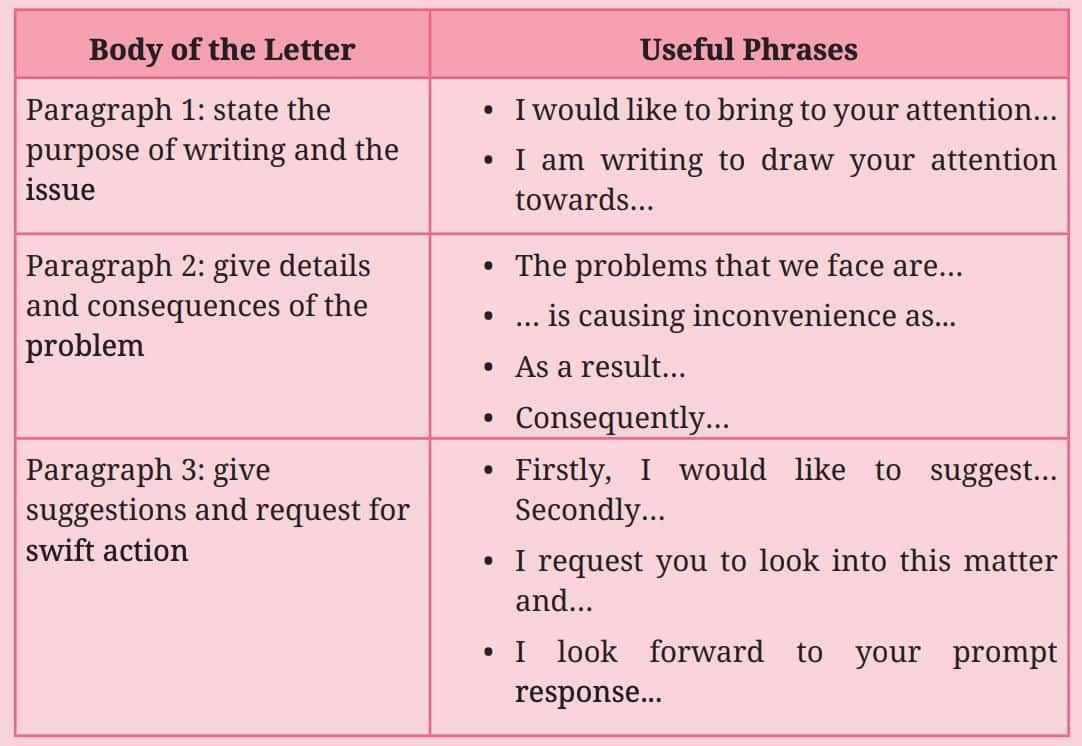
I. You have observed that the kutcha road leading to your colony is in a very bad condition due to heavy rains. The potholes are dangerous for people and can lead to accidents. They also serve as a breeding ground for mosquitoes, as there is stagnant water all around. Write a letter of complaint to the Commissioner, Municipal Corporation or the Sarpanch, Gram Panchayat to look into the matter and take necessary action. Follow the format of a formal letter and draft the letter with the help of the cues given below.
Ans:
To
The Commissioner,
Municipal Corporation,
[City Name]Date: 31 July 2025
Subject: Complaint regarding the poor condition of the kutcha road leading to our colony
Respected Sir/Madam,
I would like to bring to your attention the poor condition of the kutcha road leading to our colony. I am writing to draw your attention towards the serious inconvenience being caused to the residents due to the heavy rains.
The problems that we face are many. The road is full of potholes and is almost impossible to walk or drive on safely. It is causing inconvenience as people, especially school children and the elderly, are at risk of falling and getting injured. As a result, several minor accidents have already occurred. Consequently, the stagnant rainwater collected in the potholes has become a breeding ground for mosquitoes, increasing the risk of diseases like dengue and malaria.
Firstly, I would like to suggest that the road be repaired and properly drained at the earliest. Secondly, proper levelling and paving must be ensured to avoid future damage. I request you to look into this matter urgently and take swift action for the safety and well-being of the residents.
I look forward to your prompt response.Thanking you.
Yours sincerely,
Rahul Mehta
Rajiv Nagar Colony
Contact: 89********
Let us Explore (Page 44)
1. Choose a play that suits your requirement of theme, duration, number of actors, and available resources.
2. Choose a director, a stage manager, a light and sound in charge,a props manager, a costume designer, and a makeup artist.
3. Hold auditions and decide the roles.
4. Read the script and plan stage movements and positions for each scene.
5. Make a schedule for rehearsal.
6. Work on the set design (backdrop) and make or collect the required props.
7. Design or gather appropriate costumes.
8. Plan makeup and hairstyles to suit the play's time period.
9. Check light and sound arrangements.
10. Hold a dress rehearsal including sound and light effects.
11. Promote the event through posters and pamphlets.
12. Organise the backstage with labelled props, costumes, and entrances or exits.
13. Present the play to the audience.
Now, present the enactment of the play 'Wisdom Paves the Way' with the help of the steps you have just read. Ensure you use the correct intonation and sentence stress.
Ans: Perform the play before the audience yourselves with correct intonation and expression.
II. Stories related to wit and wisdom have always fascinated the readers. Go to the library and read the stories associated with the following.
Vikramaditya and Betal
Tenali Rama
Gopal the Jester
Panchatantra Tales
Ans: Do it yourself.
FAQs on NCERT Solutions: Wisdom Paves the Way
| 1. What are the key themes explored in the article "Wisdom Paves the Way"? |  |
| 2. How can reflection improve our understanding according to the article? | |
| 3. Why is listening considered an important skill in the article? | |
| 4. What role does writing play in personal development as stated in the article? | |
| 5. How does the article suggest we can explore new ideas? | |